Each Candidate Brings a Unique Skill Set, Experience & Expertise
This marks the first time in Pakistan’s history a civilian government has completed its full term and will transition power to a new civilian government, Pakistani elections this Saturday are complete with hope, democratic fervor, and anticipation. Here is a guide to whose running, and what each party stands for.
The Businessman: Nawaz Sharif Party: PML-N
• Economic Philosophy: Industry Friendly, Economically Liberal: Nawaz Sharif is a consistent proponent of “rapid industrialization” and there is little doubt he will incorporate free market principles anywhere he can. “He liberalized foreign exchange regulations and denationalized several public sector industrial enterprises and financial institutions”, including electric utilities in hopes to curtail power shortages that have crippled businesses and left Pakistani’s reeling in hot summers from lack of electricity. Sharif vows to remove these shortages, known as “load shedding” in the coming years through increased use of natural gas extracted from Baluchistan. While Socialist policies have historically been more popular in Pakistan, Sharif intends to “cut government expenditure by 30 percent in order to secure international backing for the economy” and is likely to continue his legacy as a free market capitalist.
• Foreign Policy: Flexible & Amendable: His record includes initiating peace processes with India in his first term as prime minister and is remembered for launching the Delhi Lahore Bus , with his Indian counterpart Atul Vajpayee in 1999. Sharif claims he will not be part of the War on Terror, but rarely shies from turning to the United States for assistance. During the 1998 Kargil conflict, former President Clinton writes in his autobiography that he was personally asked by Prime Minister Sharif to visit and discuss the conflict. He did however defy American calls to halt Pakistan’s nuclear program and the country faced crippling sanctions as a result. Sharif has since promised to “recalibrate Pakistan’s counterterrorism partnership with United States” , in hopes to quell widespread resentment of American handling of terrorism in Pakistan. He supports handing over Gwadar port to China and the singing of a gas supply project with Iran,citing Pakistan’s current foreign policy posture leaves them in “isolation” and such projects is a route to connecting with the world.
• Social Policy: Very Conservative: A protégé of Pakistan’s most religious conservative leader General Zia ul Haq, Sharif initiated the ghastly 15th Constitutional Amendment bill known as the Shariat bill in 1998 during his term which empowered the “prime minister to enforce what he thought was right and to prohibit what he considered wrong in Islam irrespective of what the Constitution or any judgment of the courts”. Suffice to say religious conservatism will color his social policy.
• Voter Base/Popularity: Very popular in the Punjab. Sharif has widespread support of the middle and lower class, urban population. He also commands support of the industrialist and business class, given his support of free market policies.
• Leadership Style/Personality: With a feudal background, Sharif is considered a son of the soil in the Punjab, (even though he lives a rather lavish lifestyle; be brings white tigers to his campaign rallies). He is mild mannered, conservative and has a simple, unobtrusive, way about him which helps him connect with most Pakistanis.
• Security Issues: He says drone attacks are against “national sovereignty” and will not tolerate them but does not offer specific alternatives to drone policy, or how to curtail them in the immediate future. Considered to be “soft” of militant groups, and lacking a significant record of standing up for minority groups, he has vowed to end America’s war on terror but “declines to say whether he would stop military operations against the Taliban and Al Qaeda” and has floated ideas on engagement with militant groups as workable options as opposed to “guns and bullets” . My guess is his government will initiate added dialogue with militant groups on a need to basis. Sharif is a free markets leader, and will prioritize big business before putting security atop his agenda.
• American Counterpart: Mitt Romney – Both free market businessman to their core, socially conservative and very wealthy, these men are rather similar. Sharif does not have Ivy League degrees, but seems more down to earth and connects with the general public with ease.
The Deal Maker: Asif Ali Zardari Party: PPP
• Economic Philosophy: Centrist with Socialist Tendencies: The party has socialist roots but since the death of Zulfiqar Ali Bhutto and his debacle of nationalizing major industries in the 70’s, the PPP has taken a centrist shift. Benazir Bhutto as prime minister favored socio-economic development through fiscal and monetary expansionist policies, and under her husband Asif Zardari’s leadership, the party will continue along this route. The PPP implemented welfare projects, including income support schemes which handed cash out to rural areas, especially in Sindh. Prime Minister Zardari has repeatedly called for consensus in Pakistan on economic issues and turned a nose to repeated US calls to steer clear of Iran’s gas pipeline. The pipeline deal with Tehran is Prime Minister’s Zardari’s answer to “chronic energy shortages in the country”
• Foreign Policy: Accommodating: The party most diametrically opposed to the military in Pakistan, the PPP seeks to forge closer ties with the United States. The military having brutally executed Zulfiqar Ali Bhutto, Pakistan’s most populous leader in the 1970’s, and house arresting his daughter Benazir (who would later go on to be Prime Minister) the Zardari government is responsible for appointing Hussain Haqqani as Ambassador in D.C. Recall Hussain Haqqani’s rather embarrassing Memo Gate controversy in which the Ambassador sent a memorandum to Admiral Mike Mullen seeking the Obama Administrations assistance in an American takeover of Pakistan’s military apparatus”. THe Prime Minister has also spent much time cultivating business ties with China, including announcing their takeover of the Gwadar port as part of a “drive to secure energy and maritime routes”. And despite seeking closer ties with the United States, Zardari has gone against US requests and met with Iran’s President Mahmoud Ahmadinejad to finalize the Iran Pakistan gas pipeline.
• Social Policy: Liberal Leaning: Historically they have been very protective of minority rights, but the PPP has not been able to prevent a current upsurge in violence against Shias, Ahmedi’s and Christians. Social policy has been rooted in helping the poor through inflationary schemes; Zulfiqar Ali Bhutto’s exceedingly popular and iconic promise of “roti kapra makaan” (bread, clothing, shelter) is still a sentiment held by the PPP. Prime Minister Zardari’s government can also boast passing a “raft of women’s empowerment resolutions through the previous parliament, including laws against domestic violence and sexual harassment”, testimony to the PPP’s liberal leaning posture. And even though many party stalwarts have been sidelined by the Zardari government in the past few years, they remain mostly committed to PPP causes.
• Voter Base/Popularity: The PPP’s stronghold has always been in Sindh,. The party commands support of the rural, lower, and middle class. They also have support in the southern part of Punjab. Not enough to win the election this year, but his party consistently wins a significant number of seats.
• Leadership Style/Personality: Asif Ali Zardari is a savvy business dealer and deft negotiator. Coming from a relatively modest feudal background, Zardari grew up with a chip on his shoulder, and has been in business for himself since his teens. Beginning with selling tickets to his father’s cinema, to trading cars, selling assets, negotiating land deals, he has always created opportunities, and found success for himself. May not be as well liked as Nawaaz Sharif in Pakistan, but he is renowned to be the most loyal of friends to those who know him.
• Security Issues: Prime Minister Zardari and his party have always sought widespread civil society support before opting for military solutions. Last year, he referred to drones as counterproductive, yet on the whole, drones have increased during his regime . On terrorism, Prime Minister Zardari has worked with the military establishment on some operations, (such as negotiating peace in SWAT with the Taliban) but insists Pakistan needs the support of civil society to launch operations against militants, while simultaneously censuring the media, judiciary and other right wing parties for not being supportive enough.
• American Counterpart: Rod Blagojevich: Two left leaning party leaders jailed for corruption, they also share strikingly characteristic smiles and have suffered the brunt of many a political cartoon. Asif Zardari and Rod Blagojevich also both elicit a love hate response from people, there’s no middle ground; one either likes, or really dislikes them.
The Captain: Imran Khan Party: PTI
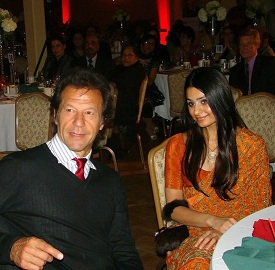
zainab jeewanjee and imran khan
• Economic Philosophy: Welfare Policies: Imran Khan says he will “end corruption in 19 days” and plans to sideline the bureaucracy to do so. All economic plans that follow are rooted in this idea. He will declare an energy emergency and claims to end load shedding in 2 years through an oversight board for energy distributers in attempt to make it an apolitical body while privatizing energy companies. He also plans to increase use of coal from Pakistan, and has made calls for an Islamic Welfare State. No word yet as to what the Islamic Welfare State would mean and how to go about implementing it, but it makes for wonderful campaigning with the people.
• Foreign Policy: Assertive: “America is destroying Pakistan”, suffice to say Imran Khan is the candidate most opposed to current US policy to Pakistan, while clarifying he is not “anti-west” . He vociferously opposes all post 9/11 Pakistani regimes from General Musharraf to Prime Minister Zardari, for cooperating in what was once known as the “war on terror”. He finds current relations, involving drone attacks in exchange for American aid more than just transactional, but a failure. Referring to it as an “American war on Pakistani soil” , Khan insists on Pakistan’s sovereignty first, and a rejection of American aid if current policies persist . And in regards to India, as a world renowned former cricketer, India may be warm to an Imran Khan regime and such popularity in the Subcontinent could be an opportunity for diplomatic headway in bilateral relations with Delhi.
• Social Policy:Conservative Reformist: Khan’s vision of an Islamic Society looks like Scandinavia; “a humane society, where there is rule of law, a society that looks after its weak, its handicapped.” Where to begin creating institutions to do this, has yet to be fleshed out. As with his energy policy, he vows to declare an emergency on education to tackle the country’s illiteracy problem, commissioning international scholar Dr. Azeem Ibrahim to come up with the plan. On minority issues, he has condemned Lashkar e Jhangvi’s killing of Shia’s yet. Overall, one may expect someone who was known for a high flying, partying lifestyle as a fashionable celebrity cricketer to be more on the liberal side of the social spectrum, but his policies for Pakistan are astonishingly conservative.
• Voter Base/Popularity: Young, rural, urban, elite, upper middle class, and educated Pakistani’s are supporting Imran Khan in this election. He also commands a significant supporting from overseas Pakistani’s, especially in the United States, where he has raised millions for this election campaign, in his cancer hospital in previous years. They say if the youth turn out to vote, the election will swing his way.
• Leadership Style/Personality: He’s the man who brought the Cricket world cup to Pakistan and will always be known as a hero who led a nation to victory. Men admire him and women love him; he’s compelling, handsome and speaking from personal experience, has a rather impressive presence. Leading PTI gradually, but steadily over the years with a straight shooting manner, he is criticized for being soft on substance. An unwavering posture against highly unpopular American policies and promise of sweeping change however, is where he finds tremendous support.
• Security Issues: If elected, Imran Khan says he will simply shoot down American drones . He will negotiate with the Taliban, explaining actual militants comprise only a small sector of Pakistani society and plans to reconstitute tribal Jirga’s to maintain peace. He want to withdraw all Pakistani troops from FATA tribal areas and applauded Prime Minister Zardari’s and the military brokered peace deal with the Taliban in SWAT 2009, which was promptly violated by the Taliban almost immediately. His plan for securing the nation from increased sectarian violence, political bombings and terrorist militancy are rooted in ending American drones and “Rambo style” mercenaries who he explains increase, rather than decrease violence.
• American Counterpart: Ron Paul: Both call for limited foreign interferences and engagements as a silver bullet to their country’s problems. They are straight shooters, unabashedly opinionated and while they don’t always have an exhaustive, full proof plans on how to pursue their relatively radical policies they both command increased followers each election cycle!
Altaf Husssain : The Organizer
Party: MQM
• Economic Philosophy: Small Scale, Private Enterprises: A party founded to establish a corruption free society, uproot the feudal system and establish a meritocracy in Pakistan’s Indian immigrants, and other minorities have a fair shot at social mobility, the party is a strong proponent of free market capitalism. They have executed several large scale development work in Pakistan’s largest city, Karachi.
• Foreign Policy: Progressive: MQM is the part that stands up most forcefully against the Taliban, historically and in this election. Sadly, they have been viciously targeted and attacked for this stance in the past weeks through bomb blasts in and around their party offices. They do not support American drones, but do support military operations against terrorist militants as needed. They call for “close, and honorable ties” with India along with a newly “independent foreign policy” .
• Social Policy: Liberal: MQM is historically secular and has always stood up strongly in support of minority rights. They have vociferously condemned every attack against minorities in Pakistan.
• Voter Base/Popularity: Altaf Hussain and MQM’s stronghold is in Karachi, among the urban, Urdu Speaking, educated middle classes. Urdu speakers are Paksitani’s who trace their roots back to India; their families migrated to Pakistan during partition, and they are disapprovingly referred to as “mohajirs” (migrants).
• Leadership Style/Personality: Altaf Hussain is a cult like figure, the single and supreme ruler of the party, he has a thunderous speaking style. With the security of knowing his party does not command enough support to rival PML-N, PPP, or PTI and other parties throughout the years, he leads loudly, and forcefully.
• Security Issues: Unwaveringly opposed to militancy and MQM supports grassroots movements to counter it. They have a stronghold in Karachi and a loyal party base in this large city couple this with Hussain’s powerful leadership (even though he lives in England) the MQM can mobilize attacks against the Taliban on a local scale.
• American Counterpart: Jimmy Hoffa. They’re both charismatic leaders who catapulted their organization to protect a minority population to the forefront of the political scene. It helps that they happen to look alike also.
“30 years of this whole business that started with the jihad against the Soviet Union is what we are trying to deal with the aftermath of. Its 30 years of these groups, supporting them, funding them, the opening of radical madrassahs in various parts of the country. Now I think we’ve done a decent job in the last two years of beginning the cleanup”
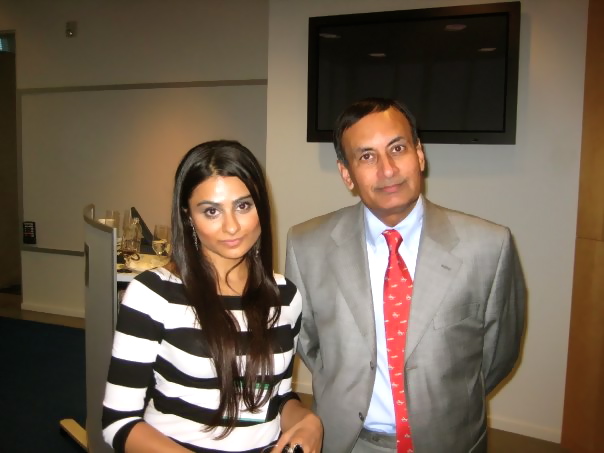
Pakistan is serious about cleaning up terrorism, but the mess runs deep. And If you want to share in an insightful discussion on the Wikileaks reports, I recommend watching Charlie Rose from last night. Because Pakistan pulled out the big guns in responding to the reports that suggested their Interservices Intelligence Agency is “aiding” the enemies in Afghanistan. Ambassador Hussain Haqqani was Rose’s guest and spoke directly to American anxieties that Pakistan is not entirely interested in ousting terrorists from the region. Specifically responding to the question of ISI links to the Taliban, Haqqani said:
“It goes back to the soviet invasion of Afghanistan. The CIA and ISI both worked with the Mujahedeen who morphed into Taliban. But now the Pakistani military and ISI are conducting successful military operations in SWAT and South Waziristan.
He elaborated:
“We’ve Taken out extremists and 74 ISI personnel have been killed in the past two years. With as many as 233 injured. That alone should be sufficient to convince people that was then and now is now and Pakistan is standing firmly on the side of those who want to eliminate the Taliban and extremists”
The statistics were particularly hard hitting. They brought a human element to our somewhat sterilized discussion about Pakistan here in the states. Being geographically removed, and with a vastly distinct culture, we are mostly informed of how the government in Islamabad deals with our administration in D.C., resorting to diplomatic sound bites and news for our information. But Haqqanis statistics provoke us to realize that just as we have struggled in Afghanistan, Pakistan too has sacrificed greatly as an ally in our war and continues to be deeply invested in combating terror.
Haqqani reminds us that the Wikileaks story is just that; a whistleblower. Without subtracting from the value of revealing what governments might otherwise keep classified, the Ambassador offered facts that quell sensationalized reception of the reports.
Rose asked weighty questions in trademark straightforwardness allowing us a chance to get answers to that the Wikileaks story leaves us lingering with. For instance, “what keeps Pakistan from doing more”; a question even those with ample knowledge and understanding of history and ground realities who can put the Wikileaks story into context sometimes wonder. Rose speculated it was a concern with India, and a fear of U.S. withdrawal. The Ambassador responded:
“There is a concern that India is not yet reconciled to our nationhood and statehood. Those are concerns reflected in public opinion and government has to deal with view that the US has not been a consistent friend of Pakistan and if we do too much at the behest of US they could leave us in the lurch and walk away again. The Biggest concern is the US can actually leave projects incomplete it has happened in the past US assistance and economic aid suspended arbitrarily and at short notice. Things have been left incomplete. They have had a very difficult relationship in the past 6 decades. We are trying tot address the totality of these issues”
It is no secret that India Pakistan relations are a primary driver of action in South Asian politics so the real nugget in the Ambassador’s above response is the talk of Pakistani Public opinion.
One of the first rules we learn in politics is that perceptions matter and what our pundits and political speechwriters have left out of the conversation is how Pakistani opinions factor into Islamabad’s policymaking.
Ambassador Haqqani did an eloquent job of explaining this tremendous sensitivity with which Islamabad must balance its interest in continuing bilateral cooperation with D.C. while alleviating a rampant fear amongst Pakistani citizens that the United States might not be trustworthy, or as the Ambassador put it “ungrateful” for all their country does.
And although Ambassador Haqqani concluded on a positive note , citing increased military cooperation in fighting terrorism and tripartite agreements on trade, he gave viewers a clear view of the “totality” and complexity of issues from the Pakistan side.
To tally Islamabad’s task list thus far: in addition to 30 years of deep cleaning, speedy recovery from loss of life, toil, treasure and time, one must add mending 60 years of mistrust with the worlds superpower to Pakistan’s list of things everyone wants done yesterday.
So let’s think twice, maybe even thrice before sponging the Wikileaks reports without an understanding of context and implicating Pakistan for not doing enough. Prime Minister Cameron, that’ means you.
Pakistan is in desperate need of a plumber to fix the leak on the front page of the New York Times this morning. The article has one of strongest suggestions yet that the Inter Services Intelligence Agency aids the enemy in Afghanistan and is rooted in reports made available by the whistler blower organization, Wikileaks. The reports entitled the “Afghan War Diaries” purport that the Pakistani ISI provides haven, if not supports Al Qaeda comes from “unverified” sources most likely “aligned with Afghan” intelligence and “paid informants”. The New York Times piece provides examples of how a suggestion of Pakistani aiding insurgents could be accurate, and leaves only a brief disclaimer that nothing is yet certain. Rather, the story more strongly asserts:
Senior lawmakers say they have no doubt that Pakistan is aiding insurgent groups. “The burden of proof is on the government of Pakistan and the ISI to show they don’t have ongoing contacts,” said Senator Jack Reed
“No doubt” is an alarming allegation against a critical ally in this war and a bit sensational in the absence of a closer reading of Pakistan’s realities and motivations.
What seems more likely than “no doubt”, is something I’ve stated previously. Both Ideology and what Pakistan’s foreign ministry spokesperson said are “ground realities” run directly counter to the suggestion that the ISI rampantly supports insurgent groups against American interests.
Quite simply, insurgent groups including Al Qaeda are deeply comprised of remnants from the Soviet Afghan war, meaning former fighters we engaged the ISI to train, maintained links to “freedom fighters” who ultimately became extremist groups we combatted post 9/11. That engagement created a decade long window in which there was little instruction or immediate opportunity and to some extent, interest for Pakistan to eradicate insurgents in its neighboring country. Couple this with the fact that Pakistan shares a nebulous border with Afghanistan as it became haven to one of the worlds largest refugee problems with Afghans fleeing Soviet atrocities, and you’ve got a battle hardened, impoverished, and an armed influx of an outside population who call major cities like Karachi, home.
So when we hear about the “Af-Pak Quagmire”, one should really be thinking in terms of the pickle Pakistan got into when millions of refugees made Pakistan’s underdeveloped, politically volatile and vastly feudal state home as the Cold War ended.
This climate allows us to put the Wikileaks reports into perspective. Firstly, reports linking ISI aid to insurgents could likely be referring to former Pakistan intelligence officials who maintained ties to insurgents as Afghans became part of the fabric of Pakistani society. Secondly, although these groups made Pakistan their home, the arms and influx of drugs via Afghanistan, never ceased. An infamous Klashinkov culture pervades Karachi amongst other places, including the now well-known FATA areas. So with such imbedded presence in Pakistan, obliterating Afghani insurgents becomes a highly sensitive task.
I rarely point to ideology as a driver of action when it comes to government behavior, but as Afghan’s made their home in Pakistan, they came sharing religion and some aspects of culture which intensifies the complexity of hunting down terrorists because it leaves Pakistan open to the possibility of a civilian uprising. Certainly Afghans would have preferred we “negotiate” rather than wage full scale war post 9/11 to settle differences. And I will not argue whether or not that would have been wise, however, the point is that the
ISI may be dealing with insurgents in vastly different ways, wheeling and dealing as opposed to obliterating them with the force we might use because of a profound risk involved in alienating an enormous, and internal Afghan presence within Pakistan’s border.
Since 9/11 Pakistan has descended into civlian chaos at certain intervals with extremists growing polarized, gravitating toward insurgents as we intensified our offensive in Afghanistan and Pakistan. So our expecations must take these realities into account and the Wikileaks reports understood within that context.
Ultimately, a lesson we might learn from the Wikileaks story is that negotiating with extremist groups for Pakistan is inevitable. General McChrystal’s Counterinsurgency strategy was moving in that direction as it called for U.S. engagement for the long haul requiring additional years in time, toil, troops, and treasure; which is an increasingly unpopular idea. So will the Wikileaks reports be the “game changer” or this wars equivalent to the “Pentagon Papers” for it’s suggestions that our engagement of Pakistan in providing billions in aid has been not only counter productive but comes in addition to our own mishandlings of the war thus far?
Perhaps. But either way, Pakistan is in desperate need of one skilled plumber to fix this leak.
Joe Biden Says Pakistan is a BIgger Concern than Afghanistan
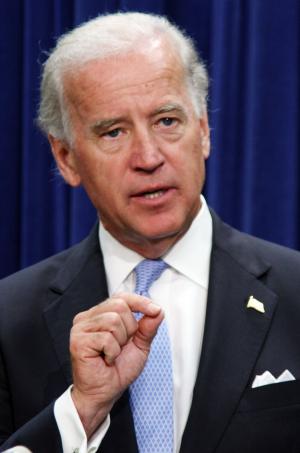
Vice President Biden was on Larry King this week slating Pakistan as America’s larger concern than Afghanistan. He explained “Pakistan is a big country…has nuclear weapons that are able to be deployed and has a real significant minority of radicalized population and a not complete functional democracy in the sense we think about it” . Which sounds tremendously pressing and makes for catchy prime time television, but let’s delve into his rationale one by one, and assess his concerns.
Pakistan is certainly “a big country” with a “real significant minority of radicalized population” and the Vice President is dead on with this issue. Among the top ten largest countries in the world, Pakistan is still developing in a relatively underdeveloped region, and houses one of the largest refugee problems on earth. So even a minority of radicalized militants is enough to wreck havok on Pakistan, as it has been. And likewise, that minority population single handedly deters our fight in fighting the war on Terror.
And this truly defines the Pakistan quagmire: dealing with extremist militants in an underdeveloped, politically volatile war zone.
Biden also said Pakistan “is not a completely functional democracy in the sense we think about it”, which is a statement of fact. However it’s a misplaced concern because it’s not necessarily a hindrance to our interests at this time. In our alliance with Pakistan Democrats have historically sided with civilian governments, while Republicans have preferred to deal with military regimes in Islamabad. So Biden’s issue with Pakistan’s brand democracy is an inherent tension that has existed in this alliance for decades.
It’s a cause of tension over the years because we’ve effectively dealt with Military regimes in the past, and other international players such as China, and India have also found it effective to deal with military led Pakistan. So Democrats like Vice President Biden insisting on American style democracy is not always necessary.
In a perfect world, our allies would have fully functioning democracies akin to ours, but the reality is our brand of governance is not easily applied in places like Pakistan.
Plus there’s a perceived arrogance that comes along with our leaders being critical of governments that function differently than ours. I think the Vice Presidents suggestion makes for a nice talking point on democracy for tv viewers, but offers no practical insight let alone a solution to Pakistan as our foremost concern.
Finally, the Vice President cited “vulnerabilities” regarding the safety of Pakistan’s nuclear weapons. Nuclear non proliferation is a bipartisan, and to a large extent, global cause of anxiety that few will argue against. But how realistic is a notion of Pakistan’s nuclear arsenal being vulnerable to non military or non state actors? It’s a nightmarish scenario that catapults Pakistan atop our immediate Foreign Policy agenda because the mere sliver of possibility proliferation could happen entails catastrophically high risks that no one is willing to take. But such alarming rhetoric doesn’t inform us of the likelihood of this happening. It just frieghtens us, deters diplomacy and ultimately undermines the U.S. Pakistani alliance. Such rhetoric, minus substantial evidence should be shared amongst policymakers and government officials pertinent to the situation. Otherwise, the rhetoric can be counter-productive in engaging allies like Pakistan.
Overall, the Vice President’s comments were consistent with the Obama Administration’s promises of an increasingly narrow focus on our Foreign Policy to Pakistan.
The most provocative piece I’ve seen on drones in Pakistan was published last week. Not the most detailed, well researched article (the New Yorker takes the cake so far) but certainly the most confrontational. Farhat Taj writes in the Daily Times that International media, including American and Pakistani reports critical of drone use are totally unfounded. Vehemently, Taj writes:
” The people of Waziristan are suffering a brutal kind of occupation under the Taliban and al Qaeda. It is in this context that they would welcome anyone, Americans, Israelis, Indians or even the devil, to rid them of the Taliban and al Qaeda”
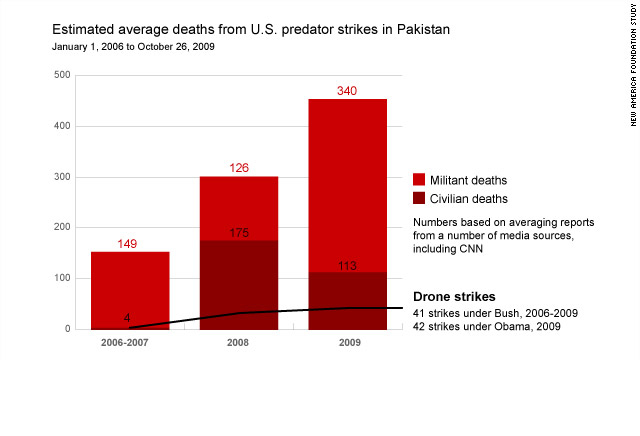
It’s a grand, almost inconceivable statement given that Anti Americanism is on a rapid rise and India / Pakistan are widely considered notorious Arch Nemesis in international relations today. Taj says inhabitants of Waziristan actually “welcome” drone attacks and dismisses all accusations of civilian casualties as Taliban propaganda. Basing this on the idea that almost no media are allowed in the area, she concludes there is no verifiable evidence, and therefore no reason for concern of civilian casualties. But mere logic would indicate otherwise. Although surgical, drones are not so precise to as to obliterate one individual at a time. When they strike, the range of damage inflicted by any drone is bound to cause peripheral damage, destroying more than just a singular terrorist.
Taj also too vehemently dismisses the concern that drones infringe on Pakistan’s sovereignty. She says greater Pakistan is oblivious to the more pressing priority of wiping out Taliban. And while I agree the Taliban is inflicting profound, perpetual and grave damage on Waziristan, greater Pakistan’s perceptions are important and not to be overlooked so easily.
Waziristan is but a fraction of Pakistan. If the majority of Pakistani’s see drones as an infringement of sovereignty, future cooperation with strategically poised Pakistan can become difficult. The alliance is already waning and one of politics’ golden rules is: perceptions matter. Whether or not there are exact numbers of civilian casualties, Pakistani’s are strongly against unmanned aircraft dropping bombs in their territory. Regardless of circumstances, the perception of an alliance with America, and our War on Terror is endangered by the drones. Hence arguments that drones are counter productive.
At what cost are we using drones to wipe out a few key leaders from militant and extremist groups? Might we accomplish the same success in hunting down terrorists by employing Pakistani forces to take these guys out themeslves using close cooperation with our counter terrorism, intelligence and military operations?
Some already argue that Islamabad tacitly works with the United States on drones in the north, however, the official and public stance of the Pakistani government is of staunch disapproval of drones. It’s a fair argument because without Islamabad’s approval, the United States would be in violation of international law, and protocol in using drones in Waziristan minus Pakistsan’s approval. So I buy the argument that Islamabad works closely in using drones in the north. But the fact that the government goes to the extent of constantly assuring its public that they disapprove of drones on record, is testimony to how offensive the use of unmanned aircrafts are in Pakistan.
So while our heightened use of drones might be effective in obliterating key leaders from the Taliban ranks for success in the immediate term, the consequences of drones entail potentially riling further anti Americanism which could compromise our interests in the future.
Cooperation is key, and I’m not convinced increased use of drones will help us engage Pakistan in the future.
Similar to his ratings drop at home, abroad President Obama is being accused of not living up to expectations. In DAWN news this week there’s an article entitled: “Obama’s Changing Tone” suggesting our President is reverting to foreign policy reminiscent of the Bush administration on Pakistan, and to an extent, the greater Muslim World. The idea is that Obama’s planned troop surge in tandem with ever toughening rhetoric post the Fort Hood Massacre and the Christmas Bomber, reflects leadership that’s not much different than former President Bush’s.
But on the contrary, our escalating presence in Pakistan is exactly what Obama promised. During the campaign trail, he made clear that his main focus was Al Qaeda and destroying terrorists in Pakistan (militants having spilled over from Afghanistan into Pakistan). The rhetoric was so hawkish, it actually became a sticking point before the primaries that Republicans and Democrats like Hillary criticized. Also, the media publicized his staunch rhetoric at length, so
Obama really has not changed tone on Pakistan: an intensified war matches his rhetoric from the start.
Plus is it fair to expect something radically different than the previous administration in the first place? Let’s not forget that it is often the political system and circumstances that drive leadership, and not vice versa. The fact is, America was already deeply engaged in two very problematic wars at the inception of Obama’s Presidency. He inherited an intensely worsening situation in Afghanistan that rapidly spilled across the border into Pakistan. President Obama anticipated this and is thus living up to campaign promises: a more hawkish foreign policy to Pakistan.
Which of course then raises the question: is hawkishness the right approach to Pakistan at this time? Pakistani’s certainly don’t think so. CIA drones have the entire country in an uproar, while Islamabad isn’t taking well to DC’s tacit encouragement of rapidly increasing Indian influence in Afghanistan, and even billions in aid from America is frowned upon with unprecedented magnitude. And it’s not that the Obama administration isn’t aware of skepticism. Rather, toughening policies are a matter of practicality.
My guess is that the President is thinking: we’re already in Afghanistan, the war is deteriorating into Pakistan, what’s the best way to mitigate the situation, secure the region just enough to exit in the next couple years while leaving behind more cooperative players in the region so as to ensure our energy and geopolitical interests in South/Central Asia.
Phew. Now there’s a dilemma. And when looked at from his possible perspective, the Pakistan quagmire is revealed as tremendously complex. It’s such a multifaceted, sweeping, consequential and changing situation that involves so many players who work within the confines of political systems that only history should be the best judge of whether Obama’s stance on Pakistan is constructive or progressive. And that itself is relative. So let’s not be surprised at his hawkishness. It was naive of anyone to expect otherwise in the case of Pakistan.
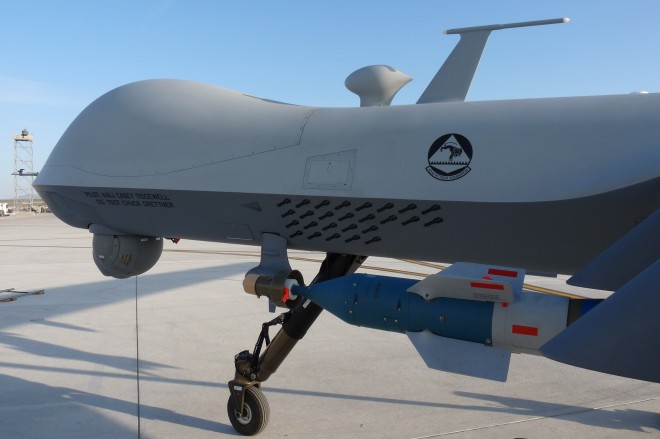
Defense Secretary Robert Gates met with officials in Islamabad to reiterate the importance of drone attacks, despite escalating reservations of their use amongst Pakistani’s. It’s been a polarizing issue from the onset because while it’s convenient to fly unmanned CIA predator aircraft over potential terrorist havens, they result in significant civilian casualties, and displaced persons. So it’s no surprise that over a year later, reconciling their use in Pakistan is still on the agenda.
For this reason, Secretary Gates announced a possibility of America providing “Pakistan with 12 unarmed Shadow aircraft”. Meaning the planes would not have a capacity to strike, but offer enhanced “surveillance capabilities under U.S. supervision”. It’s a fair decision and something I’ve suggested previously.
Gates also stressed the importance of militarily addressing all extremist groups because:
“It’s dangerous to single out any one of these groups and say, ‘If we could beat that group that would solve the problem,’ because they are in effect a syndicate of terrorist operators”
And almost simultaneously, Secretary Clinton unveiled The Afghanistan and Pakistan Regional Stabilization Strategy which sends an increase of 20-30% in civilian experts to both countries and “outlines plans to rebuild the Afghan farm sector, improve governance, and reintegrate extremists into society”. But this strategy of “reintegrating extremists” runs in contradiction to Secretary Gates’ aforementioned remarks.
Gates ruled out any possibility of reintegration calling for a consolidated attack on extremists suggesting that they work in “syndication”, while Cinton’s plan attempts to bring extremists back into the fold of moderate society.
It’s a stark inconsistency in our foreign policy. Because while I think Secretary Clinton’s idea notion of reintegration is more in tune with ground realities, and therefore viable, I figure Secretary Gates was being staunch in talks because finally relinguishing partial drone technology provided him with that margin of hawkishness. Either way though, one thing is certain, despite skepticism on both ends of the U.S. Pakistan relationship, cooperation is ever deepening.
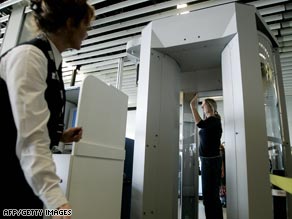
The Transportation Security Administration announced heightened security measures for inbound travelers to the United States from countries designated as “state sponsors of terrorism or other countries of interest”. Currently listed as state sponsors of terrorism are Iran, Cuba, Sudan and Syria while the “other countries of interest include Afghanistan, Algeria, Iraq, Lebanon, Libya, Nigeria, Pakistan Saudi Arabia, Somali and Yemen.
Fox News reports that effective Jan 1 2010, Pakistan International Airlines (PIA) is enhancing security checks for travelers to the United States, even though no direct flights even exist to America at this time. P.I.A. spokesperson Sultan Hassan explains: “passengers are subjected to special screening, including full body searches, in a designated area of the departure lounge. He said the airline had run advertisements in newspapers to warn prospective passengers of the increased safety measures. maintaining strict security standards at all airports for all flights”
I am of the opinion that such measures are useful if they help prevent terrorist attacks and offer peace of mind to travelers. In tandem with enhanced security directives however, should come enhanced diplomacy and perhaps specificity.
To prevent Anti-Americanism from the majority of travelers who are not terrorists, our embassies or appropriate State Department offices should amplify soft tools used in winning hearts and minds in the dozen countries whose passengers are now designated for special scrutiny.
Another way to ensure enhanced security measures don’t have unintended consequences might be a U.S. led international protocols. If all incoming travelers to the United States from a country like Pakistan are going to be searched at new, exceptional extents both in Pakistan and upon arrival to the United States, then it could be useful to implement some best practices protocols that all international Transportation authorities adhere to. For instance, to avoid instances where authorities might misuse liberties to scrutinize and make travelers feel unnecessarily uncomfortable is having a visible camera present at all times.
In the same way some California police departments are now installing cameras in officer helmets to help prevent abuse of authority and make others feel comfortable knowing there is oversight and evidence should recourse be required, T.S.A. authorities might have visible cameras present in areas where passengers from select countries like Pakistan are subject to enhanced scrutiny.
I think the new T.S.A. law could be an effective one. I don’t think most passengers would object to tightened security for the sake of safety so long as they feel they are being treated with care and there is little chance of mistreatment. So it’s important that as American’s, when we expand laws that affect the international community, we still uphold what we pledge allegiance to each day: “liberty and justice for all”.
If you could spend a day chatting with anyone from history who would you pick? This question came up over dinner with friends on Saturday night. John Lennon, Socrates, Buddha, Michael Jackson, Jesus, Oscar Wilde, the Prophet Mohammad, Cleopatra and Einstein were some of the names that came up.
We stopped at Einstein and got to thinking: In helping prompt the invention of a nuclear bomb, is Einstein worthy of the historical acclaim he receives? Soon into discussion, we realized that the question itself relies on the assumption that the nuclear bomb is capable of nothing more than destruction. Which led us to thinking of deterrence.
Has the invention of the atomic bomb perhaps prevented more conflicts, therefore saving more lives than it has taken?
Deterrence theory suggests that when two countries obtain the nuclear bomb, the consequential risks of using them become so high, that the likelihood of usage decreases. Meaning the monumental destruction that would result from using an atomic bomb on another country also equipped with the bomb who would retaliate and cause similar monumental destruction outweigh interests to ever use the bomb. Another way to put it is that if two countries have the bomb, they are less likely to use it because Mutual Destruction would take place.
Mutually Assured Destruction (MAD) is a military strategy related to deterrence that suggests states equipped with enough nuclear armaments to annihilate one another become less likely to use nuclear bombs because it would ultimately destroy ones own state. Thus, proponents of deterrence assert a nuclear capacity actually decreases the likelihood of conflict.
It can sound dicey and common criticisms of the idea question what happens if a government is headed by a fanatical, or irrational leader with no rational regard for consequences or fear of mutually assured destruction. Another criticism relates to the arms race that ensues when two countries spend billions of dollars amassing arms, increasing deficits and applying resources away from the daily needs of citizens over long periods of time.
But deterrence was effective for decades during the Cold War. The United States and former U.S.S.R., engaged in a massive arms race equipping themselves with enough nuclear power to completely destroy one another and proxy wars were fought, but direct combat and nuclear war were avoided.
South Asia might be another example. India and Pakistan have fought three wars since Partition in 1947, and despite perpetually volatile (mostly hostile) relations, war has been avoided since both countries tested their nuclear bombs (Kargil being a conflict, not a full scale war).
So can deterrence work today in the case of Iran? There’s an article in the Economist this week underscoring the first task which is ascertaining the motive for Iran’s nuclear ambitions. Are they after a bomb, or nuclear technology for civilian purposes? Either way, President Obama keeps “all options” on the table for future dealings. That’s diplomatic speak for, “the United States will use force if necessary”. And that itself could be why Iran is seeking the bomb.
Would a bomb bring decreased chance of conflict because states would think twice before using “all options”? Might it coerce Iran and other states to work things out diplomatically given escalated risks involved in conflict with a nuclear power?
I don’t know whether deterrence would apply in the case of Iran and am vehemently opposed to nuclear proliferation. Plus, considering the changing face of warfare given an age of terrorism, non-proliferation should be a primary, international aim. But the deterrent angle is rarely considered in discourse on Iran and I think scholars and policymakers should delve into why or why not the theory would apply to Iran’s nuclear ambitions.
Reason We Should Remain Neutral –Quite simply: “After two terms as prime minister, he’s remembered for rampant corruption, nuclear proliferation, and his penchant for cozying up to Islamist militants“
Pervez Musharraf or Asif Zardari:
Reason We Should Remain Neutral –Well: “at the behest of Washington, General Pervez Musharraf, who was president at the time, arranged the amnesty that allowed Zardari and his wife, Benazir Bhutto, to return from exile so she could lead her Pakistan Peoples Party in elections. Bhutto was assassinated, and her husband became prime minister. Not without reason, many Pakistanis who are angry about Zardari’s corruption and ineffectiveness hold the United States responsible for imposing him on their country”
Pakistan Military:
Reason We Should Remain Neutral –Perpetuating rampant blame that one too many American backed military dictators have prevented democracy from ever taking root in Pakistan can’t help growing weariness of cooperation with our government.
Noteworthy example –Backing General Zia-ul-Haq in the 1980’s with his leadership key to training the Mujahideen (now known as Al Qaeda) to oust the Soviets from Afghanistan. Not coincidentally, Zia’s regime is remembered as the time Pakistan shifted from being a socially progressive, and moderate Islamic state, to imposing severe, fundamentalist religious policy reforms.
Chief Justice Iftekhar Chaudhry:
Reason We Should Remain Neutral: Under a sugar-coated banner of “democracy”, the Chief Justice is too blatantly partisan for us to support. His recent decision to repeal the National Reconciliation Ordinance, which set wheels in motion for regime change is widely understood as nothing short of a ploy for power and done in the politics of retribution.
This leaves neutrality as not only our most wise option, but also perhaps our most ethical route. Restraint in supporting any particular regime could mean history points one less finger in our direction should anything go less than perfect as we deepen involvement in Af-Pak. Simultaneously, neutrality assures Pakistani masses who are increasingly skeptical of cooperation with the United States that they have 100% autonomy in political processes.
Well publicized neutrality on a looming regime change could be a valuable opportunity to demonstrate a genuine interest in Pakistan as they transform politically and we require their support in the War on Terror.






 Zainab B. Jeewanjee
 Zainab Jeewanjee