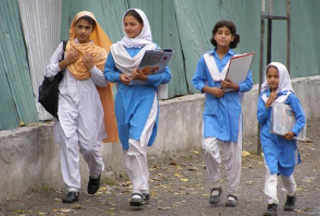
The big news in Pakistan right now is about the newly elected Prime Minster, deteriorating diplomatic relations with the United States and match fixing charges on star cricketers, but there is a less publicized, but important story that CNN published last week “Family’s 20 Kids Highlight Pakistan’s Population Explosion”.The article warns that Pakistan is currently among the top ten most populous countries and by 2050 will rank third only behind China and India. The author’s attribute this population explosion to a lack of birth control, and insufficient access to family planning information. And while birth control and family planning organizations are certainly effective means to control population growth, dissemination of information that counters prevailing cultural norms and attitudes that discourage limiting family size are also important. The article accurately describes “a majority of the population – 70% is largely illiterate and resides in rural areas lacking the most basic services” and it is in those regions in Pakistan that are most influenced by the deep conservatism that often views birth control as “un Islamic”, but does not account for the large number of efforts that have been made to curb illiteracy in these areas. Well known nonprofit organizations including The Citizens Foundation and Development in Literacy are focused on educating Pakistan’s rural populations and DIL in particular focuses on countering female illiteracy.
DIL claims “empowering underprivileged students, especially girls” as part of their “student centered model schools in remote areas of Pakistan” as part of their mission statement. And female empowerment is exactly the kind of education that can help disseminate valuable information to facilitate controlling Pakistan’s population bulge. Successful NGO’s in the Microfinance space including Grameen Bank have demonstrated success in assisting with a reduction of birth rates of their members. Like DIL, Grameen Bank claims female empowerment as part of their mission, but unlike DIL, puts in place more direct mechanisms to achieve such objectives. Their “sixteen decisions” is testimony to a commitment to female empowerment making finance contingent to social development goals, including educating children, cleaner homes, maintaining and caring for one’s health, personal discipline, and cooperation with other females in the community. Number 6 on Grameen’s list explicitly has women pledge “We intend to have small families” and through these guidelines their microfinance model is supplemented by female empowerment strategies that encourage family planning and overall develop the social environment in which they live. Similarly, Microfinance organization Pro Mujer provides poor women with mechanisms for empowerment in Latin America in addition to development opportunities through lending capital. Their approach reads:
While most microfinance institutions focus only on financial services, Pro Mujer uses a holistic approach, making sure that clients are better prepared physically, emotionally and economically to improve their lives and that of their children. Education is one strategy. Pro Mujer teaches women about domestic violence, communication skills, and women’s rights, using workshops and group discussions to raise their awareness about leadership, gender issues, and self-esteem. It also links clients with other organizations for counseling, legal assistance, and education and vocational training programs. Women also become empowered as they join and become active in their communal associations. Pro Mujer organizes women in groups of 18 to 28 clients and teaches them how to organize and manage a community bank. The women elect a board of directors to run the meetings, form a credit committee to approve loan applications, and create solidarity groups to guarantee each other’s loans. Members of the communal banks gain confidence and self-esteem as they successfully borrow and repay their loans, set up savings accounts, and become more aware of their own potential and abilities. What’s more, they apply their new skills as leaders in other community organizations.
Education + Empowerment for development
Pro Mujer and Grameen Bank are first and foremost Microfinance institutions, as DIL is to education. These organizations converge in their commitment to “women’s empowerment”, but diverge in their mechanisms to achieve that objective. Microfinance, and education are important development goals for a larger purpose of empowerment so it is important that direct efforts are put in place that have a positive impact on female empowerment. Nonprofit organizations have a profound responsibility not only to those they seek to help, but to their donors, and women’s empowerment must be more than just a catch phrase in Pakistan. It requires a serious commitment by organizations who want to have a positive, long term and sustainable impact for women. Education is an important starting point, but the work will not end there. Given the population growth numbers, empowerment must increasingly become part of the plan to develop Pakistan. Education focused NGO’s are in a good position to begin such models of development, especially if empowerment is a stated part of their mission.
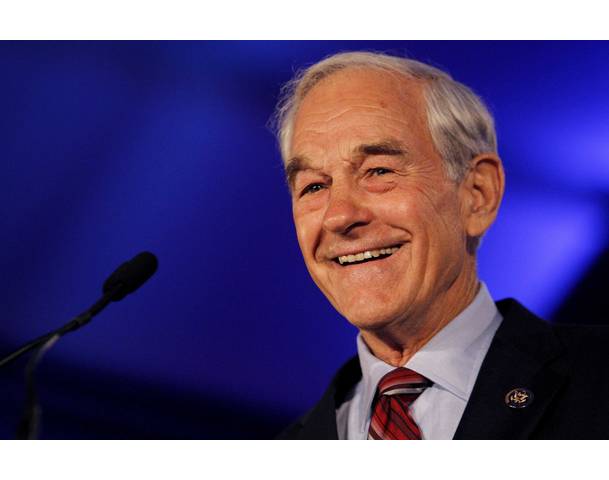
Ron Paul speaks during the Republican Leadership Conference: 2011
Is it just me, or are seemingly incessant GOP debates the past few months allowing President Obama’s lack of public exposure to seem more and more like solid leadership? The Republican lineups simplistic, square and reactionary focus on “Anti-Obama” rhetoric especially on foreign policy has highlighted a resoundingly hawkish stance on Iran with little attention to our current engagements in Afghanistan and Pakistan. And while it may be expedient amongst a certain political base to try and one-up each other in aggressive foreign policy talk, only Ron Paul challenges the party line on Americas role in the world.
When it comes to Pakistan, compared to Democrats Republicans have a consistent history of preferring to work closely with the military establishment in Islamabad. While there is a level of bipartisanship post 9/11, (case in point is Obama’s continuation of Bush era drone use with little debate), Republicans have through the Cold War and beyond preferred dealing with the military establishment rather than focusing on democratic, or liberal institution building. Which is not necessarily an entirely erroneous policy; part of the rationale is that state building is expensive in blood, toil, time and treasure and rarely feasible. Further, there are an endless number of constraints and uncertainties that profoundly hinder institution, or democratic state building in a place like Pakistan, rendering Republican policies simply pragmatic.
Which brings us to current policy: the bipartisan endorsed “Enhanced Partnership with Pakistan Act” (S. 1707) enacted in 2009 has yet to bear tangible fruit. Granted the aforementioned that institution building is time exhaustive, the fact remains that Pakistan has deteriorated politically, in the realm of security and economically. And having watched everyone from Gov. Romney, Sen. Santorun, Gov. Perry, Rep. Bachmann and yes even the soft spoken Gov. Huntsman, reiterates hawkish foreign policy while refusing to acknowledge a need for meaningful improvement. In the Republican camp only Rep. Ron Paul’s extreme calls for an isolationist posture offer some semblance of change. And because his prescriptions have yet to be tried, the utility of his ideas have yet to be tested. And now may be a time to consider his stance since they call for exactly what the Pakistani public wants right now.
Referring to our policies to Pakistan as nothing short of “Bombs for Bribes” Ron Paul acknowledges the nobility, yet inherent futility in calling for democratic institutions in places of strategic engagement. He understands that we are already engaged in “130 countries” with “700 bases around the world” and in this speech against the Enhanced Partnership with Pakistan Act, he bluntly explains:
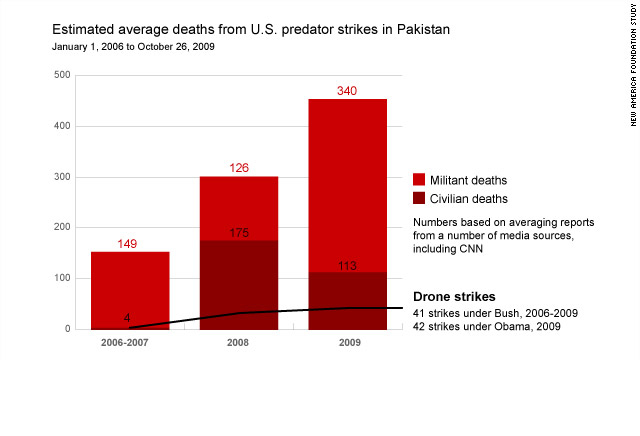
“the way we treat our fellow countries around the world is we tell them what to do and if they do it, we give them money. If they don’t we bomb them. Under this condition we are doing both. We are currently dropping bombs in Pakistan and innocent people get killed. If you want to promote our good values and democratic processes, you can’t antagonize the people”
He goes on to suggest dialogue and trade as alternatives to current policy. And although his statement is simplistic and was made in 2009, it highlights Ron Paul’s isolationist, more economically focused prescriptions on foreign policy that seek to reduce our military footprint abroad based on pragmatic constraints, like military and fiscal overstretch. And these calls seem more reasonable than before, especially when it comes to Pakistan and the fact that our aid has yet to yield satisfactory results. So while the Obama administration continues engagement and GOP candidates refuse to acknowledge much concern over current policy to Pakistan, can Ron Paul really be the only alternative available?
Someone once considered completely out of left, excuse me, right field, could be the reminder we need to moderate our engagement with countries of interest. Because what is interesting is that current rhetoric in Pakistan is very much in line with Ron Paul’s ideas. Ron Paul isn’t touting conspiracy theories, nor does he echo far left foreign policy thinkers like Noam Chomsky. Rather, his past statements on our engagement in Pakistan as “inadvertently causing chaos” and “violating security and sovereignty” are exactly what the average Pakistani seems to feel and hears about in their mainstream TV, and print media. Takeaway for us means, it’s a perception the is realistic; perhaps more so than current policy reflects.
In fact, legendary cricket star turned politician Imran Khan’s recent surge in popularity is in large part due to his highly critical foreign policy rhetoric that vociferously calls for D.C. to adopt a more isolationist stance so Pakistan might reclaim lost autonomy. Imran Khan steadily built support for his party on the continued observation that America’s “War on Terror” has intensified insecurity and his subsequent promises to curtail American involvement is a first step in alleviating Pakistan’s problems.
He underscores Ron Paul’s sentiment that perceptions urgently matter in a climate where American intervention is increasingly received hostilely. Both politicians insistence on winnings hearts and minds renders Ron Paul’s foreign policy prescriptions worthy of consideration. Imran Khan’s recent ascendency and Governor Paul’s gradually increasing support marks a convergence in shifting to a direction of a less militarized approach to Pakistan. Two men once considered out of the realm of politician viability now increasingly resonate in their respective publics; policymakers ought to take note.
Well, I called it: Pervez Musharraf is staging a return to Pakistani politics. Launching his new “All Pakistan Muslim League” (AMPL) party this week in a plan to return to the country, the former General will have to face a tremendously skeptical, increasingly hardened citizenry and even tougher adversaries in the judicial branch and opposition parties. In an Al Jazeera special report, Musharraf’s former Legal Advisor Ahmed Raza Kasuri insisted that should tacit approval come from the country’s military establishment and most importantly, with support of a “silent majority” Kasuri measures at 60-65% of moderate Pakistani’s, Musharraf will garner required support to win in future elections. Political analyst Imtiaz Gul insisted otherwise explaining not only would the military establishment be weary of backing Musharraf who cost them valuable political capital when he sacked the judiciary in 2007 and issued a State of Emergency, but also because he has “lost relevance” in Pakistan today.
Gul makes a valuable point: without relevance a political figure is climbing an uphill battle of garnering credibility, and because credibility is deeply intertwined with legitimacy, Musharraff undoubtedly faces a bumpy comeback.
But relevance is not necessarily an impediment to power in Pakistan since the current situation lends a valuable opportunity for it to be readily earned. Current President Asif Zardari usurped such an opportunity when his wife was tragically murdered and assumed leadership, riding the waves of sympathy that swept the nation to win elections. While that “relevance” is waning now, it was enough to allow him a seat of power for 2 years and actually shake off some of the “Mr. 10%” infamy, which is a far larger feat than what Mushrraf faces today.
While the main opposition party leaders Asif Zardari and Nawaaz Sharif are forever bogged by allegations of corruption, Musharraff’s criticisms revolve around issues of “democracy”.
His most vociferous opponents will cite his sacking of the judiciary, coup to power, and 9 year dictatorial reign as subverting democracy in Pakistan. But such criticism of Musharraf is both misleading and mostly hyperbole.
The deficient part of such rhetoric lies in lacking recognition of liberalism. Notions of individual human rights and liberty, free trade, separation of church and state and religious tolerance are erroneously assumed to come only with democratic leadership in Pakistan. On the contrary, liberal policies extending specifically to women’s rights, fostering regional cooperation and trade, namely with India, opening domestic markets, such as free media and holding free and fair elections were successfully carried out previously by Musharraf.
Ironically, under the title of “dictator”, he brought forth more liberal triumphs than any other leaders in my lifetime. And it is important to not confuse democracy with liberalism. Fareed Zakaria makes this distinction in tweaking “Democratic Peace Theory”. His ideas are described:
“democracy is defined in terms of the process by which a government is selected. In contrast, “constitutional liberalism” is defined not by how the government is selected, but rather b the extent to which the society and its institutions protect individuals’ basic rights (to life, property, freedom of speech, and religion)”
Thus basic tenants of a such liberalism, to a fair extent were brought forth by Musharraf. And as political change seems imminent in Pakistan, if we continue looking to political theory one might advance a case for liberalism by way of identifying Musharraf’s opposition. If we take a voluntaristic view of government, wherein heads of states are integral parts of policymaking as opposed to looking mostly at system wide determinants of policy, one finds that not only corruption, but the fact that both Asif Zardari and Nawaz Sharif are part of feudal, landowning elites in Pakistan is meaningful. With that background, and likely subsequent value sets which are diametrically opposed to liberal notions of liberty and individual rights, Pakistan runs the risk of remaining socially, and economically stagnant under their leadership. Moreover, with the U.S. winding down our war in Afghanistan and shifting in to Pakistan, more than ever liberal ideals are needed.
No amount of drones, target killings or CIA intervention have yet quelled extremism let alone terrorism in Pakistan since 9/11. Modernity and liberalism are Pakistan’s best bet at framing a solution for the long run.
It cannot be an overnight shift, but it will require leadership that espouses liberal ideals. Because without credible experience in upholding individual rights and freedoms, only halfhearted appreciation will come for liberalism and even weaker attempts to implement them.
Is Musharraf the solution Pakistan is looking for? I do not know. But until new, more modern and liberal alternatives in political leadership are available, he just might be the best option now.
It’s my first week in Denver where I’ll be attending graduate school for the next two years and I’m soaking in how kind this city is. It is the most laid back, genuine U.S. City I’ve experienced. The sincerity with which people prod “No, where are you really from?” when I initially respond “California”, is priceless. I feel like a novelty here. At an Eid Celebration last night, even a local of Pakistani descent pointed out “Wow, the guys are going to flip over you. There are no ethnic girls in Denver”.
“Ethnic”? I’ll take it; I realize I’m getting a pass for being a Californian female. Because in light of increasingly disheartening news from Pakistan, be it about floods, match fixing in cricket, and mostly terrorism plaguing the country since 9/11, Pakistani’s have captured the American state of mind in a less than appealing way. Once indecipherable on a world map for most Americans, Pakistan emerged as our stalwart ally in victory after 40+ years of Cold War. Yet as we turn to Islamabad again to fight a War on Terror, we possess a deep skepticism of Pakistani intentions.
Since September 11, every time I come to the States or western countries I feel people have the wrong impression about Pakistan as a terrorist nation. I just wanted to declare that we are very friendly, loving and caring people, and we want peace in this world as much as Americans and the rest of the world wants.
There are extremists in every religion, but just because of them you cannot judge the whole country as a terrorist nation. I just wanted to get this message across as a Pakistani
In plain terms Qureshi clarified that his country is a mostly moderate nation where people expect the same peace and security desired by all people. He reminded us of Pakistan’s humanity, directly countering the “transactional” ties that progressively complicate our understanding of Pakistan. Fareed Zakaria might agree. In a recent piece, he eloquently concurred:
Across the Muslim world, militant Islam’s appeal has plunged. In the half of the Muslim world that holds elections, parties that are in any way associated with Islamic jihad tend to fare miserably, even in Pakistan.
In his article “We’re Safer Than We Think” Zakaria points out that Muslims in Pakistan and beyond are if anything, less safe from terrorism than we are as they suffer the brunt of radical Islam’s consequences.
Over the last few years, imams and Muslim leaders across the world have been denouncing suicide bombings, terrorism, and Al Qaeda with regularity….The fatal problem with these kinds of attacks is that they kill ordinary civilians—not U.S. soldiers or diplomats—and turn the local population against Islamic radicals.
With more thorough detail, Zakaria’s is saying exactly what Qureshi did; Pakistan is not a country of terrorists. So next time I get asked where I am “really” from, I might just say “I’m from Asiam Qureshi.’s country”.
“30 years of this whole business that started with the jihad against the Soviet Union is what we are trying to deal with the aftermath of. Its 30 years of these groups, supporting them, funding them, the opening of radical madrassahs in various parts of the country. Now I think we’ve done a decent job in the last two years of beginning the cleanup”
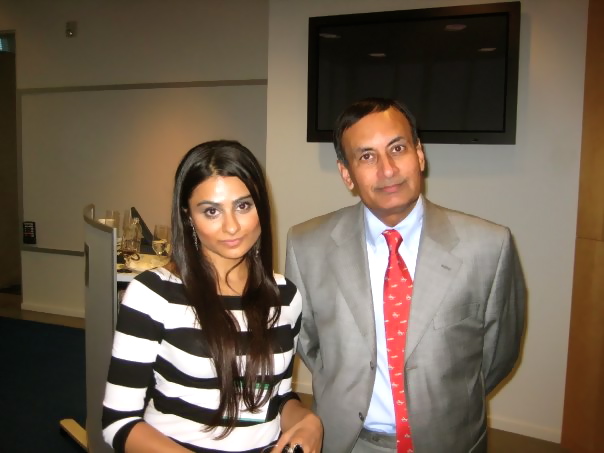
Pakistan is serious about cleaning up terrorism, but the mess runs deep. And If you want to share in an insightful discussion on the Wikileaks reports, I recommend watching Charlie Rose from last night. Because Pakistan pulled out the big guns in responding to the reports that suggested their Interservices Intelligence Agency is “aiding” the enemies in Afghanistan. Ambassador Hussain Haqqani was Rose’s guest and spoke directly to American anxieties that Pakistan is not entirely interested in ousting terrorists from the region. Specifically responding to the question of ISI links to the Taliban, Haqqani said:
“It goes back to the soviet invasion of Afghanistan. The CIA and ISI both worked with the Mujahedeen who morphed into Taliban. But now the Pakistani military and ISI are conducting successful military operations in SWAT and South Waziristan.
He elaborated:
“We’ve Taken out extremists and 74 ISI personnel have been killed in the past two years. With as many as 233 injured. That alone should be sufficient to convince people that was then and now is now and Pakistan is standing firmly on the side of those who want to eliminate the Taliban and extremists”
The statistics were particularly hard hitting. They brought a human element to our somewhat sterilized discussion about Pakistan here in the states. Being geographically removed, and with a vastly distinct culture, we are mostly informed of how the government in Islamabad deals with our administration in D.C., resorting to diplomatic sound bites and news for our information. But Haqqanis statistics provoke us to realize that just as we have struggled in Afghanistan, Pakistan too has sacrificed greatly as an ally in our war and continues to be deeply invested in combating terror.
Haqqani reminds us that the Wikileaks story is just that; a whistleblower. Without subtracting from the value of revealing what governments might otherwise keep classified, the Ambassador offered facts that quell sensationalized reception of the reports.
Rose asked weighty questions in trademark straightforwardness allowing us a chance to get answers to that the Wikileaks story leaves us lingering with. For instance, “what keeps Pakistan from doing more”; a question even those with ample knowledge and understanding of history and ground realities who can put the Wikileaks story into context sometimes wonder. Rose speculated it was a concern with India, and a fear of U.S. withdrawal. The Ambassador responded:
“There is a concern that India is not yet reconciled to our nationhood and statehood. Those are concerns reflected in public opinion and government has to deal with view that the US has not been a consistent friend of Pakistan and if we do too much at the behest of US they could leave us in the lurch and walk away again. The Biggest concern is the US can actually leave projects incomplete it has happened in the past US assistance and economic aid suspended arbitrarily and at short notice. Things have been left incomplete. They have had a very difficult relationship in the past 6 decades. We are trying tot address the totality of these issues”
It is no secret that India Pakistan relations are a primary driver of action in South Asian politics so the real nugget in the Ambassador’s above response is the talk of Pakistani Public opinion.
One of the first rules we learn in politics is that perceptions matter and what our pundits and political speechwriters have left out of the conversation is how Pakistani opinions factor into Islamabad’s policymaking.
Ambassador Haqqani did an eloquent job of explaining this tremendous sensitivity with which Islamabad must balance its interest in continuing bilateral cooperation with D.C. while alleviating a rampant fear amongst Pakistani citizens that the United States might not be trustworthy, or as the Ambassador put it “ungrateful” for all their country does.
And although Ambassador Haqqani concluded on a positive note , citing increased military cooperation in fighting terrorism and tripartite agreements on trade, he gave viewers a clear view of the “totality” and complexity of issues from the Pakistan side.
To tally Islamabad’s task list thus far: in addition to 30 years of deep cleaning, speedy recovery from loss of life, toil, treasure and time, one must add mending 60 years of mistrust with the worlds superpower to Pakistan’s list of things everyone wants done yesterday.
So let’s think twice, maybe even thrice before sponging the Wikileaks reports without an understanding of context and implicating Pakistan for not doing enough. Prime Minister Cameron, that’ means you.
Futility of Military Motivated relations Minus Democratic Input
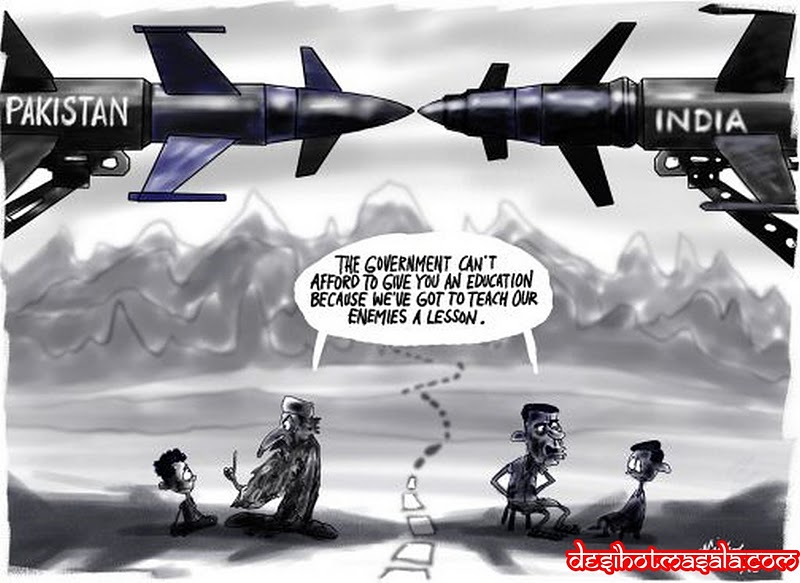
While working in D.C. some years back almost every Congress person, Think Tank and academic I came across was certain on one thing on nuclear proliferation: if an atomic bomb ever goes off again, it’s going to happen in South Asia. It was a dismal but resounding notion that I have even heard expressed amongst South Asians. Profound mistrust, three wars, land disputes, all spurred by a gory colonial partition 60 odd years ago has left Pakistan and India scarred in a way that makes cynics of even the best of us.
A realist might tell you that nuclear armed neighbors by way of deterrence have allowed India and Pakistan to refrain from war since testing their atom bombs, but even they would conclude war is inevitable. Liberals would make a case for enhanced trade to gradually spur economic interdependence to help avoid conflict, which is perhaps the most palatable idea, but statistics show that deepening trade between India and Pakistan has not yet improved relations:
“trade between India and Pakistan was at its highest ever in the year following Kargil. Even the Mumbai attacks have not significantly dented India-Pakistan trade relations. Pakistan trades with 100’s of countries, India being the 9th largest trading partner”
So if deepening trade and deterrence haven’t yielded what confidently could be considered lasting peace, what will it take? I’m of the opinion that realist and liberalist policies must be accompanied by ground level, macro scale diplomacy. Because while deterrence satisfies the all mighty military institutions, and trade satisfies highly influential business elites there’s little attention given to the masses; and by masses I mean billions of South Asians who have yet to even fathom peace as a possibility.
Call it ground level diplomacy, soft power or good ol’ winning hearts and minds: it’s the missing ingredient in bilateral relations. Resident Indian’s and Pakistani’s have a perceived animosity for one another that verges on the irrational. Catapulting cricket matches between both countries as akin to war, hate crimes against Muslims in India to cross border terrorism is absurd for states divided by man made, post colonial borders.
“India’s soft power, its true of music, dance of arts, yoga, aryuveda, even cuisine. With these examples come the sense that in todays world its not the side of the bigger army that wins, it’s the one that tells a better story. And india is the land of a better story. Stereotypes are changing. Today people in Silicon valley people talk of IIT’s with same reverence of MIT”
Why not apply that soft power in Pakistan? And vice versa. I laud the Aman ki Asha initiative for doing exactly this. Launched by Pakistani media conglomerate Geo T.V. and on the Indian side, the Times of India, both companies have taken up the task of engaging both countries using soft power. As media houses, through television, print and web placements, they engage masses directly, finally sidestepping politically or economically motivated discourse both countries are used to. THeir mission statement reads:
Public opinion is far too potent a force to be left in the hands of narrow vested interests. The people of today must find its voice and force the rulers to listen. The awaam must write its own placards and fashion its own slogans. The leaders must learn to be led and not blindly followed. Skepticism about the given is often the genesis of faith. This skepticism has been brewing. It can be unleashed to forge a new social compact between the people of this region. A social compact based on a simple yet powerful impulse – Aman ki Asha. A desire for peace.
Aman ki Asha taps the widespread but underrepresented sentiments of commonality shared by South Asians. By engaging the masses directly with soft power it’s is a brilliant first step at mitigating the most potent problem in bilateral relations: mistrust. And what is most brilliant about the initiative is that could have teeth. Unlike countless other proposals for peace, Aman ki Asha uses mass media to speak to masses directly with a specifically outlined agenda:
“Issues of trade and commerce, of investments, of financial infrastructure, of cultural exchanges, of religious and medical tourism, of free movement of ideas, of visa regimes, of sporting ties, of connectivity, of reviving existing routes, of market access, of separated families, of the plight of prisoners, will be part of our initial agenda. Through debates, discussions and the telling of stories we will find commonalities and space, for compromise and adjustment, on matters that have bedevilled relations for over 60 years”
It sounds promising, because although I do not anticipate this dissemination of smart power to yield results immediately, if it’s done consistently it might have a capacity to democratize the push for peace. It ought not to be the military, or economic institutions setting the agenda, rather, policies should reflect the will of the people. Aman ki Asha is a hugely cooperative step in bilateral ties. More peaceful relations in South Asia can begin by reminding the masses of what my Pakistani born and raised mother said when she came back from a trip to India in 2005 “they (Indians) eat the same food, sound the same, act and even look the same as us”. With such strong commonality felt amongst everyday people, one questions the legitimacy of policymaking that has historically divided, rather than united South Asians. And if that sentiment disseminates, albeit gradually, there’s much to hope for in the future.
Joe Biden Says Pakistan is a BIgger Concern than Afghanistan
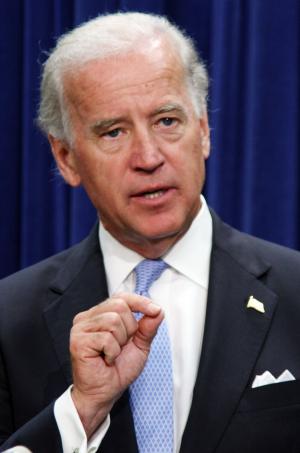
Vice President Biden was on Larry King this week slating Pakistan as America’s larger concern than Afghanistan. He explained “Pakistan is a big country…has nuclear weapons that are able to be deployed and has a real significant minority of radicalized population and a not complete functional democracy in the sense we think about it” . Which sounds tremendously pressing and makes for catchy prime time television, but let’s delve into his rationale one by one, and assess his concerns.
Pakistan is certainly “a big country” with a “real significant minority of radicalized population” and the Vice President is dead on with this issue. Among the top ten largest countries in the world, Pakistan is still developing in a relatively underdeveloped region, and houses one of the largest refugee problems on earth. So even a minority of radicalized militants is enough to wreck havok on Pakistan, as it has been. And likewise, that minority population single handedly deters our fight in fighting the war on Terror.
And this truly defines the Pakistan quagmire: dealing with extremist militants in an underdeveloped, politically volatile war zone.
Biden also said Pakistan “is not a completely functional democracy in the sense we think about it”, which is a statement of fact. However it’s a misplaced concern because it’s not necessarily a hindrance to our interests at this time. In our alliance with Pakistan Democrats have historically sided with civilian governments, while Republicans have preferred to deal with military regimes in Islamabad. So Biden’s issue with Pakistan’s brand democracy is an inherent tension that has existed in this alliance for decades.
It’s a cause of tension over the years because we’ve effectively dealt with Military regimes in the past, and other international players such as China, and India have also found it effective to deal with military led Pakistan. So Democrats like Vice President Biden insisting on American style democracy is not always necessary.
In a perfect world, our allies would have fully functioning democracies akin to ours, but the reality is our brand of governance is not easily applied in places like Pakistan.
Plus there’s a perceived arrogance that comes along with our leaders being critical of governments that function differently than ours. I think the Vice Presidents suggestion makes for a nice talking point on democracy for tv viewers, but offers no practical insight let alone a solution to Pakistan as our foremost concern.
Finally, the Vice President cited “vulnerabilities” regarding the safety of Pakistan’s nuclear weapons. Nuclear non proliferation is a bipartisan, and to a large extent, global cause of anxiety that few will argue against. But how realistic is a notion of Pakistan’s nuclear arsenal being vulnerable to non military or non state actors? It’s a nightmarish scenario that catapults Pakistan atop our immediate Foreign Policy agenda because the mere sliver of possibility proliferation could happen entails catastrophically high risks that no one is willing to take. But such alarming rhetoric doesn’t inform us of the likelihood of this happening. It just frieghtens us, deters diplomacy and ultimately undermines the U.S. Pakistani alliance. Such rhetoric, minus substantial evidence should be shared amongst policymakers and government officials pertinent to the situation. Otherwise, the rhetoric can be counter-productive in engaging allies like Pakistan.
Overall, the Vice President’s comments were consistent with the Obama Administration’s promises of an increasingly narrow focus on our Foreign Policy to Pakistan.
The most provocative piece I’ve seen on drones in Pakistan was published last week. Not the most detailed, well researched article (the New Yorker takes the cake so far) but certainly the most confrontational. Farhat Taj writes in the Daily Times that International media, including American and Pakistani reports critical of drone use are totally unfounded. Vehemently, Taj writes:
” The people of Waziristan are suffering a brutal kind of occupation under the Taliban and al Qaeda. It is in this context that they would welcome anyone, Americans, Israelis, Indians or even the devil, to rid them of the Taliban and al Qaeda”
It’s a grand, almost inconceivable statement given that Anti Americanism is on a rapid rise and India / Pakistan are widely considered notorious Arch Nemesis in international relations today. Taj says inhabitants of Waziristan actually “welcome” drone attacks and dismisses all accusations of civilian casualties as Taliban propaganda. Basing this on the idea that almost no media are allowed in the area, she concludes there is no verifiable evidence, and therefore no reason for concern of civilian casualties. But mere logic would indicate otherwise. Although surgical, drones are not so precise to as to obliterate one individual at a time. When they strike, the range of damage inflicted by any drone is bound to cause peripheral damage, destroying more than just a singular terrorist.
Taj also too vehemently dismisses the concern that drones infringe on Pakistan’s sovereignty. She says greater Pakistan is oblivious to the more pressing priority of wiping out Taliban. And while I agree the Taliban is inflicting profound, perpetual and grave damage on Waziristan, greater Pakistan’s perceptions are important and not to be overlooked so easily.
Waziristan is but a fraction of Pakistan. If the majority of Pakistani’s see drones as an infringement of sovereignty, future cooperation with strategically poised Pakistan can become difficult. The alliance is already waning and one of politics’ golden rules is: perceptions matter. Whether or not there are exact numbers of civilian casualties, Pakistani’s are strongly against unmanned aircraft dropping bombs in their territory. Regardless of circumstances, the perception of an alliance with America, and our War on Terror is endangered by the drones. Hence arguments that drones are counter productive.
At what cost are we using drones to wipe out a few key leaders from militant and extremist groups? Might we accomplish the same success in hunting down terrorists by employing Pakistani forces to take these guys out themeslves using close cooperation with our counter terrorism, intelligence and military operations?
Some already argue that Islamabad tacitly works with the United States on drones in the north, however, the official and public stance of the Pakistani government is of staunch disapproval of drones. It’s a fair argument because without Islamabad’s approval, the United States would be in violation of international law, and protocol in using drones in Waziristan minus Pakistsan’s approval. So I buy the argument that Islamabad works closely in using drones in the north. But the fact that the government goes to the extent of constantly assuring its public that they disapprove of drones on record, is testimony to how offensive the use of unmanned aircrafts are in Pakistan.
So while our heightened use of drones might be effective in obliterating key leaders from the Taliban ranks for success in the immediate term, the consequences of drones entail potentially riling further anti Americanism which could compromise our interests in the future.
Cooperation is key, and I’m not convinced increased use of drones will help us engage Pakistan in the future.
Similar to his ratings drop at home, abroad President Obama is being accused of not living up to expectations. In DAWN news this week there’s an article entitled: “Obama’s Changing Tone” suggesting our President is reverting to foreign policy reminiscent of the Bush administration on Pakistan, and to an extent, the greater Muslim World. The idea is that Obama’s planned troop surge in tandem with ever toughening rhetoric post the Fort Hood Massacre and the Christmas Bomber, reflects leadership that’s not much different than former President Bush’s.
But on the contrary, our escalating presence in Pakistan is exactly what Obama promised. During the campaign trail, he made clear that his main focus was Al Qaeda and destroying terrorists in Pakistan (militants having spilled over from Afghanistan into Pakistan). The rhetoric was so hawkish, it actually became a sticking point before the primaries that Republicans and Democrats like Hillary criticized. Also, the media publicized his staunch rhetoric at length, so
Obama really has not changed tone on Pakistan: an intensified war matches his rhetoric from the start.
Plus is it fair to expect something radically different than the previous administration in the first place? Let’s not forget that it is often the political system and circumstances that drive leadership, and not vice versa. The fact is, America was already deeply engaged in two very problematic wars at the inception of Obama’s Presidency. He inherited an intensely worsening situation in Afghanistan that rapidly spilled across the border into Pakistan. President Obama anticipated this and is thus living up to campaign promises: a more hawkish foreign policy to Pakistan.
Which of course then raises the question: is hawkishness the right approach to Pakistan at this time? Pakistani’s certainly don’t think so. CIA drones have the entire country in an uproar, while Islamabad isn’t taking well to DC’s tacit encouragement of rapidly increasing Indian influence in Afghanistan, and even billions in aid from America is frowned upon with unprecedented magnitude. And it’s not that the Obama administration isn’t aware of skepticism. Rather, toughening policies are a matter of practicality.
My guess is that the President is thinking: we’re already in Afghanistan, the war is deteriorating into Pakistan, what’s the best way to mitigate the situation, secure the region just enough to exit in the next couple years while leaving behind more cooperative players in the region so as to ensure our energy and geopolitical interests in South/Central Asia.
Phew. Now there’s a dilemma. And when looked at from his possible perspective, the Pakistan quagmire is revealed as tremendously complex. It’s such a multifaceted, sweeping, consequential and changing situation that involves so many players who work within the confines of political systems that only history should be the best judge of whether Obama’s stance on Pakistan is constructive or progressive. And that itself is relative. So let’s not be surprised at his hawkishness. It was naive of anyone to expect otherwise in the case of Pakistan.
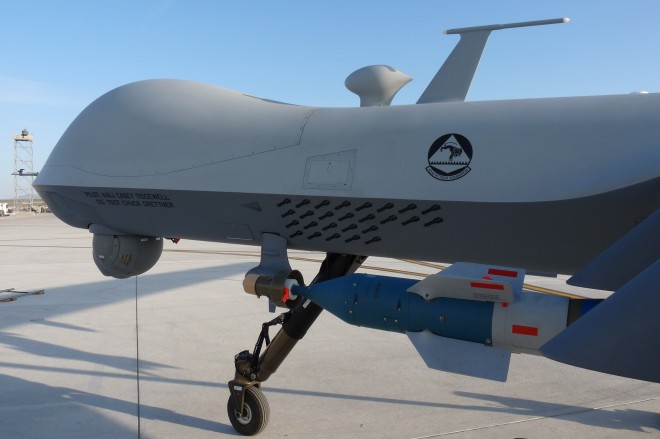
Defense Secretary Robert Gates met with officials in Islamabad to reiterate the importance of drone attacks, despite escalating reservations of their use amongst Pakistani’s. It’s been a polarizing issue from the onset because while it’s convenient to fly unmanned CIA predator aircraft over potential terrorist havens, they result in significant civilian casualties, and displaced persons. So it’s no surprise that over a year later, reconciling their use in Pakistan is still on the agenda.
For this reason, Secretary Gates announced a possibility of America providing “Pakistan with 12 unarmed Shadow aircraft”. Meaning the planes would not have a capacity to strike, but offer enhanced “surveillance capabilities under U.S. supervision”. It’s a fair decision and something I’ve suggested previously.
Gates also stressed the importance of militarily addressing all extremist groups because:
“It’s dangerous to single out any one of these groups and say, ‘If we could beat that group that would solve the problem,’ because they are in effect a syndicate of terrorist operators”
And almost simultaneously, Secretary Clinton unveiled The Afghanistan and Pakistan Regional Stabilization Strategy which sends an increase of 20-30% in civilian experts to both countries and “outlines plans to rebuild the Afghan farm sector, improve governance, and reintegrate extremists into society”. But this strategy of “reintegrating extremists” runs in contradiction to Secretary Gates’ aforementioned remarks.
Gates ruled out any possibility of reintegration calling for a consolidated attack on extremists suggesting that they work in “syndication”, while Cinton’s plan attempts to bring extremists back into the fold of moderate society.
It’s a stark inconsistency in our foreign policy. Because while I think Secretary Clinton’s idea notion of reintegration is more in tune with ground realities, and therefore viable, I figure Secretary Gates was being staunch in talks because finally relinguishing partial drone technology provided him with that margin of hawkishness. Either way though, one thing is certain, despite skepticism on both ends of the U.S. Pakistan relationship, cooperation is ever deepening.






 Zainab B. Jeewanjee
 Zainab Jeewanjee