Archive for the ‘Pakistan’ Category

h1

An Ode to Pakistan in ODI Cricket

October 11, 2023

Once upon a time there was a girl named Zainab, who stumbled upon her parents watching test cricket, frowned and said “this is too slow”. Later she walked in on her brothers watching T20 cricket and said “this is too frantic”. Then she settled into her favorite spot on the couch, turned on the TV to Pakistan in a One Day International cricket match, smiled and felt, “mmm, this is just right”.

And I haven’t looked back since. Watching Pakistan in an ODI match is my ultimate favorite pastime. My favorite ODI players have been Shahid Afridi, Abdur Razzaq, Shoaib Akhtar, Saeed Anwar, Wasim Akram to name a few. What they all had in common was that they were match winners; always unflinching, gritty, fiercely competitive, and led from the front down to the last bowl no matter the outcome.

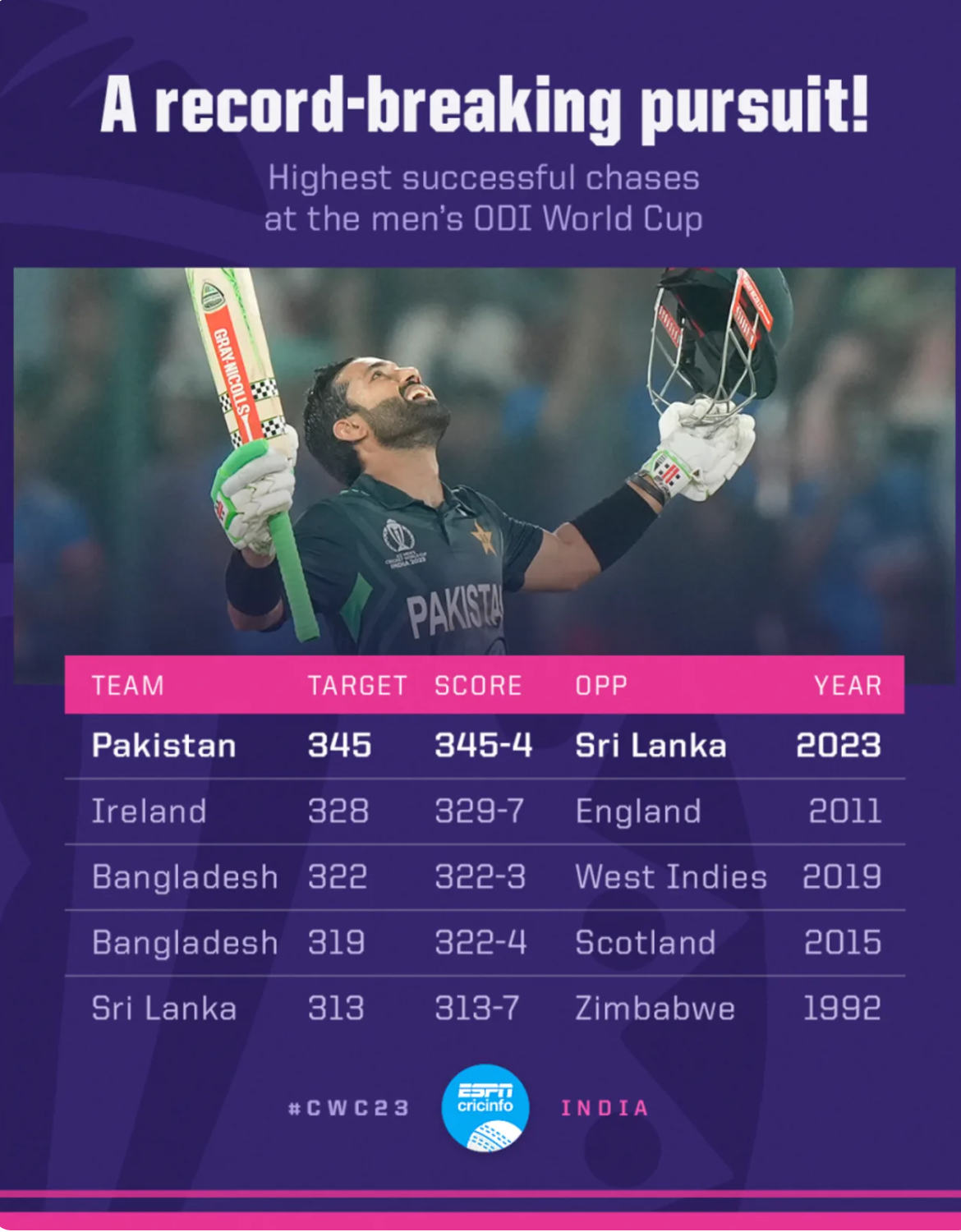
And while on paper the 2023 Pakistan team is one of the best we’ve ever had, boasting the worlds best batsman and as always, some of the worlds greatest bowlers, they’re still criticized for not winning big matches and lacking that competitive edge Pakistan cricket fans have historically expected. But they proved naysayers wrong today by comfortably blowing through ODI World Cup records and chasing down the highest total in history by scoring 345 against Sri Lanka – with 6 wickets in hand no less.

And this win highlights what I love about today’s Pakistan team; their quiet ingenuity and steadfast hopefulness.

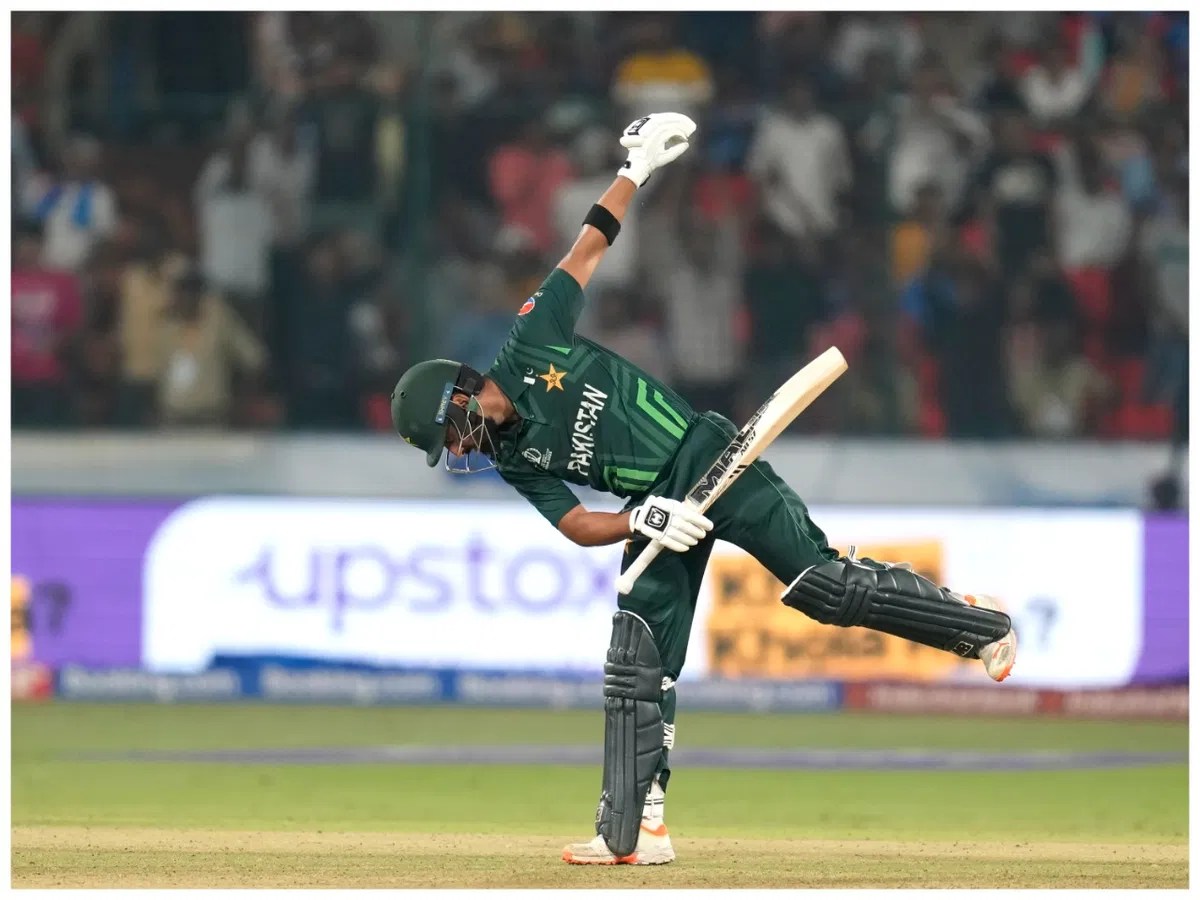
Having been banned from partaking in the Indian Premier League, the worlds most popular and profitable T20 platform, Pakistan quietly focused on alternative avenues of play, building their own T20 league and remaining steadfast to developing ODI and Test format ready teams. So, when we see test cricketer Abdullah Shafique debut in ODI today by smashing a century like it’s no big deal, it’s testimony to years of Pakistan adapting, innovating and exceling despite the odds. Few if any teams would send a test cricketer out in a world cup ODI match against an A rated side and that too for his debut. But Pakistan did, and it worked, just as they knew it would. Just like when Saqlain Mushtaq invented the doosra sending world renowned batsman and the International Cricket Council into a tizzy because they couldn’t fathom let alone play such an innovative ball. Or when Shahid Afridi made his ODI debut smashing the ball around in the 1990’s like no one had ever seen, well before T20 was even a thing (Noteworthy opinion; MS Dhoni was India’s answer to Shahid Afridi). But I digress. See, when Pakistan was banned from the IPL, it ensured their cricketing would never be complacent, it would continue to innovate and rise above a deck stacked against them.

Abdullah Shafiq takes a bow after scoring a century in his debut ODI world cup match

Pakistan has always risen to challenges in cricket and we saw that in spades today with Mohammad Rizwan, coming in at number 4, playing through injury refusing to retire and leading his team to victory.

So let history be a guide; stop banning team Pakistan from cricket — it’s depriving other nations of innovations that are going to upend them in future matches. Or, nations can continue to ban them and behold innovation after innovation from team Pakistan proving that necessity is indeed, the mother of all invention.

h1

Self Destruction – Pakistan at the Cricket World Cup 2015

February 21, 2015

CRICKET-WC-2015-PAK-WIS

I’m crestfallen, but not surprised by team Pakistan’s performance today against the West Indies in the World Cup. By showing up to International Crickets biggest tournament with apparently very little preparation, one shouldn’t have expected anything different than what’s happening.

Truth is, the teams they have lost to so far are not playing spectacular cricket, rather, Pakistan lacks the basic components of a world class team:

1. No Specialist Wicket Keeper. Pakistan is essentially playing without a wicket keeper and I wonder if that has ever happened in the history of the World Cup. Also, I’ve said it before and I’ll say it again, a specialist wicket keeper must also be a spectacular bat as a requisite in one day international cricket in the past 20 years: think Australia’s Adam Gilchrist, Sri Lanka’s Kumar Sangakkara and India’s M.S. Dhoni. Yet, selectors (PCB), commentators (Ramiz Raja) coaching (Waqar Yunus) refuse to address why specialist wicket keeper and in form batsman Sarfaraz Ahmed is not on the team now. And with every Akmal butterfingers drop, Sarfaraz’s absence is sorely missed. Yahoo Sports puts it well:

Surprisingly, regular wicketkeeper Sarfraz Ahmed, who had scored prolifically against Australia and New Zealand in last year’s test and ODI series in the UAE, is yet to get his first Cricket World Cup match.

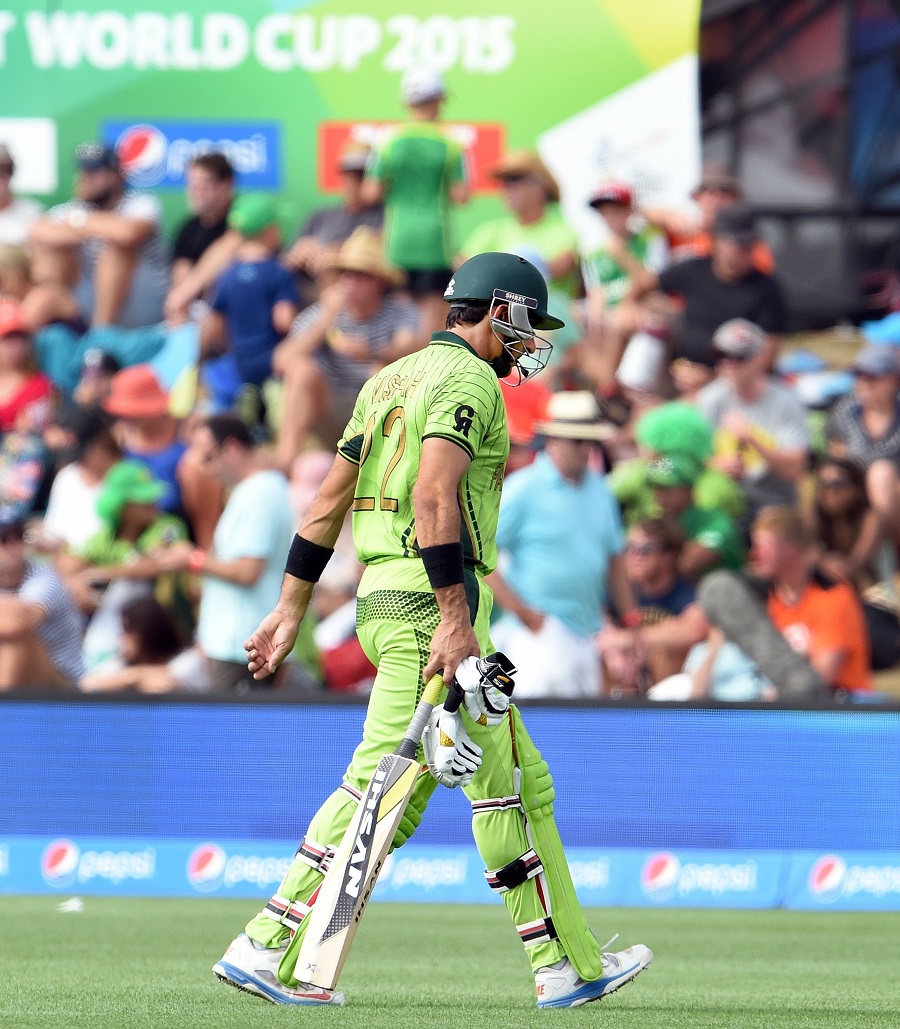
2. Zero Team Leadership: Starting from the top with mind boggling selections of the PCB, to Waqar Younus as a clueless coach and Misbah ul Haq as a most lackluster, demoralizing captain. Waqar consistently baffles everyone with his selection of bowlers and his misplacing batsman in the order (i.e. consistently selecting or opening with Younus Khan or putting him at the most valuable #3 spot, or not playing spin bowler Yasir Shah against the Windies who have trouble with spinners, but playing him against India who traditionally does okay with spinners). Then, Misbah who is the only captain out of every team i’ve seen, including the minnows who seems incapable of competitive, encouraging positive athletic leadership– which is a requisite of a captain for any sport! Battling legend Javed Miandad summarizes Misbah’s leadserhip succinctly

Cricket World Cup: Misbah-ul-Haq’s ‘weak’ leadership is not helping Pakistan, says Javed Miandad

This is aside from the fact that Misbah’s field placements CONSISTENTLY cost us matches (i.e. putting one of our least mobile fielders, Mohammad Irfan at mid wicket and long on), one is left scratching their head — what on earth is Misbah’s strategy, let alone rationale for winning?

Shoaib Akhtar agrees, he scathingly commented today “We are heading for disaster. I have never seen a more selfish and coward captain like Misbah,”

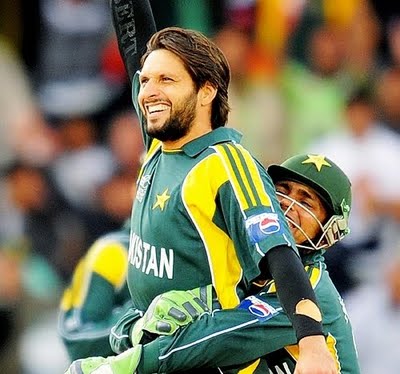
Remember Shahid Afridi as captain of Pakistan’s 2011 world cup team? THAT was world class leadership: Afridi led an inexperienced side that was underestimated by all, from the front, and launched them to exceeding all expectations. He was positive, motivational, competitive and strategic — Misbah doesn’t compare, and his captaincy is costing Pakistan win after win 😦

Shahid Afridi's Pretty Chiseled

Shahid Afridi’s Pretty Chiseled

3. No Batsmen Groomed for the World Cup: Shame on the PCB: Pakistan it seems is the only team who squandered the past 4 years without grooming enough batsmen for this tournament.

Inventor of the deadly “doosra” delivery, former master spinner Saqlain Mushtaq explains  “The whole nation feels let down and is understandably angry. You don’t expect such unprofessional decisions from a professional management,” he said.

Constantly yanking batsman with in form, winning performances like Fawad Alam, refusing to play Mohammad Hafeez when he insists he is ready, and wasting world class batsman like Umar Akmal and Shahid Afridi as lowest order players and instead playing non performing batsmen who consistently cost us key matches, like Younus Khan, Pakistan has yet to have a reliable opening duo, let alone stable batsmen to follow. And with Waqar Younus as coach admitting he’s still “experimenting” with the order (with dire results), Pakistan is painfully unprepared for the World Cup 2015.

Don’t expect major wins from a team that lacks the most basic components for crickets biggest tournament. I’m looking forward to tomorrows South Africa vs. India game. A.B. de Villiers, Hashim Amla and company — now that’s a team to be excited about.

h1

A Guide to Pakistan’s Election 2013

May 10, 2013

Pakistani Elections 2013

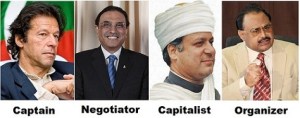
Each Candidate Brings a Unique Skill Set, Experience & Expertise

This marks the first time in Pakistan’s history a civilian government has completed its full term and will transition power to a new civilian government, Pakistani elections this Saturday are complete with hope, democratic fervor, and anticipation. Here is a guide to whose running, and what each party stands for.

The Businessman: Nawaz Sharif
Party: PML-N

Economic Philosophy: Industry Friendly, Economically Liberal: Nawaz Sharif is a consistent proponent of “rapid industrialization” and there is little doubt he will incorporate free market principles anywhere he can. “He liberalized foreign exchange regulations and denationalized several public sector industrial enterprises and financial institutions”, including electric utilities in hopes to curtail power shortages that have crippled businesses and left Pakistani’s reeling in hot summers from lack of electricity. Sharif vows to remove these shortages, known as “load shedding” in the coming years through increased use of natural gas extracted from Baluchistan. While Socialist policies have historically been more popular in Pakistan, Sharif intends to “cut government expenditure by 30 percent in order to secure international backing for the economy” and is likely to continue his legacy as a free market capitalist.
Foreign Policy: Flexible & Amendable: His record includes initiating peace processes with India in his first term as prime minister and is remembered for launching the Delhi Lahore Bus , with his Indian counterpart Atul Vajpayee in 1999. Sharif claims he will not be part of the War on Terror, but rarely shies from turning to the United States for assistance. During the 1998 Kargil conflict, former President Clinton writes in his autobiography that he was personally asked by Prime Minister Sharif to visit and discuss the conflict. He did however defy American calls to halt Pakistan’s nuclear program and the country faced crippling sanctions as a result. Sharif has since promised to “recalibrate Pakistan’s counterterrorism partnership with United States” , in hopes to quell widespread resentment of American handling of terrorism in Pakistan. He supports handing over Gwadar port to China and the singing of a gas supply project with Iran,citing Pakistan’s current foreign policy posture leaves them in “isolation” and such projects is a route to connecting with the world.
Social Policy: Very Conservative: A protégé of Pakistan’s most religious conservative leader General Zia ul Haq, Sharif initiated the ghastly 15th Constitutional Amendment bill known as the Shariat bill in 1998 during his term which empowered the “prime minister to enforce what he thought was right and to prohibit what he considered wrong in Islam irrespective of what the Constitution or any judgment of the courts”. Suffice to say religious conservatism will color his social policy.
Voter Base/Popularity: Very popular in the Punjab. Sharif has widespread support of the middle and lower class, urban population. He also commands support of the industrialist and business class, given his support of free market policies.
Leadership Style/Personality: With a feudal background, Sharif is considered a son of the soil in the Punjab, (even though he lives a rather lavish lifestyle; be brings white tigers to his campaign rallies). He is mild mannered, conservative and has a simple, unobtrusive, way about him which helps him connect with most Pakistanis.
Security Issues: He says drone attacks are against “national sovereignty” and will not tolerate them but does not offer specific alternatives to drone policy, or how to curtail them in the immediate future. Considered to be “soft” of militant groups, and lacking a significant record of standing up for minority groups, he has vowed to end America’s war on terror but “declines to say whether he would stop military operations against the Taliban and Al Qaeda” and has floated ideas on engagement with militant groups as workable options as opposed to “guns and bullets” . My guess is his government will initiate added dialogue with militant groups on a need to basis. Sharif is a free markets leader, and will prioritize big business before putting security atop his agenda.
American Counterpart: Mitt Romney – Both free market businessman to their core, socially conservative and very wealthy, these men are rather similar. Sharif does not have Ivy League degrees, but seems more down to earth and connects with the general public with ease.

The Deal Maker: Asif Ali Zardari
Party: PPP

Economic Philosophy: Centrist with Socialist Tendencies: The party has socialist roots but since the death of Zulfiqar Ali Bhutto and his debacle of nationalizing major industries in the 70’s, the PPP has taken a centrist shift. Benazir Bhutto as prime minister favored socio-economic development through fiscal and monetary expansionist policies, and under her husband Asif Zardari’s leadership, the party will continue along this route. The PPP implemented welfare projects, including income support schemes which handed cash out to rural areas, especially in Sindh. Prime Minister Zardari has repeatedly called for consensus in Pakistan on economic issues and turned a nose to repeated US calls to steer clear of Iran’s gas pipeline. The pipeline deal with Tehran is Prime Minister’s Zardari’s answer to “chronic energy shortages in the country”
Foreign Policy: Accommodating: The party most diametrically opposed to the military in Pakistan, the PPP seeks to forge closer ties with the United States. The military having brutally executed Zulfiqar Ali Bhutto, Pakistan’s most populous leader in the 1970’s, and house arresting his daughter Benazir (who would later go on to be Prime Minister) the Zardari government is responsible for appointing Hussain Haqqani as Ambassador in D.C. Recall Hussain Haqqani’s rather embarrassing Memo Gate controversy in which the Ambassador sent a memorandum to Admiral Mike Mullen seeking the Obama Administrations assistance in an American takeover of Pakistan’s military apparatus”. THe Prime Minister has also spent much time cultivating business ties with China, including announcing their takeover of the Gwadar port as part of a “drive to secure energy and maritime routes”. And despite seeking closer ties with the United States, Zardari has gone against US requests and met with Iran’s President Mahmoud Ahmadinejad to finalize the Iran Pakistan gas pipeline.
Social Policy: Liberal Leaning: Historically they have been very protective of minority rights, but the PPP has not been able to prevent a current upsurge in violence against Shias, Ahmedi’s and Christians. Social policy has been rooted in helping the poor through inflationary schemes; Zulfiqar Ali Bhutto’s exceedingly popular and iconic promise of “roti kapra makaan” (bread, clothing, shelter) is still a sentiment held by the PPP. Prime Minister Zardari’s government can also boast passing a “raft of women’s empowerment resolutions through the previous parliament, including laws against domestic violence and sexual harassment”, testimony to the PPP’s liberal leaning posture. And even though many party stalwarts have been sidelined by the Zardari government in the past few years, they remain mostly committed to PPP causes.
Voter Base/Popularity: The PPP’s stronghold has always been in Sindh,. The party commands support of the rural, lower, and middle class. They also have support in the southern part of Punjab. Not enough to win the election this year, but his party consistently wins a significant number of seats.
Leadership Style/Personality: Asif Ali Zardari is a savvy business dealer and deft negotiator. Coming from a relatively modest feudal background, Zardari grew up with a chip on his shoulder, and has been in business for himself since his teens. Beginning with selling tickets to his father’s cinema, to trading cars, selling assets, negotiating land deals, he has always created opportunities, and found success for himself. May not be as well liked as Nawaaz Sharif in Pakistan, but he is renowned to be the most loyal of friends to those who know him.
Security Issues: Prime Minister Zardari and his party have always sought widespread civil society support before opting for military solutions. Last year, he referred to drones as counterproductive, yet on the whole, drones have increased during his regime . On terrorism, Prime Minister Zardari has worked with the military establishment on some operations, (such as negotiating peace in SWAT with the Taliban) but insists Pakistan needs the support of civil society to launch operations against militants, while simultaneously censuring the media, judiciary and other right wing parties for not being supportive enough.
American Counterpart: Rod Blagojevich: Two left leaning party leaders jailed for corruption, they also share strikingly characteristic smiles and have suffered the brunt of many a political cartoon. Asif Zardari and Rod Blagojevich also both elicit a love hate response from people, there’s no middle ground; one either likes, or really dislikes them.

The Captain: Imran Khan
Party: PTI
zainab jeewanjee and imran khan smallest

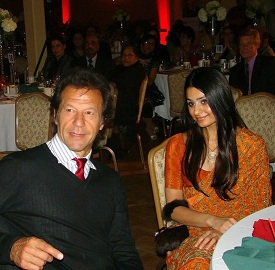
zainab jeewanjee and imran khan

Economic Philosophy: Welfare Policies: Imran Khan says he will “end corruption in 19 days” and plans to sideline the bureaucracy to do so. All economic plans that follow are rooted in this idea. He will declare an energy emergency and claims to end load shedding in 2 years through an oversight board for energy distributers in attempt to make it an apolitical body while privatizing energy companies. He also plans to increase use of coal from Pakistan, and has made calls for an Islamic Welfare State. No word yet as to what the Islamic Welfare State would mean and how to go about implementing it, but it makes for wonderful campaigning with the people.
Foreign Policy: Assertive: “America is destroying Pakistan”, suffice to say Imran Khan is the candidate most opposed to current US policy to Pakistan, while clarifying he is not “anti-west” . He vociferously opposes all post 9/11 Pakistani regimes from General Musharraf to Prime Minister Zardari, for cooperating in what was once known as the “war on terror”. He finds current relations, involving drone attacks in exchange for American aid more than just transactional, but a failure. Referring to it as an “American war on Pakistani soil” , Khan insists on Pakistan’s sovereignty first, and a rejection of American aid if current policies persist . And in regards to India, as a world renowned former cricketer, India may be warm to an Imran Khan regime and such popularity in the Subcontinent could be an opportunity for diplomatic headway in bilateral relations with Delhi.
Social Policy: Conservative Reformist: Khan’s vision of an Islamic Society looks like Scandinavia; “a humane society, where there is rule of law, a society that looks after its weak, its handicapped.” Where to begin creating institutions to do this, has yet to be fleshed out. As with his energy policy, he vows to declare an emergency on education to tackle the country’s illiteracy problem, commissioning international scholar Dr. Azeem Ibrahim to come up with the plan. On minority issues, he has condemned Lashkar e Jhangvi’s killing of Shia’s yet. Overall, one may expect someone who was known for a high flying, partying lifestyle as a fashionable celebrity cricketer to be more on the liberal side of the social spectrum, but his policies for Pakistan are astonishingly conservative.
Voter Base/Popularity: Young, rural, urban, elite, upper middle class, and educated Pakistani’s are supporting Imran Khan in this election. He also commands a significant supporting from overseas Pakistani’s, especially in the United States, where he has raised millions for this election campaign, in his cancer hospital in previous years. They say if the youth turn out to vote, the election will swing his way.
Leadership Style/Personality: He’s the man who brought the Cricket world cup to Pakistan and will always be known as a hero who led a nation to victory. Men admire him and women love him; he’s compelling, handsome and speaking from personal experience, has a rather impressive presence. Leading PTI gradually, but steadily over the years with a straight shooting manner, he is criticized for being soft on substance. An unwavering posture against highly unpopular American policies and promise of sweeping change however, is where he finds tremendous support.

Security Issues: If elected, Imran Khan says he will simply shoot down American drones . He will negotiate with the Taliban, explaining actual militants comprise only a small sector of Pakistani society and plans to reconstitute tribal Jirga’s to maintain peace. He want to withdraw all Pakistani troops from FATA tribal areas and applauded Prime Minister Zardari’s and the military brokered peace deal with the Taliban in SWAT 2009, which was promptly violated by the Taliban almost immediately. His plan for securing the nation from increased sectarian violence, political bombings and terrorist militancy are rooted in ending American drones and “Rambo style” mercenaries who he explains increase, rather than decrease violence.

American Counterpart: Ron Paul: Both call for limited foreign interferences and engagements as a silver bullet to their country’s problems. They are straight shooters, unabashedly opinionated and while they don’t always have an exhaustive, full proof plans on how to pursue their relatively radical policies they both command increased followers each election cycle!

 Altaf Husssain : The Organizer

Party: MQM

Economic Philosophy: Small Scale, Private Enterprises: A party founded to establish a corruption free society, uproot the feudal system and establish a meritocracy in Pakistan’s Indian immigrants, and other minorities have a fair shot at social mobility, the party is a strong proponent of free market capitalism. They have executed several large scale development work in Pakistan’s largest city, Karachi.
Foreign Policy: Progressive: MQM is the part that stands up most forcefully against the Taliban, historically and in this election. Sadly, they have been viciously targeted and attacked for this stance in the past weeks through bomb blasts in and around their party offices. They do not support American drones, but do support military operations against terrorist militants as needed. They call for “close, and honorable ties” with India along with a newly “independent foreign policy” .
Social Policy: Liberal : MQM is historically secular and has always stood up strongly in support of minority rights. They have vociferously condemned every attack against minorities in Pakistan.
Voter Base/Popularity: Altaf Hussain and MQM’s stronghold is in Karachi, among the urban, Urdu Speaking, educated middle classes. Urdu speakers are Paksitani’s who trace their roots back to India; their families migrated to Pakistan during partition, and they are disapprovingly referred to as “mohajirs” (migrants).
Leadership Style/Personality: Altaf Hussain is a cult like figure, the single and supreme ruler of the party, he has a thunderous speaking style. With the security of knowing his party does not command enough support to rival PML-N, PPP, or PTI and other parties throughout the years, he leads loudly, and forcefully.
Security Issues: Unwaveringly opposed to militancy and MQM supports grassroots movements to counter it. They have a stronghold in Karachi and a loyal party base in this large city couple this with Hussain’s powerful leadership (even though he lives in England) the MQM can mobilize attacks against the Taliban on a local scale.
American Counterpart: Jimmy Hoffa. They’re both charismatic leaders who catapulted their organization to protect a minority population to the forefront of the political scene. It helps that they happen to look alike also.

May the best candidate win.

h1

Empowering the Worlds 6th Most Populous Country

June 23, 2012

Schools in Pakistan’s Rural Areas

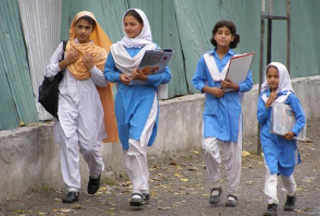
The big news in Pakistan right now is about the newly elected Prime Minster, deteriorating diplomatic relations with the United States and match fixing charges on star cricketers, but there is a less publicized, but important story that CNN published last week “Family’s 20 Kids Highlight Pakistan’s Population Explosion”. The article warns that Pakistan is currently among the top ten most populous countries and by 2050 will rank third only behind China and India. The author’s attribute this population explosion to a lack of birth control, and insufficient access to family planning information. And while birth control and family planning organizations are certainly effective means to control population growth, dissemination of information that counters prevailing cultural norms and attitudes that discourage limiting family size are also important. The article accurately describes “a majority of the population – 70% is largely illiterate and resides in rural areas lacking the most basic services” and it is in those regions in Pakistan that are most influenced by the deep conservatism that often views birth control as “un Islamic”, but does not account for the large number of efforts that have been made to curb illiteracy in these areas. Well known nonprofit organizations including The Citizens Foundation  and Development in Literacy are focused on educating Pakistan’s rural populations and DIL in particular focuses on countering female illiteracy.

DIL claims “empowering underprivileged students, especially girls” as part of their “student centered model schools in remote areas of Pakistan” as part of their mission statement. And female empowerment is exactly the kind of education that can help disseminate valuable information to facilitate controlling Pakistan’s population bulge. Successful NGO’s in the Microfinance space including Grameen Bank  have demonstrated success in assisting with a reduction of birth rates of their members. Like DIL, Grameen Bank claims female empowerment as part of their mission, but unlike DIL, puts in place more direct mechanisms to achieve such objectives. Their “sixteen decisions”  is testimony to a commitment to female empowerment making finance contingent to social development goals, including educating children, cleaner homes, maintaining and caring for one’s health, personal discipline, and cooperation with other females in the community. Number 6 on Grameen’s list explicitly has women pledge “We intend to have small families” and through these guidelines their microfinance model is supplemented by female empowerment strategies that encourage family planning and overall develop the social environment in which they live.  Similarly, Microfinance organization Pro Mujer provides poor women with mechanisms for empowerment in Latin America in addition to development opportunities through lending capital. Their approach reads:

 While most microfinance institutions focus only on financial services, Pro Mujer uses a holistic approach, making sure that clients are better prepared physically, emotionally and economically to improve their lives and that of their children. Education is one strategy. Pro Mujer teaches women about domestic violence, communication skills, and women’s rights, using workshops and group discussions to raise their awareness about leadership, gender issues, and self-esteem. It also links clients with other organizations for counseling, legal assistance, and education and vocational training programs. Women also become empowered as they join and become active in their communal associations. Pro Mujer organizes women in groups of 18 to 28 clients and teaches them how to organize and manage a community bank. The women elect a board of directors to run the meetings, form a credit committee to approve loan applications, and create solidarity groups to guarantee each other’s loans. Members of the communal banks gain confidence and self-esteem as they successfully borrow and repay their loans, set up savings accounts, and become more aware of their own potential and abilities. What’s more, they apply their new skills as leaders in other community organizations.

Education + Empowerment for development

Pro Mujer and Grameen Bank are first and foremost Microfinance institutions, as DIL is to education. These organizations converge in their commitment to “women’s empowerment”, but diverge in their mechanisms to achieve that objective. Microfinance, and education are important development goals for a larger purpose of empowerment so it is important that direct efforts are put in place that have a positive impact on female empowerment. Nonprofit organizations have a profound responsibility not only to those they seek to help, but to their donors, and women’s empowerment must be more than just a catch phrase in Pakistan. It requires a serious commitment by organizations who want to have a positive, long term and sustainable impact for women. Education is an important starting point, but the work will not end there. Given the population growth numbers, empowerment must increasingly become part of the plan to develop Pakistan. Education focused NGO’s are in a good position to begin such models of development, especially if empowerment is a stated part of their mission.


h1

Would Imran Khan call Ron Paul to Bat?

January 9, 2012

American Congressman Ron Paul

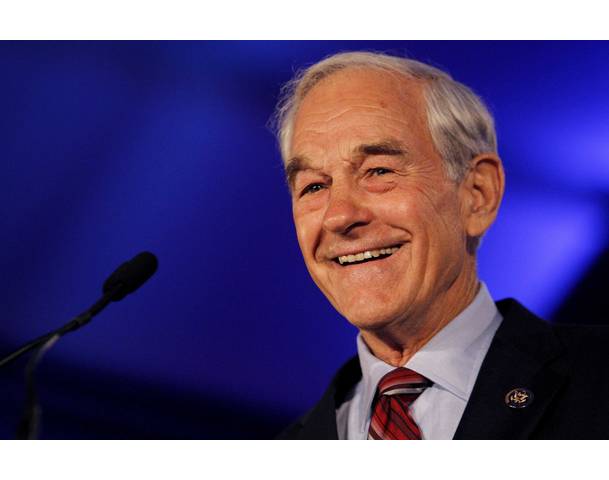
Ron Paul speaks during the Republican Leadership Conference: 2011

Is it just me, or are seemingly incessant GOP debates the past few months allowing President Obama’s lack of public exposure to seem more and more like solid leadership? The Republican lineups simplistic, square and reactionary focus on “Anti-Obama” rhetoric especially on foreign policy has highlighted a resoundingly hawkish stance on Iran with little attention to our current engagements in Afghanistan and Pakistan. And while it may be expedient amongst a certain political base to try and one-up each other in aggressive foreign policy talk, only Ron Paul challenges the party line on Americas role in the world.

When it comes to Pakistan, compared to Democrats Republicans have a consistent history of preferring to work closely with the military establishment in Islamabad. While there is a level of bipartisanship post 9/11, (case in point is Obama’s continuation of Bush era drone use with little debate), Republicans have through the Cold War and beyond preferred dealing with the military establishment rather than focusing on democratic, or liberal institution building. Which is not necessarily an entirely erroneous  policy; part of the rationale is that state building is expensive in blood, toil, time and treasure and rarely feasible. Further, there are an endless number of constraints and uncertainties that profoundly hinder institution, or democratic state building in a place like Pakistan, rendering Republican policies simply pragmatic.

Which brings us to current policy: the bipartisan endorsed “Enhanced Partnership with Pakistan Act” (S. 1707)  enacted in 2009 has yet to bear tangible fruit. Granted the aforementioned that institution building is time exhaustive, the fact remains that Pakistan has deteriorated politically, in the realm of security and economically. And having watched everyone from Gov. Romney, Sen. Santorun, Gov. Perry, Rep. Bachmann and yes even the soft spoken Gov. Huntsman, reiterates hawkish foreign policy while refusing to acknowledge a need for meaningful improvement. In the Republican camp only Rep. Ron Paul’s extreme calls for an isolationist posture offer some semblance of change. And because his prescriptions have yet to be tried, the utility of his ideas have yet to be tested. And now may be a time to consider his stance since they call for exactly what the Pakistani public wants right now.

Referring to our policies to Pakistan as nothing short of “Bombs for Bribes” Ron Paul acknowledges the nobility, yet inherent futility in calling for democratic institutions in places of strategic engagement. He understands that we are already engaged in “130 countries” with “700 bases around the world” and in this speech against the Enhanced Partnership with Pakistan Act, he bluntly explains:

the way we treat our fellow countries around the world is we tell them what to do and if they do it, we give them money. If they don’t we bomb them. Under this condition we are doing both. We are currently dropping bombs in Pakistan and innocent people get killed. If you want to promote our good values and democratic processes, you can’t antagonize the people”

http://www.youtube.com/watch?v=FZPTRrPg4bY

He goes on to suggest dialogue and trade as alternatives to current policy. And although his statement is simplistic and was made in 2009, it highlights Ron Paul’s isolationist, more economically focused prescriptions on foreign policy that seek to reduce our military footprint abroad based on pragmatic constraints, like military and fiscal overstretch. And these calls seem more reasonable than before, especially when it comes to Pakistan and the fact that our aid has yet to yield satisfactory results. So while the Obama administration continues engagement and GOP candidates refuse to acknowledge much concern over current policy to Pakistan, can Ron Paul really be the only alternative available?

Someone once considered completely out of left, excuse me, right field, could be the reminder we need to moderate our engagement with countries of interest. Because what is interesting is that current rhetoric in Pakistan is very much in line with Ron Paul’s ideas. Ron Paul isn’t touting conspiracy theories, nor does he echo far left foreign policy thinkers like Noam Chomsky. Rather, his past statements on our engagement in Pakistan as “inadvertently causing chaos” and “violating security and sovereignty” are exactly what the average Pakistani seems to feel and hears about in their mainstream TV, and print media. Takeaway for us means, it’s a perception the is realistic; perhaps more so than current policy reflects.

In fact, legendary cricket star turned politician Imran Khan’s recent surge in popularity is in large part due to his highly critical foreign policy rhetoric that vociferously calls for D.C. to adopt a more isolationist stance so Pakistan might reclaim lost autonomy. Imran Khan steadily built support for his party on the continued observation that America’s “War on Terror” has intensified insecurity and his subsequent promises to curtail American involvement is a first step in alleviating Pakistan’s problems.

http://www.youtube.com/watch?v=cegk0q4WRDA&feature=related

He underscores Ron Paul’s sentiment that perceptions urgently matter in a climate where American intervention is increasingly received hostilely.  Both politicians insistence on winnings hearts and minds renders Ron Paul’s foreign policy prescriptions worthy of consideration. Imran Khan’s recent ascendency and Governor Paul’s gradually increasing support marks a convergence in shifting to a direction of a less militarized approach to Pakistan. Two men once considered out of the realm of politician viability now increasingly resonate in their respective publics; policymakers ought to take note.


ORIGINALLY PUBLISHED @ THE FOREIGN POLICY ASSOCIATION

h1

Remember Pakistan’s Liberal Dictator?

October 4, 2010

Freedom through Dictatorship?

Freedom through Dictatorship?

Well, I called it: Pervez Musharraf is staging a return to Pakistani politics. Launching his new “All Pakistan Muslim League” (AMPL) party this week in a plan to return to the country, the former General will have to face a tremendously skeptical, increasingly hardened citizenry and even tougher adversaries in the judicial branch and opposition parties. In an Al Jazeera special report, Musharraf’s former Legal Advisor Ahmed Raza Kasuri insisted that should tacit approval come from the country’s military establishment and most importantly, with support of a “silent majority” Kasuri measures at 60-65% of moderate Pakistani’s, Musharraf will garner required support to win in future elections. Political analyst Imtiaz Gul insisted otherwise explaining not only would the military establishment be weary of backing Musharraf who cost them valuable political capital when he sacked the judiciary in 2007 and issued a State of Emergency, but also because he has “lost relevance” in Pakistan today.

Gul makes a valuable point: without relevance a political figure is climbing an uphill battle of garnering credibility, and because credibility is deeply intertwined with legitimacy, Musharraff undoubtedly faces a bumpy comeback.

But relevance is not necessarily an impediment to power in Pakistan since the current situation lends a valuable opportunity for it to be readily earned. Current President Asif Zardari usurped such an opportunity when his wife was tragically murdered and assumed leadership, riding the waves of sympathy that swept the nation to win elections. While that “relevance” is waning now, it was enough to allow him a seat of power for 2 years and actually shake off some of the “Mr. 10%” infamy, which is a far larger feat than what Mushrraf faces today.

While the main opposition party leaders Asif Zardari and Nawaaz Sharif are forever bogged by allegations of corruption, Musharraff’s criticisms revolve around issues of “democracy”.

His most vociferous opponents will cite his sacking of the judiciary, coup to power, and 9 year dictatorial reign as subverting democracy in Pakistan. But such criticism of Musharraf is both misleading and mostly hyperbole.

The deficient part of such rhetoric lies in lacking recognition of liberalism. Notions of individual human rights and liberty, free trade, separation of church and state and religious tolerance are erroneously assumed to come only with democratic leadership in Pakistan. On the contrary, liberal policies extending specifically to women’s rights, fostering regional cooperation and trade, namely with India, opening domestic markets, such as free media and holding free and fair elections were successfully carried out previously by Musharraf.

Ironically, under the title of “dictator”, he brought forth more liberal triumphs than any other leaders in my lifetime. And it is important to not confuse democracy with liberalism. Fareed Zakaria makes this distinction in tweaking “Democratic Peace Theory”. His ideas are described:

“democracy is defined in terms of the process by which a government is selected. In contrast, “constitutional liberalism” is defined not by how the government is selected, but rather b the extent to which the society and its institutions protect individuals’ basic rights (to life, property, freedom of speech, and religion)”

Thus basic tenants of a such liberalism, to a fair extent were brought forth by Musharraf. And as political change seems imminent in Pakistan, if we continue looking to political theory one might advance a case for liberalism by way of identifying Musharraf’s opposition. If we take a voluntaristic view of government, wherein heads of states are integral parts of policymaking as opposed to looking mostly at system wide determinants of policy, one finds that not only corruption, but the fact that both Asif Zardari and Nawaz Sharif are part of feudal, landowning elites in Pakistan is meaningful. With that background, and likely subsequent value sets which are diametrically opposed to liberal notions of liberty and individual rights, Pakistan runs the risk of remaining socially, and economically stagnant under their leadership. Moreover, with the U.S. winding down our war in Afghanistan and shifting in to Pakistan, more than ever liberal ideals are needed.

No amount of drones, target killings or CIA intervention have yet quelled extremism let alone terrorism in Pakistan since 9/11. Modernity and liberalism are Pakistan’s best bet at framing a solution for the long run.

It cannot be an overnight shift, but it will require leadership that espouses liberal ideals. Because without credible experience in upholding individual rights and freedoms, only halfhearted appreciation will come for liberalism and even weaker attempts to implement them.

Is Musharraf the solution Pakistan is looking for? I do not know. But until new, more modern and liberal alternatives in political leadership are available, he just might be the best option now.

ORIGINALLY PUBLISHED @

h1

Aisam Qureshi’s Country

September 12, 2010

It’s my first week in Denver where I’ll be attending graduate school for the next two years and I’m soaking in how kind this city is. It is the most laid back, genuine U.S. City I’ve experienced. The sincerity with which people prod “No, where are you really from?” when I initially respond “California”, is priceless. I feel like a novelty here. At an Eid Celebration last night, even a local of Pakistani descent pointed out “Wow, the guys are going to flip over you. There are no ethnic girls in Denver”.

Ethnic”? I’ll take it; I realize I’m getting a pass for being a Californian female. Because in light of increasingly disheartening news from Pakistan, be it about floods, match fixing in cricket, and mostly terrorism plaguing the country since 9/11, Pakistani’s have captured the American state of mind in a less than appealing way. Once indecipherable on a world map for most Americans, Pakistan emerged as our stalwart ally in victory after 40+ years of Cold War. Yet as we turn to Islamabad again to fight a War on Terror, we possess a deep skepticism of Pakistani intentions.

Pakistan is rampantly associated with concepts of Terrorism, Extremism, Al Qaeda, Taliban, Corruption and disaster as D.C. and Islamabad are ever more understood as reluctant partners. Plus post thwarting the Faisal Shahzad situation , expert indications that homegrown terrorism poses the biggest threat to the United States, stabbing of a cab driver of Pakistani descent and Amnesty International’s recent report that hate crimes against Muslims is on an alarming rise, being Pakistani seems like an uphill battle in America. So on an individual level, Pakistani’s and Americans may be feeling the same skepticism that governments harbor for one another in bilateral relations. But this week the world was abuzz when Pakistani tennis player Asiam-ul-Haq Qureshi with irresistible sincerity exclaimed:

Since September 11, every time I come to the States or western countries I feel people have the wrong impression about Pakistan as a terrorist nation. I just wanted to declare that we are very friendly, loving and caring people, and we want peace in this world as much as Americans and the rest of the world wants.

There are extremists in every religion, but just because of them you cannot judge the whole country as a terrorist nation. I just wanted to get this message across as a Pakistani

In plain terms Qureshi clarified that his country is a mostly moderate nation where people expect the same peace and security desired by all people. He reminded us of Pakistan’s humanity, directly countering the “transactional” ties that progressively complicate our understanding of Pakistan. Fareed Zakaria might agree. In a recent piece, he eloquently concurred:

Across the Muslim world, militant Islam’s appeal has plunged. In the half of the Muslim world that holds elections, parties that are in any way associated with Islamic jihad tend to fare miserably, even in Pakistan.

In his article “We’re Safer Than We Think” Zakaria points out that Muslims in Pakistan and beyond are if anything, less safe from terrorism than we are as they suffer the brunt of radical Islam’s consequences.

Over the last few years, imams and Muslim leaders across the world have been denouncing suicide bombings, terrorism, and Al Qaeda with regularity….The fatal problem with these kinds of attacks is that they kill ordinary civilians—not U.S. soldiers or diplomats—and turn the local population against Islamic radicals.

With more thorough detail, Zakaria’s is saying exactly what Qureshi did; Pakistan is not a country of terrorists. So next time I get asked where I am “really” from, I might just say “I’m from Asiam Qureshi.’s country”.

ORIGINALLY PUBLISHED @ The Foreign Policy Association

h1

The Plight of a Pakistani Bowler

August 8, 2010

By Zain & Zainab Jeewanjee

Consoling the Pakistan Side

Consoling the Pakistan Side

On the second day of a five-day test match between England and Pakistan, picture yourself as a young bowler, just out of your teens and already being anticipated as the next Wasim Akram. You represent a country that’s flooded by pain and suffering of natural disaster, plus the torment of an unnatural flood of arms, and terrorism. To top it off your home turf is off limits because of lacking security and you’re playing cricket on a foreign ground; in a country who ruled you in colonial grip for over 200 years, a tinge that might linger 63 years later.

The stage is set. The batting lineup has already let you down, and your bowling is expected to carry the team to a respectable outcome. But the angels above have arranged for ideal weather conditions and a pitch perfect for your deadly pace. The Gods are giving Pakistan an opportunity for redemption.

You take to the pitch and imagine sending a fierce, fast, reverse swinging bowling onslaught on the opponent. They’ve already overtaken your score yesterday, so you’re aiming to contain them, preserving the scant runs your side managed, and bowl the opposition out as soon as possible. You take a run up. Jogging 20 yards toward the batsman; you release the ball and he is confounded. You feel a rush of excitement. Batsman nicks it, sending the ball aloft for the simplest of catches. Your excitement steadily intensifies and you think to yourself; the Gods are on my side. You watch the ball elevate into the sky, higher, and higher and slowly descend. The Gods have arranged for it fall directly in front of first slip, and you eye your teammate’s hand intently. The ball falls directly into his palms and you feel relieved; this is the one job you can count on first slip to do. He also happens to be a top order batsman who should be longing to save face and take this crucial wicket to make up for his less than sufficient run rate. You take into account the team has already let three catches go, optimism pervades and you think, “we definitely have this one”.

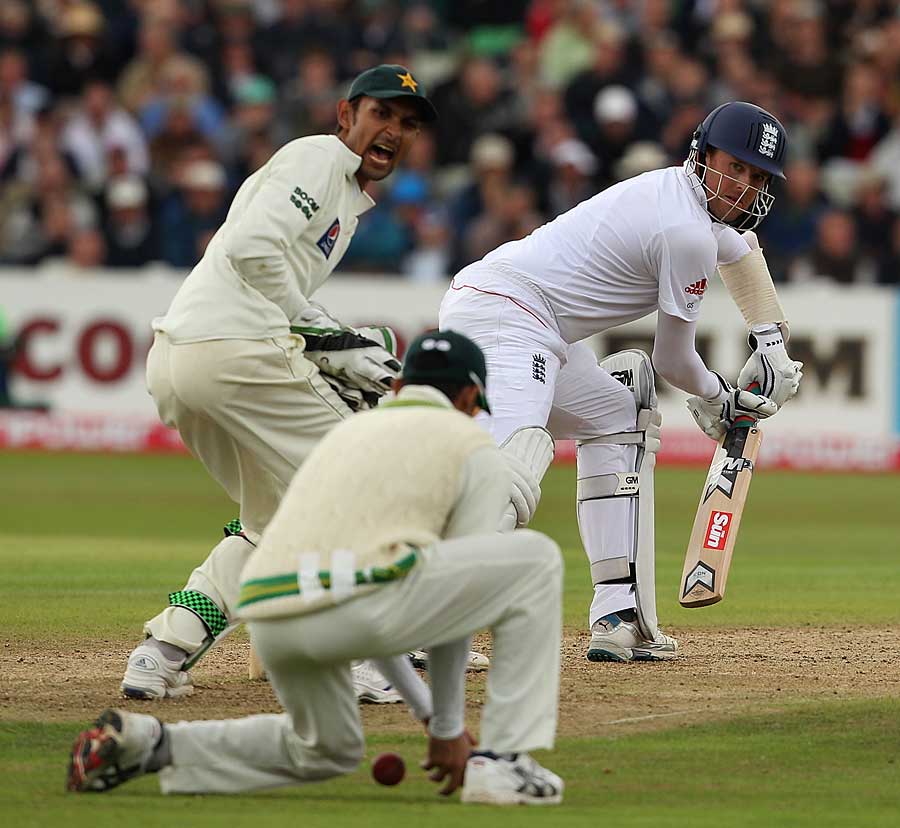
Pakistan another Drop Catch in Cricket vs England - August 2010

Pakistan another Drop Catch in Cricket vs England - August 2010

Every millisecond feels like miles as the ball falls into first slips hands. Fielders jump in victory and the crowd cheers but simultaneously, first slip drops the ball as it falls dead into the still green grass.

For a second maybe no body saw it, but the bowler is crestfallen. Excitement deflated. With a tear that never fell, he looks at the young man at slip. Slip stares back at him and with words he can’t muster, the bowler bravely smiles. His heart is racing with a million emotions but zero time to reflect on any of them, the bowler desperately focuses. His brain wants to let something out to his teammate, on his team who didn’t score enough runs, and dropping no less than 4 catches squandering opportunities the Gods laid out in this match.

As he turns and looks around at the crowd, he attempts to recuperate energy but his mind can’t help but settle in on the millions of Pakistanis suffering from floods, the war on terror, political volatility and economic insecurity and he knows that Cricket is what Pakistanis look to for hope.

I couldn’t take it anymore. I got up and made myself tea. Even thousands of miles away from England, even farther away from Pakistan, I didn’t want to face the complexities of what that bowler might have felt. So I raise my hands in prayer to whoever controls the world around us and say please, give Pakistan a break.

It reminds me of Earnest Borgnine in the Poseidon Adventure when he looks up to God in the middle of disaster and cries: “What more do you want of us? We’ve come all this way on our own no help from you. We did ask you to fight for us but damn it, don’t fight against us!”

Give Pakistan a break. I urge everyone who reads this article that as the brave bowler took strength to smile, recuperate and move forward, if you do nothing else, donate to the flood victims. Pakistan needs hope right now, and every contribution, big or small, will go a long way for those in need.

OPPORTUNITIES TO GIVE  ::::

Oxfam America

Relief International

Unicef

Edhi Foundation

Hashoo Foundation

h1

The Cleanup

July 29, 2010

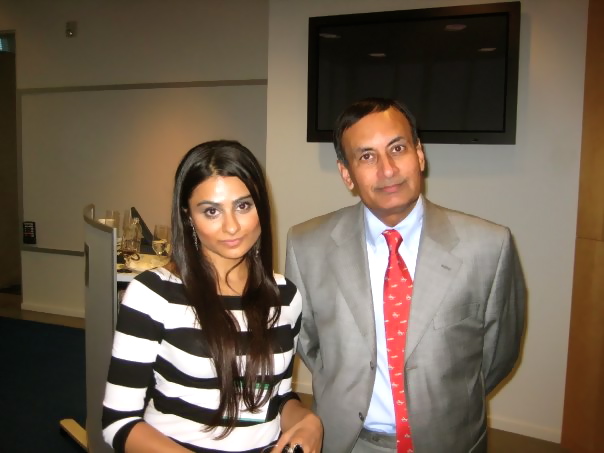
Zainab Jeewanjee with Ambassador Hussain Haqqani

Zainab Jeewanjee with Ambassador Hussain Haqqani

“30 years of this whole business that started with the jihad against the Soviet Union is what we are trying to deal with the aftermath of. Its 30 years of these groups, supporting them, funding them, the opening of radical madrassahs in various parts of the country. Now I think we’ve done a decent job in the last two years of beginning the cleanup”

Pakistan is serious about cleaning up terrorism, but the mess runs deep. And If you want to share in an insightful discussion on the Wikileaks reports, I recommend watching Charlie Rose from last night. Because Pakistan pulled out the big guns in responding to the reports that suggested their Interservices Intelligence Agency is “aiding” the enemies in Afghanistan. Ambassador Hussain Haqqani was Rose’s guest and spoke directly to American anxieties that Pakistan is not entirely interested in ousting terrorists from the region. Specifically responding to the question of ISI links to the Taliban, Haqqani said:

It goes back to the soviet invasion of Afghanistan. The CIA and ISI both worked with the Mujahedeen who morphed into Taliban. But now the Pakistani military and ISI are conducting successful military operations in SWAT and South Waziristan.

He elaborated:

We’ve Taken out extremists and 74 ISI personnel have been killed in the past two years. With as many as 233 injured. That alone should be sufficient to convince people that was then and now is now and Pakistan is standing firmly on the side of those who want to eliminate the Taliban and extremists”

The statistics were particularly hard hitting. They brought a human element to our somewhat sterilized discussion about Pakistan here in the states. Being geographically removed, and with a vastly distinct culture, we are mostly informed of how the government in Islamabad deals with our administration in D.C., resorting to diplomatic sound bites and news for our information. But Haqqanis statistics provoke us to realize that just as we have struggled in Afghanistan, Pakistan too has sacrificed greatly as an ally in our war and continues to be deeply invested in combating terror.

Haqqani reminds us that the Wikileaks story is just that; a whistleblower. Without subtracting from the value of revealing what governments might otherwise keep classified, the Ambassador offered facts that quell sensationalized reception of the reports.

Rose asked weighty questions in trademark straightforwardness allowing us a chance to get answers to that the Wikileaks story leaves us lingering with. For instance, “what keeps Pakistan from doing more”; a question even those with ample knowledge and understanding of history and ground realities who can put the Wikileaks story into context sometimes wonder. Rose speculated it was a concern with India, and a fear of U.S. withdrawal. The Ambassador responded:

“There is a concern that India is not yet reconciled to our nationhood and statehood. Those are concerns reflected in public opinion and government has to deal with view that the US has not been a consistent friend of Pakistan and if we do too much at the behest of US they could leave us in the lurch and walk away again. The Biggest concern is the US can actually leave projects incomplete it has happened in the past US assistance and economic aid suspended arbitrarily and at short notice. Things have been left incomplete. They have had a very difficult relationship in the past 6 decades. We are trying tot address the totality of these issues”

It is no secret that India Pakistan relations are a primary driver of action in South Asian politics so the real nugget in the Ambassador’s above response is the talk of Pakistani Public opinion.

One of the first rules we learn in politics is that perceptions matter and what our pundits and political speechwriters have left out of the conversation is how Pakistani opinions factor into Islamabad’s policymaking.

The Obama administration made clear by way of allocating funding in the Kerry Lugar bill that America would no longer support military regimes at the expense of democracy in Pakistan, yet we still tend to leave consideration of Pakistani public opinion out of our own expectations. Apprehensions of U.S. foreign policy are increasingly common as Pakistan deteriorated economically, politically in overall security post 9/11.

Ambassador Haqqani did an eloquent job of explaining this tremendous sensitivity with which Islamabad must balance its interest in continuing bilateral cooperation with D.C. while alleviating a rampant fear amongst Pakistani citizens that the United States might not be trustworthy, or as the Ambassador put it “ungrateful” for all their country does.

And although Ambassador Haqqani concluded on a positive note , citing increased military cooperation in fighting terrorism and tripartite agreements on trade, he gave viewers a clear view of the “totality” and complexity of issues from the Pakistan side.

To tally Islamabad’s task list thus far: in addition to 30 years of deep cleaning, speedy recovery from loss of life, toil, treasure and time, one must add mending 60 years of mistrust with the worlds superpower to Pakistan’s list of things everyone wants done yesterday.

So let’s think twice, maybe even thrice before sponging the Wikileaks reports without an understanding of context and implicating Pakistan for not doing enough.  Prime Minister Cameron, that’ means you.

ORIGINALLY PUBLISHED @ the Foreign Policy Association

h1

Floundering Pakistan

July 27, 2010

Pakistan implicated in todays Wikileaks Reports

Pakistan implicated in todays Wikileaks Reports

Pakistan is in desperate need of a plumber to fix the leak on the front page of the New York Times this morning. The article has one of strongest suggestions yet that the Inter Services Intelligence Agency aids the enemy in Afghanistan and is rooted in reports made available by the whistler blower organization, Wikileaks. The reports entitled the “Afghan War Diaries” purport that the Pakistani ISI provides haven, if not supports Al Qaeda comes from “unverified” sources most likely “aligned with Afghan” intelligence and “paid informants”. The New York Times piece provides examples of how a suggestion of Pakistani aiding insurgents could be accurate, and leaves only a brief disclaimer that nothing is yet certain. Rather, the story more strongly asserts:

Senior lawmakers say they have no doubt that Pakistan is aiding insurgent groups. “The burden of proof is on the government of Pakistan and the ISI to show they don’t have ongoing contacts,” said Senator Jack Reed

“No doubt” is an alarming allegation against a critical ally in this war and a bit sensational in the absence of a closer reading of Pakistan’s realities and motivations.

What seems more likely than “no doubt”, is something I’ve stated previously. Both Ideology and what Pakistan’s foreign ministry spokesperson said are “ground realities” run directly counter to the suggestion that the ISI rampantly supports insurgent groups against American interests.

Quite simply, insurgent groups including Al Qaeda are deeply comprised of remnants from the Soviet Afghan war, meaning former fighters we engaged the ISI to train, maintained links to “freedom fighters” who ultimately became extremist groups we combatted post 9/11. That engagement created a decade long window in which there was little instruction or immediate opportunity and to some extent, interest for Pakistan to eradicate insurgents in its neighboring country. Couple this with the fact that Pakistan shares a nebulous border with Afghanistan as it became haven to one of the worlds largest refugee problems with Afghans fleeing Soviet atrocities, and you’ve got a battle hardened, impoverished, and an armed influx of an outside population who call major cities like Karachi, home.

So when we hear about the “Af-Pak Quagmire”, one should really be thinking in terms of the pickle Pakistan got into when millions of refugees made Pakistan’s underdeveloped, politically volatile and vastly feudal state home as the Cold War ended.

This climate allows us to put the Wikileaks reports into perspective. Firstly, reports linking ISI aid to insurgents could likely be referring to former Pakistan intelligence officials who maintained ties to insurgents as Afghans became part of the fabric of Pakistani society. Secondly, although these groups made Pakistan their home, the arms and influx of drugs via Afghanistan, never ceased. An infamous Klashinkov culture pervades Karachi amongst other places, including the now well-known FATA areas.  So with such imbedded presence in Pakistan, obliterating Afghani insurgents becomes a highly sensitive task.

I rarely point to ideology as a driver of action when it comes to government behavior, but as Afghan’s made their home in Pakistan, they came sharing religion and some aspects of culture which intensifies the complexity of hunting down terrorists because it leaves Pakistan open to the possibility of a civilian uprising. Certainly Afghans would have preferred we “negotiate” rather than wage full scale war post 9/11 to settle differences. And I will not argue whether or not that would have been wise, however, the point is that the

ISI may be dealing with insurgents in vastly different ways, wheeling and dealing as opposed to obliterating them with the force we might use because of a profound risk involved in alienating an enormous, and internal Afghan presence within Pakistan’s border.

Since 9/11 Pakistan has descended into civlian chaos at certain intervals with extremists growing polarized, gravitating toward insurgents as we intensified our offensive in Afghanistan and Pakistan. So our expecations must take these realities into account and the Wikileaks reports understood within that context.

Ultimately, a lesson we might learn from the Wikileaks story is that negotiating with extremist groups for Pakistan is inevitable. General McChrystal’s Counterinsurgency strategy was moving in that direction as it called for U.S. engagement for the long haul requiring additional years in time, toil, troops, and treasure; which is an increasingly unpopular idea. So will the Wikileaks reports be the “game changer” or this wars equivalent to the “Pentagon Papers” for it’s suggestions that our engagement of Pakistan in providing billions in aid has been not only counter productive but comes in addition to our own mishandlings of the war thus far?

Perhaps. But either way, Pakistan is in desperate need of one skilled plumber to fix this leak.

ORIGINALLY PUBLISHED @