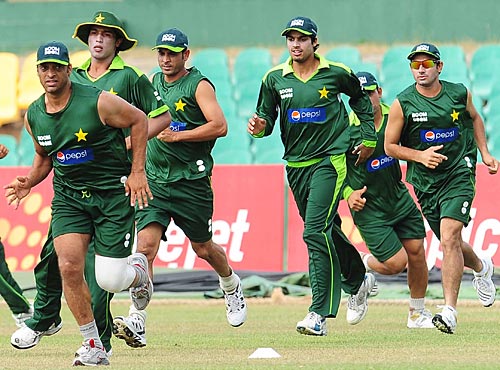
Pakistan Warms up for the Asia Cup India Match - June 2010
Well, it’s that time again. An India vs. Pakistan ODI match will be underway in a few moments. And there’s nothing like India-Pakistan cricket. For better or worse, it’s THE epic rivalry; it get’s catty, intense, fans are insanely polarized. It’s basically crickets equivalent to the NHL’s Crosby / Ovechkin rivalry. For my non-sports readers, it’s akin to team Aniston vs team Angelina. (for the record: I’m team Ovechkin and Angelina respectively)
But whether you’re a Pakistan or India fan, both teams are somewhat evenly matched at this time with Pakistan having more depth and raw talent, and India with firm composure, more consistent experience and better record in recent history. So it’s likely going to be a nail biter, winding down to the final over to determine a winner.
So, what’s it going to take for the men in green? Here’s what’s swimming around my head before the game:
Afridi: Stay the same. Awesome performance in the last game as skipper. In typical Afridi character he lived up to the “boom boom” title and strong character we expect from him. With 110 off of 75 it was his natural game catapulted to great heights with leadership and consistency. Good news is he has a tendency to excel against India. Let’s hope that form is maintained.
Salman Butt: Hold your wicket yo. He usually does, but it’s not always certain, yet crucial that he does so today. The Indian bowling attack looks mediocre, but don’t underestimate their pace bowling. Zaheer Khan is in the attack and Nehra could do harm too.
Abdur Razzaq: My favorite All rounder must be the Danger Man today. What does that mean? It means if we need it, you make 14 runs an over. No questions asked. Oh, and when we need those key maiden overs in the last hour of their lineup, keep up the bowling defense.
Kamran Akmal: Please no butterfingers. This is a world class game and an epic rivalry, no room for drop catches. Also, be quicker on the stumpings. Be a solid bat; a clutch hitter picking up the run rate consistently as a lower order batsman and even more so if you’re pushed up the order.
Mohammad Aamer: Come in strong and shut down Sehwag. Perhaps cut him some slack early on, get him into a slogging mindset then throw on pressure with an ultra slow ball. Sehwag’s bat is so fast that this is bound to be confusing to his game.
Shahzaib Hasan: Damn rookie stop playing like it’s a test match.
Shoaib Akhtar: Watch the extras, nuff said. If The Rawalpindi express does this, there’s no stopping him.
Shoaib Malik: Be at the top of your game, back form a honeymoon we need to see classic Malik in your best form. Picking off Harbhajan smashing off a couple sixes, fielding like a beast, and with accurate off spin.
Umar Akmal: Run with raw talent. You’ve got the youth, energy and can hold your wicket with a solid strike rate. Pick up the occasional boundary and stay consistent.
Prediction :::: the game changer will be either Shoaib Malik or Shoab Akhtar. They’re comback kids and can steal matches for Pakistan. They’ve done it in classic form in the past, and i want to see them do it again tonight.
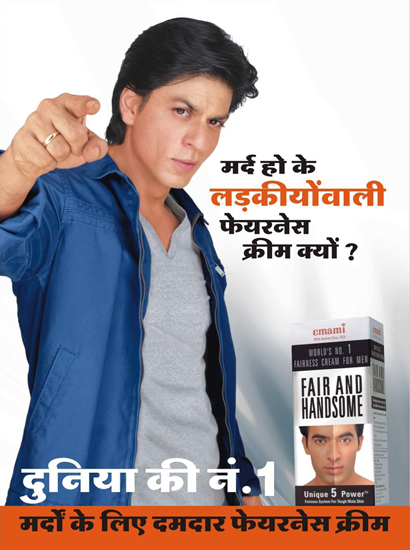
I’ve very intentionally avoided this subject despite its relevancy to South Asia, but it’s close to summertime and now that Shah Rukh Khan is involved it’s borderline political, so it’s within my jurisdiction.
“Fair and Lovely” face cream is so pervasive in “desi” culture that it’s a household name amongst both Resident and non Resident Pakistani’s. International diplomats, the United Nations, countless non profits have all failed to get India and Pakistan to agree on nukes, trade, cricket, religion (the list goes on) but when it comes to the primal issues of attraction, both have consistently been on the same page. Visit the Fair and Lovely website and you’re confronted with images of a woman’s face growing progressively lighter and the slogan: “Gorepan se kahin ziyada SAAF GORAPAN” Translation: “Even more Whiteness than Whiteness”. I kid you not, that is an accurate translation literally and contextually speaking, and yes despite this, we are still in the 21’st Century.
So this week Shahrukh Khan’s face is seen promoting the creams male counterpart, “Fair and Handsome”. The Telegraph reports“despite doubts of the effectiveness, the sight of Khan’s chiseled features endorsing the cream has angered campaigners, who say it’s “racist” to promote lighter skin as superior”
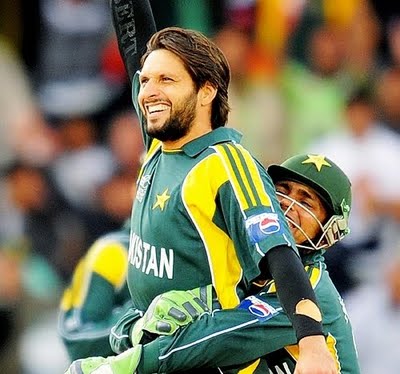
Shahid Afridi's Pretty Chiseled
Alright, first off Shah Rukh Khan doesn’t from any angle I can see have “chiseled” features. Shahid Afridi is more chiseled than him. But, that’s besides the point and doesn’t invalidate the fact that billions of men and women around the world idolize Khan and find him very attractive, hence the lakhs of rupees I’m sure he’s receiving for this endorsement. But with such immense fame, comes responsibility and his endorsement of Fair & Handsome cream is justifiably being labeled “racist” by angry campaigners.
I grew up in California where girls lay out in the sunshine all summer to quite frankly, try and get skin like mine. When sunshine isn’t an option, they confine themselves into what are nothing shortof human frying pans, lids closed in tanning beds as they do their best to maintain my shade of golden brown all year long. So it’s no surprise that I love my mocha skin. Always have. I wouldn’t change it for anything. Tan skin is part and parcel of being a Californian. Just listen to Katy Perry or the Beach Boys. In this part of the world, tan has always been undeniably sexy.
Zainab & Maria - Perfect Beach tans
Which is why the angered campaigners in India are correct in denouncing the Shah Rukh Khan endorsement; it perpetuates an unhealthy, yes racist fascination with fair skin. The reason it’s racist while the the girls in California wallowing in tanning beds isn’t is because “Fair & Lovely” occurs in a post-colonial context. You’d think that as oppressed subjects having suffered and struggled to fight of massive injustices of colonialism until Partition wherein India severed itself into two as a result (the birth of Pakistan) looking like the oppressor would be unpopular. But instead fair skin is the ultimate desire in desi land, and it’s mind boggling because European skin tones are not naturally attainable in South Asia.
Sure evolutionary biology will tell you that humans are innately attracted to beautiful people.According to biologists, we’re attracted to relatively youthful characteristics because they’re indicative of heightened fertility(i.e. lustrous hair, hourglass figures, large eyes and clear skin)but a preference for skin color really is only skin deep. South Asians naturally have darker skin and there’s no reason it should be touted as inferior.
Out of chance I happened to have grown up in a particular part of the West that values darker skin, but had I lived in Pakistan I might not have been so lucky. It’s a sad realization, because skin color is not in our control, which is why it’s problematic when corporations like Fair and Lovely seize control in attempt to create preferences where none should exist. They’re preying on insecurities to peddle their products which is done by all advertisers, but this one goes too far because it’s racist.
Shame on Shah Rukh Khan for endorsing Fair & Handsome cream; it’s not a “fair” or “handsome” move on his part. It’s Unfair and Ugly.
There’s a notion of two distinct America’s; one that is conservative, mostly Republican Red and the other a more liberal Democratic Blue, and in a similar way I’ve seen two Pakistan’s.
The polarized views are reminiscent of our own democratic deliberations; strong demonstrations for (Red) and against (Blue) the legality of the Iraq invasion beginning in 2004, or protests against the passage of Proposition 8 (Blue) in California which outlawed same sex marriage in 2008 (Red).
So do such polar views necessarily indicate a distinctly Blue and Red America? I’ve never thought so, because overallAmerican’s tend to be far more centrist than our elected officials make us out to be in a two party system. Generally, Americans from California to New York and everywhere in between share basic social and cultural values; we watch the same shows, dress similarly, and ultimately ascribe to the values outlined in our Constitution (albeit interpretations differ).
But Pakistan is very different. There is far less social homogeneousness and more indications of a vastly distinct populace, a Red and Blue Pakistan if you will. Citizens from the remote, more rural northern areas bordering Afghanistan, or Red places will likely dress, consume, and believe differently than people in the more cosmopolitan hustle and bustle of large cities like Karachi, or Blue Pakistan.
Pakistani’s are educated on vastly different scales. While one child might be raised in a feudal system from a village in Sindh with no education, another might be educated per the Cambridge system in a large city, while another might have only had formal training in religious studies at a Madrassah! In terms of dress; it’s not uncommon to find females covered in burqa’s from head to toe, no face, hands or even eyes showing (Red), while you’ll find other’s in the skimpiest of attire partying until daybreak (Blue), at which point some Pakistani’s may rise to pray at a local Mosque while others are just getting home from a night of drinking and dancing. It’s Red and Blue if i’ve ever seen it, if not as stark as the contrast of Black on White.
So there’s an enormous diversity in belief systems that is more immediately recognized in the Pakistani landscape than in ours. I recall living there while in High School and being shocked at the level of ignorance toward America by some and whole hearted embrace of western culture by others. But polar lifestyles and belief systems amongst Pakistani’s doesn’t indicate there isn’t a grey area of people who fall in between two extremes, nor does it mean the group perceived as more “western” is necessarily against the ban on Facebook. In fact, notorious party animal and international rock star Ali Azmat didn’t denounce the censorship:
“Musician Ali Azmat said the issue should be dealt with sternly so that no such thing takes place in the future. “Every Muslim condemns this act, but it should be handled responsibly because we have to maintain our image. I have registered my condemnation of the relevant Facebook page.”
And that’s when I start to worry. If so called “liberal” personalities in Pakistan can be overworked over the Facebook page and fail to renounce such short sighted legislation, I shudder to think of how widespread acceptance of unnecessary censorship still is in Pakistan.
I’ll be the first to say the Facebook page is in poor taste, it’s a sorry excuse for a cause and the fact that it does not have even a 20k following yet is testimony to how silly it is. Thus the futility of the inane effort makes the Pakistani ban a disproportionate, counter productive response.
The page does not incite hate or violence and I would go so far as to say it posed an opportunity for the Pakistani government to lead its citizens to moderation in this instance. After violent protests against the Danish cartoons which forever mar the image of Muslims today, Pakistan missed a chance to demonstrate Islamic sensibility.
By banning Facebook over a trivial issue the government makes a mockery of it’s people, Red and Blue alike. Officially designated as The Islamic Republic of Pakistan, the government carries a profound responsibility to simultaneously uphold freedom and religious consciousness. Not an easy task, but the last thing Pakistan needs right now are further riled extremists and increased Anti-Americanism.
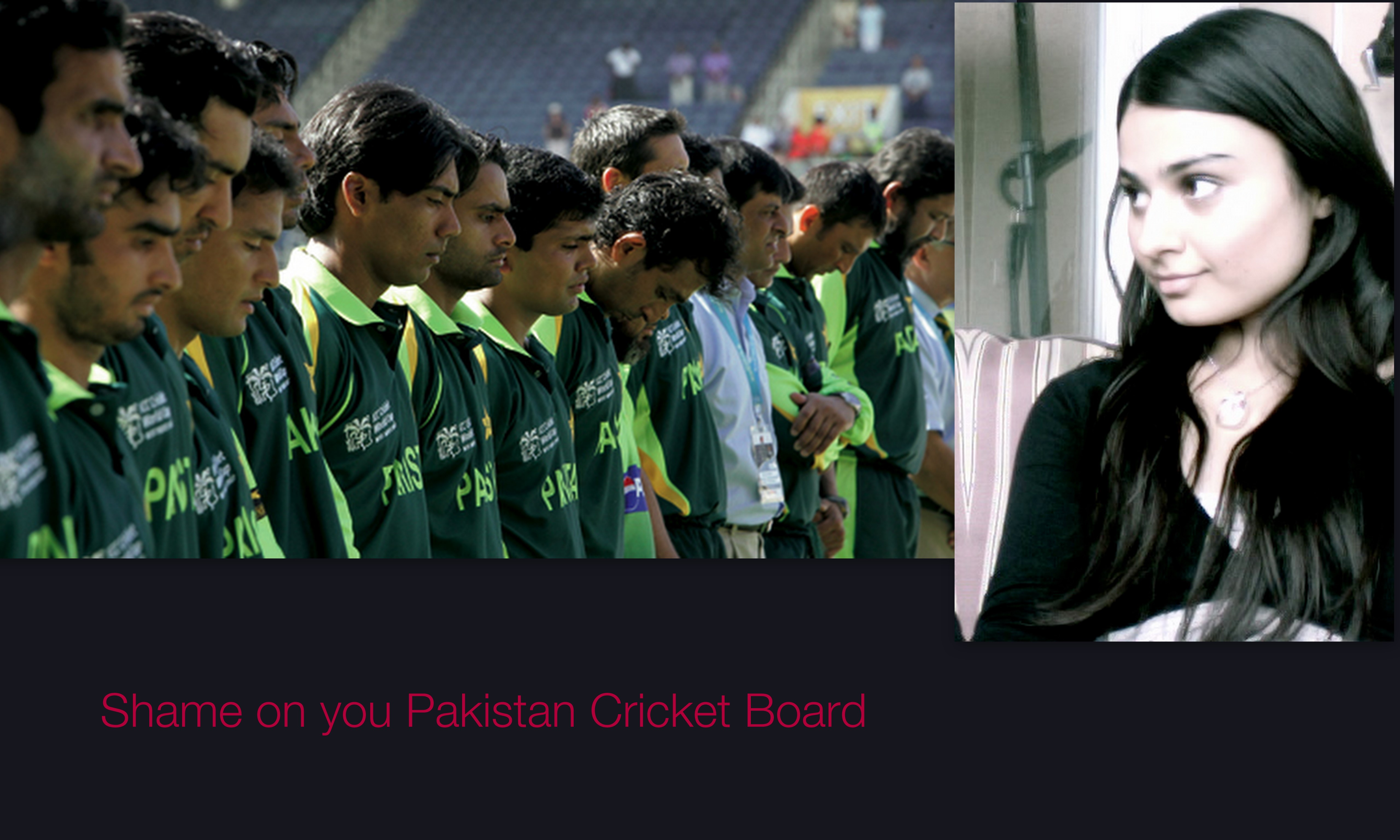
And I’m not going to lie. After your loss to the Aussies last month, I was tempted to leave you, perhaps for the Kiwi’s, maybe even see Sri Lanka for awhile. But I didn’t stray; I was a good girlfriend. Then came today’s PCB decision, reminding me that you are subject to an absurdly inefficient authority so seeped in politics that I can’t deal with your baggage anymore. The drama has been progressively agonizing.
It’s like dating a teenager. Which is why it was so easy to love you when I was one. But I’m not a teenager anymore. I’m in my 20’s now and am seriously thinking about settling down. I need a cricket team who can reciprocate my love, show consistency and keep me amused. After a long day of work, yoga and blogging, I stay up till midnight and beyond (California time) to watch your ODI’s, even Tests and you leave me dissatisfied, night after night. It’s been 14 years, of ups and downs, which have been a sad series of “downs” in the past few years. When Shahid Afridi first joined the team and scored the Worlds Fastest Century in the nineties, I was captivated; you had me at hello. So I put up with the 1999 World Cup Debacle, the next world Cup Debacle, and have no idea what you’re going to pull in this next one.
So why do I still love you? I suppose because deep down I still believe in you. It’s irrational, impractical and against my immediate interests to stay, but I won’t leave. And after all you’ve put me through: if I still don’t walk away…..that’s gotta be love.
Futility of Military Motivated relations Minus Democratic Input
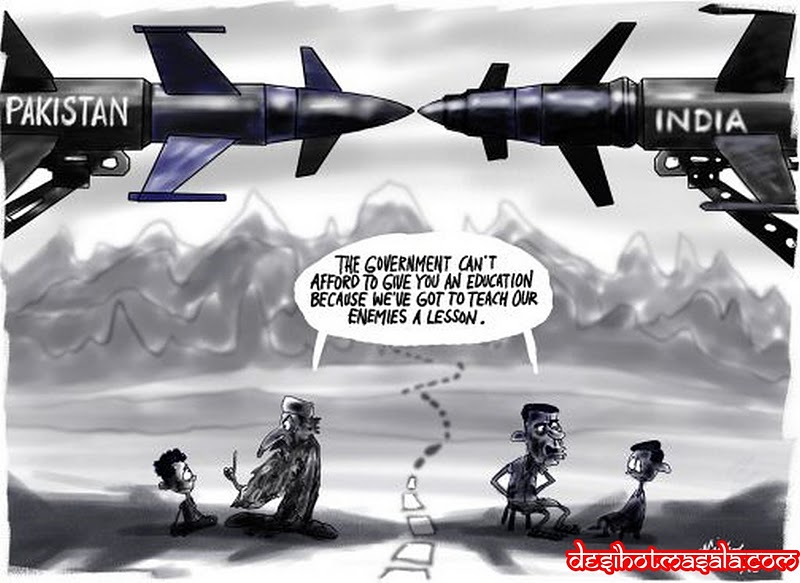
While working in D.C. some years back almost every Congress person, Think Tank and academic I came across was certain on one thing on nuclear proliferation: if an atomic bomb ever goes off again, it’s going to happen in South Asia. It was a dismal but resounding notion that I have even heard expressed amongst South Asians. Profound mistrust, three wars, land disputes, all spurred by a gory colonial partition 60 odd years ago has left Pakistan and India scarred in a way that makes cynics of even the best of us.
A realist might tell you that nuclear armed neighbors by way of deterrence have allowed India and Pakistan to refrain from war since testing their atom bombs, but even they would conclude war is inevitable. Liberals would make a case for enhanced trade to gradually spur economic interdependence to help avoid conflict, which is perhaps the most palatable idea, but statistics show that deepening trade between India and Pakistan has not yet improved relations:
“trade between India and Pakistan was at its highest ever in the year following Kargil. Even the Mumbai attacks have not significantly dented India-Pakistan trade relations. Pakistan trades with 100’s of countries, India being the 9th largest trading partner”
So if deepening trade and deterrence haven’t yielded what confidently could be considered lasting peace, what will it take? I’m of the opinion that realist and liberalist policies must be accompanied by ground level, macro scale diplomacy. Because while deterrence satisfies the all mighty military institutions, and trade satisfies highly influential business elites there’s little attention given to the masses; and by masses I mean billions of South Asians who have yet to even fathom peace as a possibility.
Call it ground level diplomacy, soft power or good ol’ winning hearts and minds: it’s the missing ingredient in bilateral relations. Resident Indian’s and Pakistani’s have a perceived animosity for one another that verges on the irrational. Catapulting cricket matches between both countries as akin to war, hate crimes against Muslims in India to cross border terrorism is absurd for states divided by man made, post colonial borders.
“India’s soft power, its true of music, dance of arts, yoga, aryuveda, even cuisine. With these examples come the sense that in todays world its not the side of the bigger army that wins, it’s the one that tells a better story. And india is the land of a better story. Stereotypes are changing. Today people in Silicon valley people talk of IIT’s with same reverence of MIT”
Why not apply that soft power in Pakistan? And vice versa. I laud the Aman ki Asha initiative for doing exactly this. Launched by Pakistani media conglomerate Geo T.V. and on the Indian side, the Times of India, both companies have taken up the task of engaging both countries using soft power. As media houses, through television, print and web placements, they engage masses directly, finally sidestepping politically or economically motivated discourse both countries are used to. THeir mission statement reads:
Public opinion is far too potent a force to be left in the hands of narrow vested interests. The people of today must find its voice and force the rulers to listen. The awaam must write its own placards and fashion its own slogans. The leaders must learn to be led and not blindly followed. Skepticism about the given is often the genesis of faith. This skepticism has been brewing. It can be unleashed to forge a new social compact between the people of this region. A social compact based on a simple yet powerful impulse – Aman ki Asha. A desire for peace.
Aman ki Asha taps the widespread but underrepresented sentiments of commonality shared by South Asians. By engaging the masses directly with soft power it’s is a brilliant first step at mitigating the most potent problem in bilateral relations: mistrust. And what is most brilliant about the initiative is that could have teeth. Unlike countless other proposals for peace, Aman ki Asha uses mass media to speak to masses directly with a specifically outlined agenda:
“Issues of trade and commerce, of investments, of financial infrastructure, of cultural exchanges, of religious and medical tourism, of free movement of ideas, of visa regimes, of sporting ties, of connectivity, of reviving existing routes, of market access, of separated families, of the plight of prisoners, will be part of our initial agenda. Through debates, discussions and the telling of stories we will find commonalities and space, for compromise and adjustment, on matters that have bedevilled relations for over 60 years”
It sounds promising, because although I do not anticipate this dissemination of smart power to yield results immediately, if it’s done consistently it might have a capacity to democratize the push for peace. It ought not to be the military, or economic institutions setting the agenda, rather, policies should reflect the will of the people. Aman ki Asha is a hugely cooperative step in bilateral ties. More peaceful relations in South Asia can begin by reminding the masses of what my Pakistani born and raised mother said when she came back from a trip to India in 2005 “they (Indians) eat the same food, sound the same, act and even look the same as us”. With such strong commonality felt amongst everyday people, one questions the legitimacy of policymaking that has historically divided, rather than united South Asians. And if that sentiment disseminates, albeit gradually, there’s much to hope for in the future.
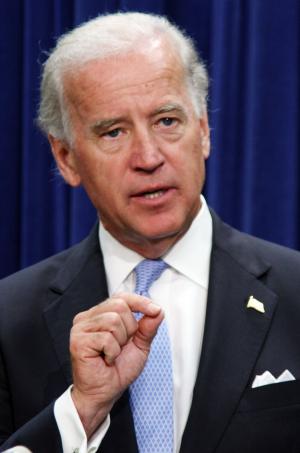
Joe Biden Says Pakistan is a BIgger Concern than Afghanistan
Vice President Biden was on Larry King this week slating Pakistan as America’s larger concern than Afghanistan. He explained “Pakistan is a big country…has nuclear weapons that are able to be deployed and has a real significant minority of radicalized population and a not complete functional democracy in the sense we think about it” . Which sounds tremendously pressing and makes for catchy prime time television, but let’s delve into his rationale one by one, and assess his concerns.
Pakistan is certainly “a big country” with a “real significant minority of radicalized population” and the Vice President is dead on with this issue. Among the top ten largest countries in the world, Pakistan is still developing in a relatively underdeveloped region, and houses one of the largest refugee problems on earth. So even a minority of radicalized militants is enough to wreck havok on Pakistan, as it has been. And likewise, that minority population single handedly deters our fight in fighting the war on Terror.
And this truly defines the Pakistan quagmire: dealing with extremist militants in an underdeveloped, politically volatile war zone.
Biden also said Pakistan “is not a completely functional democracy in the sense we think about it”, which is a statement of fact. However it’s a misplaced concern because it’s not necessarily a hindrance to our interests at this time. In our alliance with Pakistan Democrats have historically sided with civilian governments, while Republicans have preferred to deal with military regimes in Islamabad. So Biden’s issue with Pakistan’s brand democracy is an inherent tension that has existed in this alliance for decades.
It’s a cause of tension over the years because we’ve effectively dealt with Military regimes in the past, and other international players such as China, and India have also found it effective to deal with military led Pakistan. So Democrats like Vice President Biden insisting on American style democracy is not always necessary.
In a perfect world, our allies would have fully functioning democracies akin to ours, but the reality is our brand of governance is not easily applied in places like Pakistan.
Plus there’s a perceived arrogance that comes along with our leaders being critical of governments that function differently than ours. I think the Vice Presidents suggestion makes for a nice talking point on democracy for tv viewers, but offers no practical insight let alone a solution to Pakistan as our foremost concern.
Finally, the Vice President cited “vulnerabilities” regarding the safety of Pakistan’s nuclear weapons. Nuclear non proliferation is a bipartisan, and to a large extent, global cause of anxiety that few will argue against. But how realistic is a notion of Pakistan’s nuclear arsenal being vulnerable to non military or non state actors? It’s a nightmarish scenario that catapults Pakistan atop our immediate Foreign Policy agenda because the mere sliver of possibility proliferation could happen entails catastrophically high risks that no one is willing to take. But such alarming rhetoric doesn’t inform us of the likelihood of this happening. It just frieghtens us, deters diplomacy and ultimately undermines the U.S. Pakistani alliance. Such rhetoric, minus substantial evidence should be shared amongst policymakers and government officials pertinent to the situation. Otherwise, the rhetoric can be counter-productive in engaging allies like Pakistan.
Overall, the Vice President’s comments were consistent with the Obama Administration’s promises of an increasingly narrow focus on our Foreign Policy to Pakistan.
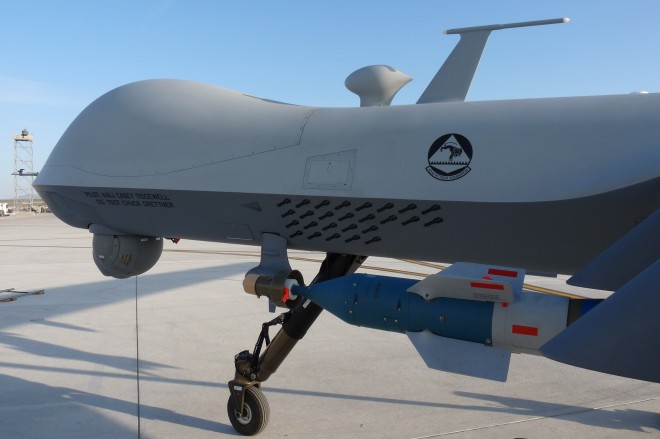
The most provocative piece I’ve seen on drones in Pakistan was published last week. Not the most detailed, well researched article (the New Yorker takes the cake so far) but certainly the most confrontational. Farhat Taj writes in the Daily Times that International media, including American and Pakistani reports critical of drone use are totally unfounded. Vehemently, Taj writes:
” The people of Waziristan are suffering a brutal kind of occupation under the Taliban and al Qaeda. It is in this context that they would welcome anyone, Americans, Israelis, Indians or even the devil, to rid them of the Taliban and al Qaeda”
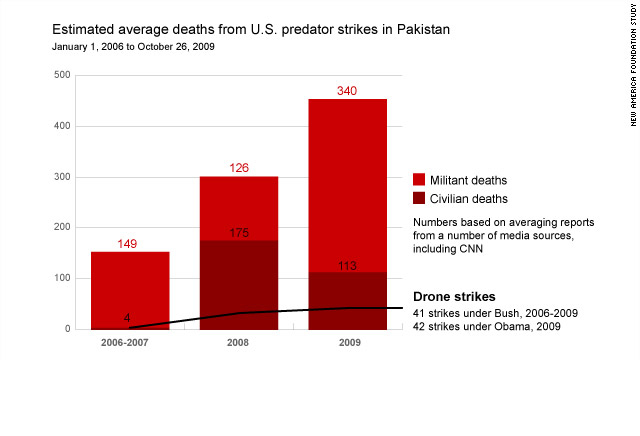
It’s a grand, almost inconceivable statement given that Anti Americanism is on a rapid rise and India / Pakistan are widely considered notorious Arch Nemesis in international relations today. Taj says inhabitants of Waziristan actually “welcome” drone attacks and dismisses all accusations of civilian casualties as Taliban propaganda. Basing this on the idea that almost no media are allowed in the area, she concludes there is no verifiable evidence, and therefore no reason for concern of civilian casualties. But mere logic would indicate otherwise. Although surgical, drones are not so precise to as to obliterate one individual at a time. When they strike, the range of damage inflicted by any drone is bound to cause peripheral damage, destroying more than just a singular terrorist.
Taj also too vehemently dismisses the concern that drones infringe on Pakistan’s sovereignty. She says greater Pakistan is oblivious to the more pressing priority of wiping out Taliban. And while I agree the Taliban is inflicting profound, perpetual and grave damage on Waziristan, greater Pakistan’s perceptions are important and not to be overlooked so easily.
Waziristan is but a fraction of Pakistan. If the majority of Pakistani’s see drones as an infringement of sovereignty, future cooperation with strategically poised Pakistan can become difficult. The alliance is already waning and one of politics’ golden rules is: perceptions matter. Whether or not there are exact numbers of civilian casualties, Pakistani’s are strongly against unmanned aircraft dropping bombs in their territory. Regardless of circumstances, the perception of an alliance with America, and our War on Terror is endangered by the drones. Hence arguments that drones are counter productive.
At what cost are we using drones to wipe out a few key leaders from militant and extremist groups? Might we accomplish the same success in hunting down terrorists by employing Pakistani forces to take these guys out themeslves using close cooperation with our counter terrorism, intelligence and military operations?
Some already argue that Islamabad tacitly works with the United States on drones in the north, however, the official and public stance of the Pakistani government is of staunch disapproval of drones. It’s a fair argument because without Islamabad’s approval, the United States would be in violation of international law, and protocol in using drones in Waziristan minus Pakistsan’s approval. So I buy the argument that Islamabad works closely in using drones in the north. But the fact that the government goes to the extent of constantly assuring its public that they disapprove of drones on record, is testimony to how offensive the use of unmanned aircrafts are in Pakistan.
So while our heightened use of drones might be effective in obliterating key leaders from the Taliban ranks for success in the immediate term, the consequences of drones entail potentially riling further anti Americanism which could compromise our interests in the future.
Cooperation is key, and I’m not convinced increased use of drones will help us engage Pakistan in the future.
Similar to his ratings drop at home, abroad President Obama is being accused of not living up to expectations. In DAWN news this week there’s an article entitled: “Obama’s Changing Tone” suggesting our President is reverting to foreign policy reminiscent of the Bush administration on Pakistan, and to an extent, the greater Muslim World. The idea is that Obama’s planned troop surge in tandem with ever toughening rhetoric post the Fort Hood Massacre and the Christmas Bomber, reflects leadership that’s not much different than former President Bush’s.
But on the contrary, our escalating presence in Pakistan is exactly what Obama promised. During the campaign trail, he made clear that his main focus was Al Qaeda and destroying terrorists in Pakistan (militants having spilled over from Afghanistan into Pakistan). The rhetoric was so hawkish, it actually became a sticking point before the primaries that Republicans and Democrats like Hillary criticized. Also, the media publicized his staunch rhetoric at length, so
Obama really has not changed tone on Pakistan: an intensified war matches his rhetoric from the start.
Plus is it fair to expect something radically different than the previous administration in the first place? Let’s not forget that it is often the political system and circumstances that drive leadership, and not vice versa. The fact is, America was already deeply engaged in two very problematic wars at the inception of Obama’s Presidency. He inherited an intensely worsening situation in Afghanistan that rapidly spilled across the border into Pakistan. President Obama anticipated this and is thus living up to campaign promises: a more hawkish foreign policy to Pakistan.
Which of course then raises the question: is hawkishness the right approach to Pakistan at this time? Pakistani’s certainly don’t think so. CIA drones have the entire country in an uproar, while Islamabad isn’t taking well to DC’s tacit encouragement of rapidly increasing Indian influence in Afghanistan, and even billions in aid from America is frowned upon with unprecedented magnitude. And it’s not that the Obama administration isn’t aware of skepticism. Rather, toughening policies are a matter of practicality.
My guess is that the President is thinking: we’re already in Afghanistan, the war is deteriorating into Pakistan, what’s the best way to mitigate the situation, secure the region just enough to exit in the next couple years while leaving behind more cooperative players in the region so as to ensure our energy and geopolitical interests in South/Central Asia.
Phew. Now there’s a dilemma. And when looked at from his possible perspective, the Pakistan quagmire is revealed as tremendously complex. It’s such a multifaceted, sweeping, consequential and changing situation that involves so many players who work within the confines of political systems that only history should be the best judge of whether Obama’s stance on Pakistan is constructive or progressive. And that itself is relative. So let’s not be surprised at his hawkishness. It was naive of anyone to expect otherwise in the case of Pakistan.
Defense Secretary Robert Gates met with officials in Islamabad to reiterate the importance of drone attacks, despite escalating reservations of their use amongst Pakistani’s. It’s been a polarizing issue from the onset because while it’s convenient to fly unmanned CIA predator aircraft over potential terrorist havens, they result in significant civilian casualties, and displaced persons. So it’s no surprise that over a year later, reconciling their use in Pakistan is still on the agenda.
For this reason, Secretary Gates announced a possibility of America providing “Pakistan with 12 unarmed Shadow aircraft”. Meaning the planes would not have a capacity to strike, but offer enhanced “surveillance capabilities under U.S. supervision”. It’s a fair decision and something I’ve suggested previously.
Gates also stressed the importance of militarily addressing all extremist groups because:
“It’s dangerous to single out any one of these groups and say, ‘If we could beat that group that would solve the problem,’ because they are in effect a syndicate of terrorist operators”
And almost simultaneously, Secretary Clinton unveiled The Afghanistan and Pakistan Regional Stabilization Strategy which sends an increase of 20-30% in civilian experts to both countries and “outlines plans to rebuild the Afghan farm sector, improve governance, and reintegrate extremists into society”. But this strategy of “reintegrating extremists” runs in contradiction to Secretary Gates’ aforementioned remarks.
Gates ruled out any possibility of reintegration calling for a consolidated attack on extremists suggesting that they work in “syndication”, while Cinton’s plan attempts to bring extremists back into the fold of moderate society.
It’s a stark inconsistency in our foreign policy. Because while I think Secretary Clinton’s idea notion of reintegration is more in tune with ground realities, and therefore viable, I figure Secretary Gates was being staunch in talks because finally relinguishing partial drone technology provided him with that margin of hawkishness. Either way though, one thing is certain, despite skepticism on both ends of the U.S. Pakistan relationship, cooperation is ever deepening.
To my knowledge, Cricket is not an official tool of diplomacy in international relations. Cricket is however, traditionally a sophisticated, gentleman’s game.
A very childish move because on a micro level, it wastes World Class cricketers’ time and on a macro scale, excludes the World Champions in 20Twenty from this tournament.
Were decision makers naïve enough to think that not bidding on Pakistani players would send a tough message to the Pakistani government so that they might soften up on Kashmir or divert troops from the Indian, to the Afghan border? I highly doubt it. Which renders the decision to exclude Pakistani players just juvenile.
It’s the kind of thing a teenager does which accomplishes little else than a momentary, base satisfaction that he or she later realizes wasn’t worth it as they get older. Because this is not going to improve relations, and it certainly doesn’t help the game of cricket to exclude the World Champs. It sends a symbolic slap across the border to millions of fans. Mind you, it slaps the fans, not the government, the fans. So, even though cricket is not an official tool of diplomacy, it can have a periphery effect of separating peoples. This snub can only stall rather than alleviate already chilling relations in South Asia.
But mostly, this comes at the cost of cricket in general. It’s reminiscent of Greg and Trevor Chappel bowling the now infamous underarm ball to New Zealand in 1981. Shame on IPL for such a foolish misstep that accomplishes nothing positive.






 Zainab B. Jeewanjee
 Zainab Jeewanjee