After much hype and even more anticipation when it was sold out Saturday night, I finally watched Kurbaan (Sacrifice), and am so disappointed. Blasé story, lame action sequences, lousy screenplay. The first Kurbaan that took place was my deciding to watch the whole thing. Shukran Allah it didn’t go too much over 2 hours.
Kurbaan #1: Your time
The blockbuster has been promoted as a “thriller” flanked by a very dramatic trailer, beautiful soundtrack and an A list cast. And I watched the cast on a talk show the other day explaining Kurbaan was actually more than a thriller: it’s a love story.
But I didn’t see any love. Even the much hyped love scenes were mediocre. I used to think the Saif Kareena duo were flawless until I watched them together in Kurbaan. SPOILER ALERT. What’s sexy about a super smart girl, reduced to forcing herself to make out with a terrorist in attempt to save her life. Ewwwww.
Kurbaan #2: Saifeena
Poor Saif too, he wasn’t the hero (actually, there was no hero in this movie). Saif was hot until this movie. Because unfortunately for him, in the absence of any personal relationship with Saif, the roles actors play become a sort of reality with which we view them. Saif was cold hearted, cunning, deceptive. Did I mention he was a terrorist? Oh, and the whole three minutes devoted to a wounded, detailed stitching up of Saif’s usually perfect chest, wasn’t good.
Kurbaan #3: Saif’s hotness quotient
Speaking of terrorism and Bollywood, do all mentions of Pakistan/Muslims really have to be linked to terrorism? Yes Pakistan is in dire straits, and South Asian relations are increasingly hostile post the Mumbai atrocities, but 60 odd years after Partition must we perpetuate tension for the sake of a mediocre 2 hour thriller flick? I’m not naïve enough to expect Bollywood churn out movies of profound political sense with a moral compass, but after films like New York, A Wednesday, Kurbaan and a few others, India’s tinsletown really gives a notion that Muslim = Terrorist.
Kurbaan #4: Any chance of increasingly hostile South Asian political relations NOT affecting the masses.
But the biggest Kurban of all is the very use of words like “Kurbaan” and “Junoon” (passion). Saif is depicted in one scene using the concept of “junoon” to justify his terrorist endeavors. And that too in Urdu, which was poorly spoken throughout the film. Urdu accents were totally off and dialogue was too contrived for it to be believable. It just wasn’t how Pakistani’s speak.
Kurbaan #5: Urdu
Perhaps the way Saif justifies terrorist activity with notions of “junoon” and “sacrifice” irks me in particular because both are poetic concepts used in one of my favorite lyrics by the rock band Junoon:
“Junoon se, aur Ishq se millti hain Azaadi. Qurbaani ki bahoon mein, millti hain Azaadi”
With passion and love one finds freedom. In the arms of sacrifice, freedom is found.
Ahhh, now that’s art. I love Hindi movies, and although Kareena stole the show with impressive theatrics, Kurban was an overall let down. Love Aaj Kal is still my choice for best movie this year.
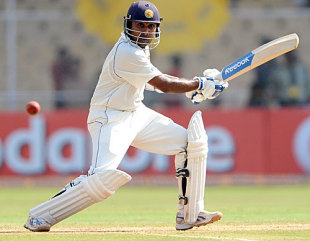
Captain. Keeper. Fielder. Batsman. Sangakkara does it all. He’s been one of my favorite players in the world since he emerged as one of the few wicketkeepers whose also consistent at bat, and the only wicketkeeper/batsman effective anywhere from opener, to 6th man down.
He’s just a sheer joy to watch. Sangakkara can make runs off any ball bowled his way, because his strikes are consistently clean, and always middled. He’ll never play a ball swinging toward the off side, to the leg side. And that kind of foresight is valuable wisdom in cricket.
Day 3, second test match vs India, Sri Lanka’s down 0 for 1, attempting to chase the monstrous 642 Indian total. Sangakkara steps in. Once opener Paranavithana fell to Sreesanth’s off side out swinger to the left handed batsman who nicked it straight into Dhoni’s hands, I guarantee Sangakkara was thinking: “shoot. I gotta hold my wicket, and be a pillar so my team doesn’t feel pressure to make an astronomical run rate”. He’s thinking like Dravid right now. But the beauty of Sangakkara is, he thinks that without having as much experience as a batsman like Dravid or Gilchrist. Sangakkara’s maturity as a batsman, captain, and keeper lie in the mere fact that if the team requires ten runs an over, he’ll do it, if they need him to hold his wicket for 100 balls, he’ll do it: he does what it takes to win. He’s dependable, consistent and although he’s out early on today, it’s not his norm.
Sri Lanka’s down 216 for 8 with impressive bowling by Sreesanth, and India’s opening lineup unleashed a batting onslaught giving them tremendous pace early on.
Sehwag’s seemingly constant ODI mindset was a blessing and Gambhir played magnificent innings, collectively chalking up 297, which eased pressure on following batsman to play their regular game. The openers did their job, and in any match, be it ODI, 20Twenty or Test, that’s key. I suppose this is just the flip side of the first test match. Sri Lanka dominated leaving India with the option to draw if not face an innings defeat, and it looks like we may see Sri Lanka in that position today.
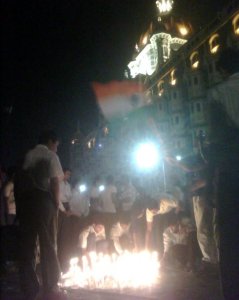
At the heels of 26/11, Pakistan charged seven people involved in the Mumbai atrocities today. The Virginia Quarterly Review has a four part article revealing the ordeal in harrowing detail and after reading it, I’m still stunned. On 26/11 last year I got a call from a friend born and raised in Mumbai who was flying out there that afternoon, he said his parents were fine but his voice was wrought by a despair I hadn’t heard from him before. He didn’t specifically say he was distraught or describe how he felt in detail, but i recognized the frustration instantly because I’d heard that voice before: from friends in Karachi who witness countless threats and acts of terrorism since 9/11. I identified immediately with my friends frustration and despair on a humanitarian level, and even further because although the perpetrators in Mumbai were allegedly trained in Pakistan, I knew they’d ultimately hurt Pakistani’s the most.
As India forges ahead economically and internationally, Pakistan is deteriorating. Terrorism has brought vanishing security that has perpetually halted foreign investment, stagnating the economy leaving no trickle down for the lower and middle class majority population who simultaneously realize a widening gap in their position vis a vis the wealthy. Terrorism has rendered governance in survival mode since 9/11 making leeway for decreased oversight and increased corruption, which was rampant to begin with.
A year after the Mumbai atrocities, we see Manmohan Singh hosted at the White House in elaborate fanfare with progressive talks on bilateral trade rooted in liberalism that is fitting for a country with roughly 8% growth in GDP and a middle class that’s now larger than our entire population in the United States.
Conversely, relations with Pakistani South Asia in light of that progress are a valid point of comparison because we have a strategic interest in both countries. More than ever, it’s apparent we have economically strategic interests with India, and security based interests in Pakistan. And like previous presidencies the Obama administration quickly realized the delicate art of balancing both interests given that either country feels progressive relations with the United States inherently comes as a direct expense of one another. Engaging India as it expands economically and Pakistan geopolitically for security’s sake (i.e. in the War on Terror and in the face of an ascending China) pose an opportunity for us to strike a creative balance in South Asia.
It’s not about who wears the crown, (“Taj”) in South Asian U.S. relations, it’s about engaging both sides for the long haul.
In Pakistan that means cooperating today for security’s sake and uprooting terrorism and fundamentalism for tomorrow. Key from there is not abandoning ship, but remaining engaged so that Pakistan too has a route to economic expansion in the future. Without security, viable development won’t take place. And so long as we are engaged in an Af-Pak war, our policymakers have a responsibility to establish a roadmap that is rooted in long term success. This is our chance to get it right in South Asia, and that begins with an intention for a permanent solution. Assisting Pakistan to navigate the rising tide of development in our globalized world could be the key to ensuring they remain a strategic, long standing ally.
Zee Tv’s been advertising the Sri Lanka India series with the tag line: “the two great Asian teams face off” and just into game 1, it’s lived up to hype.
Batting’s the name of the game so far with India winning the toss and electing to bat on a track prime for the likes of Tendulkar and Sehwag. But they lost 4 quick wickets beginning with Gautam Gambhir who opened with just 1 run off 10 balls. Very disappointing, because having elected to bat, it’s the openers responsibility to take initiative of controlling the game early on, and with Sehwag at the other end, things looked positive in the first two overs. But an amateur mistake cost Gambhir when he played a shot leaving his bat seemingly miles away form his pad. First rule of defensive batting in a supporting role: keep your bat close to your pads! Gambhir was supposed to be Sehwag’s support and when left handed Welegedara pitched a fair in-swinger (out-swinger to lefty Gambhir) he should have known better than keep his bat so far away. (In Gambhir’s defense though, Walegadara’s left handed bowling to his left handed batting is difficult to face so early in the attack).
No excuses for Sehwag though. It was clear from the onset he was in ODI mode. Generating 16 runs off 11 balls was a treat in the first 3 overs, but did little good for the team. Sehwag failed to read Walegadara’s in-swing keeping his bat prepared for a straight ball, making him plum for the LBW picking. With both openers out, the match was set for Tendulkar as the Master batsman and Dravid as the “Wall” to take center stage. But the partnership fell short of expectations when Sachin, like Sehwag seemed to be in ODI form, smashing a boundary on the first ball, but getting out 2 balls later when Walegadara struck again. Laxman fell for a duck thereafter but Dravid, in classic form was a God send coming in with India at 4 for 32.
Rahul Dravid came in & did what he does best: be the “Wall”. I realized in this match, he’s the most composed batsman in the world. And like any great form of art, be it music, theatre, painting or another sport, Dravid slows down time with his work. He bats like there’s an eternity at hand and as if wickets simply haven’t fallen. He operates beyond circumstances with a precise composure to demonstrate a maturity that a lot of batsman just lack. And that value is realized in test matches where time is secondary to holding ones wicket. Dravid didn’t once hold his bat in an aggressive position, it was mostly downward, playing each ball safely with much needed control. He didn’t go out of his way to smash any ball, but beautifully directed the pace of key balls into gaps, or nudged them just enough to get multiple runs when it was safe to do so. I think Dravid is the most conservatively effective batsman in the game today. Inzamam ul-Haq’s early days come to mind as someone comparable. You can never go wrong with a text book batsmen in test cricket: Dravid’s footwork is consistently flawless, his bat is always close to the pads and his eyes are never off the ball. It’s no wonder he led the team to a record breaking comeback making 177 off 261 bringing India to the very respectable total of 476.
Day two: knowing that to win the match Sri Lanka would need a high run rate, opener Dilshan stepped up to bat a beautiful 112 off 133, (wonderful batting acceptable for even an ODI). His contribution was key in the same way Dravid’s was to ensuring Sri Lanka maintain wickets, while keeping the run rate up. Also, Dhoni made some basic mistakes that enhanced Sri Lanka’s game. Dhoni brought in spinner Harbhajan much too early into the attack. In about the 6th over, Dhoni broke the rhythm of his fast bowlers by unorthodoxly having Harbhajan bowl. Strike bowlers play at least 10-15+ overs and spinners normally aren’t used to or are effective with newer balls because they don’t get spin. So bringing in a spinner was an unnecessary, and costly move that allowed Sri Lanka to open up their batting which settled into a good rhythm to chalk up a very nice run rate. Jaywardene in particular is playing one of the most beautiful centuries i’ve seen in awhile.
So to continue on and win this, Sri Lanka should play the entire day and chalk up a strong total of roughly 500+ runs, then declare and try to clean out India in day 4. If India wants to win from hre on out, they should focus squarely on better wicket taking. Harbhajan should be used later in the overs and Zaheer’s aggressiveness should continue to take more wickets. India should have bowled Sri Lanka for a maximum of 475, but Sri Lanka isn’t falling before that, they’re already at a magnificent 435-5. So India should be looking for solid opening in their next innings, and a total of at least 400+ again, while still leaving themselves enough time to get Sri Lanka all out. Whichever way this goes though, i think we’re in for some classy innings 🙂
Although I prefer financially conservative policies during times of economic turmoil, reform of our medical system is required: no resident of a country with the worlds largest GDP should be denied access to medical care. I’m concerned about a proposed “Government option’s” negative impact on the quality of healthcare, but overhaul of insurance by the Obama plan is valuable and the White House offers these highlights on reform:
• Insurance companies may not deny coverage based on pre-existing conditions.
• Prevents companies from dropping coverage when people are sick.
• Puts a limit on out of pocket expenses so people don’t go broke when they get sick.
• Eliminates some charges for preventive care (i.e. mammograms, flu shots, diabetes testing)
• Protects medicare for seniors and eliminates the “donut-hole” gap in coverage for prescription drugs
I’ve worked in insurance for a few years and experienced horror stories of clients who are left “uninsurable” because of pre-existing conditions. My father founded a company to deal with these exact difficulties when he was left to bear $100k+ in medical bills as insurance companies denied coverage for expenses related to my younger brother’s “pre existing” health condition. Suffice to say, individual policies extending coverage to pre-existing conditions is long overdue.
However, expanding coverage to individuals with pre-existing conditions is only effective when everyone is continuously insured, meaning coverage is purchased at length and not cancelled. Reason being, if pre-existing coverage is available, people will begin purchasing insurance only when ill, or only for immediate needs and cancel coverage once healthy, a phenomenon known as adverse selection. Adverse selection, impedes profitability posing losses to insurance companies, ultimately driving health insurance premiums upward for everyone. Which brings us back to Obama’s plan that addresses this concern by making health insurance a mandatory purchase. It’s a simple, necessary and effective solution.
But remaining highlights of reform are misleading. The plan promises to eliminate charges for certain preventative care services, put a limit on out of pocket expenses and prohibit insurance companies from canceling coverage because of illnesses. This sounds great, but most companies already offer this. In my years of dealing with individual and group health benefits, I have yet to see a carrier cancel coverage because of ongoing illnesses incurred during a policy period, and most all policies have an out of pocket maximum, or co payment structure capping what an insured must pay in a given year. For instance, on an individual Blue Cross policy in California maximum out of pocket expenses range anywhere from $3,000 to $10,00- depending on the policy one selects. Denial of coverage for a pre-existing related condition is plausible, but cancellation of a policy because of a covered illness is unheard of. Also plans already include coverage for a wide range of preventative health services. Under some plans in California, all preventative health is covered at 100% after your deductible and annual physicals are covered even before the deductible. Granted California is a progressive state where private insurers offer relatively liberal coverages, but Obama’s plan starts to look misleading in calling itself “reform” when many of the proposed changes already exist.
So given that preventative coverage is currently available and Obama’s plan extends benefits to those with pre-existing conditions, the main concern left is rising costs. There are four major players in the U.S. health system: insurance companies, medical professionals, pharmaceutical companies and American consumers. Reconciling each industries interest in profitability with a consumer interest in affordability is the task at hand. Obama’s plan says it would cost “nothing” to taxpayers and if that’s the case, consumers seem protected, but costs will inevitably be born by another player in the mix. And thus far, reform chooses to ding insurance companies between the three. This explains the aforementioned wording that misleadingly suggests coverage is being expanded when much of those benefits are already offered by insurance policies. It’s not a direct vilification of insurance companies, but certainly plays on an already widely vilified view of the insurance industry.
Americans are understandably annoyed with medical insurance costs that have risen over the years. But pharmaceutical and medical professional industries have an impact on those premiums and are worthy of consideration as legislators draft reform. Fraud on the part of medical professionals engaging in rampant up-coding, charging for unnecessary services and over-billing of both private and public insurance like Medicare play a significant part in our upward premiums. In fact, $12 billion in improper Medical claims were paid last year. So we wind up paying for exorbitant fraud first through taxes on government run health care, then through upward premiums on private insurance!And on the whole, America spends more than $2 trillion on healthcare annually with at least 3 percent of that spending — or $68 billion lost to fraud.
Pharmaceutical companies also factor into rising costs, but media, legislators and Obama’s plan are surprisingly void of any discussion or reform on that front. How the same drugs we use and are manufactured by an American pharmaceutical company, can be sold at a fraction of the cost in Canada while cheaper foreign med’s are not easily accessible in our markets, is not only unfair, but increases our premiums in the same way fraud does. When an insured purchases brand medications from a pharmacy, they pay for only a co-payment, or deductible amount while the insurance company winds up bearing the remaining, majority cost of exorbitantly priced drugs, which ultimately drives rates up for us all.
Point to note: reform is needed on all ends. Obama’s plan brings much needed value by requiring insurance companies to extend benefits for pre-existing conditions and mandating purchase of some form of coverage. And equally important is understanding that insurance companies are not the sole contributors to rising costs of health care in America and should therefore not be an exclusive target of reform.
Pervez Musharraf was on Fareed Zakaria GPS this morning discussing the Af-Pak situation in two segments. The second segment focused on Pakistan where Zakaria prefaced Q&A by reminding viewers that General Musharraf is an “authentic representation of Pakistan’s military” and that his comments will reveal that the situation in Afghanistan is rooted in a“60 year geopolitical rivalry that we just walked in to, and its between between India and Pakistan“. Sounded like grand stuff.
And Zakaria jumped right in. He began with questions on whether the Pakistan military is as committed to eliminating terrorists in the north who launch cross border attacks as they are to obliterating terrorists in the South who are responsible for domestic assaults. He said the military “never seems to get around to attacking North Waziristan who attacks India or Afghanistan because they were supported in the past”. Musharraff made clear that during his tenure, he insisted on drone technology needed to obliterate terrorists from both regions, especially given Baitullah Mehsud who assassinated Bhutto and that terrorists were never supported by the military or any government policy. He mentioned that ISI “ingress” in terrorist groups is standard procedure practiced by all Intelligence operations, clarifying that “ingress” is not be equated to “support”, rather it’s standard maintenance of contacts with such groups for the states advantage.
When questioned about the widespread notion that Al Qaeda leader Mullah Umar is in Pakistan, Musharraf said it’s “200% wrong” explaining Umar would have no interest in leaving a safe haven in the northern areas where Taliban has de-facto control for Quetta where US and Pakistani intelligence/ military roam rampant. It was a reasonable response and Zakaria’s questions sounded increasingly implicative.
Zakaria probed the notion saying that the “Afghanistan government and intelligence say he’s in Pakistan” to which Musharraff firmly explained “don’t talk about the Afghan government and intelligence. By design, they mislead the world, they talk against Pakistan because they are entirely under the influence of Indian intelligence”.
Wow, he just said it. It’s often documented in Pakistani media that Indian intelligence is widely responsible for insurgencies in northern areas of Pakistan and the province of Balochistan by way of material support, but rarely is that view expressed in mainstream U.S. media. Former Foreign Minister Sharifuddin Pirzada recently explained to me that warming of relations between Delhi and Kabul come at a direct expense of Pakistan because of such subversive, Indian led dealings with Afghanistan. Similarly, Musharraf explained he has provided “documented evidence” of this activity in the past.
From the first question on Pakistan’s commitment to uprooting cross border terrorism, to the question on Mullah Umar, Zakaria elicited Musharraf into discussion of a supposed “geopolitical rivalry” between India and Pakistan wherein Afghanistan is used as a “client state” by either nation as a buffer against, if not to subvert one another. And although I can’t say that is entirely untrue, Zakaria approached today’s interview with this preconceived notion, and overstepped neutrality by implicating Pakistan in the process.
Amidst drastic worsening of the Af-Pak situation with US forces suffering our deadliest months and Pakistani civilians and military bearing the brunt of terrorist assaults, Secretary Clinton arrived in full diplomatic force last week. She made media rounds sitting down for Q&A sessions with everyone from major news outlets to universities. But even the Clinton charm and expertise was met with vociferous skepticism. Before concerns on the Kerry Lugar bill could be adequately addressed, Clinton’s statements seem to have only riled increased trepidation in Pakistan:
Hamid Mir of GEO News peppered her with questions regarding illegally armed US diplomats roaming the streets of the capital and continued drone attacks. His questions reflect macro concerns that sovereignty is inherently undermined in cooperating with the United States. And at the Government college in Lahore, Secretary Clinton faced what I thought were even tougher questions:
Students identified a worsening War on Terror is akin to the Vietnam quagmire and suggested it’s time we focused on winning hearts and minds.
Another student echoed widespread skepticism of US/Pakistan cooperation citing failures of previous engagement during the Soviet Afghan War and how again “forcing Pakistan to take action that we might not want to take” is a legitimate concern among masses. Another said bilateral relations are marred by a subsequent “trust deficit” with Secretary Clinton responding that American’s have a similar lacking faith in Pakistan.
“Al Qaeda has had safe haven in Pakistan since 2002….I find it hard to believe that nobody in your government knows where they are and couldn’t get them if they really wanted to”
And that was just on security. On society and development she criticized “At the risk of sounding undiplomatic, Pakistan has to have internal investment in your public services and your business opportunities”
Ouch, thinks Pakistan. If Hillary’s mission was to rally support of cooperation with the United States amidst rapidly increasing skepticism of D.C.’s policies, the rhetoric has fallen short. In fact both Pakistani and American media are growing weary of the alliance:
Chris Matthews, in trademark rambunctiousness goes to town on Pakistan’s efforts in the War on Terror. But simplistic, irrelevant comments from his guests subtract from any substantive debate on the issue.
No offense Mr. Matthews, but just a brief look at a history book, closer reading of ground realities, or even quoting Hillary in context of the entire situation would have made for a more substantial segment. The panelists actually likened U.S engagement of Pakistan to a Sigfreid and Roy Act. It’s laughable and renders the aforementioned student questions more articulate and informative than this discussion.
Nonetheless, it seems former Pakistani President Ayub Khan’s book suggesting cooperation based on the idea of each being “Friends not Masters” is now a shared sentiment in this alliance . So the dilemma remains: increasing skepticism polarizes Islamabad and D.C. I just hope it will spur realization that winning hearts and minds on both ends is imperative.
Shahid Afridi is the most exciting cricketer in ODI’s. He’ll either smash the fastest century in history, or maintain a strike rate of 300 off just a couple balls before being caught out. So for Pakistan his presence could mean massive game winning runs, or for the opposition, a quick, key wicket early on. Either way, it’s extremely suspenseful excitement for both teams and all fans watching that no other player offers.
What’s even more exciting is that Afiridi’s no longer a novice. He’s been around 10+ years but hasn’t received the kind of acclaim his potential commands. He’s overlooked as merely an inexperienced slogger because no one really expects him to last more than a couple overs. But in this years 20/20 World Cup and today’s ODI, Afridi asserted himself as the quintessential all rounder.
One shouldn’t underestimate tight fielding, very effective bowling, and competitive spirit Afridi harnessed over the years . Because even when he’s inconsistent at bat, his wealth of periphery contributions have led to victory, proving he’s so much more than just a slogger.
In today’s match versus New Zeland he demonstrated maturity by chalking up roughly just 50% percent of runs off boundaries when Pakistan was 70 for 4, and taking key wickets, almost getting a hat trick. Doubters take note: Afridi is entirely capable of playing a solid, consistent, and well rounded game.
His volatile career can partially be attributed to laughable PCB selection processes and mediocre coaching. Because the past decade of Pakistani cricket has been defined by arbitrary player selections and coaches irrationally shuffling the lineup.
Counter productive, yo-yo operations assigned Afridi everywhere from opener, middle order and tail end batsman without giving him sufficient time to play where he is most effective. His natural game is aggressive and valuable at the mid to lower end for two reasons. Firstly, although he’s had trouble with spinners, he’s deadly when attacking a worn down ball from a medium paced bowler. Secondly, Afridi’s style isn’t conducive to requirements of an opener. Opening bat imposes a pressure for a deep concentration and patience.
Because Pakistan is often inconsistent and has yet to decide on solid openers, this leaves middle and lower end batsman required to chalk up significant runs when openers don’t hack it. And that kind of pressure requires rapid, hard hitting runs on a grand scale from severely limited balls that only Afridi can produce. He thrives on such conditions, rising to the occasion and leading Pakistan to victories like today’s.
Not to mention his consistent bowling. He always maintains a good economy and although he’s not a strike bowler, he quite often strikes wickets. In today’s match he patiently maintained line and length despite going without a wicket for a few overs, eventually taking out Daniel Vettori who looked dangerous with a 90+ strike rate.
Key to such effective bowling is Afridi’s deadly variation in speed. He has the unique ability to throw batsmen off their game by changing up bowling pace buttressed by an equally menacing competitive spirit. He’ll bowl 3 slow balls, and the next one faster than even Razzaq’s fastest. Some fast bowlers change up’s aren’t even as fast as his.
Plus he disguises the changeup very well: batsmen don’t know if he’s going to throw a googly, leg spin, or just throw a fast one with no turn at all. Afridi doesn’t allow batsmen liberty to anticipate a ball, hence his consistently good economy. Side note: Tendulkar is also good at this.
There’s no doubt Afridi’s a talented cricketer. But the past year we’ve seen a mature Afridi harness his game and emerge as a strong leader against world class teams. With the Pakistan team in what seems like a constant transitional phase, Afridi has risen to all occasions maintaing a powerful game and vivid energy that is key to supporting youngsters like Umar Gul and Kamran Akmal as we saw in today’s match.
So kudos to Ramiz Raja for finally addressing skipper Younus Khan about his lacking performance after today’s match. It’s high time Pakistan found a new captain, and i think Afridi has earned a shot at the position.
I love my palm pre. Then again, I’ve been with Nextel for 10+ years (you can’t beat free incoming coupled with a coast to coast walkie-talkie) meaning I’ve put up with painfully primitive, virtually featureless, and the most rugged phones one can imagine. So the Palm Pre is quite a step up from a long history of using Motorola phones designed for construction workers.
But it really is a great phone. The Pre functions very much like the IPhone with a touch screen and capacity to browse different applications with the flick of a finger. Perhaps the only limitation is the fact that only a fraction of applications are available for the Pre in comparison to the Iphone. But what I love about my pre, is that along with the touch screen, I have a drop down “QWERTY” keypad, the Iphone is restrictive to onlya touch screen. This allows the Iphone a larger screen, but at the expense of freedom to text and respond to emails with the efficiency of a fully functioning keypad. Touch-screens are far more sensitive than actual keypads and therefore inherently more prone to error.
Drawbacks to the Pre? Battery life is weak and the speaker phone is even weaker. But I’ve heard similar criticism of the Iphone’s battery. My mom and brothers both have IPhones, and although their applications look enticing, at the end of the day my Pre is still cuter.
The Iphone’s look is iconic, but it’s borderline monotonous. The overly simplistic, geometric form makes it sterile looking. The pre is curvy, organic…..it’s just sexy. Better yet, the Iphone is the cellular equivalent of Olive Oyl, while my Pre is Jessica Rabbit.
Zainab Interviews the Honorary Sharifuddin Pirzada
Q & A BREAKDOWN
PAST LEADERS: Jinnah
2:39 – 3:17 – Former BJP Parliamentarian Jaswant Singh authored a book on Jinnah that is receiving a lot of controversy, having actually worked with Jinnah, can you share your thoughts on the book ?
3:20 – 4:42 – In recent interviews, Singh has said Muslims in India are “robbed of their psychological security” and basically downtrodden. He says what Jinnah should have done is left some advice for Indian Muslims who stayed back and didn’t migrate to Pakistan after partition, what do you think Jinnah might have said?
4:44-6:01 – He also refers to Jinnah as a “nationalist” not at all Anti-Indian, please expand
6:01-7:34 – Referring to politics, when Jinnah split from the Congress party eventually formulating a two state idea later in his career, were there any politics referring to Nehru or Gandhi that had an impact on decision making? Jaswant Singh makes a mention to some, what does your experience tell us?
7:35: – 8:15 – You’ve mentioned previously that Jinnah was a self made man, more details?
8:15 – 8:55 : Tell us about your experience with Jinnah, its a rare treat for us to have your insight
8: 55 – 9:22 – Further details, conclusion on Jinnah.
“Jinnah had the Charm of Churchill, Dignity of de Gaulle, Magnetism of Mandela, and Objectivity of Obama”
CURRENT LEADERS : Musharraf
9:23 – 10:47 – Shifting to current leaders now, lets talk about Musharraf. You’ve got great experience, tell us about your work with the former General and Leader of Pakistan.
10:48 – 11:55 – How did your work with Musharraf expand during his tenure?
12:56 – 13:45 – You served on the national security council & as senior advisor to Gen. Musharraf, tell us howthe context of national security in Pakistan changed after 9/11. Specifically what came on the agenda, what were the immediate concerns and interests and what drove the decision to behave the way Pakistan did at the time?
13:45 – 15:48 – Recent polls indicate a majority of pakistanis think Musharraf should be punished for treason as per laws under article 6 of the Constitution, how do you feel about that?
15:48 – 14:55 – Do you think it’s a valid case that Musharraf be tried for treason?
14:54 – 15:38 – Regarding an increasingly free media in Pakistan, please offer further insight
15:38 – 16:16 – There’s a contention that the currently free media be attributed to Benazir Bhutto’s regime wherein sateilite technology allowing expanded media was put in place, while others assign credit to Musharraf. Can you clarify this?
16:16 – 18:39 – Do you think it was the state of emergency and sacking of the judiciary that caused Musharraf to lose elections?
18:42 – 19:35 – Final question on Musharraf, what do you think his legacy would be?
“The Media is very free in Pakistan, and Musharraf is to be given a great deal of credit for that”
CURRENT LEADERS : Zardari
19:48 – 20:55 – Recent military achievements in SWAT and international trade deals penned by Zardari paint a somewhat rosy picture for the future, what are your thoughts on him so far?
US – PAKISTAN RELATIONS:
20:57 – 23:14 – There’s a US special envoy in the region, drone attacks continue, the west is pushing for rapid democratization and are heavily investing in counterterrorism through cooperation with Pakistan while Islamabad hopes to secure itself and expand economically in this engagement. But there’s a long history of cooperation but still a lot of skepticism on both sides, do you think current engagement with a new administration who promises more diplomacy will yield different results than we’ve seen in this alliance?
23:14 – 24:52 – What advice might you offer President Obama or the State department in terms of engaging Pakistan?
“Pakistan was member of SEATO and CENTO but certain conditions were not fulfilled and there is a strong section of Pakistan who has reservations with a cordial relationship with the United States”
PAKISTAN & THE MUSLIM WORLD
24:55 – 25:11 – Your position at the Organization of Islamic Conference?
25:13 – 25:57 – On the Israeli Palestinian issue, how do you assess the current two state solution that Obama has put forward? How viable is it?
25:57 – 26:25 – What is Pakistan’s diplomatic/official stance on the Israeli Palestinian Issue?e Islamic Conference
12:25 – 26:35 – What are the main priorities of the Organization of the Islamic Conference?
“The Palestinian Issue followed by Kashmir are of top priority to the Organization of Islamic Conference”
PAKISTAN BORDER RELATIONS : INDIA & AFGHANISTAN:
26:35 – 27:42 – Manmohan Singh & Prime Minister Gilani at the NAAM summit this summer agreed to bracket issues of Terrorism and move forward on peace talks and trade issues. Such rhetoric is not new, and might not reach fruition, so do you see anything being resolved in Kashmir anytime soon, without the help of the US?
27:44 – 28:44 – Elections in Afghanistan are being contested between Abdullah Abdullah and incumbent Karzai. Pakistan doesn’t seem keen on either because both signal a warming of relations between Kabul & New Delhi which is believed to come at a direct expense to Islamabad. How do you feel about that?
America can facilitate peace talks between India and Pakistan on Kashmir, but on the whole, people of Kashmir are still suffering and struggling. The approach of prime ministers has been positive, but an extremist element in India exists which doesn’t want this. To stop suffering in Kashmir, a solution must be reached.
PAKISTAN’S INTERNATIONAL FUTURE:
28:44 – How do you see geopolitics playing out in the next decade for Pakistan, given amplified US presence, including super embassies being constructed in Pakistan/Afghanistan, perpetually stalled relations with India, a very likely nuclear neighbor in Iran, and increasingly influential China and polarized Russia, what does Pakistan look like ten years from now?
“Pakistan in the next ten years must concentrate on democratic set up, economic development & maintaining cordial relatoins with Islamic countries. There are two great friends of Pakistan: Saudi Arabia, the other is China. That’s a good starting point”




 Zainab B. Jeewanjee
 Zainab Jeewanjee