Similar to his ratings drop at home, abroad President Obama is being accused of not living up to expectations. In DAWN news this week there’s an article entitled: “Obama’s Changing Tone” suggesting our President is reverting to foreign policy reminiscent of the Bush administration on Pakistan, and to an extent, the greater Muslim World. The idea is that Obama’s planned troop surge in tandem with ever toughening rhetoric post the Fort Hood Massacre and the Christmas Bomber, reflects leadership that’s not much different than former President Bush’s.
But on the contrary, our escalating presence in Pakistan is exactly what Obama promised. During the campaign trail, he made clear that his main focus was Al Qaeda and destroying terrorists in Pakistan (militants having spilled over from Afghanistan into Pakistan). The rhetoric was so hawkish, it actually became a sticking point before the primaries that Republicans and Democrats like Hillary criticized. Also, the media publicized his staunch rhetoric at length, so
Obama really has not changed tone on Pakistan: an intensified war matches his rhetoric from the start.
Plus is it fair to expect something radically different than the previous administration in the first place? Let’s not forget that it is often the political system and circumstances that drive leadership, and not vice versa. The fact is, America was already deeply engaged in two very problematic wars at the inception of Obama’s Presidency. He inherited an intensely worsening situation in Afghanistan that rapidly spilled across the border into Pakistan. President Obama anticipated this and is thus living up to campaign promises: a more hawkish foreign policy to Pakistan.
Which of course then raises the question: is hawkishness the right approach to Pakistan at this time? Pakistani’s certainly don’t think so. CIA drones have the entire country in an uproar, while Islamabad isn’t taking well to DC’s tacit encouragement of rapidly increasing Indian influence in Afghanistan, and even billions in aid from America is frowned upon with unprecedented magnitude. And it’s not that the Obama administration isn’t aware of skepticism. Rather, toughening policies are a matter of practicality.
My guess is that the President is thinking: we’re already in Afghanistan, the war is deteriorating into Pakistan, what’s the best way to mitigate the situation, secure the region just enough to exit in the next couple years while leaving behind more cooperative players in the region so as to ensure our energy and geopolitical interests in South/Central Asia.
Phew. Now there’s a dilemma. And when looked at from his possible perspective, the Pakistan quagmire is revealed as tremendously complex. It’s such a multifaceted, sweeping, consequential and changing situation that involves so many players who work within the confines of political systems that only history should be the best judge of whether Obama’s stance on Pakistan is constructive or progressive. And that itself is relative. So let’s not be surprised at his hawkishness. It was naive of anyone to expect otherwise in the case of Pakistan.
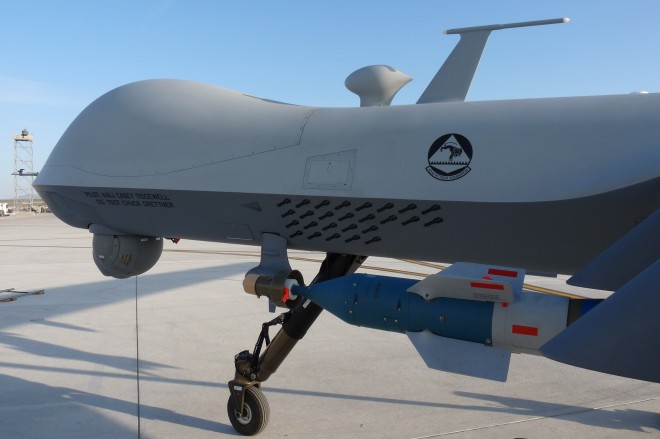
Defense Secretary Robert Gates met with officials in Islamabad to reiterate the importance of drone attacks, despite escalating reservations of their use amongst Pakistani’s. It’s been a polarizing issue from the onset because while it’s convenient to fly unmanned CIA predator aircraft over potential terrorist havens, they result in significant civilian casualties, and displaced persons. So it’s no surprise that over a year later, reconciling their use in Pakistan is still on the agenda.
For this reason, Secretary Gates announced a possibility of America providing “Pakistan with 12 unarmed Shadow aircraft”. Meaning the planes would not have a capacity to strike, but offer enhanced “surveillance capabilities under U.S. supervision”. It’s a fair decision and something I’ve suggested previously.
Gates also stressed the importance of militarily addressing all extremist groups because:
“It’s dangerous to single out any one of these groups and say, ‘If we could beat that group that would solve the problem,’ because they are in effect a syndicate of terrorist operators”
And almost simultaneously, Secretary Clinton unveiled The Afghanistan and Pakistan Regional Stabilization Strategy which sends an increase of 20-30% in civilian experts to both countries and “outlines plans to rebuild the Afghan farm sector, improve governance, and reintegrate extremists into society”. But this strategy of “reintegrating extremists” runs in contradiction to Secretary Gates’ aforementioned remarks.
Gates ruled out any possibility of reintegration calling for a consolidated attack on extremists suggesting that they work in “syndication”, while Cinton’s plan attempts to bring extremists back into the fold of moderate society.
It’s a stark inconsistency in our foreign policy. Because while I think Secretary Clinton’s idea notion of reintegration is more in tune with ground realities, and therefore viable, I figure Secretary Gates was being staunch in talks because finally relinguishing partial drone technology provided him with that margin of hawkishness. Either way though, one thing is certain, despite skepticism on both ends of the U.S. Pakistan relationship, cooperation is ever deepening.
Both DAWN news and CNN have good reports on Pakistani artist Imran Mudassar. The following video briefly takes us into some of his recent works that depict deteriorating security, and amplified militarism that torments his country.
I found his first work in the video of particular interest: the wall piece brought from Kabul that was peppered with shrapnel holes. Mudassir traces an outline of a man’s torso onto the destroyed wall and highlights each hole with color to accentuate a very poignant notion that these aren’t just holes, they’re wounds. He specifically mentions he can’t stop thinking about those holes after having seen them, and quite effectively after seeing his work, one might feel the same. Minimal use of color and the small scale work set into a simple frame brings us in contact with a wrenching reality that mainstream news reporting of terrorism just can’t offer.
Seeing the actual holes that sharpnel makes on an individual human torso is far different than just hearing that another suicide bomber struck in the Af-Pak region.
The holes in this work leave us feeling empty as we peer into the darkness and depth of these wounds. Kudos once again CNN for reporting on one of the many persevering stories out of Pakistan during these testing times.
Reason We Should Remain Neutral –Quite simply: “After two terms as prime minister, he’s remembered for rampant corruption, nuclear proliferation, and his penchant for cozying up to Islamist militants“
Pervez Musharraf or Asif Zardari:
Reason We Should Remain Neutral –Well: “at the behest of Washington, General Pervez Musharraf, who was president at the time, arranged the amnesty that allowed Zardari and his wife, Benazir Bhutto, to return from exile so she could lead her Pakistan Peoples Party in elections. Bhutto was assassinated, and her husband became prime minister. Not without reason, many Pakistanis who are angry about Zardari’s corruption and ineffectiveness hold the United States responsible for imposing him on their country”
Pakistan Military:
Reason We Should Remain Neutral –Perpetuating rampant blame that one too many American backed military dictators have prevented democracy from ever taking root in Pakistan can’t help growing weariness of cooperation with our government.
Noteworthy example –Backing General Zia-ul-Haq in the 1980’s with his leadership key to training the Mujahideen (now known as Al Qaeda) to oust the Soviets from Afghanistan. Not coincidentally, Zia’s regime is remembered as the time Pakistan shifted from being a socially progressive, and moderate Islamic state, to imposing severe, fundamentalist religious policy reforms.
Chief Justice Iftekhar Chaudhry:
Reason We Should Remain Neutral: Under a sugar-coated banner of “democracy”, the Chief Justice is too blatantly partisan for us to support. His recent decision to repeal the National Reconciliation Ordinance, which set wheels in motion for regime change is widely understood as nothing short of a ploy for power and done in the politics of retribution.
This leaves neutrality as not only our most wise option, but also perhaps our most ethical route. Restraint in supporting any particular regime could mean history points one less finger in our direction should anything go less than perfect as we deepen involvement in Af-Pak. Simultaneously, neutrality assures Pakistani masses who are increasingly skeptical of cooperation with the United States that they have 100% autonomy in political processes.
Well publicized neutrality on a looming regime change could be a valuable opportunity to demonstrate a genuine interest in Pakistan as they transform politically and we require their support in the War on Terror.
Most Unexpected Event: Terrorists turning domestic. Pakistan has suffered the brunt of terrorist activity in 2009. The stereotype we have of terrorists today entails violent attacks on supposed “infidels”, or western international targets. But 2009 saw Al Qaeda gradually in cooperation with the Taliban, extend violent attacks on Pakistan’s predominantly Muslim population. Attacks on and around Islamic houses of worship even became a reality this year.
What to Watch for in 2010: Increasing democratization of Pakistan, despite a very likely change in regime. Former military General Musharraf may return in some capacity, and democratization should continue to progress by way of an expanding private media. As per Musharraff’s reform in 2002, privatized Television channels have made extraordinary strides in disseminating information that is increasingly reflective of the masses, giving Pakistani’s a voice, and vehicle for change. Many consider the reinstatement of Chief Justice Iftikhar Chaudhry in March 2009 a direct result of privatized media who vociferously helped mobilize demonstrations such as the Long March. So, although security issues will continue to dominate until Af-Pak is stabilized, expect expanding television media that can help pave the way for a more moderate, democratic Pakistan.
Friday morning a CNN headline informed us that the stock market is inching forward, but America is “still in the red”, simply reminding us that we’re spending more than we’re making.
Ouch. With an expanding war and expanding government (Af-Pak war and healthcare reform respectively), expenses seem excessive. But, thinking about the Af-Pak quagmire within this perspective made me realize the costly necessity of our engagement. Because even though it may seem cost effective and immediately convenient to bring troops home , our absence in the Af-Pak region entails risks that are perhaps higher than the costs of Obama’s troop surge, even in our downward economy.
Let’s run a counterfactual to demonstrate. If we begin troop withdrawal, ultimately winding down NATO forces as well, in the absence of a U.S. presence, Af-Pak becomes fully accessible to regional powers, including China, Russia, and India to step in. Security and development will be led by other foreign powers who emerge with powerful influence in this strategic area. Because in addition to our foremost interest in obliterating Al Qaeda, Afghanistan is strategically poised to access Central Asian energy interests as is Pakistan. Pakistan is not landlocked so the Karachi port becomes key to transporting Central Asian energy to international markets. In our absence, Russia or China emerges as forerunners in supporting Af-Pak in their route to development meaning major energy projects that we stand to benefit from, such as the Turkmenistan-Afghanistan pipeline might take a backseat to projects led by Russia. Similarly, energy projects like the Iran-Pakistan-India Pipeline which the Heritage Organization has already called “unacceptable” for U.S. interests make further headway in our absence with the support China. So withdrawing troops runs the risk of our losing access to potential energy resources and could further threaten Europe by allowing the former USSR to gain a “stranglehold over European energy security”.
Similarly, there are critical security risks that come along with our withdrawal. In our absence, regional powers that are historically not geopolitically neutral in the can create a climate of further conflict.
– Current Afghanistan-India alliance (rapidly increasing)
– Russia-Pakistan enmity (as per India Russia alliance)
– Russia-Afghanistan enmity (Soviet Afghan War)
– India-Russia alliance (An expanding, long term alliance began during the Cold War)
– India-China enmity (Sino Indian War)
– Pakistan-China alliance (Long term alliance began during the Sino Indian War)
– India-Pakistan enmity (Deep mistrust dating back to Partition in 1947 with 3 wars fought since)
This complex mix of regional relations in tandem with competing interests for Afghanistan and Pakistan creates weighty risks that are too big to take. For instance, there’s a widespread notion that Pakistan sought to wield control over Afghanistan to use it as a buffer against India and currently, the Pakistani government says the same is true for India as relations warm between Delhi and Kabul. By removing the United States from the picture, the risk of leaving two nuclear armed, historic adversaries vying for geopolitically strategic and energy rich Afghanistan becomes a weighty concern.
So two weeks ago when Fareed Zakaria questioned Prime Minister Manmohan Singh on whether or not India believes Pakistan is doing it all it can to uproot terrorism, and Mr. Singh gently responded that America has given him all the assurance he needs, one realizes the magnanimity of our mitigating tensions in the region. Leaving the Af-Pak region now runs great potential for further insecurity and could run directly counter to our energy interests. Let’s hope our policies in uprooting terror are accompanied by development strategies for long term stability in Afghanistan and Pakistan so that our presence is not perpetually required.
NYTIMES does a good job of publishing weekly articles on the Af-Pak situation. And a recent piece had a very enticing title: “The Demons that Haunt Pakistan” . It conjured deep curiosity and I delved into it anticipating the “demons” referred to how terrorists have paralyzed the country since 9/11.
Instead, the writer interviews one oddball Psychiatrist who says the “Gucci suit” wearing Americans are the real terrorists and Blackwater is luring his hired help to engage in a grand U.S. conspiracy to destroy Pakistan. Based on this sole, very erratic viewpoint, she presumes that like a “teenager” Pakistan is “self-conscious, emotional, quick to blame others for its troubles” and is where conspiracy theories are “pervasive”.But the presumption that Anti-Americanism supersedes resentment of actual terrorists who have is not well founded. In fact, only at the end of the article does she acknowledge the moderate Pakistani viewpoint:
“Islam treats foreigners according to their wishes,” It’s not what these people (terrorists) say — killing them or asking others to terrorize them,” he said contemptuously of the militants. “We must treat everybody equally. Christians, Jews, Muslims”
The author refers to this as the “unlikely exception”, but on the contrary, this perspective is more likely to be found in Pakistan. The gentleman expressing this view is working class and the masses are working class. They’re not doctors or professionals whom the author erroneously cites as the norm. Further, it’s the working classes who struggle most with terrorism, not the sliver of Pakistan’s elite population who maintain comforts despite political upheaval. So the implication that demon-esque Anti Americanism is rooted in spectacular conspiracy theories is unlikely:
The majority masses are far more skeptical of Pakistani policymakers and domestic corruption than of Blackwater and the American, or Indian government for that matter.
More accurately on India, the author cites counter productive policies in Pakistan that maintained, rather than obliterated the feudal system and attributes the profound struggles of Partition to subsequent skepticism that has been harbored by both countries for one another since. Plus, having fought three wars in just 62 years, she explains it’s “natural that Pakistan’s security concerns focus more on its eastern border with India” and “not irrational” for Pakistan to resent American calls for change in this strategy.
The piece goes on to explain resentment of American policymaking viewed as “U.S. single-mindedly pursues it’s own interests as it did in the 80’s when it was confronting the Soviets”. And therein lies skepticism for the United States in Pakistan: it’s rooted in abandoning ship post the Soviet-Afghan war. Leaving Pakistan with one of the worlds largest refugee problems well ISI/CIA trained extremist Islamist militants in a developing country hasn’t boded well 20 years later. As a partial result, Pakistan hasn’t developed, it’s deteriorated. Cooperation in our Afghan operation in the 80’s isn’t perceived as productive. Thus,
Current skepticism of U.S. expansion in the Af-Pak war is not a matter of irrational, conspiracy theories or bitterness for all things American, it comes after prolonged, and now daily struggle against extremist Islam, and terrorists who massacre Pakistanis almost daily since 9/11.
In the Wall Street Journal this week, he explained “quitting is not an option”, and “time limits” should not drive our exit strategy. Rather, in tandem with additional troops, a “political” surge is key. With firsthand military and political experience in the Af-Pak region and War on Terror, Musharraf gives us substance with which to understand the situation. He explains that when the United States “liberated Afghanistan from the tyranny of Al Qaeda and Taliban, they had unequivocal support of the majority of Afghans.” What we didn’t do though, is establish a “truly representative national government” giving proportional representation to Pashtun’s who are the ethnic majority. He says:
The political instability and ethnic imbalance in Afghanistan after 9/11 marginalized the majority Pashtuns and pushed them into the Taliban fold, even though they were not ideological supporters of the Taliban.
As a result, despite Pakistani efforts during Musharraf’s tenure where “600 Al Qaeda and Afghan Taliban leaders, some of them of very high value” were captured in tandem with the establishment of “1000 border check posts”, the Afghan government never gained legitimacy, and ultimately, sufficient authority. He further attributes insufficient NATO forces and the distraction of invading Iraq as leading causes to the Taliban’s capacity to gain ground, and reassert its center of gravity toward northern Pakistan.
With a grand strategy to destabilize the whole region, the Taliban and al Qaeda established links with extremists in Pakistani society on the one hand and with Muslim fundamentalists in India on the other.
It’s a complex situation, but Musharraff’s recommendations are rooted in a wealth of experience and offer details on a practical solution.
President Obama stayed true to his word. During the presidential campaign last year, he vowed to hunt down Al Qaeda in Pakistan and after months of deliberation with Congress, his focus on deepening military involvement in the region has come to fruition. 30,000 more troops are promised to the Af-Pak war and in his speech yesterday, Obama focused squarely on the “inextricable” link Afghanistan and Pakistani security share. He insisted the “NWFP” is where terrorist leadership including 9/11 masterminds Osama bin Laden and Ayman al Zwahiri find “safe haven” and reiterated an urgency to pass the Kerry Lugar bill. But overall,
No new strategy was laid out. We’re sending more troops without any information that an improved plan is in place. With an increased focus on Pakistan knowing it has deteriorated since the War on Terror began, it is critical to see details of a more effective Af-Pak strategy.
Politicians, pundits, scholars, journalists and even bloggers like myself have called for increased intelligence sharing and military training from our end to Pakistani forces to uproot terrorists. And President Obama briefly, but finally acknowledged this would take place. However, it was said almost in passing relative to 9/11 rhetoric reminding us that we must stand in solidarity with our allies and expand our efforts in the war on terror. Which is important, however, after 8 long years of conflict and heavy taxpayer dollars allocated to this war in a downward economy, I expected at least some details of a revamped approach. Otherwise there’s a fear that more of the same will lead to more of the same: an escalation of our engagement and simultaneous worsening in the region.
There’s a very good piece in the Los Angeles Times explaining this troop surge is a replay of our approach in Iraq. The idea is that a temporary troop surge with predetermined date of withdrawal allows domestic security forces time to develop so that when our troops leave, they manage security to a large extent on their own. However, experts in the article point out that Afghanistan is vastly different from Iraq and a troop surge might not yield similar success in this case. Also, there’s little mention of Pakistan because a
troop surge would not apply to Pakistan where established military and paramilitary security forces already exist. Thus Obama’s square focus on Pakistan in tandem with a troop surge is incomplete without additional details on a revamped strategy.
And the Kerry Lugar bill is not sufficient. The fact that President Obama at the beginning of his speech still urges us to support the legislation despite widespread skepticism at home and in Pakistan, is testimony to how much a new plan is needed. Let’s hope we hear one soon.
At the heels of 26/11, Pakistan charged seven people involved in the Mumbai atrocities today. The Virginia Quarterly Review has a four part article revealing the ordeal in harrowing detail and after reading it, I’m still stunned. On 26/11 last year I got a call from a friend born and raised in Mumbai who was flying out there that afternoon, he said his parents were fine but his voice was wrought by a despair I hadn’t heard from him before. He didn’t specifically say he was distraught or describe how he felt in detail, but i recognized the frustration instantly because I’d heard that voice before: from friends in Karachi who witness countless threats and acts of terrorism since 9/11. I identified immediately with my friends frustration and despair on a humanitarian level, and even further because although the perpetrators in Mumbai were allegedly trained in Pakistan, I knew they’d ultimately hurt Pakistani’s the most.
As India forges ahead economically and internationally, Pakistan is deteriorating. Terrorism has brought vanishing security that has perpetually halted foreign investment, stagnating the economy leaving no trickle down for the lower and middle class majority population who simultaneously realize a widening gap in their position vis a vis the wealthy. Terrorism has rendered governance in survival mode since 9/11 making leeway for decreased oversight and increased corruption, which was rampant to begin with.
A year after the Mumbai atrocities, we see Manmohan Singh hosted at the White House in elaborate fanfare with progressive talks on bilateral trade rooted in liberalism that is fitting for a country with roughly 8% growth in GDP and a middle class that’s now larger than our entire population in the United States.
Conversely, relations with Pakistani South Asia in light of that progress are a valid point of comparison because we have a strategic interest in both countries. More than ever, it’s apparent we have economically strategic interests with India, and security based interests in Pakistan. And like previous presidencies the Obama administration quickly realized the delicate art of balancing both interests given that either country feels progressive relations with the United States inherently comes as a direct expense of one another. Engaging India as it expands economically and Pakistan geopolitically for security’s sake (i.e. in the War on Terror and in the face of an ascending China) pose an opportunity for us to strike a creative balance in South Asia.
It’s not about who wears the crown, (“Taj”) in South Asian U.S. relations, it’s about engaging both sides for the long haul.
In Pakistan that means cooperating today for security’s sake and uprooting terrorism and fundamentalism for tomorrow. Key from there is not abandoning ship, but remaining engaged so that Pakistan too has a route to economic expansion in the future. Without security, viable development won’t take place. And so long as we are engaged in an Af-Pak war, our policymakers have a responsibility to establish a roadmap that is rooted in long term success. This is our chance to get it right in South Asia, and that begins with an intention for a permanent solution. Assisting Pakistan to navigate the rising tide of development in our globalized world could be the key to ensuring they remain a strategic, long standing ally.





 Zainab B. Jeewanjee
 Zainab Jeewanjee