Posts Tagged ‘Afghanistan Pakistan’
 July 27, 2010
-

Pakistan implicated in todays Wikileaks Reports
Pakistan is in desperate need of a plumber to fix the leak on the front page of the New York Times this morning. The article has one of strongest suggestions yet that the Inter Services Intelligence Agency aids the enemy in Afghanistan and is rooted in reports made available by the whistler blower organization, Wikileaks. The reports entitled the “Afghan War Diaries” purport that the Pakistani ISI provides haven, if not supports Al Qaeda comes from “unverified” sources most likely “aligned with Afghan” intelligence and “paid informants”. The New York Times piece provides examples of how a suggestion of Pakistani aiding insurgents could be accurate, and leaves only a brief disclaimer that nothing is yet certain. Rather, the story more strongly asserts:
Senior lawmakers say they have no doubt that Pakistan is aiding insurgent groups. “The burden of proof is on the government of Pakistan and the ISI to show they don’t have ongoing contacts,” said Senator Jack Reed
“No doubt” is an alarming allegation against a critical ally in this war and a bit sensational in the absence of a closer reading of Pakistan’s realities and motivations.
What seems more likely than “no doubt”, is something I’ve stated previously. Both Ideology and what Pakistan’s foreign ministry spokesperson said are “ground realities” run directly counter to the suggestion that the ISI rampantly supports insurgent groups against American interests.
Quite simply, insurgent groups including Al Qaeda are deeply comprised of remnants from the Soviet Afghan war, meaning former fighters we engaged the ISI to train, maintained links to “freedom fighters” who ultimately became extremist groups we combatted post 9/11. That engagement created a decade long window in which there was little instruction or immediate opportunity and to some extent, interest for Pakistan to eradicate insurgents in its neighboring country. Couple this with the fact that Pakistan shares a nebulous border with Afghanistan as it became haven to one of the worlds largest refugee problems with Afghans fleeing Soviet atrocities, and you’ve got a battle hardened, impoverished, and an armed influx of an outside population who call major cities like Karachi, home.
So when we hear about the “Af-Pak Quagmire”, one should really be thinking in terms of the pickle Pakistan got into when millions of refugees made Pakistan’s underdeveloped, politically volatile and vastly feudal state home as the Cold War ended.
This climate allows us to put the Wikileaks reports into perspective. Firstly, reports linking ISI aid to insurgents could likely be referring to former Pakistan intelligence officials who maintained ties to insurgents as Afghans became part of the fabric of Pakistani society. Secondly, although these groups made Pakistan their home, the arms and influx of drugs via Afghanistan, never ceased. An infamous Klashinkov culture pervades Karachi amongst other places, including the now well-known FATA areas. So with such imbedded presence in Pakistan, obliterating Afghani insurgents becomes a highly sensitive task.
I rarely point to ideology as a driver of action when it comes to government behavior, but as Afghan’s made their home in Pakistan, they came sharing religion and some aspects of culture which intensifies the complexity of hunting down terrorists because it leaves Pakistan open to the possibility of a civilian uprising. Certainly Afghans would have preferred we “negotiate” rather than wage full scale war post 9/11 to settle differences. And I will not argue whether or not that would have been wise, however, the point is that the
ISI may be dealing with insurgents in vastly different ways, wheeling and dealing as opposed to obliterating them with the force we might use because of a profound risk involved in alienating an enormous, and internal Afghan presence within Pakistan’s border.
Since 9/11 Pakistan has descended into civlian chaos at certain intervals with extremists growing polarized, gravitating toward insurgents as we intensified our offensive in Afghanistan and Pakistan. So our expecations must take these realities into account and the Wikileaks reports understood within that context.
Ultimately, a lesson we might learn from the Wikileaks story is that negotiating with extremist groups for Pakistan is inevitable. General McChrystal’s Counterinsurgency strategy was moving in that direction as it called for U.S. engagement for the long haul requiring additional years in time, toil, troops, and treasure; which is an increasingly unpopular idea. So will the Wikileaks reports be the “game changer” or this wars equivalent to the “Pentagon Papers” for it’s suggestions that our engagement of Pakistan in providing billions in aid has been not only counter productive but comes in addition to our own mishandlings of the war thus far?
Perhaps. But either way, Pakistan is in desperate need of one skilled plumber to fix this leak.
ORIGINALLY PUBLISHED @
Posted in Current Affairs, Foreign Policy, International Relations, Pakistan, U.S. Politics, US Foreign Polciy, US Pakistan relations | Tagged af-pak, Afghan refugees, Afghanistan Pakistan, Afghanistan refugees, afghanistan relations, Al Qaeda Pakistan, al qaeda war on terror, america and pakistan, american foreign policy, american pakistan relations, counterinsurgency, extremist groups pakistan, influx refugees pakistan, insurgent pakistan, insurgents, insurgents pakistan, International Relations, karachi, karachi violence, klashinkov culture, klashinkov pakistan, negotiating pakistan, Pakistan, pakistan negotiations, pakistan refugee, Pakistan refugees, pakistan wikileaks, pakistani politics, refugees pakistan, soviet afghan war, soviet afghanistan, soviet invasion of afghanistan, terrorism, terrorist, u.s. foreign policy, US Pakistan relations, war in afghanistan, war on terror pakistan, war pakistan, wars, wikileaks report, zainab, zainab jeewanjee, zainab jeewanjee foreign policy, zainab jeewanjee Pakistan, Zainab jeewanjee politics, zainyjee | 4 Comments »
January 22, 2010
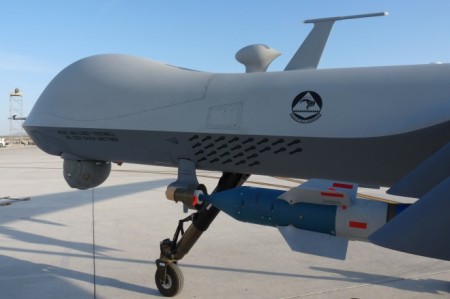
Reconciling CIA Drones in Pakistan
Click here to Read the First Part: Reconciling CIA Drones in Pakistan Part 1
Defense Secretary Robert Gates met with officials in Islamabad to reiterate the importance of drone attacks, despite escalating reservations of their use amongst Pakistani’s. It’s been a polarizing issue from the onset because while it’s convenient to fly unmanned CIA predator aircraft over potential terrorist havens, they result in significant civilian casualties, and displaced persons. So it’s no surprise that over a year later, reconciling their use in Pakistan is still on the agenda.
For this reason, Secretary Gates announced a possibility of America providing “Pakistan with 12 unarmed Shadow aircraft”. Meaning the planes would not have a capacity to strike, but offer enhanced “surveillance capabilities under U.S. supervision”. It’s a fair decision and something I’ve suggested previously.
Supplying drones to close allies who aid in our War Efforts absolves us of sole liability for collateral damage wreaked by these machines that are always controversial, and increasingly protested internationally.
Gates also stressed the importance of militarily addressing all extremist groups because:
“It’s dangerous to single out any one of these groups and say, ‘If we could beat that group that would solve the problem,’ because they are in effect a syndicate of terrorist operators”
And almost simultaneously, Secretary Clinton unveiled The Afghanistan and Pakistan Regional Stabilization Strategy which sends an increase of 20-30% in civilian experts to both countries and “outlines plans to rebuild the Afghan farm sector, improve governance, and reintegrate extremists into society”. But this strategy of “reintegrating extremists” runs in contradiction to Secretary Gates’ aforementioned remarks.
Gates ruled out any possibility of reintegration calling for a consolidated attack on extremists suggesting that they work in “syndication”, while Cinton’s plan attempts to bring extremists back into the fold of moderate society.
It’s a stark inconsistency in our foreign policy. Because while I think Secretary Clinton’s idea notion of reintegration is more in tune with ground realities, and therefore viable, I figure Secretary Gates was being staunch in talks because finally relinguishing partial drone technology provided him with that margin of hawkishness. Either way though, one thing is certain, despite skepticism on both ends of the U.S. Pakistan relationship, cooperation is ever deepening.
ORIGINALLY PUBLISHED @
Posted in Current Affairs, Foreign Policy, International Affairs, International Relations, Pakistan, US Foreign Polciy, US Pakistan relations | Tagged af-pak, af-pak region, af-pak strategy, af-pak war, Afghanistan Pakistan, afghanistan pakistan drone, afghanistan pakistan drones, afghanistan pakistan war, american aid to pakistan, american foreign policy pakistan, american pakistan politics, american pakistan relations, cia drones, cia drones in pakistan, CIA drones pakistan, CIA pakistan, cia pakistan cooperation, cia pakistan drones, defense minister pakistan, drones cia pakistan, drones robert gates pakistan, hillary clinton on pakistan, HIllary Clinton Pakistan, International Affairs, International Affairs Pakistan, jeewanjee politics, military intelligence pakistan, obama pakistan strategy, obama war on terror, Pakistan, pakistan cia, pakistan foreign policy, pakistan military, pakistan politics, pakistan strategy american, pakistan USA cooperation, pakistani politics, politics in pakistan, Reconciling CIA drones, robert gates pakistan, secretary clinton afghanistan, secretary clinton pakistan, secretary gates pakistan, secretary of state hillary clinton, us defense secretary gates pakistan, US foreign policy pakistan, us gates pakistan, us led war on terror, US pakistan cooperation, US Pakistan discussions, us pakistan foreign policy, US Pakistan relations, us strategy pakistan, war on terror afghanistan, war on terror pakistan, war on terror us, zainab jeewanjee, Zainab jeewanjee politics, zainab pakistan, zainab politics, zainyjee | 6 Comments »
October 9, 2009
After months of consideration on how to deal with our escalating engagement in the AF-Pak region, Obama’s administration has decided:
“the Taliban cannot be eliminated as a political or military movement”
An article in the Washington Post today cites the administrations re-vamped goal of mitigating a Taliban capacity to interfere in the establishment of a stable Afghan government while assuring us that Al Qaeda is the primary threat, and our strategy will focus squarely on eradicating them.
It seemed news on Pakistan in the past year revolved around Islamabad not doing enough to eradicate the Taliban; equating the group to Al Qaeda in terms of importance in the War on Terror. But today marks a clear departure from such criticism. Distinguishing Al Qaeda from the Taliban is a huge step forward for the United States. Because connecting our goals to eliminate both immediate security threats and major elements of Afghan society that are unpalatable to our values, has proven counter productive. Having lived in Pakistan to experience the ill effects of hyper conservative religious factions, I know we mean well in trying to uproot extremism, but it just hasn’t worked in tandem with our military offensive. And I’ve mentioned the importance of a distinction between these groups previously:
The Taliban is historically distinct from militant groups like Al Qaeda. Unlike the Taliban, Al Qaeda is directly responsible for 9/11. Simply put, the Taliban was an ideologically fundamental group, while Al Qaeda is a militant, terrorist group. Both are dangerous as such, but the Taliban has national interests in controlling Afghanistan under strict ideological rules while Al Qaeda is a militant organization with international ambitions.
It’s not a novel contention, but only just being reflected in policy, and I think it has potential for success. As an ideological force, the Taliban foster an ultra conservative brand of Islam, but are not necessarily a threat to our security interests. Plus, if General McChrystal’s goal is defined as establishing a sustainable, democratic Afghan government, in order for it to be considered legitimate, it must be rooted in Afghan values and according to Afghan preferences. Such preferences might seem backward, or entirely unpleasant to us, but so long as our interests are being protected, impressing our brand of democratic values should take a back seat for the time being. I think the Obama administration has taken a wise step in revamping the Af-Pak strategy and hope it yields lasting success.
ORIGINALLY POSTED @
Posted in Current Affairs, Foreign Policy, International Affairs, International Relations, U.S. Politics, US Foreign Polciy | Tagged af-pak strategy, af-pak war, af-pak war on terror, Afghanistan, Afghanistan Pakistan, afghanistan pakistan politics, afghanistan taliban, afghanistan taliban politics, afghanistan war on terror, afpak, afpak war, Al Qaeda, al qaeda in pakistan, Al Qaeda Pakistan, al qaeda tailban, al qaeda taliban difference, al qaeda terrorism, al qaeda war on terror, alqaeda afghanistan, difference between al qaeda and talian, difference between al qaeda taliban, fighting al qaeda, fighting taliban, fighting the taliban in afghanistan, foreign policy to pakistan, general mcchrystal afghanistan, general mcchrystal afghanistan pakistan strategy, general mcchrystal military strategy, general mcchrystal obama strategy, general mcchrystal obama war on terror, general mcchrystal pakistan, general mcchrystal war on terror, International Affairs, International Affairs Pakistan, international politics, international politics in pakistan, international relations pakistan, mcchrystal af-pak, mcchrystal afghanistan, mcchrystal obama, mcchrystal on pakistan, mcchrystal pakistan, mcchrystal war on terror, obama afghanistan war on terror, obama led war on terror in afghanistan, obama troop surge, obama troops in afghanistan, obama us war on terror, obama war on terror, obama war on terror in afghanistan, obama war on terror in pakistan, obama war on terror pakistan, pakistan affairs., pakistan foreign policy, pakistan international relations, pakistan obama war on terror, pakistan political affairs, pakistan politics, pakistan taliban, pakistani, pakistani foreign policy, pakistani politics, pakistani taliban, pakistans foreign policy, political affairs of pakistan, politics in pakistan, politics of pakistan, politics pakistan, taliban afghanistan, taliban al qaeda, taliban eliminated, taliban in afghanistan, taliban in afghanistan and pakistan, taliban in pakistan, taliban in the war on terror, taliban pakistan, the difference between al qaeda and the taliban, US foreign policy to pakistan, us led war on terror afghanistan, us led war on terror pakistan, us troops in afghanistan, us troops war on terror, us war on terror taliban, war on terror, war on terror afghanistan, war on terror in pakistan, war on terror military strategy, war on terror obama, war on terror obama af-pak, war on terror pakistan, war on terror taliban, whats the difference with al qaeda and taliban, zainab jeewanjee, Zainab jeewanjee politics | 7 Comments »
August 18, 2009
“Pakistan Objects to U.S. Plan for Afghanistan War” reads a New York Times article last month updating us on our foreign policy. The article forewarns of “fissures” in the U.S. Pakistan alliance at this critical moment when President Obama sends additional troops to the region. The article specifically outlines Pakistan’s insistence on maintaining forces along the Indian border when the United States expresses concern that the Afghan border is of greater priority. Pakistani officials, to some international dismay, contend that it is more constructive to maintain dialogue with some parts of the Taliban rather than going at the group in an all out military offensive. The piece continues to explain that, sources from the Inter Services Intelligence Agency (ISI: Pakistan’s intelligence agency, their equivalent to our CIA) briefed Special Envoy Holbrooke this morning in their strong concerns of an U.S. “surge” which would “result in more civilian casualties, further alienate local populations. Thus more local resistance to foreign troops”. And while the article continues with how these concerns contrast starkly with U.S. fears that Pakistan is not focusing enough on the Taliban in the north, it is important to revisit the consequences of, and reassess our long-term strategy in Operation Enduring Freedom. Because more of the same may not be an apt solution given that the war is escalating in terms of U.S. costs (on various levels), the region is deteriorating, and prominent experts now claim the effort is doomed to be “unwinnable”.
The fact is, this is the deadliest month for U.S. troops in Afghanistan and where there once was no Al Qaeda or Taliban in the sovereign state of Pakistan, now exists a terribly frightening border through which terrorists are fleeing and situating themselves in the north. Furthermore, it is important to remember that until recently, the Taliban was not considered a terrorist organization, although alarming they were not a military threat before 9/11. Al Qaeda was the main target in Afghanistan, and their presence in Pakistan was minimal, if at all. Since our invasion, the Taliban and Al Qaeda are increasingly difficult to differentiate, and rather than being obliterated, are moving in to Pakistan. And a once ideologically problematic group of Islamic extremists, the Taliban, are now dangerously aligning with far more treacherous terrorist outfits like Al Qaeda.
In a similar way, other regional militant groups are gaining ground as extremist groups evade NATO forces and subsequently weaken our anti-terrorist efforts. The Mumbai atrocities and embassy attacks in Afghanistan last year are testimony to the danger of militant groups advancing their efforts in an increasing climate of instability. This only legitimizes Pakistan’s skepticism of continuing an predominantly military means to combating terrorism. If limited surgical strikes, close intelligence sharing, and consistent provision of anti-terror training and supplies is agreed as effective amongst officials, the U.S. and Pakistan should focus on a “surge” on these fronts.
So when the news paints a clashing picture of interests between Pakistan and the United States, it is a simplistic one. Both states actually have an intense interest in securing the region against terrorists and while they might disagree on tactics, it is important that the Obama administration at least reassess the previous administration’s policies of simply implementing a military “surge”. Even if a surge in troops is potentially successful, working closely to expand on what has proven to be effective is a safer option. So a discerning look at this weeks supposed “fissure” between U.S. and Pakistani officials in discussing cooperation should prompt us to better understand Islamabad’s concerns and perhaps reassess our strategy .
Posted in International Affairs, International Relations, U.S. Politics | Tagged Afghan border, Afghanistan, Afghanistan Pakistan, Afghanistan war, afghanistan war on terror, Al Qaeda Pakistan, CIA, defining the US surge for pakistan, defining us surge, defining us surge for pakistan, instability pakistan, ISI, NATO and pakistan, nato pakistan, new york times, Pakistan, pakistan al qaeda, Pakistan and NATO, pakistan US alliance, Pakistan US cooperation, Pakistan US relations, Pakistan war on terror, Pakistan. US foreign policy, Pakistani intelligence, Surge, surgical strikes pakistan, Taliban, terrorism pakistan, U.S. Surge, uprooting terrorism in pakistan, uprooting terrorism pakistan, US efforts in afghanistan, US efforts in pakistan, US foreign policy, US foreign policy to pakistan, US pakistan alliance, US pakistan cooperation, US Pakistan relations, war on terror, war on terror pakistan, zainab jeewanjee, zainab jeewanjee Pakistan, Zainab jeewanjee politics | Leave a Comment »


 Zainab B. Jeewanjee
 Zainab Jeewanjee