 January 26, 2010
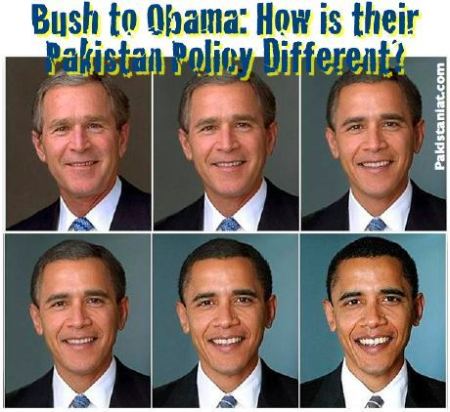
Bush & Obama : Identical Policies to Pakistan?
Similar to his ratings drop at home, abroad President Obama is being accused of not living up to expectations. In DAWN news this week there’s an article entitled: “Obama’s Changing Tone” suggesting our President is reverting to foreign policy reminiscent of the Bush administration on Pakistan, and to an extent, the greater Muslim World. The idea is that Obama’s planned troop surge in tandem with ever toughening rhetoric post the Fort Hood Massacre and the Christmas Bomber, reflects leadership that’s not much different than former President Bush’s.
But on the contrary, our escalating presence in Pakistan is exactly what Obama promised. During the campaign trail, he made clear that his main focus was Al Qaeda and destroying terrorists in Pakistan (militants having spilled over from Afghanistan into Pakistan). The rhetoric was so hawkish, it actually became a sticking point before the primaries that Republicans and Democrats like Hillary criticized. Also, the media publicized his staunch rhetoric at length, so
Obama really has not changed tone on Pakistan: an intensified war matches his rhetoric from the start.
Plus is it fair to expect something radically different than the previous administration in the first place? Let’s not forget that it is often the political system and circumstances that drive leadership, and not vice versa. The fact is, America was already deeply engaged in two very problematic wars at the inception of Obama’s Presidency. He inherited an intensely worsening situation in Afghanistan that rapidly spilled across the border into Pakistan. President Obama anticipated this and is thus living up to campaign promises: a more hawkish foreign policy to Pakistan.
Which of course then raises the question: is hawkishness the right approach to Pakistan at this time? Pakistani’s certainly don’t think so. CIA drones have the entire country in an uproar, while Islamabad isn’t taking well to DC’s tacit encouragement of rapidly increasing Indian influence in Afghanistan, and even billions in aid from America is frowned upon with unprecedented magnitude. And it’s not that the Obama administration isn’t aware of skepticism. Rather, toughening policies are a matter of practicality.
My guess is that the President is thinking: we’re already in Afghanistan, the war is deteriorating into Pakistan, what’s the best way to mitigate the situation, secure the region just enough to exit in the next couple years while leaving behind more cooperative players in the region so as to ensure our energy and geopolitical interests in South/Central Asia.
Phew. Now there’s a dilemma. And when looked at from his possible perspective, the Pakistan quagmire is revealed as tremendously complex. It’s such a multifaceted, sweeping, consequential and changing situation that involves so many players who work within the confines of political systems that only history should be the best judge of whether Obama’s stance on Pakistan is constructive or progressive. And that itself is relative. So let’s not be surprised at his hawkishness. It was naive of anyone to expect otherwise in the case of Pakistan.
ORIGINALLY PUBLISHED @
Posted in Current Affairs, Foreign Policy, International Affairs, International Relations, Pakistan, US Foreign Polciy, US Pakistan relations | Tagged af-pak, af-pak region, af-pak strategic, af-pak war, af-pak war on terror, america and pakistan cooperation, america and pakistan politics, american foreign policy and pakistan, american foreign policy pakistan, american pakistani politics, International Affairs, International Affairs Pakistan, international politics pakistan, International Relations, international relations pakistan, military aid, obama and pakistan, obama foreign policy, Obama Pakistan, obama pakistan policy, obamas foreign policy, obamas pakistan policy, pakistan international, pakistan policy, pakistan politiacal affairs, pakistan political, pakistan political affairs, pakistan politics, pakistan united states afghanistan, Pakistan US cooperation, Pakistan US relations, pakistan us relationship, Pakistan war on terror, pakistan washington dc, pakistani affairs, pakistani corruption, pakistani military, pakistani policies, pakistani political affairs, pakistani politics, pakistani poltics, pakistani poltiis, pakistani taliban, pakistani us relations, pakistans military, pakistans war on terror, pervez musharraf pakistan, policy to pakistan, political affairs of pakistan, politics in pakistan, politics of pakistan, politics pakistan, president obama and pakistan, president obama foreign policy, president obama pakistan, president obama pakistan strategy, prime minister sharif, relations between united states and pakistan, senator kerry, senator kerry pakistan, senator lugar pakistan, south waziristan pakistan, Taliban, taliban afghanistan, taliban in pakistan, taliban pakistan, the af-pak region, the af-pak war, troop surge afghanistan, troop surge in afghanistan, troop surge in pakistan, troop surge pakistan, u.s. pakistan cooperation, united states assistance pakistan, united states democracy pakistan, United states foreign policy pakistan, united states pakistan cooperation, united states pakistan policies, united states pakistan relations, us aid to pakistan, us assistance to pakistan, US foreign policy, US foreign policy pakistan, us foreign policy south asia, US foreign policy to pakistan, us led war on terror, us led war on terror pakistan, us neutrality pakistan, US pakistan cooperation, us pakistan politics, US Pakistan relations, us pakistan relationship, us war on terror, us war on terror pakistan, war on terror in afghanistan, war on terror in pakistan, war on terror pakistan, war on terror united states pakistan, zainab blog, zainab jeewanjee, zainab jeewanjee foreign policy, zainab jeewanjee internation, zainab jeewanjee international affairs, zainab jeewanjee international relations, zainab jeewanjee Pakistan, Zainab jeewanjee politics, zainab politics, zainyjee | 1 Comment »
January 22, 2010
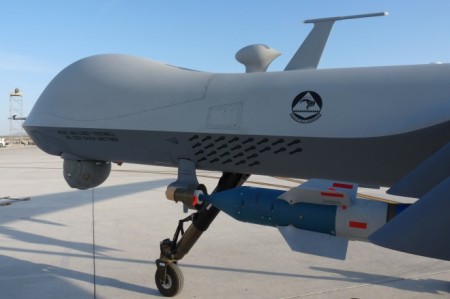
Reconciling CIA Drones in Pakistan
Click here to Read the First Part: Reconciling CIA Drones in Pakistan Part 1
Defense Secretary Robert Gates met with officials in Islamabad to reiterate the importance of drone attacks, despite escalating reservations of their use amongst Pakistani’s. It’s been a polarizing issue from the onset because while it’s convenient to fly unmanned CIA predator aircraft over potential terrorist havens, they result in significant civilian casualties, and displaced persons. So it’s no surprise that over a year later, reconciling their use in Pakistan is still on the agenda.
For this reason, Secretary Gates announced a possibility of America providing “Pakistan with 12 unarmed Shadow aircraft”. Meaning the planes would not have a capacity to strike, but offer enhanced “surveillance capabilities under U.S. supervision”. It’s a fair decision and something I’ve suggested previously.
Supplying drones to close allies who aid in our War Efforts absolves us of sole liability for collateral damage wreaked by these machines that are always controversial, and increasingly protested internationally.
Gates also stressed the importance of militarily addressing all extremist groups because:
“It’s dangerous to single out any one of these groups and say, ‘If we could beat that group that would solve the problem,’ because they are in effect a syndicate of terrorist operators”
And almost simultaneously, Secretary Clinton unveiled The Afghanistan and Pakistan Regional Stabilization Strategy which sends an increase of 20-30% in civilian experts to both countries and “outlines plans to rebuild the Afghan farm sector, improve governance, and reintegrate extremists into society”. But this strategy of “reintegrating extremists” runs in contradiction to Secretary Gates’ aforementioned remarks.
Gates ruled out any possibility of reintegration calling for a consolidated attack on extremists suggesting that they work in “syndication”, while Cinton’s plan attempts to bring extremists back into the fold of moderate society.
It’s a stark inconsistency in our foreign policy. Because while I think Secretary Clinton’s idea notion of reintegration is more in tune with ground realities, and therefore viable, I figure Secretary Gates was being staunch in talks because finally relinguishing partial drone technology provided him with that margin of hawkishness. Either way though, one thing is certain, despite skepticism on both ends of the U.S. Pakistan relationship, cooperation is ever deepening.
ORIGINALLY PUBLISHED @
Posted in Current Affairs, Foreign Policy, International Affairs, International Relations, Pakistan, US Foreign Polciy, US Pakistan relations | Tagged af-pak, af-pak region, af-pak strategy, af-pak war, Afghanistan Pakistan, afghanistan pakistan drone, afghanistan pakistan drones, afghanistan pakistan war, american aid to pakistan, american foreign policy pakistan, american pakistan politics, american pakistan relations, cia drones, cia drones in pakistan, CIA drones pakistan, CIA pakistan, cia pakistan cooperation, cia pakistan drones, defense minister pakistan, drones cia pakistan, drones robert gates pakistan, hillary clinton on pakistan, HIllary Clinton Pakistan, International Affairs, International Affairs Pakistan, jeewanjee politics, military intelligence pakistan, obama pakistan strategy, obama war on terror, Pakistan, pakistan cia, pakistan foreign policy, pakistan military, pakistan politics, pakistan strategy american, pakistan USA cooperation, pakistani politics, politics in pakistan, Reconciling CIA drones, robert gates pakistan, secretary clinton afghanistan, secretary clinton pakistan, secretary gates pakistan, secretary of state hillary clinton, us defense secretary gates pakistan, US foreign policy pakistan, us gates pakistan, us led war on terror, US pakistan cooperation, US Pakistan discussions, us pakistan foreign policy, US Pakistan relations, us strategy pakistan, war on terror afghanistan, war on terror pakistan, war on terror us, zainab jeewanjee, Zainab jeewanjee politics, zainab pakistan, zainab politics, zainyjee | 6 Comments »



 Zainab B. Jeewanjee
 Zainab Jeewanjee