

No Question too Tough for Obama - The Daily Show with Jon Stewart : October 2010
I just remembered why I liked Barack Obama so much. His appearance on the Daily Show with Jon Stewart last night showcased the President at his best: intellectual, elegant, steadfast and most importantly: insightful.
Without divulging how I voted in the Democratic primaries or General Elections of 2008, I will admit to being skeptical of Obama’s static foreign policy agenda and also feeling apprehensive about his left of center public policy. Because with such immense charisma calling for sweeping change amidst sentiments of “hope”, (which gave him mass appeal, especially amongst my generation) actual substance of his promises on policymaking were left out.
For better or worse, realities of effective politicking in our commercial election culture denied us an opportunity for substantial debate. Ironically, that gap in information was filled last night not by a mainstream news outlet, but Comedy Central .
This morning though, the mainstream news outlets probably realized this and have been abuzz over the interview. The Christian Science Monitor questions: “Did Mr. Obama take Jon Stewart to the cleaners?” In one word: Yeah. But with such questions abounding, apparently many of us expected otherwise. Stewart is so widely celebrated as a voice of younger generations; recall pundits taking swipes at him in 2008 citing “stoned slackers” were his majority viewing demographic. But his impact is far greater than such talk suggests. The Daily Show has become a relatively legitimate cultural representation of political inquiry and dissent. While the material is sometimes crass, I’ve found that well informed members of the public actually pay attention to what is said on the program.
If Wikileaks is the mighty foreign affairs whistleblower of our time, the Daily Show is it’s naughty little brother, revealing less dramatic yet just as irrational and unacceptable public policy absurdities of the day.
To boot, Jon Stewart actually asks compelling questions on important issues that he sincerely seems concerned are not addressed by mainstream media. And he did this impeccably in interviewing the President yesterday. Decidedly subduing humor, Stewart was poised and firm. He questioned Obama a number of times on Democratic party infighting as symptomatic of a larger problem within our system of government:
“Is there a difference between what you ran on and what you delivered? You ran on, if I may, such “audacity”…yet legislatively it has felt timid at times. I’m not even sure at times, what you want out of a healthcare bill”
Cheeky use of “audacity” but the question was an honest, direct investigation of the American President keeping promises, complete with a serious suggestion that he has not. Undaunted and with characteristic level-headedness, Obama responded deftly by listing accomplishments of healthcare reform thus far:
– 30 million more Americans are to be insured
– A new Patients Bill of Rights ensures carriers can’t cancel coverage when one is sick
– Abolishes Lifetime Maximum’s on health policies
– Children/Young adults have extended stay on parental coverage until age 26
– All while cutting the deficit by 1 trillion + dollars
“This is what I think most people would say is as significant a piece of legislation as we’ve seen in this nations history. But what happens is it gets discounted because the presumption is we didn’t get 100% of what we wanted, we got 90% of what we wanted, so lets focus on the 10%. And right now there is a woman in New Hampshire who doesn’t have to sell her house to get her cancer treatments because of that healthcare bill. And she doesn’t think it’s inconsequential, or “timid”
It was one of the most substantial responses I’ve heard a politician say on television that I can remember. We’ve become so used to seeing political figures evade questions (in the few instances they are asked serious ones), ambiguously address issues, irrelevantly tout campaign slogans, and regurgitate party rhetoric. Obama did not resort to any of that. He steadily addressed each pressing question with facts followed by insight. The highlight and defining moment of the interview came when Stewart peppered the President with a third follow up inquiry on healthcare reform, insisting enough had not been done in line with campaign promises to which Obama responded:
“Look, if the point Jon is that overnight we did not transform the healthcare system, that point is true. When we promised during the campaign, change you can believe in, it wasn’t change you can believe in, in 18 months. It was change you can believe in, but you know what, you’re going to have to work for it”
Sold. It was witty, honest and directly answered the question: And he elaborated:
“When social security was passed, it applied to widows and orphans and it was a very restricted program, and overtime that structure that was built, ended up developing into the most important social safety net in our country. The same is true on every piece of progressive legislation. When the civil rights act passed, there were still folks down south who couldn’t vote, and I’m sure there were commentators who said this law is not doing the job, but the point was we had created a structure, we put a framework in place that allowed us to continue to make progress. That’s what we’ve done in the past 18 months, and that’s what we’ll keep on doing as long as I’m president of the United States”
Behold: Factual + insightful = solid answers the public deserves. And while we can complain about an apparently dismal state of affairs wherein cable comedy television is perhaps the most substantial access to political discourse we have, let us instead revel in this moment when our Commander in Chief authoritatively leads with intellect. Our hegemony deserves nothing less.
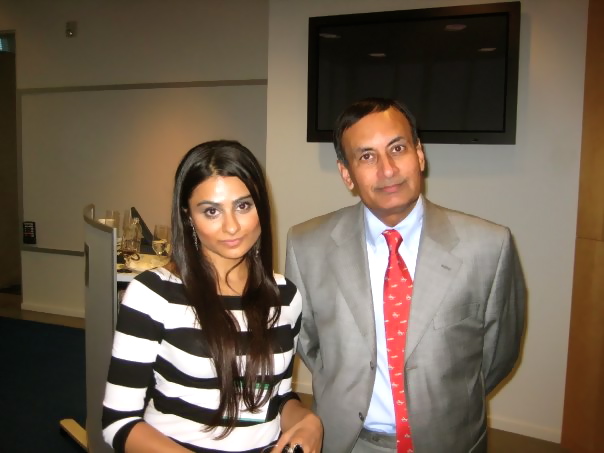


 Zainab B. Jeewanjee
 Zainab Jeewanjee