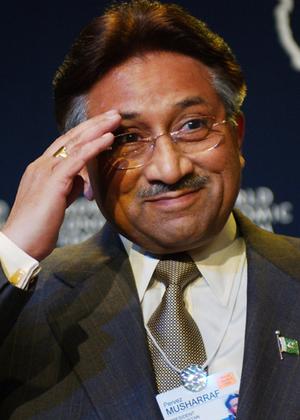
Well, I called it: Pervez Musharraf is staging a return to Pakistani politics. Launching his new “All Pakistan Muslim League” (AMPL) party this week in a plan to return to the country, the former General will have to face a tremendously skeptical, increasingly hardened citizenry and even tougher adversaries in the judicial branch and opposition parties. In an Al Jazeera special report, Musharraf’s former Legal Advisor Ahmed Raza Kasuri insisted that should tacit approval come from the country’s military establishment and most importantly, with support of a “silent majority” Kasuri measures at 60-65% of moderate Pakistani’s, Musharraf will garner required support to win in future elections. Political analyst Imtiaz Gul insisted otherwise explaining not only would the military establishment be weary of backing Musharraf who cost them valuable political capital when he sacked the judiciary in 2007 and issued a State of Emergency, but also because he has “lost relevance” in Pakistan today.
Gul makes a valuable point: without relevance a political figure is climbing an uphill battle of garnering credibility, and because credibility is deeply intertwined with legitimacy, Musharraff undoubtedly faces a bumpy comeback.
But relevance is not necessarily an impediment to power in Pakistan since the current situation lends a valuable opportunity for it to be readily earned. Current President Asif Zardari usurped such an opportunity when his wife was tragically murdered and assumed leadership, riding the waves of sympathy that swept the nation to win elections. While that “relevance” is waning now, it was enough to allow him a seat of power for 2 years and actually shake off some of the “Mr. 10%” infamy, which is a far larger feat than what Mushrraf faces today.
While the main opposition party leaders Asif Zardari and Nawaaz Sharif are forever bogged by allegations of corruption, Musharraff’s criticisms revolve around issues of “democracy”.
His most vociferous opponents will cite his sacking of the judiciary, coup to power, and 9 year dictatorial reign as subverting democracy in Pakistan. But such criticism of Musharraf is both misleading and mostly hyperbole.
The deficient part of such rhetoric lies in lacking recognition of liberalism. Notions of individual human rights and liberty, free trade, separation of church and state and religious tolerance are erroneously assumed to come only with democratic leadership in Pakistan. On the contrary, liberal policies extending specifically to women’s rights, fostering regional cooperation and trade, namely with India, opening domestic markets, such as free media and holding free and fair elections were successfully carried out previously by Musharraf.
Ironically, under the title of “dictator”, he brought forth more liberal triumphs than any other leaders in my lifetime. And it is important to not confuse democracy with liberalism. Fareed Zakaria makes this distinction in tweaking “Democratic Peace Theory”. His ideas are described:
“democracy is defined in terms of the process by which a government is selected. In contrast, “constitutional liberalism” is defined not by how the government is selected, but rather b the extent to which the society and its institutions protect individuals’ basic rights (to life, property, freedom of speech, and religion)”
Thus basic tenants of a such liberalism, to a fair extent were brought forth by Musharraf. And as political change seems imminent in Pakistan, if we continue looking to political theory one might advance a case for liberalism by way of identifying Musharraf’s opposition. If we take a voluntaristic view of government, wherein heads of states are integral parts of policymaking as opposed to looking mostly at system wide determinants of policy, one finds that not only corruption, but the fact that both Asif Zardari and Nawaz Sharif are part of feudal, landowning elites in Pakistan is meaningful. With that background, and likely subsequent value sets which are diametrically opposed to liberal notions of liberty and individual rights, Pakistan runs the risk of remaining socially, and economically stagnant under their leadership. Moreover, with the U.S. winding down our war in Afghanistan and shifting in to Pakistan, more than ever liberal ideals are needed.
No amount of drones, target killings or CIA intervention have yet quelled extremism let alone terrorism in Pakistan since 9/11. Modernity and liberalism are Pakistan’s best bet at framing a solution for the long run.
It cannot be an overnight shift, but it will require leadership that espouses liberal ideals. Because without credible experience in upholding individual rights and freedoms, only halfhearted appreciation will come for liberalism and even weaker attempts to implement them.
Is Musharraf the solution Pakistan is looking for? I do not know. But until new, more modern and liberal alternatives in political leadership are available, he just might be the best option now.
Reason We Should Remain Neutral –Quite simply: “After two terms as prime minister, he’s remembered for rampant corruption, nuclear proliferation, and his penchant for cozying up to Islamist militants“
Pervez Musharraf or Asif Zardari:
Reason We Should Remain Neutral –Well: “at the behest of Washington, General Pervez Musharraf, who was president at the time, arranged the amnesty that allowed Zardari and his wife, Benazir Bhutto, to return from exile so she could lead her Pakistan Peoples Party in elections. Bhutto was assassinated, and her husband became prime minister. Not without reason, many Pakistanis who are angry about Zardari’s corruption and ineffectiveness hold the United States responsible for imposing him on their country”
Pakistan Military:
Reason We Should Remain Neutral –Perpetuating rampant blame that one too many American backed military dictators have prevented democracy from ever taking root in Pakistan can’t help growing weariness of cooperation with our government.
Noteworthy example –Backing General Zia-ul-Haq in the 1980’s with his leadership key to training the Mujahideen (now known as Al Qaeda) to oust the Soviets from Afghanistan. Not coincidentally, Zia’s regime is remembered as the time Pakistan shifted from being a socially progressive, and moderate Islamic state, to imposing severe, fundamentalist religious policy reforms.
Chief Justice Iftekhar Chaudhry:
Reason We Should Remain Neutral: Under a sugar-coated banner of “democracy”, the Chief Justice is too blatantly partisan for us to support. His recent decision to repeal the National Reconciliation Ordinance, which set wheels in motion for regime change is widely understood as nothing short of a ploy for power and done in the politics of retribution.
This leaves neutrality as not only our most wise option, but also perhaps our most ethical route. Restraint in supporting any particular regime could mean history points one less finger in our direction should anything go less than perfect as we deepen involvement in Af-Pak. Simultaneously, neutrality assures Pakistani masses who are increasingly skeptical of cooperation with the United States that they have 100% autonomy in political processes.
Well publicized neutrality on a looming regime change could be a valuable opportunity to demonstrate a genuine interest in Pakistan as they transform politically and we require their support in the War on Terror.
It’s untimely politicking in Pakistan as the Supreme Court turned overturned the National Reconciliation Ordinance (NRO) that offered government officials Amnesty from corruption charges. Deeming the NRO unconstitutional today renders President Zardari the main target of reopening corruption cases against what will be thousands of top government officials including interior Minister Rehman Malik. Originally, the ordinance was put in effect in 2007 under Pervez Musharraf’s regime and intended to free Benazir Bhutto of corruption charges so that she could return and run for political office in Pakistan wherein power would likely have been shared with Pervez Musharraf after elections. The tragic death of Ms. Bhutto upset such endeavors, but ushered in Bhutto’s husband, Asif Ali Zardari as the popular victor of elections that year.
Ironically, the National Reconciliation Ordinance that helped usher Zardari to power, might now signal his exit.
As head of state, he could cite Presidential immunity from corruption charges but the ruling still riles an increasingly discontented populace against Mr. Zardari. And however noble reopening corruption cases might seem, to a discerning eye, the Supreme Court is politicking with the overturning of NRO. The Foreign Policy Magazine astutely notes that this ruling is nothing short of an “opportunity to settle a long-standing political score with Zardari“. Plus it comes conveniently at a time when the air is ripe for a new regime, some say imminent even.
The Supreme Court eyes an opportunity to not only settle a political score, but sees an chance to construct obstacles for General Musharraff who some say eyes a very possible return as Zardari’s popularity wanes.
Having sacked the judiciary during his tenure, Mr. Musharraf is not favored for return amongst the Supreme Court, to put it lightly. So, unfortunately, justice itself might not be the main ambition in overturning NRO and reopening thousands of corruption cases at this time.
Pakistan is at a crossroads: stability and development should be of top priority. There’s no room for personal power politics between parties, and branches of government which ideally would not affect policymaking, and currently should at the least take a backseat to security issues.
Mis-focus of priorities and exploiting opportunities for political retaliation is a dishonorable excuse for governance and I hope that if political transitions transpire as a result of this ruling, they will have no adverse effect on security during such testing times in Pakistan.
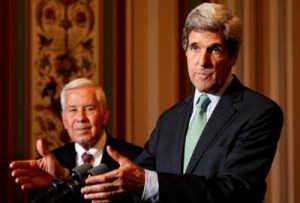
Senate unanimously passed a bill authorizing “appropriations to promote an enhanced strategic partnership with Pakistan”. The legislation is likely to receive similar support in the House later this week before being sent to President Obama for final approval. Initial versions of legislation were presented as the Biden-Lugar bill last year led by democrats Joe Biden and Senator Kerry, and supported by Hillary Clinton and Barack Obama. Currently, the bill is coauthored by Republican Senator Dick Lugar making it widely bipartisan which reflects our growing desire to engage Pakistan ensuring stability and ultimately our interests in the region.
The Legislation triples foreign aid to our major non NATO ally” allowing up to $1,500,000,000 for their cooperation in “counterterrorism/counterinsurgencydescribing Pakistan’s ongoing struggles and successes against the Taliban and Al Qaeda. It cites assassination of Benazir Bhutto, the Islamabad and Mumbai hotel attacks last fall among other suicide bombings in Pakistan and Afghanistan, some of which involved deaths of US citizens to underscore an immediate need to assist Pakistan at this critical time. As we face mounting deaths in the War on Terror, send additional troops to Afghanistan and President Obama works closely with generals to revamp our strategy there, the bill is meant to forge a new relationship with Pakistan.
It extends diplomatic rhetoric directly to the people of Pakistan by describing the daily plight of citizens who are “especially hard hit by rising food and commodity prices and severe energy shortages” with 2/3rds of the population living on less than 2.25 and 1/5 of the population living below the poverty line”. It further mentions “Compatible goals of combating terrorism, radicalism and promoting economic development through building of infrastructure and promoting social and material well being for Pakistani citizens through development of public services”. And most interestingly, the bill cites Pew opinion polls finding:
“Pakistan has historically viewed the relationship between the United States and Pakistan as a transactional one characterized by a heavy emphasis on security issues with little attention to other matters of great interest to citizens of Pakistan”.
Then referring to the current civilian government as an “opportunity to place relations on a new and more stable foundation”. The bill’s ‘statement of policy‘ identifies the following objectives:
Support the consolidation of democracy, good governance & rule of law in Pakistan
Support economic growth & development to promote stability/security
To build a sustained, long term, multifaceted relationship with Pakistan
Expanding bilateral engagement with Pakistan
To work with Pakistan and bordering countries to facilitate peace (a possible reference to mediating the Kashmir issue. President Obama mentioned doing so during his campaign run for President)
Expand people to people engagement between US and Pakistan through increased educational, technical and cultural exchanges (possibly in the form of more student/professional visas. Envoy Holbrooke mentioned this in visits to Karachi in July)
Work with government of Pakistan to:
prevent Pakistani territory from being used as a base/conduit for terrorism in Pakistan, Afghanistan, India or elsewhere
Coordinate military, paramilitary & police action against terrorist terrorism
Help bring peace, stability and development
(this might entail counterinsurgency/counterterrorism assistance and cooperation through intelligence sharing, arms development/trade and training of Pakistani forces)
Pakistan is aptly described as a major non-NATO, long-standing ally. But cooperation has been dominated by security issues generally in the form of military dictators supported by the States in exchange for Pakistan’s military assistance throughout the Cold War and current War on Terror resulting in the Pakistani mindset of solely “transactional” relations. This bill is a fair attempt to shift that context to a more positive tone with the aforementioned objectives and diplomatic rhetoric.
However, certain specificities such as timetables and solid oversight must be transparently accessible to the Pakistani and American public to ensure more positive relations are achieved. Already experts are weighing in with concerns. Despite the commitment to development in addressing the plight of daily Pakistani’s, Foreign Policy Magazine mentions that the bill doesn’t say exactly how much of these funds are to be allocated toward military assistances. And although senator Kerry insists “Clear, tough minded accountability standards and metrics” are contained in the bill, Dawn News cites Rand Corporation expert Dr. Christine Fair raising the issue of “greater transparency” and wanting to ensure international accounting standards are applied in allocating these funds. Such concerns are equally felt in Pakistan, where past commitments of economic development have not always found their way to alleviating the plight of daily citizens for whom funding is supposedly intended.
For this reason a concerted conviction to improving the daily lives of Pakistani’s is required by Pakistani politicians who have ultimate control over how these funds are applied. I hope that President Asif Zardari along with Parliament works closely to ensure monies are responsibly allocated to a “sustainable” development the bill calls for.
Former leaders from Ayub Khan, Benazir Bhutto, and General Musharraf tried to address the issue of growing energy consumption and diminishing supplies which is now legitimately deemed a “crisis” in Pakistan. President Zardari had his hand in addressing the crisis last week during the quarterly visit to Beijing where he discussed China’s assistance on energy projects. The result is a signed Memorandum of Understanding between both states for the construction of the Bunji dam in the Astore district of Pakistan. Pakistani Ambassador to China, Masood Khan confirmed this dam is one of 8 slotted for priority construction and will have a capacity of generating 7,000 megawatts of electricity. Additionally, Presdient Zardari visited the ambitious Three Gorges Dam and met with Solar Power companies in China this year and enthusiastically invited them to carry out feasibility studies and expertise:
“We need solar power for individual housing units and I want the Chinese to carry out a study in Pakistan,”
Applying such construction to the northern areas of Pakistan as per recent deals with China have the potential to spur similar growth. Localized hydel projects with Chinese expertise can bypass a need for more macro transmission and distribution costs involved with creating larger infrastructure. Time and money are saved if large scale distribution channels to transmit power are not needed. And because the energy produced would be confined to the area of consumption more expensive centralized power generation and large scale load issues may be avoided.
“personally monitoring all ongoing projects being carried out by Chinese engineers and experts in Pakistan, adding that he was holding regular meetings with Chinese ambassador in Islamabad”
So colorful history aside, President Zardari is one of the few, if not first true businessmen turned leaders of Pakistan and it will be great to see the success of his recent bilateral negotiations with China translate to a lasting alleviation of the energy crisis.





 Zainab B. Jeewanjee
 Zainab Jeewanjee