

In kindergarten the last thing we did before going home was have story time. And I best recall Cinderella in particular because I interrupted Mrs. Woods twice during her reading: first because I didn’t understand why the glass slipper didn’t change back to Cinderella’s original shoe when everything else did at midnight, and then I wondered why out of all the girls in the land, how could that slipper just not fit anyone else?
Suffice to say, Cinderella didn’t add up when I was 5 (for some odd reason, Alice in Wonderland did, but that’s another matter altogether). Then in high school and undergraduate Women’s Studies and Sociology classes we deconstructed seemingly endless dangers of these fairy tales with their adverse impact on female agency (or rather, a complete omission of it), which certainly didn’t help the skepticism I already had for this princess. But Maureen Dowd asks us to revisit her in an article on Sunday. Yes, I will grant that the whole damsel in distress cliché in fairy tales (and to a large extent in Hollywood to this day) did little to empower women, but in light of this weeks Royal wedding, Dowd describes a redefinition of Cinderella:
“Teaming with the spirit of her dead mother, Cinderella cleverly rescues herself from servitude, conjures up her own glittery makeover and then saves the prince from the same torment she endured living with her hideous stepsisters”
Was Cinderella more clever than my volumes of feminist theory posited? And in that light, can we credit the new Duchess, Kate Middleton as being an empowered woman with agency who married a Prince but is actually the leading heroic figure in their tale? Dowd likens her to Cinderella given their so called, “commoner” background and the solemn image of a deceased mother figure (Princess Diana) that looms large in their pasts:
“You could sense a collective prayer among the spectators that Kate, with her Cinderella coach, Cartier tiara and satin slippers, was not a lamb being led to slaughter. Many assured the invading celebrity journalists that Kate was older and more grounded than the virginal and high-strung 20-year-old who married an older man who loved another woman”
And therein we find agency, in a place no one ever encourages you to look: in a females age. The fact that Kate is nearly 10 years older than Diana at the time of her marriage changes the story completely. Testimony to this are a string of articles in the past couple years describing an increasingly buffoon like modern day male, painfully complacent in his inability to think or act for himself, versus an increasingly assertive, confident and successful modern female. The result is that both sexes converge in delaying marriage and other markers of adulthood more than ever before. Not that the Prince is any way buffoon like, or Kate a high strung, domineering partner, but they are entering into a relationship that seems much more complementary than what William’s mother entered into. And that might have much to do with age and this delayed experience of adulthood that has ironically given girls a chance to be girls longer, but simultaneously offers greater opportunity to discover, and attain our interests. Couple this girl with a guy who evades the buffoon like existence and you’ve probably got a happy ending.
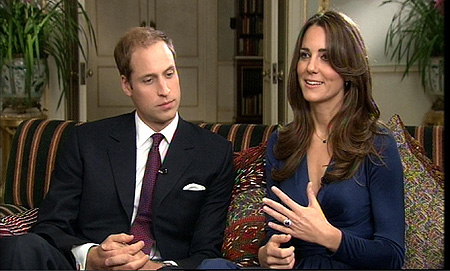 So, we go back to Dowd’s question: did Cinderella and Kate “marry up” or was it the other way around? Well, I suppose it’s both. Because whether it’s the new Duchess and Duke of Cambridge or Cinderella and her handsome prince, there’s a very interesting balance that each person found by acting with keen self-awareness, and taking time to thoughtfully determine a plan independent of external pressure which they then executed with utmost confidence and presentation. Go figure: fairy tales wound up being more pragmatic in adulthood than in kindergarten 🙂



 Zainab B. Jeewanjee
 Zainab Jeewanjee