Posts Tagged ‘General Musharraf’
 October 4, 2010
-
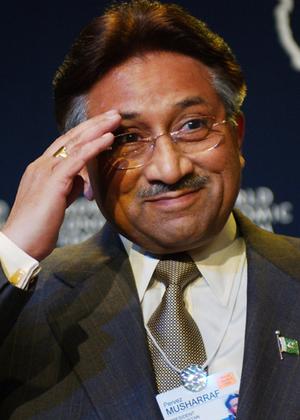
Freedom through Dictatorship?
Well, I called it: Pervez Musharraf is staging a return to Pakistani politics. Launching his new “All Pakistan Muslim League” (AMPL) party this week in a plan to return to the country, the former General will have to face a tremendously skeptical, increasingly hardened citizenry and even tougher adversaries in the judicial branch and opposition parties. In an Al Jazeera special report, Musharraf’s former Legal Advisor Ahmed Raza Kasuri insisted that should tacit approval come from the country’s military establishment and most importantly, with support of a “silent majority” Kasuri measures at 60-65% of moderate Pakistani’s, Musharraf will garner required support to win in future elections. Political analyst Imtiaz Gul insisted otherwise explaining not only would the military establishment be weary of backing Musharraf who cost them valuable political capital when he sacked the judiciary in 2007 and issued a State of Emergency, but also because he has “lost relevance” in Pakistan today.
Gul makes a valuable point: without relevance a political figure is climbing an uphill battle of garnering credibility, and because credibility is deeply intertwined with legitimacy, Musharraff undoubtedly faces a bumpy comeback.
But relevance is not necessarily an impediment to power in Pakistan since the current situation lends a valuable opportunity for it to be readily earned. Current President Asif Zardari usurped such an opportunity when his wife was tragically murdered and assumed leadership, riding the waves of sympathy that swept the nation to win elections. While that “relevance” is waning now, it was enough to allow him a seat of power for 2 years and actually shake off some of the “Mr. 10%” infamy, which is a far larger feat than what Mushrraf faces today.
While the main opposition party leaders Asif Zardari and Nawaaz Sharif are forever bogged by allegations of corruption, Musharraff’s criticisms revolve around issues of “democracy”.
His most vociferous opponents will cite his sacking of the judiciary, coup to power, and 9 year dictatorial reign as subverting democracy in Pakistan. But such criticism of Musharraf is both misleading and mostly hyperbole.
The deficient part of such rhetoric lies in lacking recognition of liberalism. Notions of individual human rights and liberty, free trade, separation of church and state and religious tolerance are erroneously assumed to come only with democratic leadership in Pakistan. On the contrary, liberal policies extending specifically to women’s rights, fostering regional cooperation and trade, namely with India, opening domestic markets, such as free media and holding free and fair elections were successfully carried out previously by Musharraf.
Ironically, under the title of “dictator”, he brought forth more liberal triumphs than any other leaders in my lifetime. And it is important to not confuse democracy with liberalism. Fareed Zakaria makes this distinction in tweaking “Democratic Peace Theory”. His ideas are described:
“democracy is defined in terms of the process by which a government is selected. In contrast, “constitutional liberalism” is defined not by how the government is selected, but rather b the extent to which the society and its institutions protect individuals’ basic rights (to life, property, freedom of speech, and religion)”
Thus basic tenants of a such liberalism, to a fair extent were brought forth by Musharraf. And as political change seems imminent in Pakistan, if we continue looking to political theory one might advance a case for liberalism by way of identifying Musharraf’s opposition. If we take a voluntaristic view of government, wherein heads of states are integral parts of policymaking as opposed to looking mostly at system wide determinants of policy, one finds that not only corruption, but the fact that both Asif Zardari and Nawaz Sharif are part of feudal, landowning elites in Pakistan is meaningful. With that background, and likely subsequent value sets which are diametrically opposed to liberal notions of liberty and individual rights, Pakistan runs the risk of remaining socially, and economically stagnant under their leadership. Moreover, with the U.S. winding down our war in Afghanistan and shifting in to Pakistan, more than ever liberal ideals are needed.
No amount of drones, target killings or CIA intervention have yet quelled extremism let alone terrorism in Pakistan since 9/11. Modernity and liberalism are Pakistan’s best bet at framing a solution for the long run.
It cannot be an overnight shift, but it will require leadership that espouses liberal ideals. Because without credible experience in upholding individual rights and freedoms, only halfhearted appreciation will come for liberalism and even weaker attempts to implement them.
Is Musharraf the solution Pakistan is looking for? I do not know. But until new, more modern and liberal alternatives in political leadership are available, he just might be the best option now.
ORIGINALLY PUBLISHED @
Posted in Current Affairs, International Affairs, International Relations, Pakistan | Tagged ahmed raza kasuri, al jazeera, al jazeera musharraf, al jazeera pakistan, al jazeera report, all pakistan muslim league, approval rating pakistan, Asif Zardari, benazir, CIA, corruption, corruption in pakistan, dictator musharraf, dictator of pakistan, dictators, elections in pakistan, elections leadership in pakistan, essence of decision, Fareed Zakaria, free fair elections, future of asif zardari, future of musharraf, future of pakistan, General Musharraf, imtiaz gul, jeewanjee, leadership in pakistan, liberal pakistan, liberalism, military of pakistan, military rule pakistan, moderation pakistan, modern pakistan, modernity, musharaf, musharaf in hindsight, musharaf return to pakistan, musharaff, Musharraf, musharraf in hindsight, musharraff in hindsight, Nawaz Sharif, pakistan citizens, pakistan corruption, pakistan leadership, pakistan leadership roles, pakistan politics, pakistani current affairs, pakistani politics, pakistans leaderhsip, Pervez Musharraf, pervez musharraf comeback, policies pakistan, policy pakistan, policymaking in pakistan, problem in pakistani politics, support, supreme court pakistan, US pakistan cooperation, zainab, zainab jeewanjee, zainyjee | 11 Comments »
December 21, 2009
American Neutrality is Boston Globe’s recommendation for U.S. policymakers as political uncertainty looms over Pakistan with last weeks repeal of the National Reconciliation Ordinance, effectively revoking Amnesty from corruption charges on thousands of government officials. Although political transition appears imminent in 2010 and comes as President Obama commits to an Af-Pak troop surge, effectively stepping up our engagement with Islamabad, the Boston Globe’s call for neutrality is wise given the current pool of potential leaders to choose from:
- Nawaaz Sharif:
- Reason We Should Remain Neutral – Quite simply: “After two terms as prime minister, he’s remembered for rampant corruption, nuclear proliferation, and his penchant for cozying up to Islamist militants“
- Pervez Musharraf or Asif Zardari:
- Reason We Should Remain Neutral – Well: “at the behest of Washington, General Pervez Musharraf, who was president at the time, arranged the amnesty that allowed Zardari and his wife, Benazir Bhutto, to return from exile so she could lead her Pakistan Peoples Party in elections. Bhutto was assassinated, and her husband became prime minister. Not without reason, many Pakistanis who are angry about Zardari’s corruption and ineffectiveness hold the United States responsible for imposing him on their country”
- Pakistan Military:
- Reason We Should Remain Neutral – Perpetuating rampant blame that one too many American backed military dictators have prevented democracy from ever taking root in Pakistan can’t help growing weariness of cooperation with our government.
- Noteworthy example – Backing General Zia-ul-Haq in the 1980’s with his leadership key to training the Mujahideen (now known as Al Qaeda) to oust the Soviets from Afghanistan. Not coincidentally, Zia’s regime is remembered as the time Pakistan shifted from being a socially progressive, and moderate Islamic state, to imposing severe, fundamentalist religious policy reforms.
- Chief Justice Iftekhar Chaudhry:
- Reason We Should Remain Neutral: Under a sugar-coated banner of “democracy”, the Chief Justice is too blatantly partisan for us to support. His recent decision to repeal the National Reconciliation Ordinance, which set wheels in motion for regime change is widely understood as nothing short of a ploy for power and done in the politics of retribution.
This leaves neutrality as not only our most wise option, but also perhaps our most ethical route. Restraint in supporting any particular regime could mean history points one less finger in our direction should anything go less than perfect as we deepen involvement in Af-Pak. Simultaneously, neutrality assures Pakistani masses who are increasingly skeptical of cooperation with the United States that they have 100% autonomy in political processes.
Well publicized neutrality on a looming regime change could be a valuable opportunity to demonstrate a genuine interest in Pakistan as they transform politically and we require their support in the War on Terror.
ORIGINALLY PUBLISHED @
Posted in Current Affairs, Foreign Policy, International Affairs, International Relations, Pakistan, U.S. Politics, US Foreign Polciy, US Pakistan relations | Tagged 2010 pakistan, 2010 pakistan politics, af-pak, af-pak region, af-pak strategic, af-pak war, af-pak war on terror, american neutrality pakistan, american pakistan relations, asif ali zardari, Asif Zardari, asif zardari pakistan NRO, asif zardari supreme court, chaudhry chief justice, chief justice chaudry, chief justice in pakistan, chief justice nro pakistan, chief justice of pakistan, chief justice pakistan, current affairs pakistan, genearal zia united states, General Musharraf, general zia pakistan, general zia united states, iftekhar chaudry, iftikhar chaudhry, international affairs in pakistan, International Affairs Pakistan, international politics pakistan, international relations pakistan, jeewanjee, jeewanjee politics, justice chaudhry, justice chaudry, kerry lugar bill, kerry lugar bill pakistan, mujahideen zia, musharraf pakistan, musharraf zardari, muslim world, muslims pakistan, national reconciliation ordinance, national reconciliation ordinance pakistan, nawaaz sharif, nawaaz sharif corruption, nawaz sharif corruption, nawaz sharif corruption prime minister, neutrality pakistan, news on pakistan, NRO court zardari, NRO pakistan, NRO pakistan court, NRO ruling, NRO supreme court, NRO supreme court pakistan, NRO unconstitutional, NRO unconstitutional pakistan, NRO zardari, NRO zardari pakistan, organization of islamic conference pakistan, pakistan 2010 prediction, pakistan 2010 recommendation, pakistan affairs., pakistan foreign policy, pakistan foreign policy association united states, pakistan international, Pakistan international affairs, pakistan international politics, pakistan musharraf, pakistan needs economic development, pakistan news, pakistan next year, pakistan policy, pakistan politiacal affairs, pakistan political, pakistan political affairs, pakistan politics, pakistan politics asif zardari, pakistan united states afghanistan, Pakistan US cooperation, Pakistan war on terror, pakistani affairs, pakistani policies, pakistani political affairs, pakistani politics, pakistani poltiis, pakistani us relations, pervez musharraf pakistan, politics in pakistan, politics of pakistan, president obama pakistan strategy, prime minister jaswant singh, prime minister nawaz sharif, prime minister sharif, supreme court pakistan zardari, terrorism afghanistan pakistan, terrorism of pakistan, the af-pak region, the af-pak war, united states assistance pakistan, United states foreign policy pakistan, united states pakistan cooperation, united states pakistan policies, united states pakistan relations, united states zia ul haq, us assistance to pakistan, US foreign policy, US foreign policy to pakistan, us led war on terror, us led war on terror pakistan, us neutrality pakistan, US Pakistan relations, us winning hearts and minds, war on terror in pakistan, war on terror united states pakistan, zainab jeewanjee, zainab jeewanjee foreign policy, zainab jeewanjee internation, zainab jeewanjee international affairs, zainab jeewanjee international relations, zainab jeewanjee Pakistan, Zainab jeewanjee politics, zainab politics, zainyjee, zardari corruption, zardari nro, zia pakistan islamization, zia pakistan radical islam, zia ul haq pakistan | 2 Comments »
December 7, 2009
As President Obama announced a troop surge in the Af-Pak war, former leader of Pakistan General Musharraff weighed in with specifics a solution would require.
In the Wall Street Journal this week, he explained “quitting is not an option”, and “time limits” should not drive our exit strategy. Rather, in tandem with additional troops, a “political” surge is key. With firsthand military and political experience in the Af-Pak region and War on Terror, Musharraf gives us substance with which to understand the situation. He explains that when the United States “liberated Afghanistan from the tyranny of Al Qaeda and Taliban, they had unequivocal support of the majority of Afghans.” What we didn’t do though, is establish a “truly representative national government” giving proportional representation to Pashtun’s who are the ethnic majority. He says:
The political instability and ethnic imbalance in Afghanistan after 9/11 marginalized the majority Pashtuns and pushed them into the Taliban fold, even though they were not ideological supporters of the Taliban.
As a result, despite Pakistani efforts during Musharraf’s tenure where “600 Al Qaeda and Afghan Taliban leaders, some of them of very high value” were captured in tandem with the establishment of “1000 border check posts”, the Afghan government never gained legitimacy, and ultimately, sufficient authority. He further attributes insufficient NATO forces and the distraction of invading Iraq as leading causes to the Taliban’s capacity to gain ground, and reassert its center of gravity toward northern Pakistan.
With a grand strategy to destabilize the whole region, the Taliban and al Qaeda established links with extremists in Pakistani society on the one hand and with Muslim fundamentalists in India on the other.
It’s a complex situation, but Musharraff’s recommendations are rooted in a wealth of experience and offer details on a practical solution.
ORIGINALLY PIBLISHED @
Posted in Current Affairs, International Affairs, International Relations, Pakistan, US Pakistan relations | Tagged af-pak obama surge, af-pak obama troop, af-pak obama troops, af-pak pakistan, af-pak region, af-pak strategy, af-pak taliban, af-pak terrorism, af-pak troop surge, af-pak troops, af-pak war, af-pak war pakistan, afghan pak region, afghanistan pakistan war, america and pakistan war on terror, balochistan raw, cnn interview of musharraf, cnn pakistan, counterterrorism pakistan, development in pakistan, economic development pakistan, fareed zakaria gps pakistan, fareed zakaria pakistan, fareed zakaria show general musharraf, fareed zakaria war on terror pakistan, General Musharraf, general musharraf cnn, general musharraf politics, india and pakistan, india and pakistan policies, india and pakistan politics, india and pakistan terrorism, India Pakistan, india pakistan politics, India Pakistan relations, international affairs in pakistan, International Affairs Pakistan, international politics pakistan, international relations pakistan, isi india, isi pakistan, islamabad bombings islamabad attacks, military offensive pakistan, musharraf gps, musharraf interview cnn, musharraf interview fareed zakaria, musharraf on cnn, musharraf on fareed zakaria, musharraf on fareed zakaria cnn, musharraf on fareed zakaria show, musharraf on india, musharraf on intelligene, musharraf on the war on terror, musharraf on war on terror, musharraf war on terror, obama troop surge, obama troops afghanistan, obama troops in afghanistan, obama troops pakistan, obamas troop surge, pakistan affairs., pakistan army, pakistan army india, pakistan army war on terror, pakistan civil war, pakistan general musharraf politics, pakistan india political rivalry, pakistan isi, pakistan isi baluchistan, pakistan political affairs, pakistan politics, pakistan terrorism india, Pakistan war on terror, pakistan war on terror cnn, pakistan war on terror fareed zakaria, pakistan waziristan, pakistan waziristan war, pakistani military, pakistani policies, pakistani politics, pakistsan afghanistan war on terror, pervez musharraf india, pervez musharraf politics, political rivalry india pakistan, politics in pakistan, zainab jeewanjee, zainab politics, zainyjee | 1 Comment »
November 9, 2009
Pervez Musharraf was on Fareed Zakaria GPS this morning discussing the Af-Pak situation in two segments. The second segment focused on Pakistan where Zakaria prefaced Q&A by reminding viewers that General Musharraf is an “authentic representation of Pakistan’s military” and that his comments will reveal that the situation in Afghanistan is rooted in a “60 year geopolitical rivalry that we just walked in to, and its between between India and Pakistan“. Sounded like grand stuff.
And Zakaria jumped right in. He began with questions on whether the Pakistan military is as committed to eliminating terrorists in the north who launch cross border attacks as they are to obliterating terrorists in the South who are responsible for domestic assaults. He said the military “never seems to get around to attacking North Waziristan who attacks India or Afghanistan because they were supported in the past”. Musharraff made clear that during his tenure, he insisted on drone technology needed to obliterate terrorists from both regions, especially given Baitullah Mehsud who assassinated Bhutto and that terrorists were never supported by the military or any government policy. He mentioned that ISI “ingress” in terrorist groups is standard procedure practiced by all Intelligence operations, clarifying that “ingress” is not be equated to “support”, rather it’s standard maintenance of contacts with such groups for the states advantage.
When questioned about the widespread notion that Al Qaeda leader Mullah Umar is in Pakistan, Musharraf said it’s “200% wrong” explaining Umar would have no interest in leaving a safe haven in the northern areas where Taliban has de-facto control for Quetta where US and Pakistani intelligence/ military roam rampant. It was a reasonable response and Zakaria’s questions sounded increasingly implicative.
Zakaria probed the notion saying that the “Afghanistan government and intelligence say he’s in Pakistan” to which Musharraff firmly explained “don’t talk about the Afghan government and intelligence. By design, they mislead the world, they talk against Pakistan because they are entirely under the influence of Indian intelligence”.
Wow, he just said it. It’s often documented in Pakistani media that Indian intelligence is widely responsible for insurgencies in northern areas of Pakistan and the province of Balochistan by way of material support, but rarely is that view expressed in mainstream U.S. media. Former Foreign Minister Sharifuddin Pirzada recently explained to me that warming of relations between Delhi and Kabul come at a direct expense of Pakistan because of such subversive, Indian led dealings with Afghanistan. Similarly, Musharraf explained he has provided “documented evidence” of this activity in the past.
From the first question on Pakistan’s commitment to uprooting cross border terrorism, to the question on Mullah Umar, Zakaria elicited Musharraf into discussion of a supposed “geopolitical rivalry” between India and Pakistan wherein Afghanistan is used as a “client state” by either nation as a buffer against, if not to subvert one another. And although I can’t say that is entirely untrue, Zakaria approached today’s interview with this preconceived notion, and overstepped neutrality by implicating Pakistan in the process.
ORIGINALLY PUBLISHED @
Posted in Current Affairs, Foreign Policy, India Pakistan, International Affairs, International Relations, Pakistan, South Asia | Tagged af-pak region, af-pak strategy, af-pak taliban, af-pak terrorism, af-pak war, afghan pak region, afghanistan pakistan war, america and pakistan war on terror, balochistan raw, cnn interview of musharraf, cnn pakistan, counterterrorism pakistan, development in pakistan, economic development pakistan, fareed zakaria gps pakistan, fareed zakaria pakistan, fareed zakaria show general musharraf, fareed zakaria war on terror pakistan, General Musharraf, general musharraf cnn, general musharraf politics, india and pakistan, india and pakistan policies, india and pakistan politics, india and pakistan terrorism, india baluchistan, india in baluchistan, India Pakistan, india pakistan affairs, india pakistan army, india pakistan balochistan, india pakistan baluchistan, india pakistan geo politics, india pakistan geopolitics, india pakistan politics, India Pakistan relations, international affairs in pakistan, International Affairs Pakistan, international politics pakistan, international relations pakistan, isi india, isi pakistan, islamabad bombings islamabad attacks, military offensive pakistan, musharraf gps, musharraf interview cnn, musharraf interview fareed zakaria, musharraf on cnn, musharraf on fareed zakaria, musharraf on fareed zakaria cnn, musharraf on fareed zakaria show, musharraf on india, musharraf on intelligene, musharraf on the war on terror, musharraf on war on terror, musharraf war on terror, pakistan affairs., pakistan army, pakistan army india, pakistan army war on terror, pakistan civil war, pakistan general musharraf politics, pakistan india political rivalry, pakistan isi, pakistan isi baluchistan, pakistan political affairs, pakistan politics, pakistan terrorism india, Pakistan war on terror, pakistan war on terror cnn, pakistan war on terror fareed zakaria, pakistan waziristan, pakistan waziristan war, pakistani military, pakistani policies, pakistani politics, pakistsan afghanistan war on terror, pervez musharraf india, pervez musharraf politics, political rivalry india pakistan, politics in pakistan, politics of india pakistan, politics of pakistan, raw baluchistan, raw in baluchistan, raw india, raw india balochistan, raw india baluchistan, raw india pakistan, rivalry politics india pakistan, terrorism afghanistan pakistan, terrorism in india pakistan, terrorism musharraf, terrorism of pakistan, terrorism pakistani, war india and pakistan, war on terror in pakistan, war on terror india and pakistan, war on terror musharraf, war on terror united states pakistan, zainab jeewanjee, zainab jeewanjee international affairs, Zainab jeewanjee politics, zainab politics, zakaria interview musharraf, zakaria interviews musharraf, zakaria pakistan cnn | 1 Comment »
November 1, 2009
Zainab Interviews the Honorary Sharifuddin Pirzada
Q & A BREAKDOWN
PAST LEADERS: Jinnah
- 2:39 – 3:17 – Former BJP Parliamentarian Jaswant Singh authored a book on Jinnah that is receiving a lot of controversy, having actually worked with Jinnah, can you share your thoughts on the book ?
- 3:20 – 4:42 – In recent interviews, Singh has said Muslims in India are “robbed of their psychological security” and basically downtrodden. He says what Jinnah should have done is left some advice for Indian Muslims who stayed back and didn’t migrate to Pakistan after partition, what do you think Jinnah might have said?
- 4:44-6:01 – He also refers to Jinnah as a “nationalist” not at all Anti-Indian, please expand
- 6:01-7:34 – Referring to politics, when Jinnah split from the Congress party eventually formulating a two state idea later in his career, were there any politics referring to Nehru or Gandhi that had an impact on decision making? Jaswant Singh makes a mention to some, what does your experience tell us?
- 7:35: – 8:15 – You’ve mentioned previously that Jinnah was a self made man, more details?
- 8:15 – 8:55 : Tell us about your experience with Jinnah, its a rare treat for us to have your insight
- 8: 55 – 9:22 – Further details, conclusion on Jinnah.
“Jinnah had the Charm of Churchill, Dignity of de Gaulle, Magnetism of Mandela, and Objectivity of Obama”
CURRENT LEADERS : Musharraf
- 9:23 – 10:47 – Shifting to current leaders now, lets talk about Musharraf. You’ve got great experience, tell us about your work with the former General and Leader of Pakistan.
- 10:48 – 11:55 – How did your work with Musharraf expand during his tenure?
- 12:56 – 13:45 – You served on the national security council & as senior advisor to Gen. Musharraf, tell us howthe context of national security in Pakistan changed after 9/11. Specifically what came on the agenda, what were the immediate concerns and interests and what drove the decision to behave the way Pakistan did at the time?
- 13:45 – 15:48 – Recent polls indicate a majority of pakistanis think Musharraf should be punished for treason as per laws under article 6 of the Constitution, how do you feel about that?
- 15:48 – 14:55 – Do you think it’s a valid case that Musharraf be tried for treason?
- 14:54 – 15:38 – Regarding an increasingly free media in Pakistan, please offer further insight
- 15:38 – 16:16 – There’s a contention that the currently free media be attributed to Benazir Bhutto’s regime wherein sateilite technology allowing expanded media was put in place, while others assign credit to Musharraf. Can you clarify this?
- 16:16 – 18:39 – Do you think it was the state of emergency and sacking of the judiciary that caused Musharraf to lose elections?
- 18:42 – 19:35 – Final question on Musharraf, what do you think his legacy would be?
“The Media is very free in Pakistan, and Musharraf is to be given a great deal of credit for that”
CURRENT LEADERS : Zardari
- 19:48 – 20:55 – Recent military achievements in SWAT and international trade deals penned by Zardari paint a somewhat rosy picture for the future, what are your thoughts on him so far?
US – PAKISTAN RELATIONS:
- 20:57 – 23:14 – There’s a US special envoy in the region, drone attacks continue, the west is pushing for rapid democratization and are heavily investing in counterterrorism through cooperation with Pakistan while Islamabad hopes to secure itself and expand economically in this engagement. But there’s a long history of cooperation but still a lot of skepticism on both sides, do you think current engagement with a new administration who promises more diplomacy will yield different results than we’ve seen in this alliance?
- 23:14 – 24:52 – What advice might you offer President Obama or the State department in terms of engaging Pakistan?
“Pakistan was member of SEATO and CENTO but certain conditions were not fulfilled and there is a strong section of Pakistan who has reservations with a cordial relationship with the United States”
PAKISTAN & THE MUSLIM WORLD
- 24:55 – 25:11 – Your position at the Organization of Islamic Conference?
- 25:13 – 25:57 – On the Israeli Palestinian issue, how do you assess the current two state solution that Obama has put forward? How viable is it?
- 25:57 – 26:25 – What is Pakistan’s diplomatic/official stance on the Israeli Palestinian Issue?e Islamic Conference
- 12:25 – 26:35 – What are the main priorities of the Organization of the Islamic Conference?
“The Palestinian Issue followed by Kashmir are of top priority to the Organization of Islamic Conference”
PAKISTAN BORDER RELATIONS : INDIA & AFGHANISTAN:
- 26:35 – 27:42 – Manmohan Singh & Prime Minister Gilani at the NAAM summit this summer agreed to bracket issues of Terrorism and move forward on peace talks and trade issues. Such rhetoric is not new, and might not reach fruition, so do you see anything being resolved in Kashmir anytime soon, without the help of the US?
- 27:44 – 28:44 – Elections in Afghanistan are being contested between Abdullah Abdullah and incumbent Karzai. Pakistan doesn’t seem keen on either because both signal a warming of relations between Kabul & New Delhi which is believed to come at a direct expense to Islamabad. How do you feel about that?
America can facilitate peace talks between India and Pakistan on Kashmir, but on the whole, people of Kashmir are still suffering and struggling. The approach of prime ministers has been positive, but an extremist element in India exists which doesn’t want this. To stop suffering in Kashmir, a solution must be reached.
PAKISTAN’S INTERNATIONAL FUTURE:
- 28:44 – How do you see geopolitics playing out in the next decade for Pakistan, given amplified US presence, including super embassies being constructed in Pakistan/Afghanistan, perpetually stalled relations with India, a very likely nuclear neighbor in Iran, and increasingly influential China and polarized Russia, what does Pakistan look like ten years from now?
“Pakistan in the next ten years must concentrate on democratic set up, economic development & maintaining cordial relatoins with Islamic countries. There are two great friends of Pakistan: Saudi Arabia, the other is China. That’s a good starting point”
Posted in Current Affairs, Foreign Policy, India Pakistan, International Affairs, International Relations, Pakistan, South Asia, US Pakistan relations | Tagged af-pak war, afghanistan pakistan war on terror, akistan, american pakistan relations, current affairs pakistan, democracy pakistan, gandhi jinnah, gandhi partition jinnah, General Musharraf, International Affairs, International Affairs Pakistan, jijnnah partition, jinnah democracy, jinnah democratic, jinnah freedom, jinnah gandhi, jinnah pakistan, jinnah pakistan democracy, jinnah pakistan freedom, jinnah politician, jinnah politics, kerry lugar bill, kerry lugar bill pakistan, latest news pakistan, minnah democratic pakistan, mohammad ali jinnah, musharraf pakistan, muslim world, muslims pakistan, news on pakistan, organization of islamic conference pakistan, pakistan afghanistan, pakistan current affairs, Pakistan economy, Pakistan international affairs, pakistan international politics, pakistan musharraf, pakistan news, pakistan politics, pakistan terrorism, Pakistan terrorists, pakistan us assistance, Pakistan US cooperation, Pakistan war on terror, pakistani affairs, pakistani politics, pakistani us relations, partition pakistan, pervez musharraf pakistan, politician pakistan, politics in pakistan, Sharefuddin Pirzada, united states assistance pakistan, united states pakistan cooperation, us assistance to pakistan, US foreign policy, US foreign policy to pakistan, US Pakistan relations, war on terror, war on terror pakistan, zainab jeewanjee, zainab politics, zainyjee.wordpress.com | 7 Comments »
August 23, 2009
No explanation can adequately address the horrors carried out in Gojra Pakistan. But these horrors are newsworthy and have potential to serve as a lesson in uprooting such inhumanity. Rather than focusing squarely and vaguely on vast historical causation that might allow factions to commit these horrors, a closer look at multifaceted ways in which to uproot that causation by drawing on recent history is valuable.
Because in some ways recent events are repetitive of the country’s history of cyclical, civilian to military governance. Just over half of 62 years of Pakistani statehood have been spent under martial law (which is bizarre, though not entirely as alarming as it sounds). Civilian regimes have been notoriously corrupt and did little to bring about democracy when scrutinized beyond the cover of a “civlian” title. Given this backdrop and our long engagement with Islamabad, Washington’s lenses should be discerning when dealing with Pakistan. But events like Gojra, the Mumbai atrocities and relentless, daily plight Pakistan’s military and civilians face in uprooting terror from in and around their borders, consistently begs the question: what is still going wrong?
If we draw on recent events for explanation, there is one consistency: Since the War on Terror began, Pakistan was most stable under Musharraf with respect to security and international standing and since his departure, the economy is deteriorating.
Correlating these successes to Msuharraf’s tenure might come across as reductive, but it is tangible. Thus, to better formulate our strategy in Pakistan given the luxury of hindsight, it could be useful to revisit Musharraf’s policies by way of dispelling vociferous censures that follow him until now:
As a military leader Musharraf’s governance deepened the cycle of martial law ultimately not allowing a democracy to take shape in Pakistan:
- Not necessarily: South Asian policy expert Anatol Lieven explains “All civilian governments have been guilty of corruption, election rigging and the imprisonment or murder of political opponents, in some cases to a worse degree than the military administrations that followed.” And the pool from which to select leaders post Musharraf offered little hope for anything different. Alternative options were extensions of the very leadership Lieven explains. They offered dynastic governance (Benazir Bhutto as daughter of Zulfiqar Bhutto) or perpetual subversion of democracy through maintaining a feudal system (Asif Zardari). In fact, the feudal system wherein masses of uneducated Pakistani’s are bound to a servile existence is what causes this kind of aristocracy to reign. This rampant subversion of Pakistani citizenry is a far cry from democracy.
- Musharraf indirectly addressed this by privatizing news media. This profoundly affected everyday Pakistani’s by spurring, fresh news, views, ideas, occupations and attention independent of state censorship and interest. Something I took for granted until spending time in Karachi before Musharraf’s tenure (especially under Sharif’s government). If anti- Americanism was a problem in Pakistan, Sharif’s rigid and religious driven censorship of television, and print media certainly did not help while Musharraf’s policies, did.
- On a side note: although media privatization is eclipsed by other news out of Pakistan in the past few years, I cite this as Musharraf’s crowning achievement. I maintain that its effects will have lasting impact on ultimately allowing a viable democracy to take shape in Pakistan by way of a meaningful dissemination of independent and increasingly globalized information.
Musharraf should not be credited with the economic growth because it was driven by foreign support funds from the War on Terror which would have been collected from cooperation by any Pakistani government in power at the time:
- Also while investments were “paternalistic” during martial law, economic growth actually did, “trickle down” as was seen in major cities. A more modernized standard of living through increased consumption and access to products reflected this economic expansion amongst all levels in society. For the first time in Karachi, I saw hired help, including chauffeurs who are part of the working class carrying cell phones and purchasing American DVD’s. Women were increasingly seen occupying positions in the financial sector and politics. So military paternalism, is sadly more productive than the civilian corruption that takes place because it means funds are at least circulated domestically, rather than driven out of the country entirely.
Now I’m not equating these specific instances of consumption and progress necessarily to full-fledged support of Musharraf, nor am I making a case for permanent military rule in Pakistan or condoning military corruption. However, such tangible developments amidst unfounded criticism and the reality of Pakistan’s history should inform Washington. A senior fellow on South Asia at the Council on Foreign Relations perhaps prescribed this best in 2007:
Musharraf offers Washington continuity in the face of uncertain political transition. He is a familiar face, a leader with whom the Bush administration has established a sustained working relationship. Under even the smoothest possible transition scenarios, Musharraf’s departure would interrupt bilateral cooperation on military, counterterrorism, and intelligence matters for days or weeks—with uncertain consequences for U.S. security
In hindsight, this assessment is quite apt. Musharraf was an ally who provided results and continued to successfully expand our efforts in the War on Terror. Not just for U.S. interests, but for Pakistani interests in security and development. Had Musharraf not fired the Supreme Court judges and declared the state of emergency that wound up dismissing further justices, he might have maintained his leadership that is needed in Pakistan at this time. And I hope the Obama Administration takes this recent history into close consideration when formulating our ongoing cooperation with leaders in Islamabad.
ORIGINALLY POSTED @
Posted in International Affairs, International Relations | Tagged Anatol Lieven, Benazir Bhutto, Bhutto, civilian government in pakistan, civilian government pakistan, civilian military rule in pakistan, civilian rule in pakistan, democracy in pakistan, democracy musharraf, democracy pakistan, democratization in pakistan, General Musharraf, general pervez musharraf, Gojra, Gojra Pakistan, martial law in pakistan, martial law pakistan, military governance in pakistan, military rule in pakistan, military rule pakistan, Musharraf, musharraf and democracy, musharraf in hindsight, musharraf zainab jeewanjee, Mushy sahib, Nawaz Sharif, Pakistan, pakistan corruption, Pakistan democracy, Pakistan economy, Pakistan leader, pakistan martial law, Pakistan media, pakistan military, Pakistan military leader, Pakistan president, Pakistan prime minister, Pervez Musharraf, US Pakistan relations, war on terror, zainab jeewanjee | 13 Comments »


 Zainab B. Jeewanjee
 Zainab Jeewanjee