The most provocative piece I’ve seen on drones in Pakistan was published last week. Not the most detailed, well researched article (the New Yorker takes the cake so far) but certainly the most confrontational. Farhat Taj writes in the Daily Times that International media, including American and Pakistani reports critical of drone use are totally unfounded. Vehemently, Taj writes:
” The people of Waziristan are suffering a brutal kind of occupation under the Taliban and al Qaeda. It is in this context that they would welcome anyone, Americans, Israelis, Indians or even the devil, to rid them of the Taliban and al Qaeda”
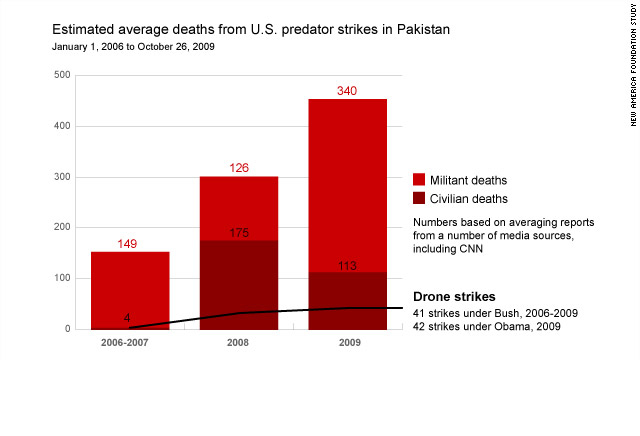
It’s a grand, almost inconceivable statement given that Anti Americanism is on a rapid rise and India / Pakistan are widely considered notorious Arch Nemesis in international relations today. Taj says inhabitants of Waziristan actually “welcome” drone attacks and dismisses all accusations of civilian casualties as Taliban propaganda. Basing this on the idea that almost no media are allowed in the area, she concludes there is no verifiable evidence, and therefore no reason for concern of civilian casualties. But mere logic would indicate otherwise. Although surgical, drones are not so precise to as to obliterate one individual at a time. When they strike, the range of damage inflicted by any drone is bound to cause peripheral damage, destroying more than just a singular terrorist.
Taj also too vehemently dismisses the concern that drones infringe on Pakistan’s sovereignty. She says greater Pakistan is oblivious to the more pressing priority of wiping out Taliban. And while I agree the Taliban is inflicting profound, perpetual and grave damage on Waziristan, greater Pakistan’s perceptions are important and not to be overlooked so easily.
Waziristan is but a fraction of Pakistan. If the majority of Pakistani’s see drones as an infringement of sovereignty, future cooperation with strategically poised Pakistan can become difficult. The alliance is already waning and one of politics’ golden rules is: perceptions matter. Whether or not there are exact numbers of civilian casualties, Pakistani’s are strongly against unmanned aircraft dropping bombs in their territory. Regardless of circumstances, the perception of an alliance with America, and our War on Terror is endangered by the drones. Hence arguments that drones are counter productive.
At what cost are we using drones to wipe out a few key leaders from militant and extremist groups? Might we accomplish the same success in hunting down terrorists by employing Pakistani forces to take these guys out themeslves using close cooperation with our counter terrorism, intelligence and military operations?
Some already argue that Islamabad tacitly works with the United States on drones in the north, however, the official and public stance of the Pakistani government is of staunch disapproval of drones. It’s a fair argument because without Islamabad’s approval, the United States would be in violation of international law, and protocol in using drones in Waziristan minus Pakistsan’s approval. So I buy the argument that Islamabad works closely in using drones in the north. But the fact that the government goes to the extent of constantly assuring its public that they disapprove of drones on record, is testimony to how offensive the use of unmanned aircrafts are in Pakistan.
So while our heightened use of drones might be effective in obliterating key leaders from the Taliban ranks for success in the immediate term, the consequences of drones entail potentially riling further anti Americanism which could compromise our interests in the future.
Cooperation is key, and I’m not convinced increased use of drones will help us engage Pakistan in the future.
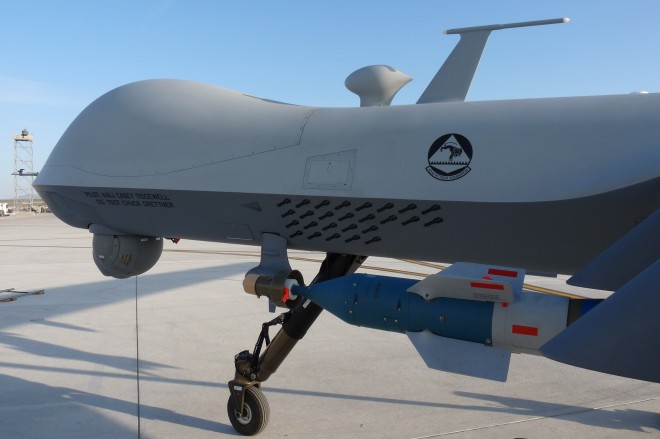
Defense Secretary Robert Gates met with officials in Islamabad to reiterate the importance of drone attacks, despite escalating reservations of their use amongst Pakistani’s. It’s been a polarizing issue from the onset because while it’s convenient to fly unmanned CIA predator aircraft over potential terrorist havens, they result in significant civilian casualties, and displaced persons. So it’s no surprise that over a year later, reconciling their use in Pakistan is still on the agenda.
For this reason, Secretary Gates announced a possibility of America providing “Pakistan with 12 unarmed Shadow aircraft”. Meaning the planes would not have a capacity to strike, but offer enhanced “surveillance capabilities under U.S. supervision”. It’s a fair decision and something I’ve suggested previously.
Gates also stressed the importance of militarily addressing all extremist groups because:
“It’s dangerous to single out any one of these groups and say, ‘If we could beat that group that would solve the problem,’ because they are in effect a syndicate of terrorist operators”
And almost simultaneously, Secretary Clinton unveiled The Afghanistan and Pakistan Regional Stabilization Strategy which sends an increase of 20-30% in civilian experts to both countries and “outlines plans to rebuild the Afghan farm sector, improve governance, and reintegrate extremists into society”. But this strategy of “reintegrating extremists” runs in contradiction to Secretary Gates’ aforementioned remarks.
Gates ruled out any possibility of reintegration calling for a consolidated attack on extremists suggesting that they work in “syndication”, while Cinton’s plan attempts to bring extremists back into the fold of moderate society.
It’s a stark inconsistency in our foreign policy. Because while I think Secretary Clinton’s idea notion of reintegration is more in tune with ground realities, and therefore viable, I figure Secretary Gates was being staunch in talks because finally relinguishing partial drone technology provided him with that margin of hawkishness. Either way though, one thing is certain, despite skepticism on both ends of the U.S. Pakistan relationship, cooperation is ever deepening.
The Transportation Security Administration announced heightened security measures for inbound travelers to the United States from countries designated as “state sponsors of terrorism or other countries of interest”. Currently listed as state sponsors of terrorism are Iran, Cuba, Sudan and Syria while the “other countries of interest include Afghanistan, Algeria, Iraq, Lebanon, Libya, Nigeria, Pakistan Saudi Arabia, Somali and Yemen.
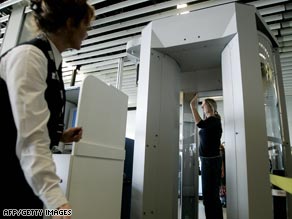
Fox News reports that effective Jan 1 2010, Pakistan International Airlines (PIA) is enhancing security checks for travelers to the United States, even though no direct flights even exist to America at this time. P.I.A. spokesperson Sultan Hassan explains: “passengers are subjected to special screening, including full body searches, in a designated area of the departure lounge. He said the airline had run advertisements in newspapers to warn prospective passengers of the increased safety measures. maintaining strict security standards at all airports for all flights”
I am of the opinion that such measures are useful if they help prevent terrorist attacks and offer peace of mind to travelers. In tandem with enhanced security directives however, should come enhanced diplomacy and perhaps specificity.
To prevent Anti-Americanism from the majority of travelers who are not terrorists, our embassies or appropriate State Department offices should amplify soft tools used in winning hearts and minds in the dozen countries whose passengers are now designated for special scrutiny.
Another way to ensure enhanced security measures don’t have unintended consequences might be a U.S. led international protocols. If all incoming travelers to the United States from a country like Pakistan are going to be searched at new, exceptional extents both in Pakistan and upon arrival to the United States, then it could be useful to implement some best practices protocols that all international Transportation authorities adhere to. For instance, to avoid instances where authorities might misuse liberties to scrutinize and make travelers feel unnecessarily uncomfortable is having a visible camera present at all times.
In the same way some California police departments are now installing cameras in officer helmets to help prevent abuse of authority and make others feel comfortable knowing there is oversight and evidence should recourse be required, T.S.A. authorities might have visible cameras present in areas where passengers from select countries like Pakistan are subject to enhanced scrutiny.
I think the new T.S.A. law could be an effective one. I don’t think most passengers would object to tightened security for the sake of safety so long as they feel they are being treated with care and there is little chance of mistreatment. So it’s important that as American’s, when we expand laws that affect the international community, we still uphold what we pledge allegiance to each day: “liberty and justice for all”.
Reason We Should Remain Neutral –Quite simply: “After two terms as prime minister, he’s remembered for rampant corruption, nuclear proliferation, and his penchant for cozying up to Islamist militants“
Pervez Musharraf or Asif Zardari:
Reason We Should Remain Neutral –Well: “at the behest of Washington, General Pervez Musharraf, who was president at the time, arranged the amnesty that allowed Zardari and his wife, Benazir Bhutto, to return from exile so she could lead her Pakistan Peoples Party in elections. Bhutto was assassinated, and her husband became prime minister. Not without reason, many Pakistanis who are angry about Zardari’s corruption and ineffectiveness hold the United States responsible for imposing him on their country”
Pakistan Military:
Reason We Should Remain Neutral –Perpetuating rampant blame that one too many American backed military dictators have prevented democracy from ever taking root in Pakistan can’t help growing weariness of cooperation with our government.
Noteworthy example –Backing General Zia-ul-Haq in the 1980’s with his leadership key to training the Mujahideen (now known as Al Qaeda) to oust the Soviets from Afghanistan. Not coincidentally, Zia’s regime is remembered as the time Pakistan shifted from being a socially progressive, and moderate Islamic state, to imposing severe, fundamentalist religious policy reforms.
Chief Justice Iftekhar Chaudhry:
Reason We Should Remain Neutral: Under a sugar-coated banner of “democracy”, the Chief Justice is too blatantly partisan for us to support. His recent decision to repeal the National Reconciliation Ordinance, which set wheels in motion for regime change is widely understood as nothing short of a ploy for power and done in the politics of retribution.
This leaves neutrality as not only our most wise option, but also perhaps our most ethical route. Restraint in supporting any particular regime could mean history points one less finger in our direction should anything go less than perfect as we deepen involvement in Af-Pak. Simultaneously, neutrality assures Pakistani masses who are increasingly skeptical of cooperation with the United States that they have 100% autonomy in political processes.
Well publicized neutrality on a looming regime change could be a valuable opportunity to demonstrate a genuine interest in Pakistan as they transform politically and we require their support in the War on Terror.
Most Unexpected Event: Terrorists turning domestic. Pakistan has suffered the brunt of terrorist activity in 2009. The stereotype we have of terrorists today entails violent attacks on supposed “infidels”, or western international targets. But 2009 saw Al Qaeda gradually in cooperation with the Taliban, extend violent attacks on Pakistan’s predominantly Muslim population. Attacks on and around Islamic houses of worship even became a reality this year.
What to Watch for in 2010: Increasing democratization of Pakistan, despite a very likely change in regime. Former military General Musharraf may return in some capacity, and democratization should continue to progress by way of an expanding private media. As per Musharraff’s reform in 2002, privatized Television channels have made extraordinary strides in disseminating information that is increasingly reflective of the masses, giving Pakistani’s a voice, and vehicle for change. Many consider the reinstatement of Chief Justice Iftikhar Chaudhry in March 2009 a direct result of privatized media who vociferously helped mobilize demonstrations such as the Long March. So, although security issues will continue to dominate until Af-Pak is stabilized, expect expanding television media that can help pave the way for a more moderate, democratic Pakistan.
What happens when a majority of one country’s citizens opt for martial law but the democratically elected government in power including judicial, executive and legislative branches are against a military takeover? It’s quite the political conundrum because either side offers legitimate democratic authority, but they’re diametrically opposed. A rational answer is to let the democratically elected government fulfill it’s term and allow citizens to elect politicians to office who will support martial law in the next term. That might work in a fully functional democracy backed by institutions that can uphold legitimacy and granted the state is sufficiently secure. However, in light of decreasing security, severe economic downturns and age old skepticism of U.S. actions in Pakistan, ever so gradually the country shifts it’s gaze toward the military.
Decreasing Security :: To offer partial explanation in a nutshell: Since 2001, terrorists fleeing Operation Enduring Freedom in Afghanistan, spilled over into Pakistan at the nebulous northern border areas which are historically autonomous from federal regulation. The fact that Pakistan already housed one of the worlds largest refugee populations allowed this spillover a massive and destitute demographic from which to exploit support. As a result, we now see unprecedented terrorism in Pakistan where Al Qaeda and the Taliban had no significant presence prior to 9/11.
Skepticism of U.S.’s Role in Pakistan:: Since the inception of Pakistan in 1947, bilateral realations with the United States have been defined by cooperation wherein Pakistan served as a proxy for U.S. Containment throughout the Cold War (i.e. security pacts like SEATO, CENTCOM, then aiding our Afghan led defense against Soviet incursions in the 1980’s). In exchange, Pakistan’s military with U.S. support, bolstered itself as the strongest, most efficient and stable institution in Pakistan. Some argue civilian governments and democratic institutions were thus never given an opportunity to compete with such a well funded, strongly backed military. And therein we find multifaceted dimensions that help explain the controversy over current U.S. support of Pakistan. Former Pakistan to U.S. ambassador Maleeha Lodhi describes the Kerry Lugar bill:
“the offending part of the legislation sets up the country as hired help and puts the military in the dock, presumed guilty on many counts and having to prove its innocence to Washington”
Pakistan is “hired help”, that’s the crux of skepticism on the Kerry-Lugar bill. Concern is rooted in a long history of cooperation with the United States that some argue created a behemoth military institution costing them a fair chance at democracy. In attempt to address that very concern, the Kerry Lugar bill mentions no military aid in exchange for cooperation on the War on Terror, unlike previous assistance packages from the Cold War. Ironically, bleak affairs in Pakistan now which are partially a result of pervious cooperation, particularly during the Soviet Afhgan war, prompt arguments that the military is exactly what needs support right now. Thus, the Lugar Bill receives not only skepticism from Pakistan’s strongest institution, but increasingly the public.
Although Secretary Clinton and Senators Kerry and Lugar have made no indication of altering the bill, to avoid future skepticism and potential resentment of U.S. involvement in Pakistan it could be wise to make changes so as to not sideline the military at this critical period in our War on Terror. Unlike previous Republican presidencies, the Obama administration is committed to dealing with civilian governments in Pakistan. It’s a noble idea and even though i don’t suspect that as the military gains legitimacy the civilian government will collapse soon, we should think twice before riling such concern over a bill that has just a 5 year life span. Central and South Asia are critical regions for our interests and we may need to engage strategically positioned Pakistan in more years to come. So a backlash by the most powerful institution in that country is something we should anticipate, and work actively against.
“Tonight we celebrate a great religion and its commitment to justice and progress. We honor the contributions of Americas Muslims and the positive example they set for so many”
No matter how one feels about Washington’s foreign policy, U.S. hegemony, or Americans in general, it’s hard to deny the appeal of our President’s sharp diplomacy. From making his first call in office to Palestinian Authority President Mahmoud Abbas, to his landmark speech in Cairo marking “A New Beginning” in U.S. relations with the Muslim world to hosting the annual White House Iftar, Barack Obama’s message to Muslims is drastically different than previous administrations. This administration extends a mature attempt to engage Muslims at home and abroad.
I use the word mature because previous presidencies naively boxed themselves in an almost solely hostile rhetoric of The War on Terror or simply lacked foresight to effectively convey that America is not adverse to Islam. Lacking foresight is critical because Islam’s global reach puts Muslims atop the list of the worlds fastest growing religions . So when President Obama shifts diplomatic rhetoric to a more mature tone with the Muslim world it’s to ensure progressive relations with this large and increasingly strategic demographic. And that’s why I think President Obama’s overtures are genuine. They fulfill our long term interests in garnering positive relations with a rapidly growing and influential Muslim world.
Regardless of whether his diplomatic overtures vastly alter policies, they are highly symbolic, and perceptions matter. American political discourse in the past referring to religion most often talked about “Judeo-Christian” values and beliefs without a mention of Muslims, even though Islam is the second largest religion in the world. Couple this with a political mis-focus on only extremist factions rather than on the moderate, majority of Muslims, just makes President Obama’s more astute diplomacy that much more valuable. Rather thanalienate Muslims across the globe, he shifts the context of US engagement to one of inclusiveness.
In his Ramadan greeting President Obama repeatedly emphasizes that U.S. relations with the Muslim world draw on commonalities citing rituals such as fasting, values of tolerance, advancing justice and respect as mutual goals that can be reached through cooperation. He specifies expanding education, fostering entrepreneurship, collaboration on science and eradicating global illnesses as instances where the US and Muslim world can engage toward more progressive relations. Not a bad idea. Let’s hope that liberal theories of humanity prove true and these ideas come to fruition.



 Zainab B. Jeewanjee
 Zainab Jeewanjee