The Transportation Security Administration announced heightened security measures for inbound travelers to the United States from countries designated as “state sponsors of terrorism or other countries of interest”. Currently listed as state sponsors of terrorism are Iran, Cuba, Sudan and Syria while the “other countries of interest include Afghanistan, Algeria, Iraq, Lebanon, Libya, Nigeria, Pakistan Saudi Arabia, Somali and Yemen.
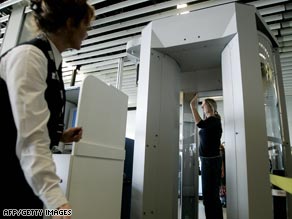
Fox News reports that effective Jan 1 2010, Pakistan International Airlines (PIA) is enhancing security checks for travelers to the United States, even though no direct flights even exist to America at this time. P.I.A. spokesperson Sultan Hassan explains: “passengers are subjected to special screening, including full body searches, in a designated area of the departure lounge. He said the airline had run advertisements in newspapers to warn prospective passengers of the increased safety measures. maintaining strict security standards at all airports for all flights”
I am of the opinion that such measures are useful if they help prevent terrorist attacks and offer peace of mind to travelers. In tandem with enhanced security directives however, should come enhanced diplomacy and perhaps specificity.
To prevent Anti-Americanism from the majority of travelers who are not terrorists, our embassies or appropriate State Department offices should amplify soft tools used in winning hearts and minds in the dozen countries whose passengers are now designated for special scrutiny.
Another way to ensure enhanced security measures don’t have unintended consequences might be a U.S. led international protocols. If all incoming travelers to the United States from a country like Pakistan are going to be searched at new, exceptional extents both in Pakistan and upon arrival to the United States, then it could be useful to implement some best practices protocols that all international Transportation authorities adhere to. For instance, to avoid instances where authorities might misuse liberties to scrutinize and make travelers feel unnecessarily uncomfortable is having a visible camera present at all times.
In the same way some California police departments are now installing cameras in officer helmets to help prevent abuse of authority and make others feel comfortable knowing there is oversight and evidence should recourse be required, T.S.A. authorities might have visible cameras present in areas where passengers from select countries like Pakistan are subject to enhanced scrutiny.
I think the new T.S.A. law could be an effective one. I don’t think most passengers would object to tightened security for the sake of safety so long as they feel they are being treated with care and there is little chance of mistreatment. So it’s important that as American’s, when we expand laws that affect the international community, we still uphold what we pledge allegiance to each day: “liberty and justice for all”.
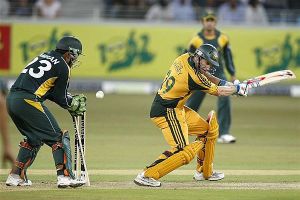
Test matches will disappear from cricket by the year 2020, and ironically, because of 20Twenty. After Pakistan’s frustrating loss against Australia today, batsman Mohammad Yousuf warns that Twenty20 cricket will ruin Pakistan’s game. He says:
“Because of Twenty20 cricket no player knows how to stay at the wicket anymore. Until players do not play with discipline and play ball to ball and leave balls they are supposed to we will struggle in ODIs, let alone Tests. If you are going to slog all the time what is the point? It is necessary that Pakistanis, the media, the board, the fans realise that we play as little Twenty20 as possible.”
Mohammad Yousuf is asking everyone to limit Twenty20 cricket at a time when it’s popularity is on the rise, Pakistan is the reigning World Champion and undoubtedly has the best players the game has seen (Afridi, Razzaq, Ajmal, Gul). He’s basically making a case for conservative cricket: or getting back to the basics of Test.
In Test’s even if you’re pitched a full toss at above average speed and there’s no one at long on or square leg, the skilled batsman refrains from smashing it out of the park.
Reason being the risk of getting out supersedes the worth of a six. However, that kind of discipline is the exact antithesis of 20Twenty cricket where you are required to play each ball as if it’s a potential six. But having the sense to resist potential sixers is but one part of the batting discipline needed in traditional cricket. It’s an overall psychological discipline where batsman must with extreme patience and consistency just hold one’s wicket. To do that, over after over for 5 days, knowing that the match could wind up in just a draw requires an extreme endurance that few batsman posses. In fact some of the best batsmen in the game who have mastered this don’t even play ODI’s anymore, like Rahul Dravid. Case in point, most teams don’t have players who specialize in Test, Dravid is actually a rare case. Mohammad Yousuf could then be on the right track: are players losing an edge in Test, and perhaps even skill by playing 20Twenty cricket?
20Twenty is the American equivalent of Home Run Derby: the game simply requires batsman to smash anything and everything out of the park. 8th man down must carry at least a 100% strike rate to give a team the depth required to be competitive in the game.
It’s less about psychological discipline, discerning batting or even batting skills for that matter. Because if the aim is to slog, you can take a whack at just about anything pitched your way. It requires a lot of power and little else. Anyone with training and enough arm strength to smack the ball around can be fairly successful. There aren’t rewards for consistency, patience or discipline. In fact, those qualities are counter productive in 20Twenty. In Tests you score runs by first discerning which balls are safe, whether that be after 5 or 50 overs, and then you nudge, or direct the ball into anticipated gaps.
It’s a whole different ball game, as they say in the States. So is Mohammad Yousuf correct in calling for a limit to 20Twenty? The conventional part of me who tends to resist change says yes. But the more spontaneous, forward thinking side of me says, hey, if that’s the natural progression of the game and Tests are inevitably obsolete, bring on a few more Shahid Afridi’s !
Reason We Should Remain Neutral –Quite simply: “After two terms as prime minister, he’s remembered for rampant corruption, nuclear proliferation, and his penchant for cozying up to Islamist militants“
Pervez Musharraf or Asif Zardari:
Reason We Should Remain Neutral –Well: “at the behest of Washington, General Pervez Musharraf, who was president at the time, arranged the amnesty that allowed Zardari and his wife, Benazir Bhutto, to return from exile so she could lead her Pakistan Peoples Party in elections. Bhutto was assassinated, and her husband became prime minister. Not without reason, many Pakistanis who are angry about Zardari’s corruption and ineffectiveness hold the United States responsible for imposing him on their country”
Pakistan Military:
Reason We Should Remain Neutral –Perpetuating rampant blame that one too many American backed military dictators have prevented democracy from ever taking root in Pakistan can’t help growing weariness of cooperation with our government.
Noteworthy example –Backing General Zia-ul-Haq in the 1980’s with his leadership key to training the Mujahideen (now known as Al Qaeda) to oust the Soviets from Afghanistan. Not coincidentally, Zia’s regime is remembered as the time Pakistan shifted from being a socially progressive, and moderate Islamic state, to imposing severe, fundamentalist religious policy reforms.
Chief Justice Iftekhar Chaudhry:
Reason We Should Remain Neutral: Under a sugar-coated banner of “democracy”, the Chief Justice is too blatantly partisan for us to support. His recent decision to repeal the National Reconciliation Ordinance, which set wheels in motion for regime change is widely understood as nothing short of a ploy for power and done in the politics of retribution.
This leaves neutrality as not only our most wise option, but also perhaps our most ethical route. Restraint in supporting any particular regime could mean history points one less finger in our direction should anything go less than perfect as we deepen involvement in Af-Pak. Simultaneously, neutrality assures Pakistani masses who are increasingly skeptical of cooperation with the United States that they have 100% autonomy in political processes.
Well publicized neutrality on a looming regime change could be a valuable opportunity to demonstrate a genuine interest in Pakistan as they transform politically and we require their support in the War on Terror.
Most Unexpected Event: Terrorists turning domestic. Pakistan has suffered the brunt of terrorist activity in 2009. The stereotype we have of terrorists today entails violent attacks on supposed “infidels”, or western international targets. But 2009 saw Al Qaeda gradually in cooperation with the Taliban, extend violent attacks on Pakistan’s predominantly Muslim population. Attacks on and around Islamic houses of worship even became a reality this year.
What to Watch for in 2010: Increasing democratization of Pakistan, despite a very likely change in regime. Former military General Musharraf may return in some capacity, and democratization should continue to progress by way of an expanding private media. As per Musharraff’s reform in 2002, privatized Television channels have made extraordinary strides in disseminating information that is increasingly reflective of the masses, giving Pakistani’s a voice, and vehicle for change. Many consider the reinstatement of Chief Justice Iftikhar Chaudhry in March 2009 a direct result of privatized media who vociferously helped mobilize demonstrations such as the Long March. So, although security issues will continue to dominate until Af-Pak is stabilized, expect expanding television media that can help pave the way for a more moderate, democratic Pakistan.
It’s untimely politicking in Pakistan as the Supreme Court turned overturned the National Reconciliation Ordinance (NRO) that offered government officials Amnesty from corruption charges. Deeming the NRO unconstitutional today renders President Zardari the main target of reopening corruption cases against what will be thousands of top government officials including interior Minister Rehman Malik. Originally, the ordinance was put in effect in 2007 under Pervez Musharraf’s regime and intended to free Benazir Bhutto of corruption charges so that she could return and run for political office in Pakistan wherein power would likely have been shared with Pervez Musharraf after elections. The tragic death of Ms. Bhutto upset such endeavors, but ushered in Bhutto’s husband, Asif Ali Zardari as the popular victor of elections that year.
Ironically, the National Reconciliation Ordinance that helped usher Zardari to power, might now signal his exit.
As head of state, he could cite Presidential immunity from corruption charges but the ruling still riles an increasingly discontented populace against Mr. Zardari. And however noble reopening corruption cases might seem, to a discerning eye, the Supreme Court is politicking with the overturning of NRO. The Foreign Policy Magazine astutely notes that this ruling is nothing short of an “opportunity to settle a long-standing political score with Zardari“. Plus it comes conveniently at a time when the air is ripe for a new regime, some say imminent even.
The Supreme Court eyes an opportunity to not only settle a political score, but sees an chance to construct obstacles for General Musharraff who some say eyes a very possible return as Zardari’s popularity wanes.
Having sacked the judiciary during his tenure, Mr. Musharraf is not favored for return amongst the Supreme Court, to put it lightly. So, unfortunately, justice itself might not be the main ambition in overturning NRO and reopening thousands of corruption cases at this time.
Pakistan is at a crossroads: stability and development should be of top priority. There’s no room for personal power politics between parties, and branches of government which ideally would not affect policymaking, and currently should at the least take a backseat to security issues.
Mis-focus of priorities and exploiting opportunities for political retaliation is a dishonorable excuse for governance and I hope that if political transitions transpire as a result of this ruling, they will have no adverse effect on security during such testing times in Pakistan.
What happens when a majority of one country’s citizens opt for martial law but the democratically elected government in power including judicial, executive and legislative branches are against a military takeover? It’s quite the political conundrum because either side offers legitimate democratic authority, but they’re diametrically opposed. A rational answer is to let the democratically elected government fulfill it’s term and allow citizens to elect politicians to office who will support martial law in the next term. That might work in a fully functional democracy backed by institutions that can uphold legitimacy and granted the state is sufficiently secure. However, in light of decreasing security, severe economic downturns and age old skepticism of U.S. actions in Pakistan, ever so gradually the country shifts it’s gaze toward the military.
Decreasing Security :: To offer partial explanation in a nutshell: Since 2001, terrorists fleeing Operation Enduring Freedom in Afghanistan, spilled over into Pakistan at the nebulous northern border areas which are historically autonomous from federal regulation. The fact that Pakistan already housed one of the worlds largest refugee populations allowed this spillover a massive and destitute demographic from which to exploit support. As a result, we now see unprecedented terrorism in Pakistan where Al Qaeda and the Taliban had no significant presence prior to 9/11.
Skepticism of U.S.’s Role in Pakistan:: Since the inception of Pakistan in 1947, bilateral realations with the United States have been defined by cooperation wherein Pakistan served as a proxy for U.S. Containment throughout the Cold War (i.e. security pacts like SEATO, CENTCOM, then aiding our Afghan led defense against Soviet incursions in the 1980’s). In exchange, Pakistan’s military with U.S. support, bolstered itself as the strongest, most efficient and stable institution in Pakistan. Some argue civilian governments and democratic institutions were thus never given an opportunity to compete with such a well funded, strongly backed military. And therein we find multifaceted dimensions that help explain the controversy over current U.S. support of Pakistan. Former Pakistan to U.S. ambassador Maleeha Lodhi describes the Kerry Lugar bill:
“the offending part of the legislation sets up the country as hired help and puts the military in the dock, presumed guilty on many counts and having to prove its innocence to Washington”
Pakistan is “hired help”, that’s the crux of skepticism on the Kerry-Lugar bill. Concern is rooted in a long history of cooperation with the United States that some argue created a behemoth military institution costing them a fair chance at democracy. In attempt to address that very concern, the Kerry Lugar bill mentions no military aid in exchange for cooperation on the War on Terror, unlike previous assistance packages from the Cold War. Ironically, bleak affairs in Pakistan now which are partially a result of pervious cooperation, particularly during the Soviet Afhgan war, prompt arguments that the military is exactly what needs support right now. Thus, the Lugar Bill receives not only skepticism from Pakistan’s strongest institution, but increasingly the public.
Although Secretary Clinton and Senators Kerry and Lugar have made no indication of altering the bill, to avoid future skepticism and potential resentment of U.S. involvement in Pakistan it could be wise to make changes so as to not sideline the military at this critical period in our War on Terror. Unlike previous Republican presidencies, the Obama administration is committed to dealing with civilian governments in Pakistan. It’s a noble idea and even though i don’t suspect that as the military gains legitimacy the civilian government will collapse soon, we should think twice before riling such concern over a bill that has just a 5 year life span. Central and South Asia are critical regions for our interests and we may need to engage strategically positioned Pakistan in more years to come. So a backlash by the most powerful institution in that country is something we should anticipate, and work actively against.
Pakistani forces are in full offensive mode today, bombing northern areas of South Waziristan. Although planned months in advance, this comes immediately following a siege at military headquarters, and a number of suicide attacks for which Taliban have claimed responsibility. Simultaneously, the Kerry-Lugar Bill elicits concern that contingencies on funding potentially violate sovereignty, US controlled drone attacks continue and the economy has yet to pick up. Needless to say, the War on Terror have been tough times for Pakistan, and I hope the military succeeds in securing northern areas swiftly.
But an interesting perspective that is perhaps overshadowed by statistics, strategies, and tangible costs/benefits of our engagement in Operation Enduring Freedom, are the multifaceted issues of Pakistan’s agenda, which should describe handling security breaches at the forefront of their interests.
The Christian Science Monitor has a piece entitled “Pakistan Taliban Bombing Spree Could spur Backlash” reporting on today’s military offensive, but the thrust is that the Taliban siege at military headquarters “spurs” Pakistani forces to fight harder, and stronger against the Taliban. By attributing an increased fight to the “backlash” of this weekends attacks, the article rests on an implied assumption that Pakistan would otherwise have made suboptimal efforts at obliterating terrorists. At the end of the article an alternative view is offered by a security analyst at the INternational Institute for Strategic Studies in London explaining:
“I don’t think any serious military is baited in that way. It will certainly annoy the military intensely and strengthen resolve, but the South Waziristan operation – which will inevitably occur at some point – isn’t going to be accelerated just because of this.”
“By launching these attacks on the very citadel and symbol of the Pakistani Army they have just crossed a red line, and there is no turning back as far as the Pakistani Army is concerned. I think they will be made to pay for it.”
Certainly, a brazen attack on military headquarters will rile a staunch response. But the articles title still suggests that the siege fuels the military offensive rather than an inherent interest in combatting terrorism.
This idea is an extension of what is now a widespread misperception that Pakistan is not entirely interested in combating terrorism, when on the contrary, this weeks offensive reaffirms Pakistan’s struggle for security. And I wonder if the skeptical lens with which reports question Pakistan’s effort stem from a stage set for discourse back in 2001 when former President George Bush decided countries were simply “either with us, or against us”.
The effectiveness of that strategy is debatable, but 8 years later it doesn’t offer sufficient explanations for allies like Pakistan who work “with us”, yet face persistent accusations of not doing enough. Because this weekend’s siege on military headquarters indicates Pakistan’s inherent interest in uprooting terrorism, but without a comprehensive reading into the situation it’s easy to have only a “with or against us” understanding. The northern areas where Afghani militants have spilled over is an autonomous region, historically beyond the realm of federal authority. Yet its inhabitants share with greater Pakistan a similar culture, ascribe to the same religion (although interpretations vary), and even share a physical resemblance making it a very sensitive area where any state would use force only as a final resort. Militarily obliterating such an area is unpalatable to the general Pakistani public and therefore a difficult issue to deal with for policymakers. In addition, Pakistan’s forces are only 60+ years old and trained predominantly in conventional warfare to face a potential Indian threat.
Thus, there are extremely sensitive considerations and multiple dimensions in the Pakistani approach to dealing with terrorism that since 2001, is an increasingly domestic battle. Just militarily obliterating this kind of demographic is not only potentially destabilizing for Pakistan, but is impractical without additional funding, training, and intelligence sharing with our forces. So Pakistan’s cooperation with the United States is not a black or white, “with us or against us” situation. The Obama administration understands this as if applies General McChrystal’s recommendations to differentiate Taliban from Al Qaeda as targets in the War on Terror. Such practicality takes into considerations long term realities and sensitivities of the region as cooperation in our War on Terror looks increasingly domestic for Pakistan.
Even if peace talks are stalled between India and Pakistan, warming relations are on the cards for South Asian’s this week. With India’s chances of surviving the ICC Champions Trophy contingent to a Pakistan win on Wednesday against Australia, Dhoni and company will be watching closely in hopes for a victory for the men in green. So what’s it going to take:
Strong Opening:
Imran Nazir can’t be hasty. He has a tendency to get carried away after an early four, or six. Overconfidence can be a hinderance. And he can’t rely on hopes of weak fielding as he might have done in previous matches. He should play his natural game, hit a few boundaries overt time, but keep on guard.
Kamran Akmal has fair potential, even if he’s not my top choice for opener because of a lacking consistency. Key for him is simply: “don’t get out”. Allow Nazir to handle hiking up a solid run rate and understand that if his partner does get out, skilled batsman such as Malik and Afridi are behind him. Plus it’s well known that Pakistan can generate 100+ runs with middle/tail end batsman if need be. So Akmal should refrain from taking leadership, hold his wicket and play big shots if given safe opportunities to do so.
Discipline:
Umar Gul must be more careful. With a 9.16 economy in the India match, and zero wickets, he needs to step it up. Gul has to take charge as Pakistan’s most experienced opening bowler with this squad. There’s no such thing as negligible extras when playing against the Aussies, it’s just too costly.
Wicket Taking:
When Australia loses a wicket, they face opposition with equal or even greater confidence than before. Their batting doesn’t falter, it goes up a notch. So what Pakistan needs to do is ensure a constant aggressiveness in bowling. Keeping an Aussie run rate down in the first five overs is critical. If you give the Aussies a chance to consistently gain confidence from the onset, they’ll run with it and it’ll be hard to chase/contain from there.
Fielding:
Shahid Afirdi & Shoaib Malik are the top fieldsmen. But it’s going to take aconcerted effort on the entire Pakistan side to avoid weak fielding that can wind up expensive in the end. The Australian concept seems to be that when a fielder drops a catch off their hit, they punish bowlers by hitting one out of the park, as if to consider the misfielding an opportunity for a bonus hit, or a free wicket of sorts. It’s an aggressive strategy underscoring the importance of fielding against this team.
The game plan for Pakistan ultimately is: Cautious Intensity. No extras, keep the Aussie run rate down, maintain wickets and the runs will come. Besides, Pakistan’s already secured their seat in the Semi Finals. A safe victory is really all we ask for. Well, in the case of the Indian squad, given that their survival is reliant on both a Pakistan win and an astronomical run rate against the West Indies in their next match, they might be hoping Pakistan get a little more than just a “safe” victory 😉
“Tonight we celebrate a great religion and its commitment to justice and progress. We honor the contributions of Americas Muslims and the positive example they set for so many”
No matter how one feels about Washington’s foreign policy, U.S. hegemony, or Americans in general, it’s hard to deny the appeal of our President’s sharp diplomacy. From making his first call in office to Palestinian Authority President Mahmoud Abbas, to his landmark speech in Cairo marking “A New Beginning” in U.S. relations with the Muslim world to hosting the annual White House Iftar, Barack Obama’s message to Muslims is drastically different than previous administrations. This administration extends a mature attempt to engage Muslims at home and abroad.
I use the word mature because previous presidencies naively boxed themselves in an almost solely hostile rhetoric of The War on Terror or simply lacked foresight to effectively convey that America is not adverse to Islam. Lacking foresight is critical because Islam’s global reach puts Muslims atop the list of the worlds fastest growing religions . So when President Obama shifts diplomatic rhetoric to a more mature tone with the Muslim world it’s to ensure progressive relations with this large and increasingly strategic demographic. And that’s why I think President Obama’s overtures are genuine. They fulfill our long term interests in garnering positive relations with a rapidly growing and influential Muslim world.
Regardless of whether his diplomatic overtures vastly alter policies, they are highly symbolic, and perceptions matter. American political discourse in the past referring to religion most often talked about “Judeo-Christian” values and beliefs without a mention of Muslims, even though Islam is the second largest religion in the world. Couple this with a political mis-focus on only extremist factions rather than on the moderate, majority of Muslims, just makes President Obama’s more astute diplomacy that much more valuable. Rather thanalienate Muslims across the globe, he shifts the context of US engagement to one of inclusiveness.
In his Ramadan greeting President Obama repeatedly emphasizes that U.S. relations with the Muslim world draw on commonalities citing rituals such as fasting, values of tolerance, advancing justice and respect as mutual goals that can be reached through cooperation. He specifies expanding education, fostering entrepreneurship, collaboration on science and eradicating global illnesses as instances where the US and Muslim world can engage toward more progressive relations. Not a bad idea. Let’s hope that liberal theories of humanity prove true and these ideas come to fruition.
Shahrukh Khan, one of the most famous men in the world was detained in New Jersey last week and thinks it was because of his Muslim surname. I don’t condone unreasonably preferential treatment for megastars, but something is amiss when terms like “Islamaphobia” and “Racial Profiling” are internationally understood within an American context.
Travelling from Vegas last year, as I handed my pass to board a flight back to DC I was stopped and asked to wait aside for reasons not disclosed. Four French nationals were told the same. As all the other passengers boarded, we waited for at least 15 minutes and were given no explanation for being pulled aside. Eventually a burly looking woman and imperturbable looking man in black security garb arrived and said we were to be frisked. One of the French nationals and I asked why this was necessary after having already cleared regular security to which they responded, it’s just “routine”. The response doesn’t qualify as a logical answer to the question, but neither guard seemed interested in engaging in sound argumentation: futility kept me from trying to get an accurate response. The burly one frisked me and a French female who had a duffle bag much larger and fuller than my over the shoulder bag. She didn’t search the French female’s duffle, but mine was searched at length despite having been through X-ray and manual security beforehand. I watched her tinker with my book, pens, makeup pouch, stuffed toy, and laptop and mentioned to her: “You forgot to check the other girl’s bag”. She said “what?” I repeated my comment as she re-fastened my bag and handed it back to me. I walked away as she started to answer figuring a response was likely to include the word “routine” and leave any reasonable person dissatisfied.
Homeland Securities explanation to Shahrukh Khan was identical: his treatment was “routine”. But Khan said he felt “humiliated” and in saying “we should not be treated on the basis of our color or nationality” made clear that he felt racially profiled. In my experience, I didn’t feel humiliated although I was dissatisfied, because as an American national, the only variable for which I received a more in depth check than the French female, was aapparently my race. It was discriminatory, and it didn’t feel nice.
I’m not vouching for less security necessarily, but it’s time a solution is explored if these “routine” searches/detentions are increasingly discriminatory extending to variables such as race, religious affiliation and nationality. We live in too rapidly a globalizing world for the United States to come across as unwelcoming.




 Zainab B. Jeewanjee
 Zainab Jeewanjee