Posts Tagged ‘new york times’

h1

How Old Was Cinderella & Prince Charming?

May 3, 2011

In kindergarten the last thing we did before going home was have story time. And I best recall Cinderella in particular because I interrupted Mrs. Woods twice during her reading: first because I didn’t understand why the glass slipper didn’t change back to Cinderella’s original shoe when everything else did at midnight, and then I wondered why out of all the girls in the land, how could that slipper just not fit anyone else?

Suffice to say, Cinderella didn’t add up when I was 5 (for some odd reason, Alice in Wonderland did, but that’s another matter altogether). Then in high school and undergraduate Women’s Studies and Sociology classes we deconstructed seemingly endless dangers of these fairy tales with their adverse impact on female agency (or rather, a complete omission of it), which certainly didn’t help the skepticism I already had for this princess. But Maureen Dowd asks us to revisit her in an article on Sunday. Yes, I will grant that the whole damsel in distress cliché in fairy tales (and to a large extent in Hollywood to this day) did little to empower women, but in light of this weeks Royal wedding, Dowd describes a redefinition of Cinderella:

“Teaming with the spirit of her dead mother, Cinderella cleverly rescues herself from servitude, conjures up her own glittery makeover and then saves the prince from the same torment she endured living with her hideous stepsisters”

Was Cinderella more clever than my volumes of feminist theory posited? And in that light, can we credit the new Duchess, Kate Middleton as being an empowered woman with agency who married a Prince but is actually the leading heroic figure in their tale? Dowd likens her to Cinderella given their so called, “commoner” background and the solemn image of a deceased mother figure (Princess Diana) that looms large in their pasts:

“You could sense a collective prayer among the spectators that Kate, with her Cinderella coach, Cartier tiara and satin slippers, was not a lamb being led to slaughter. Many assured the invading celebrity journalists that Kate was older and more grounded than the virginal and high-strung 20-year-old who married an older man who loved another woman”

And therein we find agency, in a place no one ever encourages you to look: in a females age. The fact that Kate is nearly 10 years older than Diana at the time of her marriage changes the story completely. Testimony to this are a string of articles in the past couple years describing an increasingly buffoon like modern day male, painfully complacent in his inability to think or act for himself, versus an increasingly assertive, confident and successful modern female. The result is that both sexes converge in delaying marriage and other markers of adulthood more than ever before. Not that the Prince is any way buffoon like, or Kate a high strung, domineering partner, but they are entering into a relationship that seems much more complementary than what William’s mother entered into. And that might have much to do with age and this delayed experience of adulthood that has ironically given girls a chance to be girls longer, but simultaneously offers greater opportunity to discover, and attain our interests. Couple this girl with a guy who evades the buffoon like existence and you’ve probably got a happy ending.
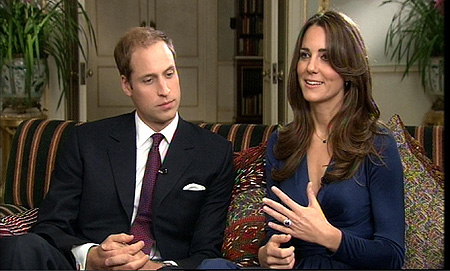
So, we go back to Dowd’s question: did Cinderella and Kate “marry up” or was it the other way around? Well, I suppose it’s both. Because whether it’s the new Duchess and Duke of Cambridge or Cinderella and her handsome prince, there’s a very interesting balance that each person found by acting with keen self-awareness, and taking time to thoughtfully determine a plan independent of external pressure which they then executed with utmost confidence and presentation. Go figure: fairy tales wound up being more pragmatic in adulthood than in kindergarten 🙂


h1

In Defense of Sarah Palin’s Sex Appeal

October 22, 2010
Sarah Palin - Making Politics Chic

Sarah Palin - Certainly Making Politics Chic

Making Ignorance Chic” is among the most emailed articles this week at the New York Times in which Maureen Dowd addresses an everlasting female dilemma: choosing between “intellectualism and sexuality”. She describes the “false” dichotomy in which women are rarely appreciated for both simultaneously. And by describing this phenomenon as “persistent”, I interpret it’s become progressively easier to pursue heightened sexuality than intellectualism. Dowd takes us back to 1950’s America reminiscing that “dumb blonde’s” like Marilyn Monroe made it seem fashionable to at the least, attempt to appear intellectual, while today’s personalities like Sarah Palin are “making ignorance chic”.

And it sounds convincing to cite a time when beauty icons like Marilyn were asked to pose with token history books and married intellectuals versus Sarah Palin who prides herself on being anti intellectual, or who Dowd is actually describing is of “average” intellect.

But does this make Marilyn any more intellectual in and of itself? Did Marilyn give females more reason to aspire to be intellectual while Palin makes ignorance chic? I don’t think so. If anything, it’s the other way around. If both cases reflect a societal and ultimately self-imposed choice for beauty over brains, Palin should be perceived as more empowering between the two.

Did Marilyn Monroe Make Reading Chic?

Did Marilyn Monroe Make Reading Chic?

Because while both represent sex before intellect, at least Palin comes complete with autonomy; which is a function of time and space.

Dowd describes Marilyn marrying intellectuals, or posing in “tight shorts” with books on Goya as evidence that it was somehow more chic to be intellectual then, albeit in an apologetic tone. But despite Palins sometimes absurd thoughts, she is not prided by advocates for being absurd or sexy; she’s lauded for what she has accomplished.

Unlike Monroe, Palin has very tangible intellectual achievements to show for as governor of Alaska, per opportunities afforded to her as we’ve progressed as a society in trying to level the playing field for women since Marilyn’s time.

So there are system level differences making it misleading to compare to what degree their individual impact was on perpetuating ignorance as chic. But if anything, Marilyn, and I’d say females in that time had less opportunity and incentive to pursue intellectual routes than we do in Palin’s America.

Simply put: Palin was governor / Marilyn merely married the author of Death of a Salesman.For what it’s worth, looking then just to sexuality: it’s further telling that Marilyn had to show far more skin than Palin in setting any standards for chic. Point being, it’s not significantly less sexy to be intellectual now than it was in the 50’s.

So Dowd’s piece is slightly off target. It’s partial to Marilyn (heck, deep down I am too) and that era. The article would be correct in a more general sense: it’s remained diametrically chic to be sexy rather than intellectual. And that route is often more immediately convenient too (females are aware of this every waking second, and very early on).

The catch is, pursuing sexuality at the expense of intellectualism is disastrous long term strategy (girls are rarely fully aware of this), and that’s the real lesson both Marilyn Monroe and Sarah Palin demonstrate.

h1

Defining the U.S. Surge for Pakistan

August 18, 2009

“Pakistan Objects to U.S. Plan for Afghanistan War” reads a New York Times article last month updating us on our foreign policy. The article forewarns of “fissures” in the U.S. Pakistan alliance at this critical moment when President Obama sends additional troops to the region. The article specifically outlines Pakistan’s insistence on maintaining forces along the Indian border when the United States expresses concern that the Afghan border is of greater priority. Pakistani officials, to some international dismay, contend that it is more constructive to maintain dialogue with some parts of the Taliban rather than going at the group in an all out military offensive. The piece continues to explain that, sources from the Inter Services Intelligence Agency (ISI: Pakistan’s intelligence agency, their equivalent to our CIA) briefed Special Envoy Holbrooke this morning in their strong concerns of an U.S. “surge” which would “result in more civilian casualties, further alienate local populations. Thus more local resistance to foreign troops”. And while the article continues with how these concerns contrast starkly with U.S. fears that Pakistan is not focusing enough on the Taliban in the north, it is important to revisit the consequences of, and reassess our long-term strategy in Operation Enduring Freedom. Because more of the same may not be an apt solution given that the war is escalating in terms of U.S. costs (on various levels), the region is deteriorating, and prominent experts now claim the effort is doomed to be “unwinnable”.

The fact is, this is the deadliest month for U.S. troops in Afghanistan and where there once was no Al Qaeda or Taliban in the sovereign state of Pakistan, now exists a terribly frightening border through which terrorists are fleeing and situating themselves in the north. Furthermore, it is important to remember that until recently, the Taliban was not considered a terrorist organization, although alarming they were not a military threat before 9/11. Al Qaeda was the main target in Afghanistan, and their presence in Pakistan was minimal, if at all. Since our invasion, the Taliban and Al Qaeda are increasingly difficult to differentiate, and rather than being obliterated, are moving in to Pakistan. And a once ideologically problematic group of Islamic extremists, the Taliban, are now dangerously aligning with far more treacherous terrorist outfits like Al Qaeda.

In a similar way, other regional militant groups are gaining ground as extremist groups evade NATO forces and subsequently weaken our anti-terrorist efforts. The Mumbai atrocities and embassy attacks in Afghanistan last year are testimony to the danger of militant groups advancing their efforts in an increasing climate of instability. This only legitimizes Pakistan’s skepticism of continuing an predominantly military means to combating terrorism. If limited surgical strikes, close intelligence sharing, and consistent provision of anti-terror training and supplies is agreed as effective amongst officials, the U.S. and Pakistan should focus on a “surge” on these fronts.

So when the news paints a clashing picture of interests between Pakistan and the United States, it is a simplistic one. Both states actually have an intense interest in securing the region against terrorists and while they might disagree on tactics, it is important that the Obama administration at least reassess the previous administration’s policies of simply implementing a military “surge”. Even if a surge in troops is potentially successful, working closely to expand on what has proven to be effective is a safer option. So a discerning look at this weeks supposed “fissure” between U.S. and Pakistani officials in discussing cooperation should prompt us to better understand Islamabad’s concerns and perhaps reassess our strategy .