Posts Tagged ‘pakistan corruption’
 October 4, 2010
-
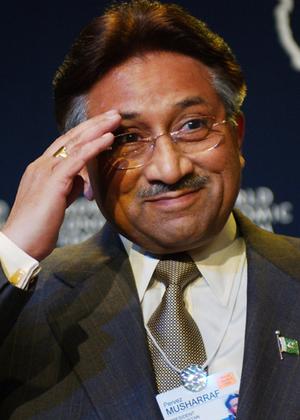
Freedom through Dictatorship?
Well, I called it: Pervez Musharraf is staging a return to Pakistani politics. Launching his new “All Pakistan Muslim League” (AMPL) party this week in a plan to return to the country, the former General will have to face a tremendously skeptical, increasingly hardened citizenry and even tougher adversaries in the judicial branch and opposition parties. In an Al Jazeera special report, Musharraf’s former Legal Advisor Ahmed Raza Kasuri insisted that should tacit approval come from the country’s military establishment and most importantly, with support of a “silent majority” Kasuri measures at 60-65% of moderate Pakistani’s, Musharraf will garner required support to win in future elections. Political analyst Imtiaz Gul insisted otherwise explaining not only would the military establishment be weary of backing Musharraf who cost them valuable political capital when he sacked the judiciary in 2007 and issued a State of Emergency, but also because he has “lost relevance” in Pakistan today.
Gul makes a valuable point: without relevance a political figure is climbing an uphill battle of garnering credibility, and because credibility is deeply intertwined with legitimacy, Musharraff undoubtedly faces a bumpy comeback.
But relevance is not necessarily an impediment to power in Pakistan since the current situation lends a valuable opportunity for it to be readily earned. Current President Asif Zardari usurped such an opportunity when his wife was tragically murdered and assumed leadership, riding the waves of sympathy that swept the nation to win elections. While that “relevance” is waning now, it was enough to allow him a seat of power for 2 years and actually shake off some of the “Mr. 10%” infamy, which is a far larger feat than what Mushrraf faces today.
While the main opposition party leaders Asif Zardari and Nawaaz Sharif are forever bogged by allegations of corruption, Musharraff’s criticisms revolve around issues of “democracy”.
His most vociferous opponents will cite his sacking of the judiciary, coup to power, and 9 year dictatorial reign as subverting democracy in Pakistan. But such criticism of Musharraf is both misleading and mostly hyperbole.
The deficient part of such rhetoric lies in lacking recognition of liberalism. Notions of individual human rights and liberty, free trade, separation of church and state and religious tolerance are erroneously assumed to come only with democratic leadership in Pakistan. On the contrary, liberal policies extending specifically to women’s rights, fostering regional cooperation and trade, namely with India, opening domestic markets, such as free media and holding free and fair elections were successfully carried out previously by Musharraf.
Ironically, under the title of “dictator”, he brought forth more liberal triumphs than any other leaders in my lifetime. And it is important to not confuse democracy with liberalism. Fareed Zakaria makes this distinction in tweaking “Democratic Peace Theory”. His ideas are described:
“democracy is defined in terms of the process by which a government is selected. In contrast, “constitutional liberalism” is defined not by how the government is selected, but rather b the extent to which the society and its institutions protect individuals’ basic rights (to life, property, freedom of speech, and religion)”
Thus basic tenants of a such liberalism, to a fair extent were brought forth by Musharraf. And as political change seems imminent in Pakistan, if we continue looking to political theory one might advance a case for liberalism by way of identifying Musharraf’s opposition. If we take a voluntaristic view of government, wherein heads of states are integral parts of policymaking as opposed to looking mostly at system wide determinants of policy, one finds that not only corruption, but the fact that both Asif Zardari and Nawaz Sharif are part of feudal, landowning elites in Pakistan is meaningful. With that background, and likely subsequent value sets which are diametrically opposed to liberal notions of liberty and individual rights, Pakistan runs the risk of remaining socially, and economically stagnant under their leadership. Moreover, with the U.S. winding down our war in Afghanistan and shifting in to Pakistan, more than ever liberal ideals are needed.
No amount of drones, target killings or CIA intervention have yet quelled extremism let alone terrorism in Pakistan since 9/11. Modernity and liberalism are Pakistan’s best bet at framing a solution for the long run.
It cannot be an overnight shift, but it will require leadership that espouses liberal ideals. Because without credible experience in upholding individual rights and freedoms, only halfhearted appreciation will come for liberalism and even weaker attempts to implement them.
Is Musharraf the solution Pakistan is looking for? I do not know. But until new, more modern and liberal alternatives in political leadership are available, he just might be the best option now.
ORIGINALLY PUBLISHED @
Posted in Current Affairs, International Affairs, International Relations, Pakistan | Tagged ahmed raza kasuri, al jazeera, al jazeera musharraf, al jazeera pakistan, al jazeera report, all pakistan muslim league, approval rating pakistan, Asif Zardari, benazir, CIA, corruption, corruption in pakistan, dictator musharraf, dictator of pakistan, dictators, elections in pakistan, elections leadership in pakistan, essence of decision, Fareed Zakaria, free fair elections, future of asif zardari, future of musharraf, future of pakistan, General Musharraf, imtiaz gul, jeewanjee, leadership in pakistan, liberal pakistan, liberalism, military of pakistan, military rule pakistan, moderation pakistan, modern pakistan, modernity, musharaf, musharaf in hindsight, musharaf return to pakistan, musharaff, Musharraf, musharraf in hindsight, musharraff in hindsight, Nawaz Sharif, pakistan citizens, pakistan corruption, pakistan leadership, pakistan leadership roles, pakistan politics, pakistani current affairs, pakistani politics, pakistans leaderhsip, Pervez Musharraf, pervez musharraf comeback, policies pakistan, policy pakistan, policymaking in pakistan, problem in pakistani politics, support, supreme court pakistan, US pakistan cooperation, zainab, zainab jeewanjee, zainyjee | 11 Comments »
October 12, 2009
At the heels of Pakistan’s offensive against militants in South Waziristan, terrorists brazenly staged an attack on military headquarters this weekend. Commandos responded swiftly, taking out 9 of the militants, capturing their ring leader and freeing 39 hostages. Despite success in ending the siege, the incident demonstrates a worsening Af-Pak situation and beseeches a new strategy.
Our administrations new strategy is defined by an increase in troops to Afghanistan, focusing military efforts squarely on Al Qaeda (less focus on Taliban) and expanded funding to Pakistan by way of the Kerry Lugar bill. And while the troop surge and emphasis on Al Qaeda are debated at length in D.C., the Pakistani media is abuzz on the Kerry Lugar bill. There are calls by The Awami League Party (representing the NWFP regions & a predominantly Pashtun population) that the bill allow for an “uninterrupted flow of non military assistance” while other politicians vouch against the legislation altogether. Tehrik-e-Insaaf chairman Imran Khan said the bill “enslaves” Pakistan and can only benefit the top echelons of government referring to past corruption allegations on senior government officials. Similarly, pundits were all over Pakistani television in the past week, echoing concerns about corruption, lack of support to the military, too many strings attached to funding, and how the bill threatens sovereignty. This morning Foreign Minister Shah Mahmood Qureshi flew to D.C. to discuss theseconcerns just as rumours that Pakistan’s Ambassador to the United States is losing his post becayse of not entirely positive comments regarding the Kerry-Lugar legislation. Suffice to say, the Enhanced Partnership with Pakistan Actmeant to extend a new strategic hand of cooperation to Islamabad is not off to the positive start intend
In fact, Senator Kerry’s office directly responded to popular skepticism in a recent report.
- Addressing concerns that the bill would invade state soveriegnty: Senator Kerry explains the bill funds “schools, roads, energy infrastructure and medical clinics” and that “those seeking to undermine” a US/Pakistan in that endeavor are doing so to “advance narrow partisan or institutional agendas“.
- Regarding the idea that the legislation comes with too many strings attached, Kerry emphasizes that the $7.5 billion annual pledge is for “unconditioned non military aid” and comes with “strict measures of financial accountability” referring specifically to Executive Branch oversight on the use of these funds.
This is contentious to Pakistan because it’s maybe the first time external oversight is imposed on assistance from the United States. And while the bill does a great job of outlining funds for social infrastructure intended to find it’s way to everyday citizens, on the issue of sovereigty, the real sticking point is regarding a potential subversion of the Pakistani military. Senator Kerry insists that the bill’s:
- “focus is on nonmilitary assistance to the people of Pakistan” and military aid is contingent to “cooperation on nonproliferation“. However, the bills funding is rooted in “significant efforts towards combating terrorist groups” and the “Pakistani military not subverting the political or judicial process” to ensure “common goals” of “security and democracy“.
This irks Pakistani’s for a number of reasons. Firstly, there’s ambiguous wording. “Cooperation on nonproliferation” is vague enough to translate as potentially linking funds to Pakistan giving up their right to maintain armaments comparable to neighboring India. Similarly, “significant efforts toward combating terrorism” gives no reference for how this will be measured.
On the Pakistan side, the worry is that “significant efforts”, according to their definition might not match a U.S. definition of success. Plus there might continue to be a disagreement on the idea of “combating terrorism”. It’s a contention we’ve seen play out as D.C. repeatedly called for heightened efforts on combating the Taliban, quitely but surely opposing Pakistan’s attempts at negotiating with those groups rather than employing just a military offensive, (a policy we’re now reverting).
Also, delinking assistance from the military is unprecedented and freightening to some because while it is necessary to develop schools, and social, democratic infrastructure for long term development, in the immediate term there are widespread security breaches with weekly suicide attacks, an ever growing incursion from Afghan militants on the northern border and drone attacks that result in collateral damage.
So Pakistans concerns echo a need for both immediate security and long term development, but not at the expense of one another.
Keep in mind, the widely held, and all but true notion that Pakistan is perhaps the only place where the military controls a country, and not vice versa. That idea is rooted in that their military is historically the strongest, most stable and legitimately accepted institution. Let me emphasize that last part: it’s historically the most legitimately accepted institution in Pakistan in an absence of stable democratic institutions never having developed. Meaning, in times of economic, social and political uncertainty, the military has historically responded most efficiently in alleviating situations since 1947. Whether one accepts the idea that the military creates a perpetual cycle of uncertainty within which to assume power periodically, or the military responds to the shortcomings of civilian governments in the absence of democratic instiuttions (chicken & egg argument), either way, the military’s been relatively effective in handling crises in Pakistan in comparison to civlian regimes. So given the current enviornment of insecurity, people are weary of a hopeful promise for “long term” moves toward “democracy” that might comes at the expense of insufficient assistance to their military who has a capacity to alleviate immediate security concerns.
I think democracy is the ultimate route to security for Pakistan, but despite Executive branch oversight and our “long term” commitment defined by only 5 years of funding, Pakistan’s concerns are understandable. Given a long history of cooperation, Pakistan is more used to US assistance through bilateral relations with a Republican government in DC (think General Zia/Raegan, General Musharraf/Bush, Ayub Khan/Eisenhower, Yahya/Nixon) and the Kerry Lugar bill is a staunch reverasal of our foreign policy with Islamabad. Perhaps finding value in previously crafted policies to Pakistan in combination with our current legislative proposals is an optimal solution to quelling the enahanced concern of our enhanced cooperation.
Posted in Current Affairs, Foreign Policy, International Affairs, International Relations, Pakistan, U.S. Politics, Uncategorized, US Foreign Polciy, US Pakistan relations | Tagged afghan terrorism pakistan, afghanistan terrorism, aid to pakistan, aid to pakistans military, Al Qaeda Pakistan, american aid to pakistan, american pakistan relations, assistance for pakistan, assistance to pakistan, attack on pakistan military, corruption in pakistan, democracy in pakistan, democratization in pakistan, democratization of pakistan, democratization pakistan, financial assistance pakistan, foreign policy to pakistan, funding to pakistan, imran khan pakistan, imran khan pakistan politics, imran khan pakistani politics, International Affairs, International Affairs Pakistan, international politics, international politics in pakistan, international relations pakistan, john kerry pakistan, kerry lugar bill, kerry lugar bill pakistan, kerry lugar funding to pakistan, kerry lugar pakistan, kerry pakistan, militants in pakistan, militants pakistan, military assistance pakistan, military pakistan, Obama Pakistan, pakistan aid, pakistan american relations, pakistan assistance, pakistan attack militants, pakistan corruption, Pakistan democracy, pakistan foreign policy, Pakistan international affairs, pakistan international relations, pakistan militants, pakistan military aid, pakistan political affairs, pakistan politics, Pakistan US relations, pakistan us relationship, Pakistan war on terror, pakistan washington dc, pakistani affairs, pakistani corruption, pakistani military, pakistani political affairs, pakistani politics, pakistani taliban, pakistans military, pakistans war on terror, political affairs of pakistan, politics in pakistan, politics of pakistan, politics pakistan, president obama pakistan, relations between united states and pakistan, senator kerry, senator kerry pakistan, senator lugar pakistan, south waziristan pakistan, Taliban, taliban afghanistan, taliban in pakistan, taliban pakistan, troop surge afghanistan, troop surge in afghanistan, troop surge in pakistan, troop surge pakistan, united states democracy pakistan, us aid to pakistan, us assistance to pakistan, US foreign policy, US foreign policy pakistan, US foreign policy to pakistan, us led war on terror pakistan, US Pakistan relations, us pakistan relationship, us war on terror, us war on terror pakistan, war on terror in afghanistan, war on terror in pakistan, war on terror pakistan, waziristan pakistan, zainab jeewanjee, zainab jeewanjee Pakistan, Zainab jeewanjee politics | 12 Comments »
September 25, 2009
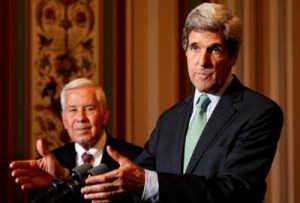
Senate unanimously passed a bill authorizing “appropriations to promote an enhanced strategic partnership with Pakistan”. The legislation is likely to receive similar support in the House later this week before being sent to President Obama for final approval. Initial versions of legislation were presented as the Biden-Lugar bill last year led by democrats Joe Biden and Senator Kerry, and supported by Hillary Clinton and Barack Obama. Currently, the bill is coauthored by Republican Senator Dick Lugar making it widely bipartisan which reflects our growing desire to engage Pakistan ensuring stability and ultimately our interests in the region.
The Legislation triples foreign aid to our major non NATO ally” allowing up to $1,500,000,000 for their cooperation in “counterterrorism/counterinsurgency describing Pakistan’s ongoing struggles and successes against the Taliban and Al Qaeda. It cites assassination of Benazir Bhutto, the Islamabad and Mumbai hotel attacks last fall among other suicide bombings in Pakistan and Afghanistan, some of which involved deaths of US citizens to underscore an immediate need to assist Pakistan at this critical time. As we face mounting deaths in the War on Terror, send additional troops to Afghanistan and President Obama works closely with generals to revamp our strategy there, the bill is meant to forge a new relationship with Pakistan.
It extends diplomatic rhetoric directly to the people of Pakistan by describing the daily plight of citizens who are “especially hard hit by rising food and commodity prices and severe energy shortages” with 2/3rds of the population living on less than 2.25 and 1/5 of the population living below the poverty line”. It further mentions “Compatible goals of combating terrorism, radicalism and promoting economic development through building of infrastructure and promoting social and material well being for Pakistani citizens through development of public services”. And most interestingly, the bill cites Pew opinion polls finding:
“Pakistan has historically viewed the relationship between the United States and Pakistan as a transactional one characterized by a heavy emphasis on security issues with little attention to other matters of great interest to citizens of Pakistan”.
Then referring to the current civilian government as an “opportunity to place relations on a new and more stable foundation”. The bill’s ‘statement of policy‘ identifies the following objectives:
- Support the consolidation of democracy, good governance & rule of law in Pakistan
- Support economic growth & development to promote stability/security
- To build a sustained, long term, multifaceted relationship with Pakistan
- Expanding bilateral engagement with Pakistan
- To work with Pakistan and bordering countries to facilitate peace (a possible reference to mediating the Kashmir issue. President Obama mentioned doing so during his campaign run for President)
- Expand people to people engagement between US and Pakistan through increased educational, technical and cultural exchanges (possibly in the form of more student/professional visas. Envoy Holbrooke mentioned this in visits to Karachi in July)
- Work with government of Pakistan to:
-
- prevent Pakistani territory from being used as a base/conduit for terrorism in Pakistan, Afghanistan, India or elsewhere
- Coordinate military, paramilitary & police action against terrorist terrorism
- Help bring peace, stability and development
- (this might entail counterinsurgency/counterterrorism assistance and cooperation through intelligence sharing, arms development/trade and training of Pakistani forces)
Pakistan is aptly described as a major non-NATO, long-standing ally. But cooperation has been dominated by security issues generally in the form of military dictators supported by the States in exchange for Pakistan’s military assistance throughout the Cold War and current War on Terror resulting in the Pakistani mindset of solely “transactional” relations. This bill is a fair attempt to shift that context to a more positive tone with the aforementioned objectives and diplomatic rhetoric.
However, certain specificities such as timetables and solid oversight must be transparently accessible to the Pakistani and American public to ensure more positive relations are achieved. Already experts are weighing in with concerns. Despite the commitment to development in addressing the plight of daily Pakistani’s, Foreign Policy Magazine mentions that the bill doesn’t say exactly how much of these funds are to be allocated toward military assistances. And although senator Kerry insists “Clear, tough minded accountability standards and metrics” are contained in the bill, Dawn News cites Rand Corporation expert Dr. Christine Fair raising the issue of “greater transparency” and wanting to ensure international accounting standards are applied in allocating these funds. Such concerns are equally felt in Pakistan, where past commitments of economic development have not always found their way to alleviating the plight of daily citizens for whom funding is supposedly intended.
For this reason a concerted conviction to improving the daily lives of Pakistani’s is required by Pakistani politicians who have ultimate control over how these funds are applied. I hope that President Asif Zardari along with Parliament works closely to ensure monies are responsibly allocated to a “sustainable” development the bill calls for.
ORIGINALLY PUBLISHED @
Posted in Current Affairs, Economics, Foreign Policy, International Affairs, International Relations, Pakistan, South Asia, U.S. Politics, US Foreign Polciy, US Pakistan relations | Tagged 2009 bill pakistan, aid pakistan, aid to pakistan, Al Qaeda, Al Qaeda Pakistan, america foreign policy pakistan, america pakistan relations, american pakistani relations, appropriations bill pakistan, appropriations pakistan, appropriations to pakistan, Asif Zardari, biden lugar bill, biden lugar bill pakistan, biden pakistan, bill for pakistan in the senate, bipartisan bill pakistan, clinton pakistan, corruption in pakistan, counterterrorism pakistan, defeating terrorism, defeating terrorism development, defeating terrorism with development, dick lugar, enhanced strategic partnership pakistan, enhanced strategic partnership with pakistan, foreign aid pakistan, foreign aid to pakistan, foreign policy to pakistan, funding to pakistan, HIllary Clinton Pakistan, hillary pakistan, International Affairs, International Affairs Pakistan, international politics, international politics in pakistan, international relations pakistan, joe biden, joe biden pakistan, john kerry, john kerry bill, john kerry pakistan, kerry biden, kerry lugar, kerry lugar bill on pakistan, kerry lugar bill pakistan, kerry lugar pakistan, lugar kerry bill, lugar pakistan, Obama Pakistan, pakistan affairs., pakistan and congress, pakistan and the west, pakistan bill, pakistan bill passed, pakistan congress, pakistan corruption, pakistan counterterrorism, pakistan foreign policy, pakistan foreign policy united states, pakistan international relations, pakistan kerry lugar bill, pakistan lugar, Pakistan obama, pakistan political affairs, pakistan politics, pakistan senate bill, pakistan united states political affairs, pakistan us political affairs, Pakistan US relations, Pakistan war on terror, pakistani foreign policy, pakistani politics, pakistans foreign policy, political affairs of pakistan, politics in pakistan, politics of pakistan, politics pakistan, politics to pakistan, politics us and pakistan, politics us pakistan, president obama pakistan, relations with the united states, senate bill pakistan, senate pakistan, senate passes pakistan bill, senator dick lugar, senator john kerry, senator kerry, Taliban, taliban pakistan, terrorism, united states and pakistan politics, united states foreign policy and pakistan, united states pakistan relations, united states pakistani relations, us congress and pakistan, US foreign policy, US foreign policy pakistan, US foreign policy to pakistan, us funds to pakistan, us pakistan political affairs, us pakistan politics, US Pakistan relations, us pakistani relations, us political affairs and pakistan, us politics and pakistan, us politics pakistan, us to pakistan relations, us war on terror, war on terror, war on terror kerry, war on terror obama, war on terror pakistan, zainab jeewanjee, zainab jeewanjee Pakistan, Zainab jeewanjee politics | 2 Comments »
August 23, 2009
No explanation can adequately address the horrors carried out in Gojra Pakistan. But these horrors are newsworthy and have potential to serve as a lesson in uprooting such inhumanity. Rather than focusing squarely and vaguely on vast historical causation that might allow factions to commit these horrors, a closer look at multifaceted ways in which to uproot that causation by drawing on recent history is valuable.
Because in some ways recent events are repetitive of the country’s history of cyclical, civilian to military governance. Just over half of 62 years of Pakistani statehood have been spent under martial law (which is bizarre, though not entirely as alarming as it sounds). Civilian regimes have been notoriously corrupt and did little to bring about democracy when scrutinized beyond the cover of a “civlian” title. Given this backdrop and our long engagement with Islamabad, Washington’s lenses should be discerning when dealing with Pakistan. But events like Gojra, the Mumbai atrocities and relentless, daily plight Pakistan’s military and civilians face in uprooting terror from in and around their borders, consistently begs the question: what is still going wrong?
If we draw on recent events for explanation, there is one consistency: Since the War on Terror began, Pakistan was most stable under Musharraf with respect to security and international standing and since his departure, the economy is deteriorating.
Correlating these successes to Msuharraf’s tenure might come across as reductive, but it is tangible. Thus, to better formulate our strategy in Pakistan given the luxury of hindsight, it could be useful to revisit Musharraf’s policies by way of dispelling vociferous censures that follow him until now:
As a military leader Musharraf’s governance deepened the cycle of martial law ultimately not allowing a democracy to take shape in Pakistan:
- Not necessarily: South Asian policy expert Anatol Lieven explains “All civilian governments have been guilty of corruption, election rigging and the imprisonment or murder of political opponents, in some cases to a worse degree than the military administrations that followed.” And the pool from which to select leaders post Musharraf offered little hope for anything different. Alternative options were extensions of the very leadership Lieven explains. They offered dynastic governance (Benazir Bhutto as daughter of Zulfiqar Bhutto) or perpetual subversion of democracy through maintaining a feudal system (Asif Zardari). In fact, the feudal system wherein masses of uneducated Pakistani’s are bound to a servile existence is what causes this kind of aristocracy to reign. This rampant subversion of Pakistani citizenry is a far cry from democracy.
- Musharraf indirectly addressed this by privatizing news media. This profoundly affected everyday Pakistani’s by spurring, fresh news, views, ideas, occupations and attention independent of state censorship and interest. Something I took for granted until spending time in Karachi before Musharraf’s tenure (especially under Sharif’s government). If anti- Americanism was a problem in Pakistan, Sharif’s rigid and religious driven censorship of television, and print media certainly did not help while Musharraf’s policies, did.
- On a side note: although media privatization is eclipsed by other news out of Pakistan in the past few years, I cite this as Musharraf’s crowning achievement. I maintain that its effects will have lasting impact on ultimately allowing a viable democracy to take shape in Pakistan by way of a meaningful dissemination of independent and increasingly globalized information.
Musharraf should not be credited with the economic growth because it was driven by foreign support funds from the War on Terror which would have been collected from cooperation by any Pakistani government in power at the time:
- Also while investments were “paternalistic” during martial law, economic growth actually did, “trickle down” as was seen in major cities. A more modernized standard of living through increased consumption and access to products reflected this economic expansion amongst all levels in society. For the first time in Karachi, I saw hired help, including chauffeurs who are part of the working class carrying cell phones and purchasing American DVD’s. Women were increasingly seen occupying positions in the financial sector and politics. So military paternalism, is sadly more productive than the civilian corruption that takes place because it means funds are at least circulated domestically, rather than driven out of the country entirely.
Now I’m not equating these specific instances of consumption and progress necessarily to full-fledged support of Musharraf, nor am I making a case for permanent military rule in Pakistan or condoning military corruption. However, such tangible developments amidst unfounded criticism and the reality of Pakistan’s history should inform Washington. A senior fellow on South Asia at the Council on Foreign Relations perhaps prescribed this best in 2007:
Musharraf offers Washington continuity in the face of uncertain political transition. He is a familiar face, a leader with whom the Bush administration has established a sustained working relationship. Under even the smoothest possible transition scenarios, Musharraf’s departure would interrupt bilateral cooperation on military, counterterrorism, and intelligence matters for days or weeks—with uncertain consequences for U.S. security
In hindsight, this assessment is quite apt. Musharraf was an ally who provided results and continued to successfully expand our efforts in the War on Terror. Not just for U.S. interests, but for Pakistani interests in security and development. Had Musharraf not fired the Supreme Court judges and declared the state of emergency that wound up dismissing further justices, he might have maintained his leadership that is needed in Pakistan at this time. And I hope the Obama Administration takes this recent history into close consideration when formulating our ongoing cooperation with leaders in Islamabad.
ORIGINALLY POSTED @
Posted in International Affairs, International Relations | Tagged Anatol Lieven, Benazir Bhutto, Bhutto, civilian government in pakistan, civilian government pakistan, civilian military rule in pakistan, civilian rule in pakistan, democracy in pakistan, democracy musharraf, democracy pakistan, democratization in pakistan, General Musharraf, general pervez musharraf, Gojra, Gojra Pakistan, martial law in pakistan, martial law pakistan, military governance in pakistan, military rule in pakistan, military rule pakistan, Musharraf, musharraf and democracy, musharraf in hindsight, musharraf zainab jeewanjee, Mushy sahib, Nawaz Sharif, Pakistan, pakistan corruption, Pakistan democracy, Pakistan economy, Pakistan leader, pakistan martial law, Pakistan media, pakistan military, Pakistan military leader, Pakistan president, Pakistan prime minister, Pervez Musharraf, US Pakistan relations, war on terror, zainab jeewanjee | 13 Comments »
August 18, 2009
Posted in International Affairs | Tagged corruption in pakistan, democracy in pakistan, GEO, jeewanjee, Jinnah, Mr. Jeem, Muhammad Ali Jinnah, Pakistan, pakistan after 60 years, pakistan corruption, Pakistan economy, pakistan independence, Pakistan media, pakistan since partition, pakistani, pakistani media, Pakistanis, Partition, Qaid, qaid e azam, Quaid-e-Azam, zainab jeewanjee | 1 Comment »
August 18, 2009
U.S. Envoy Holbrooke issued a public statement this week acknowledging Pakistan’s “deep rooted” energy problem. He explained that the United States “wanted to send the message that it was concerned about people’s genuine problems”. And the energy problem is in fact among the major problems faced by everyday Pakistanis. In the sweltering summertime, rural areas are faced with prolonged hours of outages, also known as “load shedding” with main cities including the Federal capital suffering 6 to 8 hours daily. This is not only physically unbearable for everyday citizens, but has a profound stalling effect on businesses as it further cripples the already anguished economy. Holbrooke is right then, a genuine attempt to begin resolving the energy crisis would be much welcomed and could in fact help to win the “hearts and minds” of Pakistanis.
This is among the first diplomatic statements issued regarding a funding to help upgrade Pakistan’s power sector and a timeline, or specific details on how such assistance would actually come about were not yet offered. But Pakistani finance minister Shaukat Tarin described in detail how the government could “rent electricity-generating plants over the next three to five years to fill the gap until large-scale energy projects come online and Washington could help by providing financial guarantees to encourage private investment in the sector”. Given the billions of dollars in defense spending Washington has provided Islamabad since 2001, I think Finance Minister Tarin is asking for very, very little here. It would be wise long term strategy for Holbrooke and the Obama Administration to seriously considering delving into this kind of cooperation as it can yield true long term security for the masses of citizens and ultimately, the state.
In addition, Holbrooke announced he would discuss a range of other issues that directly affect the everyday lives of Pakistanis during visit to Karachi on Wednesday. In unison with most diplomatic statements from the United States pertinent to Pakistan these days, Holbrooke’s remarks were overall positive as he expressed confidence in the current democratic regime completing its term and cited a “visible improvement in the political atmosphere” when compared to his past visit.
Amplified cooperation between Washington and Islamabad in combating terrorists is painting a rosy picture of relations these days. News of possible cooperation on funding energy projects is hopeful and on the Pakistani side, Prime Minister Gilani “sought to assuage concerns among western countries about governance and mismanagement issues in Pakistan saying that accountability had been institutionalized”. Many countries are hesitant to allocate funding in fear of a lack of transparency and corruption. But Pakistan has finally addressed this through the first ever independent oversight body: a parliamentary watchdog – Public Accounts Committee of the National Assembly who is appointed from the opposition party. This truly is unprecedented and viable move toward democratic processes. It should actually assuage fears to invest in helping Pakistan at this time. An interesting side note here is that this institutionalized, unprecedented oversight comes as a result of the judiciary and media being independent, which is a policy enacted by former General Musharraff as head of state during his tenure.
Finally, the drone attacks continue to be a point of discussion between the U.S. and Pakistan with Gilani reitering that Washington directly provide Islamabad with the technology so not as to further instigate Anti-Americanism in the region through the widespread collateral/civilian damage that the unmanned predator aircrafts inflict.
So it will be interesting to see statements from Washington in the coming weeks on Pakistan. Funding to help resolve the profoundly distressing energy crisis could be a wonderful opportunity for us to offer real aid to Pakistan. Military aid given since 2001 has been real, and can help for security, but if the Obama administration wants to shift from the previous administrations policies and engage in more meaningful solutions, I think winning the hearts and minds through funding projects that directly affect people is in our long term interest of securing the region rather than only focusing on aid to state level institutions for which trickle down can be painfully slow.
Posted in International Affairs, Pakistan, U.S. Politics | Tagged Barack Obama Pakistan, CIA drones pakistan, development in pakistan, drone, drones, drones in Pakistan, education in Pakistan, Energy, energy crisis in pakistan, energy crisis pakistan, energy pakistan, from energy to education pakistan, from energy to education pakistan has a few number one priorities, Holbrooke, holbrooke pakistan, load shedding, load shedding in pakistan, load shedding pakistan, loadshedding, loadshedding in pakistan, loadshedding pakistan, Musharraf, Obama Pakistan, Pakistan, Pakistan Barack Obama, pakistan corruption, pakistan defense spending, pakistan drone attacks, Pakistan energy, Pakistan energy crisis, pakistan energy issues, Pakistan international affairs, pakistan international relations, Pakistan obama, Pakistan US discussions, Pakistan war on terror, special envoy pakistan, special envoy to afghanistan, special envoy to pakistan, US Pakistan discussions, US Pakistan relations, zainab jeewanjee, zainab jeewanjee Pakistan, Zainab jeewanjee politics | 4 Comments »


 Zainab B. Jeewanjee
 Zainab Jeewanjee