Posts Tagged ‘secretary of state hillary clinton’

h1

Concessions & Collateral Damage : CIA Drones in Pakistan – Part 2

January 22, 2010

Reconciling CIA Drones in Pakistan

Reconciling CIA Drones in Pakistan

Click here to Read the First Part: Reconciling CIA Drones in Pakistan Part 1

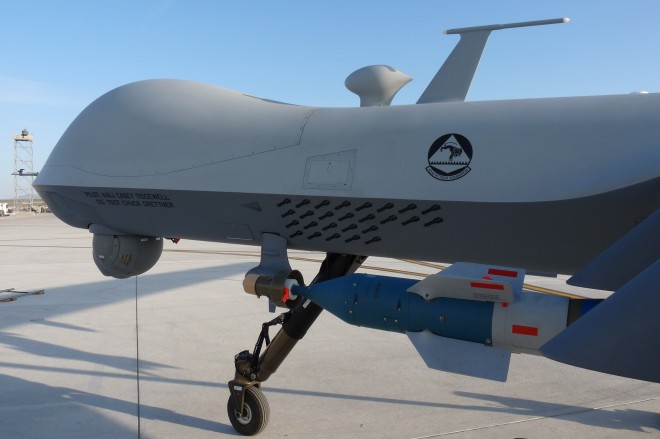
Defense Secretary Robert Gates met with officials in Islamabad to reiterate the importance of drone attacks, despite escalating reservations of their use amongst Pakistani’s. It’s been a polarizing issue from the onset because while it’s convenient to fly unmanned CIA predator aircraft over potential terrorist havens, they result in significant civilian casualties, and displaced persons. So it’s no surprise that over a year later, reconciling their use in Pakistan is still on the agenda.

For this reason, Secretary Gates announced a possibility of America providingPakistan with 12 unarmed Shadow aircraft”. Meaning the planes would not have a capacity to strike, but offer enhanced “surveillance capabilities under U.S. supervision”. It’s a fair decision and something I’ve suggested previously.

Supplying drones to close allies who aid in our War Efforts absolves us of sole liability for collateral damage wreaked by these machines that are always controversial, and increasingly protested internationally.

Gates also stressed the importance of militarily addressing all extremist groups because:

“It’s dangerous to single out any one of these groups and say, ‘If we could beat that group that would solve the problem,’ because they are in effect a syndicate of terrorist operators”

And almost simultaneously, Secretary Clinton unveiled The Afghanistan and Pakistan Regional Stabilization Strategy which sends an increase of 20-30% in civilian experts to both countries and “outlines plans to rebuild the Afghan farm sector, improve governance, and reintegrate extremists into society”. But this strategy of “reintegrating extremists” runs in contradiction to Secretary Gates’ aforementioned remarks.

Gates ruled out any possibility of reintegration calling for a consolidated attack on extremists suggesting that they work in “syndication”, while Cinton’s plan attempts to bring extremists back into the fold of moderate society.

It’s a stark inconsistency in our foreign policy. Because while I think Secretary Clinton’s idea notion of reintegration is more in tune with ground realities, and therefore viable, I figure Secretary Gates was being staunch in talks because finally relinguishing partial drone technology provided him with that margin of hawkishness. Either way though, one thing is certain, despite skepticism on both ends of the U.S. Pakistan relationship, cooperation is ever deepening.

ORIGINALLY PUBLISHED @

h1

“Friends Not Masters” : Hillary Clinton in Pakistan

November 7, 2009

Amidst drastic worsening of  the Af-Pak situation with US forces suffering our deadliest months and Pakistani civilians and military bearing the brunt of terrorist assaults,  Secretary Clinton arrived in full diplomatic force last week. She made media rounds sitting down for Q&A sessions with everyone from major news outlets to universities. But even the Clinton charm and expertise was met with vociferous skepticism. Before concerns on the Kerry Lugar bill could be adequately addressed, Clinton’s statements seem to have only riled increased trepidation in Pakistan:

Hamid Mir of GEO News peppered her with questions regarding illegally armed US diplomats roaming the streets of the capital and continued drone attacks. His questions reflect macro concerns that sovereignty is inherently undermined in cooperating with the United States. And at the Government college in Lahore, Secretary Clinton faced what I thought were even tougher questions:

Students identified a worsening War on Terror is akin to the Vietnam quagmire and suggested it’s time we focused on winning hearts and minds.

Another student echoed widespread skepticism of US/Pakistan cooperation citing failures of previous engagement during the Soviet Afghan War and how again “forcing Pakistan to take action that we might not want to take”  is a legitimate concern among masses. Another said bilateral relations are marred by a subsequent “trust deficit” with Secretary Clinton responding that American’s have a similar lacking faith in Pakistan.

That mutual distrust, as disappointing as it is on all ends, is tame compared to what Clinton expressed to Newspapers in Lahore:

“Al Qaeda has had safe haven in Pakistan since 2002….I find it hard to believe that nobody in your government knows where they are and couldn’t get them if they really wanted to”

And that was just on security. On society and development she criticized  “At the risk of sounding undiplomatic, Pakistan has to have internal investment in your public services and your business opportunities”

Ouch, thinks Pakistan. If Hillary’s mission was to rally support of cooperation with the United States amidst rapidly increasing skepticism of D.C.’s policies, the rhetoric has fallen short. In fact both Pakistani and American media are growing weary of the alliance:

Chris Matthews, in trademark rambunctiousness goes to town on Pakistan’s efforts in the War on Terror. But simplistic, irrelevant comments from his guests subtract from any substantive debate on the issue.

No offense Mr. Matthews, but just a brief look at a history book, closer reading of ground realities, or even quoting Hillary in context of the entire situation would have made for a more substantial segment. The panelists actually likened U.S engagement of  Pakistan to a Sigfreid and Roy Act. It’s laughable and renders the aforementioned student questions more articulate and informative than this discussion.

Nonetheless, it seems former Pakistani President Ayub Khan’s book suggesting cooperation based on the idea of each being “Friends not Masters” is now a shared sentiment in this alliance . So the dilemma remains: increasing skepticism polarizes Islamabad and D.C. I just hope it will spur realization that winning hearts and minds on both ends is imperative.

ORIGINALLY PUBLISHED @