Posts Tagged ‘terrorism’
 July 27, 2010
-
Pakistan implicated in todays Wikileaks Reports
Pakistan is in desperate need of a plumber to fix the leak on the front page of the New York Times this morning. The article has one of strongest suggestions yet that the Inter Services Intelligence Agency aids the enemy in Afghanistan and is rooted in reports made available by the whistler blower organization, Wikileaks. The reports entitled the “Afghan War Diaries” purport that the Pakistani ISI provides haven, if not supports Al Qaeda comes from “unverified” sources most likely “aligned with Afghan” intelligence and “paid informants”. The New York Times piece provides examples of how a suggestion of Pakistani aiding insurgents could be accurate, and leaves only a brief disclaimer that nothing is yet certain. Rather, the story more strongly asserts:
Senior lawmakers say they have no doubt that Pakistan is aiding insurgent groups. “The burden of proof is on the government of Pakistan and the ISI to show they don’t have ongoing contacts,” said Senator Jack Reed
“No doubt” is an alarming allegation against a critical ally in this war and a bit sensational in the absence of a closer reading of Pakistan’s realities and motivations.
What seems more likely than “no doubt”, is something I’ve stated previously. Both Ideology and what Pakistan’s foreign ministry spokesperson said are “ground realities” run directly counter to the suggestion that the ISI rampantly supports insurgent groups against American interests.
Quite simply, insurgent groups including Al Qaeda are deeply comprised of remnants from the Soviet Afghan war, meaning former fighters we engaged the ISI to train, maintained links to “freedom fighters” who ultimately became extremist groups we combatted post 9/11. That engagement created a decade long window in which there was little instruction or immediate opportunity and to some extent, interest for Pakistan to eradicate insurgents in its neighboring country. Couple this with the fact that Pakistan shares a nebulous border with Afghanistan as it became haven to one of the worlds largest refugee problems with Afghans fleeing Soviet atrocities, and you’ve got a battle hardened, impoverished, and an armed influx of an outside population who call major cities like Karachi, home.
So when we hear about the “Af-Pak Quagmire”, one should really be thinking in terms of the pickle Pakistan got into when millions of refugees made Pakistan’s underdeveloped, politically volatile and vastly feudal state home as the Cold War ended.
This climate allows us to put the Wikileaks reports into perspective. Firstly, reports linking ISI aid to insurgents could likely be referring to former Pakistan intelligence officials who maintained ties to insurgents as Afghans became part of the fabric of Pakistani society. Secondly, although these groups made Pakistan their home, the arms and influx of drugs via Afghanistan, never ceased. An infamous Klashinkov culture pervades Karachi amongst other places, including the now well-known FATA areas. So with such imbedded presence in Pakistan, obliterating Afghani insurgents becomes a highly sensitive task.
I rarely point to ideology as a driver of action when it comes to government behavior, but as Afghan’s made their home in Pakistan, they came sharing religion and some aspects of culture which intensifies the complexity of hunting down terrorists because it leaves Pakistan open to the possibility of a civilian uprising. Certainly Afghans would have preferred we “negotiate” rather than wage full scale war post 9/11 to settle differences. And I will not argue whether or not that would have been wise, however, the point is that the
ISI may be dealing with insurgents in vastly different ways, wheeling and dealing as opposed to obliterating them with the force we might use because of a profound risk involved in alienating an enormous, and internal Afghan presence within Pakistan’s border.
Since 9/11 Pakistan has descended into civlian chaos at certain intervals with extremists growing polarized, gravitating toward insurgents as we intensified our offensive in Afghanistan and Pakistan. So our expecations must take these realities into account and the Wikileaks reports understood within that context.
Ultimately, a lesson we might learn from the Wikileaks story is that negotiating with extremist groups for Pakistan is inevitable. General McChrystal’s Counterinsurgency strategy was moving in that direction as it called for U.S. engagement for the long haul requiring additional years in time, toil, troops, and treasure; which is an increasingly unpopular idea. So will the Wikileaks reports be the “game changer” or this wars equivalent to the “Pentagon Papers” for it’s suggestions that our engagement of Pakistan in providing billions in aid has been not only counter productive but comes in addition to our own mishandlings of the war thus far?
Perhaps. But either way, Pakistan is in desperate need of one skilled plumber to fix this leak.
ORIGINALLY PUBLISHED @
Posted in Current Affairs, Foreign Policy, International Relations, Pakistan, U.S. Politics, US Foreign Polciy, US Pakistan relations | Tagged af-pak, Afghan refugees, Afghanistan Pakistan, Afghanistan refugees, afghanistan relations, Al Qaeda Pakistan, al qaeda war on terror, america and pakistan, american foreign policy, american pakistan relations, counterinsurgency, extremist groups pakistan, influx refugees pakistan, insurgent pakistan, insurgents, insurgents pakistan, International Relations, karachi, karachi violence, klashinkov culture, klashinkov pakistan, negotiating pakistan, Pakistan, pakistan negotiations, pakistan refugee, Pakistan refugees, pakistan wikileaks, pakistani politics, refugees pakistan, soviet afghan war, soviet afghanistan, soviet invasion of afghanistan, terrorism, terrorist, u.s. foreign policy, US Pakistan relations, war in afghanistan, war on terror pakistan, war pakistan, wars, wikileaks report, zainab, zainab jeewanjee, zainab jeewanjee foreign policy, zainab jeewanjee Pakistan, Zainab jeewanjee politics, zainyjee | 4 Comments »
January 29, 2010
You’ve arrived in a foreign land, and are suddenly surrounded by distress. What do you do in a terrorist attack where you are caught entirely off guard, not fluent in the local language, and have no clue where help might be? It’s a frightening scenario and since 9/11, a concern Americans face when travelling abroad. And while individual travelers might not be able to prevent or predict terrorist activity, there are precautions and tips that help us when we leave home:
Pre Travel Precautions:
- Check State department Travel Warnings which explain places where our embassy might have constraints in assisting citizens due to present turmoil (http://travel.state.gov/travel/cis_pa_tw/tw/tw_1764.html)
- Avail the free Travel Registration Service allowing you to “record information about your upcoming trip abroad so the Department of State may assist you in case of emergency”. This is especially useful for long term international travel because it allows the embassy to know who missing persons are. In times of trouble, they might work with local government contacts to locate you, or if you’re injured, help you find proper medical attention. (https://travelregistration.state.gov/ibrs/ui/)
- Check in with close friends, family, and trusted contacts to get inside information from people who have visited or lived in your destination country and might know how and whom to address in emergency situations
On Arrival:
- Check local laws. Certain crimes carry heavier punishments than ours. A good example is the 1996 case of American Michael Fay who was caned for allegedly vandalizing cars with graffiti in Singapore (a charge he denies). Despite strong pressure from the U.S. embassy and even President Bill Clinton urging Singapore to ease the penalty, Fay suffered 12 strokes by cane and 4 months in jail. So be sure to mind local laws that could be vastly different from ours. Other examples include stricter penalties on drugs, including marijuana and even bans on pornography in some Middle Eastern countries.
- Keep trusted people informed of your plans. Email hotel information and other contact info of who you plan to visit in addition to your itinerary to trusted persons. It’s important others know of your whereabouts to help track you down in case of emergency or if you wind up missing.
- Maintain photocopies of passports separate from originals in your luggage in case originals are lost.
- Convert to local currency and carry only a couple credit cards. Americans usually have numerous cards, but Visa and Amex are mostly sufficient abroad. Don’t burden yourself with extraneous modes of payment, or reasons to be mugged!
When Abroad
(especially in places of turmoil, terrorist activity or where there could be Anti-American Sentiment):
- Consider refraining from using your first name when possible.
- Keep from walking into crowded places such as local markets when alone.
- Typical targets of terrorist activity are western hotels, American franchises, resort areas, and shopping places frequented by tourists and while those are places you might be likely to visit, be sure to go with trusted escorts and rarely alone.
- Be careful about getting into vociferous discussions on touchy political, religious or ideological issues.
- Merge with local customs and appearances. Don’t be loud or inadvertently disturb cultural sensitivities with your behavior or attire. Especially females. For instance, in some Muslim countries women opt for more modest clothes, and an American in shorts and a tank top might draw unnecessary, and unwanted attention in those situations
- Avoid public transport. Opt for government/federally authorized taxi services. Saudi Arabia and Mexico have been known for private taxi services that are unreliable if not entirely fake operations!
If An Attack Occurs:
- Distance yourself from the site of the attack and become as inconspicuous as possible.
- Don’t argue with authorities. And don’t assume Miranda rights or other American style protection services are immediately available to you. Cooperate with authorities: your “right to remain silent” or to “counsel” is secondary to safety and may not be relevant or offered at all.
- If transportation is operating normally, find the earliest flight back. If transportation is disrupted, seek assistance from the U.S. embassy
- Remember the point of terrorism is to instill fear, try not to fall into that trap. Don’t panic & remain calm.
If Kidnapped:
- Keep quiet & listen carefully. Answer questions but don’t voluntarily divulge extraneous information or opinions.
- Carefully assess the risk at hand. Is escape a viable opportunity? There is often a high risk involved in attempting to escape.
- Memorize the appearance of your surroundings and captors. If freed, that will be invaluable to bringing the terrorists to justice.
- Don’t be aggressive
- Patiently get to know your kidnappers and pay close attention to their sentiments so as to ensure you don’t offend them. Listening and even pretending to understand or be sympathetic to their cause/ideology, no matter how disturbing, might go a long way in buying negotiation time.
- Clearly ascertain the situation: what is their objective, demands and cause. Do they have a political objective or are they seeking ransom.
- Plead
Bomb or Sabotage:
- Assess the situation & be aware of your surroundings. The first moments are likely followed by shock & chaos. Gather yourself and find safe haven to distance yourself from harm
- Remain vigilant and listen and watch for where safety/medical attention is available – get to your hotel and contact the embassy who will guide you on what to do.
Chemical Warfare
– Shield yourself with clothing or something else to act as a gas mask.
– Most imperative is fleeing the area with some form of covering on your mouth and nose.
– If you can, wet your shirt and use it as a gas mask and breathe only enough air to get you away from the attack
Hijacking/Hostage Situation:
– Don’t antagonize your captors. Keep quite and listen.
– Evaluate the consequences of being proactive in battling terrorists. If hostage takers are on a suicide mission, it might be worthy to take action. If they are negotiating with authorities and have a financial objective, trying to be hero may be an impediment to ultimate safety for everyone. So a careful evaluation of the situation is key.
– As with kidnappers, memorize the appearance of your captors. Notice names, height, weight, language, hair color, eyes, hair type, clothing and whatever other details will help authorities recognize them in the future.
After an attack:
– Immediate evacuation might not be necessary, but you should consider cutting the trip short and leaving the country should the situation worsen
– Seek embassy advice and assistance in the event that there is a complete breakdown of law and order. They can help arrange for your evacuation in the absence of governmental control.
***** DISCLAIMER *****
Zainab Jeewanjee is not a security expert. She is a blogger, sales director and tenured student.
Anything written on this blog are her personal opinions, unless otherwise cited. You can take her advice at your own risk 😉
Posted in travel | Tagged airport security, how to stay safe when traveling, jeewanjee, safety during travel, safety travel, safety when abroad, security when you travel, terrorism, terrorism and travel, terrorism information travel, tips for travel, travel, travel insurance, travel laws, travel news, travel protect, travel protection, travel security, travel tips, traveling abroad tips, traveling tips, trip information, visit abroad tips, zainab jeewanjee, zainyjee | 5 Comments »
September 25, 2009
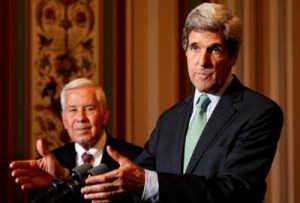
Senate unanimously passed a bill authorizing “appropriations to promote an enhanced strategic partnership with Pakistan”. The legislation is likely to receive similar support in the House later this week before being sent to President Obama for final approval. Initial versions of legislation were presented as the Biden-Lugar bill last year led by democrats Joe Biden and Senator Kerry, and supported by Hillary Clinton and Barack Obama. Currently, the bill is coauthored by Republican Senator Dick Lugar making it widely bipartisan which reflects our growing desire to engage Pakistan ensuring stability and ultimately our interests in the region.
The Legislation triples foreign aid to our major non NATO ally” allowing up to $1,500,000,000 for their cooperation in “counterterrorism/counterinsurgency describing Pakistan’s ongoing struggles and successes against the Taliban and Al Qaeda. It cites assassination of Benazir Bhutto, the Islamabad and Mumbai hotel attacks last fall among other suicide bombings in Pakistan and Afghanistan, some of which involved deaths of US citizens to underscore an immediate need to assist Pakistan at this critical time. As we face mounting deaths in the War on Terror, send additional troops to Afghanistan and President Obama works closely with generals to revamp our strategy there, the bill is meant to forge a new relationship with Pakistan.
It extends diplomatic rhetoric directly to the people of Pakistan by describing the daily plight of citizens who are “especially hard hit by rising food and commodity prices and severe energy shortages” with 2/3rds of the population living on less than 2.25 and 1/5 of the population living below the poverty line”. It further mentions “Compatible goals of combating terrorism, radicalism and promoting economic development through building of infrastructure and promoting social and material well being for Pakistani citizens through development of public services”. And most interestingly, the bill cites Pew opinion polls finding:
“Pakistan has historically viewed the relationship between the United States and Pakistan as a transactional one characterized by a heavy emphasis on security issues with little attention to other matters of great interest to citizens of Pakistan”.
Then referring to the current civilian government as an “opportunity to place relations on a new and more stable foundation”. The bill’s ‘statement of policy‘ identifies the following objectives:
- Support the consolidation of democracy, good governance & rule of law in Pakistan
- Support economic growth & development to promote stability/security
- To build a sustained, long term, multifaceted relationship with Pakistan
- Expanding bilateral engagement with Pakistan
- To work with Pakistan and bordering countries to facilitate peace (a possible reference to mediating the Kashmir issue. President Obama mentioned doing so during his campaign run for President)
- Expand people to people engagement between US and Pakistan through increased educational, technical and cultural exchanges (possibly in the form of more student/professional visas. Envoy Holbrooke mentioned this in visits to Karachi in July)
- Work with government of Pakistan to:
-
- prevent Pakistani territory from being used as a base/conduit for terrorism in Pakistan, Afghanistan, India or elsewhere
- Coordinate military, paramilitary & police action against terrorist terrorism
- Help bring peace, stability and development
- (this might entail counterinsurgency/counterterrorism assistance and cooperation through intelligence sharing, arms development/trade and training of Pakistani forces)
Pakistan is aptly described as a major non-NATO, long-standing ally. But cooperation has been dominated by security issues generally in the form of military dictators supported by the States in exchange for Pakistan’s military assistance throughout the Cold War and current War on Terror resulting in the Pakistani mindset of solely “transactional” relations. This bill is a fair attempt to shift that context to a more positive tone with the aforementioned objectives and diplomatic rhetoric.
However, certain specificities such as timetables and solid oversight must be transparently accessible to the Pakistani and American public to ensure more positive relations are achieved. Already experts are weighing in with concerns. Despite the commitment to development in addressing the plight of daily Pakistani’s, Foreign Policy Magazine mentions that the bill doesn’t say exactly how much of these funds are to be allocated toward military assistances. And although senator Kerry insists “Clear, tough minded accountability standards and metrics” are contained in the bill, Dawn News cites Rand Corporation expert Dr. Christine Fair raising the issue of “greater transparency” and wanting to ensure international accounting standards are applied in allocating these funds. Such concerns are equally felt in Pakistan, where past commitments of economic development have not always found their way to alleviating the plight of daily citizens for whom funding is supposedly intended.
For this reason a concerted conviction to improving the daily lives of Pakistani’s is required by Pakistani politicians who have ultimate control over how these funds are applied. I hope that President Asif Zardari along with Parliament works closely to ensure monies are responsibly allocated to a “sustainable” development the bill calls for.
ORIGINALLY PUBLISHED @
Posted in Current Affairs, Economics, Foreign Policy, International Affairs, International Relations, Pakistan, South Asia, U.S. Politics, US Foreign Polciy, US Pakistan relations | Tagged 2009 bill pakistan, aid pakistan, aid to pakistan, Al Qaeda, Al Qaeda Pakistan, america foreign policy pakistan, america pakistan relations, american pakistani relations, appropriations bill pakistan, appropriations pakistan, appropriations to pakistan, Asif Zardari, biden lugar bill, biden lugar bill pakistan, biden pakistan, bill for pakistan in the senate, bipartisan bill pakistan, clinton pakistan, corruption in pakistan, counterterrorism pakistan, defeating terrorism, defeating terrorism development, defeating terrorism with development, dick lugar, enhanced strategic partnership pakistan, enhanced strategic partnership with pakistan, foreign aid pakistan, foreign aid to pakistan, foreign policy to pakistan, funding to pakistan, HIllary Clinton Pakistan, hillary pakistan, International Affairs, International Affairs Pakistan, international politics, international politics in pakistan, international relations pakistan, joe biden, joe biden pakistan, john kerry, john kerry bill, john kerry pakistan, kerry biden, kerry lugar, kerry lugar bill on pakistan, kerry lugar bill pakistan, kerry lugar pakistan, lugar kerry bill, lugar pakistan, Obama Pakistan, pakistan affairs., pakistan and congress, pakistan and the west, pakistan bill, pakistan bill passed, pakistan congress, pakistan corruption, pakistan counterterrorism, pakistan foreign policy, pakistan foreign policy united states, pakistan international relations, pakistan kerry lugar bill, pakistan lugar, Pakistan obama, pakistan political affairs, pakistan politics, pakistan senate bill, pakistan united states political affairs, pakistan us political affairs, Pakistan US relations, Pakistan war on terror, pakistani foreign policy, pakistani politics, pakistans foreign policy, political affairs of pakistan, politics in pakistan, politics of pakistan, politics pakistan, politics to pakistan, politics us and pakistan, politics us pakistan, president obama pakistan, relations with the united states, senate bill pakistan, senate pakistan, senate passes pakistan bill, senator dick lugar, senator john kerry, senator kerry, Taliban, taliban pakistan, terrorism, united states and pakistan politics, united states foreign policy and pakistan, united states pakistan relations, united states pakistani relations, us congress and pakistan, US foreign policy, US foreign policy pakistan, US foreign policy to pakistan, us funds to pakistan, us pakistan political affairs, us pakistan politics, US Pakistan relations, us pakistani relations, us political affairs and pakistan, us politics and pakistan, us politics pakistan, us to pakistan relations, us war on terror, war on terror, war on terror kerry, war on terror obama, war on terror pakistan, zainab jeewanjee, zainab jeewanjee Pakistan, Zainab jeewanjee politics | 2 Comments »
August 31, 2009
This summers meeting between Pakistani Prime Minister Gilani and Indian counterpart Manmohan Singh at the Non-Aligned Summit (NAM) resumed cooperative talks since they had stalled after the Mumbai atrocities. The summit marked a breakthrough in Indian-Pakistani relations when both sides decided to bracket issues of terrorism from future peace talks, by signing an agreement that identifies terrorism as the tantamount, mutual interest at this time. But the meeting has proven costly for Prime Minister Singh who some speculate, in attempt to leave behind a legacy of progressive cooperation with Pakistan, might have gone too far. Members of the opposition BJP party, and even some in his own Congress party say the NAM declaration does little else but soften India’s position in foreign policy to Pakistan.
Singh addressed criticism in Parliament during debate with a BJP member who accused him of “surrendering” and “walking into the Pakistani camp”. The prime minister countered that unless tensions and possible war are desired, such engagement is necessary and by in large, did not retract his statements. Although, he did try and recover some political base by later clarifying: “ talks between the two countries on broader issues like trade and travel cannot continue unless Pakistan pursues strong action against terror”. The clarification however, maintains his stance that peace talks can take place bracketing concerns on terrorism but would still allow leeway for trade and travel issues to be used as leverage later. Delinking peace talks thus leaves open the possibility of including Kashmir in future discussions with Pakistan, (although there is no specific mention of Kashmir in the agreement), and could mark a beginning of more progressive dialogue. Singh specifically cited Prime Minister Gilani’s providing an additional dossier on the Mumbai atrocities at the NAM summit had convinced him of Pakistan’s commitment to uprooting terrorist groups given that:
“this is the first time that Pakistan has ever formally briefed us on the results of an investigation into a terrorist attack in India. It is also the first time that they have admitted that their nationals and a terrorist organization based in Pakistan carried out a ghastly terrorist act in India.”
Under current leadership it seems relations are moving with some positive direction, with emphasis on the word “some”. Because such instances for optimism are not entirely rare in South Asian history. A recent article in Dawn reminds us that while positive dialogue takes place,
“India-Pakistan relations do not move in a straight line. They zigzag from crisis to crisis. In the interregnum the two countries either engage in negotiations or struggle to revive an interrupted dialogue”
That’s a very perceptive notion. The agreement at NAM is hopefully indicative of future cooperation, but history has shown us a reality that the arms race in South Asia tends to impede diplomatic progress. Ultimately, the message conveyed with development of arms, is immediate, tangible, and potentially hostile. On the other hand, diplomacy is gradual, inherently more subtle and less concrete.
So earlier this week on the anniversary celebrating India’s retaking of military posts in Kargil when Delhi symbolically launched its nuclear submarine, the INS Arihant (Destroyer of the Enemies) realpolitik dictates a clear message to Pakistan that is explained by their Foreign Office spokesman Abdul Basit:
‘continued induction of new lethal weapon systems by India’ is ‘detrimental to regional peace and stability’.
The obvious concern in Pakistan then is whether this capability is a potential “platform to launch nuclear missiles”
Thus when either neighbor develops such armaments, basics of power politics teaches that the risk of not responding with deterrent armaments could be akin to state suicide. Whether or not one assumes conflict to be inevitable , an arms race is almost certain in situations like this. So, even though Pakistan is unlikely to announce nuclear submarine capability soon, in some capacity armaments of defense will be sought to counter India’s recent development. This will be considered necessary even though the Indian launch is directed at China’s rapid military modernization and not limited to a focus on Pakistan. Realpolitik will still drive Islamabad to invest in counter armaments despite the fact that Pakistan is heavily invested in the costly War on Terror, and more than ever in need of funding for social developments and aid for the largest refugee problem in the world.
International summits such as the Non Aligned Movement or even SAARC meetings which yield progressive diplomacy then work secondary to an expensive, and expansive arms race which in turn, perpetuates a now notorious and mutual mistrust that plagues South Asia. So, Prime Minister Singh’s alleged “softening” with Pakistan might be conciliatory in a diplomatic way, but continued development of armaments eclipses that rhetoric. Progressive relations will ultimately require more tangible approaches that enhance a meaningful trust rather than perpetuate an arms race.
ORIGINALLY POSTED @
Posted in Current Affairs, India Pakistan, International Affairs, International Relations, Pakistan, South Asia | Tagged arihant, arihant india, arihant submarine, arms race pakistan india, arms race south asia, BJP, Gilani, Gilani Pakistan, india arihand, india history, india nuclear, india nuclear submarine, India Pakistan, india pakistan arms race, india pakistan history, india pakistan nuclear, India Pakistan relations, india pakistan talks, indian nuclear submarine, indo pak, indo pak relations, Manmohan Singh, Manmohan Singh Pakistan, NAM, non aligned movement, pakistan history, pakistan india, pakistan india arms race, pakistan india relations, prime minister Gilani, Prime minister Singh, SAARC, Singh Pakistan, South Asia foreign policy, terorrism india pakistan talks, terrorism, terrorism in pakistan, terrorism pakistan, zainab jeewanjee | 2 Comments »


 Zainab B. Jeewanjee
 Zainab Jeewanjee