 September 25, 2009
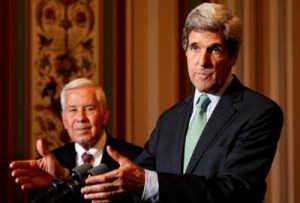
Senate unanimously passed a bill authorizing “appropriations to promote an enhanced strategic partnership with Pakistan”. The legislation is likely to receive similar support in the House later this week before being sent to President Obama for final approval. Initial versions of legislation were presented as the Biden-Lugar bill last year led by democrats Joe Biden and Senator Kerry, and supported by Hillary Clinton and Barack Obama. Currently, the bill is coauthored by Republican Senator Dick Lugar making it widely bipartisan which reflects our growing desire to engage Pakistan ensuring stability and ultimately our interests in the region.
The Legislation triples foreign aid to our major non NATO ally” allowing up to $1,500,000,000 for their cooperation in “counterterrorism/counterinsurgency describing Pakistan’s ongoing struggles and successes against the Taliban and Al Qaeda. It cites assassination of Benazir Bhutto, the Islamabad and Mumbai hotel attacks last fall among other suicide bombings in Pakistan and Afghanistan, some of which involved deaths of US citizens to underscore an immediate need to assist Pakistan at this critical time. As we face mounting deaths in the War on Terror, send additional troops to Afghanistan and President Obama works closely with generals to revamp our strategy there, the bill is meant to forge a new relationship with Pakistan.
It extends diplomatic rhetoric directly to the people of Pakistan by describing the daily plight of citizens who are “especially hard hit by rising food and commodity prices and severe energy shortages” with 2/3rds of the population living on less than 2.25 and 1/5 of the population living below the poverty line”. It further mentions “Compatible goals of combating terrorism, radicalism and promoting economic development through building of infrastructure and promoting social and material well being for Pakistani citizens through development of public services”. And most interestingly, the bill cites Pew opinion polls finding:
“Pakistan has historically viewed the relationship between the United States and Pakistan as a transactional one characterized by a heavy emphasis on security issues with little attention to other matters of great interest to citizens of Pakistan”.
Then referring to the current civilian government as an “opportunity to place relations on a new and more stable foundation”. The bill’s ‘statement of policy‘ identifies the following objectives:
- Support the consolidation of democracy, good governance & rule of law in Pakistan
- Support economic growth & development to promote stability/security
- To build a sustained, long term, multifaceted relationship with Pakistan
- Expanding bilateral engagement with Pakistan
- To work with Pakistan and bordering countries to facilitate peace (a possible reference to mediating the Kashmir issue. President Obama mentioned doing so during his campaign run for President)
- Expand people to people engagement between US and Pakistan through increased educational, technical and cultural exchanges (possibly in the form of more student/professional visas. Envoy Holbrooke mentioned this in visits to Karachi in July)
- Work with government of Pakistan to:
-
- prevent Pakistani territory from being used as a base/conduit for terrorism in Pakistan, Afghanistan, India or elsewhere
- Coordinate military, paramilitary & police action against terrorist terrorism
- Help bring peace, stability and development
- (this might entail counterinsurgency/counterterrorism assistance and cooperation through intelligence sharing, arms development/trade and training of Pakistani forces)
Pakistan is aptly described as a major non-NATO, long-standing ally. But cooperation has been dominated by security issues generally in the form of military dictators supported by the States in exchange for Pakistan’s military assistance throughout the Cold War and current War on Terror resulting in the Pakistani mindset of solely “transactional” relations. This bill is a fair attempt to shift that context to a more positive tone with the aforementioned objectives and diplomatic rhetoric.
However, certain specificities such as timetables and solid oversight must be transparently accessible to the Pakistani and American public to ensure more positive relations are achieved. Already experts are weighing in with concerns. Despite the commitment to development in addressing the plight of daily Pakistani’s, Foreign Policy Magazine mentions that the bill doesn’t say exactly how much of these funds are to be allocated toward military assistances. And although senator Kerry insists “Clear, tough minded accountability standards and metrics” are contained in the bill, Dawn News cites Rand Corporation expert Dr. Christine Fair raising the issue of “greater transparency” and wanting to ensure international accounting standards are applied in allocating these funds. Such concerns are equally felt in Pakistan, where past commitments of economic development have not always found their way to alleviating the plight of daily citizens for whom funding is supposedly intended.
For this reason a concerted conviction to improving the daily lives of Pakistani’s is required by Pakistani politicians who have ultimate control over how these funds are applied. I hope that President Asif Zardari along with Parliament works closely to ensure monies are responsibly allocated to a “sustainable” development the bill calls for.
ORIGINALLY PUBLISHED @
Posted in Current Affairs, Economics, Foreign Policy, International Affairs, International Relations, Pakistan, South Asia, U.S. Politics, US Foreign Polciy, US Pakistan relations | Tagged 2009 bill pakistan, aid pakistan, aid to pakistan, Al Qaeda, Al Qaeda Pakistan, america foreign policy pakistan, america pakistan relations, american pakistani relations, appropriations bill pakistan, appropriations pakistan, appropriations to pakistan, Asif Zardari, biden lugar bill, biden lugar bill pakistan, biden pakistan, bill for pakistan in the senate, bipartisan bill pakistan, clinton pakistan, corruption in pakistan, counterterrorism pakistan, defeating terrorism, defeating terrorism development, defeating terrorism with development, dick lugar, enhanced strategic partnership pakistan, enhanced strategic partnership with pakistan, foreign aid pakistan, foreign aid to pakistan, foreign policy to pakistan, funding to pakistan, HIllary Clinton Pakistan, hillary pakistan, International Affairs, International Affairs Pakistan, international politics, international politics in pakistan, international relations pakistan, joe biden, joe biden pakistan, john kerry, john kerry bill, john kerry pakistan, kerry biden, kerry lugar, kerry lugar bill on pakistan, kerry lugar bill pakistan, kerry lugar pakistan, lugar kerry bill, lugar pakistan, Obama Pakistan, pakistan affairs., pakistan and congress, pakistan and the west, pakistan bill, pakistan bill passed, pakistan congress, pakistan corruption, pakistan counterterrorism, pakistan foreign policy, pakistan foreign policy united states, pakistan international relations, pakistan kerry lugar bill, pakistan lugar, Pakistan obama, pakistan political affairs, pakistan politics, pakistan senate bill, pakistan united states political affairs, pakistan us political affairs, Pakistan US relations, Pakistan war on terror, pakistani foreign policy, pakistani politics, pakistans foreign policy, political affairs of pakistan, politics in pakistan, politics of pakistan, politics pakistan, politics to pakistan, politics us and pakistan, politics us pakistan, president obama pakistan, relations with the united states, senate bill pakistan, senate pakistan, senate passes pakistan bill, senator dick lugar, senator john kerry, senator kerry, Taliban, taliban pakistan, terrorism, united states and pakistan politics, united states foreign policy and pakistan, united states pakistan relations, united states pakistani relations, us congress and pakistan, US foreign policy, US foreign policy pakistan, US foreign policy to pakistan, us funds to pakistan, us pakistan political affairs, us pakistan politics, US Pakistan relations, us pakistani relations, us political affairs and pakistan, us politics and pakistan, us politics pakistan, us to pakistan relations, us war on terror, war on terror, war on terror kerry, war on terror obama, war on terror pakistan, zainab jeewanjee, zainab jeewanjee Pakistan, Zainab jeewanjee politics | 2 Comments »
August 18, 2009
“Pakistan Objects to U.S. Plan for Afghanistan War” reads a New York Times article last month updating us on our foreign policy. The article forewarns of “fissures” in the U.S. Pakistan alliance at this critical moment when President Obama sends additional troops to the region. The article specifically outlines Pakistan’s insistence on maintaining forces along the Indian border when the United States expresses concern that the Afghan border is of greater priority. Pakistani officials, to some international dismay, contend that it is more constructive to maintain dialogue with some parts of the Taliban rather than going at the group in an all out military offensive. The piece continues to explain that, sources from the Inter Services Intelligence Agency (ISI: Pakistan’s intelligence agency, their equivalent to our CIA) briefed Special Envoy Holbrooke this morning in their strong concerns of an U.S. “surge” which would “result in more civilian casualties, further alienate local populations. Thus more local resistance to foreign troops”. And while the article continues with how these concerns contrast starkly with U.S. fears that Pakistan is not focusing enough on the Taliban in the north, it is important to revisit the consequences of, and reassess our long-term strategy in Operation Enduring Freedom. Because more of the same may not be an apt solution given that the war is escalating in terms of U.S. costs (on various levels), the region is deteriorating, and prominent experts now claim the effort is doomed to be “unwinnable”.
The fact is, this is the deadliest month for U.S. troops in Afghanistan and where there once was no Al Qaeda or Taliban in the sovereign state of Pakistan, now exists a terribly frightening border through which terrorists are fleeing and situating themselves in the north. Furthermore, it is important to remember that until recently, the Taliban was not considered a terrorist organization, although alarming they were not a military threat before 9/11. Al Qaeda was the main target in Afghanistan, and their presence in Pakistan was minimal, if at all. Since our invasion, the Taliban and Al Qaeda are increasingly difficult to differentiate, and rather than being obliterated, are moving in to Pakistan. And a once ideologically problematic group of Islamic extremists, the Taliban, are now dangerously aligning with far more treacherous terrorist outfits like Al Qaeda.
In a similar way, other regional militant groups are gaining ground as extremist groups evade NATO forces and subsequently weaken our anti-terrorist efforts. The Mumbai atrocities and embassy attacks in Afghanistan last year are testimony to the danger of militant groups advancing their efforts in an increasing climate of instability. This only legitimizes Pakistan’s skepticism of continuing an predominantly military means to combating terrorism. If limited surgical strikes, close intelligence sharing, and consistent provision of anti-terror training and supplies is agreed as effective amongst officials, the U.S. and Pakistan should focus on a “surge” on these fronts.
So when the news paints a clashing picture of interests between Pakistan and the United States, it is a simplistic one. Both states actually have an intense interest in securing the region against terrorists and while they might disagree on tactics, it is important that the Obama administration at least reassess the previous administration’s policies of simply implementing a military “surge”. Even if a surge in troops is potentially successful, working closely to expand on what has proven to be effective is a safer option. So a discerning look at this weeks supposed “fissure” between U.S. and Pakistani officials in discussing cooperation should prompt us to better understand Islamabad’s concerns and perhaps reassess our strategy .
Posted in International Affairs, International Relations, U.S. Politics | Tagged Afghan border, Afghanistan, Afghanistan Pakistan, Afghanistan war, afghanistan war on terror, Al Qaeda Pakistan, CIA, defining the US surge for pakistan, defining us surge, defining us surge for pakistan, instability pakistan, ISI, NATO and pakistan, nato pakistan, new york times, Pakistan, pakistan al qaeda, Pakistan and NATO, pakistan US alliance, Pakistan US cooperation, Pakistan US relations, Pakistan war on terror, Pakistan. US foreign policy, Pakistani intelligence, Surge, surgical strikes pakistan, Taliban, terrorism pakistan, U.S. Surge, uprooting terrorism in pakistan, uprooting terrorism pakistan, US efforts in afghanistan, US efforts in pakistan, US foreign policy, US foreign policy to pakistan, US pakistan alliance, US pakistan cooperation, US Pakistan relations, war on terror, war on terror pakistan, zainab jeewanjee, zainab jeewanjee Pakistan, Zainab jeewanjee politics | Leave a Comment »


 Zainab B. Jeewanjee
 Zainab Jeewanjee