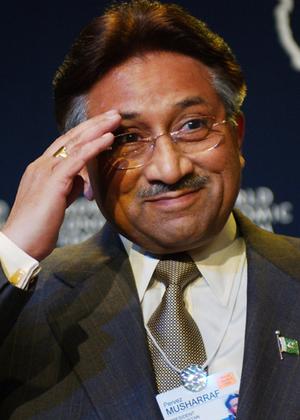
Well, I called it: Pervez Musharraf is staging a return to Pakistani politics. Launching his new “All Pakistan Muslim League” (AMPL) party this week in a plan to return to the country, the former General will have to face a tremendously skeptical, increasingly hardened citizenry and even tougher adversaries in the judicial branch and opposition parties. In an Al Jazeera special report, Musharraf’s former Legal Advisor Ahmed Raza Kasuri insisted that should tacit approval come from the country’s military establishment and most importantly, with support of a “silent majority” Kasuri measures at 60-65% of moderate Pakistani’s, Musharraf will garner required support to win in future elections. Political analyst Imtiaz Gul insisted otherwise explaining not only would the military establishment be weary of backing Musharraf who cost them valuable political capital when he sacked the judiciary in 2007 and issued a State of Emergency, but also because he has “lost relevance” in Pakistan today.
Gul makes a valuable point: without relevance a political figure is climbing an uphill battle of garnering credibility, and because credibility is deeply intertwined with legitimacy, Musharraff undoubtedly faces a bumpy comeback.
But relevance is not necessarily an impediment to power in Pakistan since the current situation lends a valuable opportunity for it to be readily earned. Current President Asif Zardari usurped such an opportunity when his wife was tragically murdered and assumed leadership, riding the waves of sympathy that swept the nation to win elections. While that “relevance” is waning now, it was enough to allow him a seat of power for 2 years and actually shake off some of the “Mr. 10%” infamy, which is a far larger feat than what Mushrraf faces today.
While the main opposition party leaders Asif Zardari and Nawaaz Sharif are forever bogged by allegations of corruption, Musharraff’s criticisms revolve around issues of “democracy”.
His most vociferous opponents will cite his sacking of the judiciary, coup to power, and 9 year dictatorial reign as subverting democracy in Pakistan. But such criticism of Musharraf is both misleading and mostly hyperbole.
The deficient part of such rhetoric lies in lacking recognition of liberalism. Notions of individual human rights and liberty, free trade, separation of church and state and religious tolerance are erroneously assumed to come only with democratic leadership in Pakistan. On the contrary, liberal policies extending specifically to women’s rights, fostering regional cooperation and trade, namely with India, opening domestic markets, such as free media and holding free and fair elections were successfully carried out previously by Musharraf.
Ironically, under the title of “dictator”, he brought forth more liberal triumphs than any other leaders in my lifetime. And it is important to not confuse democracy with liberalism. Fareed Zakaria makes this distinction in tweaking “Democratic Peace Theory”. His ideas are described:
“democracy is defined in terms of the process by which a government is selected. In contrast, “constitutional liberalism” is defined not by how the government is selected, but rather b the extent to which the society and its institutions protect individuals’ basic rights (to life, property, freedom of speech, and religion)”
Thus basic tenants of a such liberalism, to a fair extent were brought forth by Musharraf. And as political change seems imminent in Pakistan, if we continue looking to political theory one might advance a case for liberalism by way of identifying Musharraf’s opposition. If we take a voluntaristic view of government, wherein heads of states are integral parts of policymaking as opposed to looking mostly at system wide determinants of policy, one finds that not only corruption, but the fact that both Asif Zardari and Nawaz Sharif are part of feudal, landowning elites in Pakistan is meaningful. With that background, and likely subsequent value sets which are diametrically opposed to liberal notions of liberty and individual rights, Pakistan runs the risk of remaining socially, and economically stagnant under their leadership. Moreover, with the U.S. winding down our war in Afghanistan and shifting in to Pakistan, more than ever liberal ideals are needed.
No amount of drones, target killings or CIA intervention have yet quelled extremism let alone terrorism in Pakistan since 9/11. Modernity and liberalism are Pakistan’s best bet at framing a solution for the long run.
It cannot be an overnight shift, but it will require leadership that espouses liberal ideals. Because without credible experience in upholding individual rights and freedoms, only halfhearted appreciation will come for liberalism and even weaker attempts to implement them.
Is Musharraf the solution Pakistan is looking for? I do not know. But until new, more modern and liberal alternatives in political leadership are available, he just might be the best option now.
It’s my first week in Denver where I’ll be attending graduate school for the next two years and I’m soaking in how kind this city is. It is the most laid back, genuine U.S. City I’ve experienced. The sincerity with which people prod “No, where are you really from?” when I initially respond “California”, is priceless. I feel like a novelty here. At an Eid Celebration last night, even a local of Pakistani descent pointed out “Wow, the guys are going to flip over you. There are no ethnic girls in Denver”.
“Ethnic”? I’ll take it; I realize I’m getting a pass for being a Californian female. Because in light of increasingly disheartening news from Pakistan, be it about floods, match fixing in cricket, and mostly terrorism plaguing the country since 9/11, Pakistani’s have captured the American state of mind in a less than appealing way. Once indecipherable on a world map for most Americans, Pakistan emerged as our stalwart ally in victory after 40+ years of Cold War. Yet as we turn to Islamabad again to fight a War on Terror, we possess a deep skepticism of Pakistani intentions.
Since September 11, every time I come to the States or western countries I feel people have the wrong impression about Pakistan as a terrorist nation. I just wanted to declare that we are very friendly, loving and caring people, and we want peace in this world as much as Americans and the rest of the world wants.
There are extremists in every religion, but just because of them you cannot judge the whole country as a terrorist nation. I just wanted to get this message across as a Pakistani
In plain terms Qureshi clarified that his country is a mostly moderate nation where people expect the same peace and security desired by all people. He reminded us of Pakistan’s humanity, directly countering the “transactional” ties that progressively complicate our understanding of Pakistan. Fareed Zakaria might agree. In a recent piece, he eloquently concurred:
Across the Muslim world, militant Islam’s appeal has plunged. In the half of the Muslim world that holds elections, parties that are in any way associated with Islamic jihad tend to fare miserably, even in Pakistan.
In his article “We’re Safer Than We Think” Zakaria points out that Muslims in Pakistan and beyond are if anything, less safe from terrorism than we are as they suffer the brunt of radical Islam’s consequences.
Over the last few years, imams and Muslim leaders across the world have been denouncing suicide bombings, terrorism, and Al Qaeda with regularity….The fatal problem with these kinds of attacks is that they kill ordinary civilians—not U.S. soldiers or diplomats—and turn the local population against Islamic radicals.
With more thorough detail, Zakaria’s is saying exactly what Qureshi did; Pakistan is not a country of terrorists. So next time I get asked where I am “really” from, I might just say “I’m from Asiam Qureshi.’s country”.
Similar to his ratings drop at home, abroad President Obama is being accused of not living up to expectations. In DAWN news this week there’s an article entitled: “Obama’s Changing Tone” suggesting our President is reverting to foreign policy reminiscent of the Bush administration on Pakistan, and to an extent, the greater Muslim World. The idea is that Obama’s planned troop surge in tandem with ever toughening rhetoric post the Fort Hood Massacre and the Christmas Bomber, reflects leadership that’s not much different than former President Bush’s.
But on the contrary, our escalating presence in Pakistan is exactly what Obama promised. During the campaign trail, he made clear that his main focus was Al Qaeda and destroying terrorists in Pakistan (militants having spilled over from Afghanistan into Pakistan). The rhetoric was so hawkish, it actually became a sticking point before the primaries that Republicans and Democrats like Hillary criticized. Also, the media publicized his staunch rhetoric at length, so
Obama really has not changed tone on Pakistan: an intensified war matches his rhetoric from the start.
Plus is it fair to expect something radically different than the previous administration in the first place? Let’s not forget that it is often the political system and circumstances that drive leadership, and not vice versa. The fact is, America was already deeply engaged in two very problematic wars at the inception of Obama’s Presidency. He inherited an intensely worsening situation in Afghanistan that rapidly spilled across the border into Pakistan. President Obama anticipated this and is thus living up to campaign promises: a more hawkish foreign policy to Pakistan.
Which of course then raises the question: is hawkishness the right approach to Pakistan at this time? Pakistani’s certainly don’t think so. CIA drones have the entire country in an uproar, while Islamabad isn’t taking well to DC’s tacit encouragement of rapidly increasing Indian influence in Afghanistan, and even billions in aid from America is frowned upon with unprecedented magnitude. And it’s not that the Obama administration isn’t aware of skepticism. Rather, toughening policies are a matter of practicality.
My guess is that the President is thinking: we’re already in Afghanistan, the war is deteriorating into Pakistan, what’s the best way to mitigate the situation, secure the region just enough to exit in the next couple years while leaving behind more cooperative players in the region so as to ensure our energy and geopolitical interests in South/Central Asia.
Phew. Now there’s a dilemma. And when looked at from his possible perspective, the Pakistan quagmire is revealed as tremendously complex. It’s such a multifaceted, sweeping, consequential and changing situation that involves so many players who work within the confines of political systems that only history should be the best judge of whether Obama’s stance on Pakistan is constructive or progressive. And that itself is relative. So let’s not be surprised at his hawkishness. It was naive of anyone to expect otherwise in the case of Pakistan.
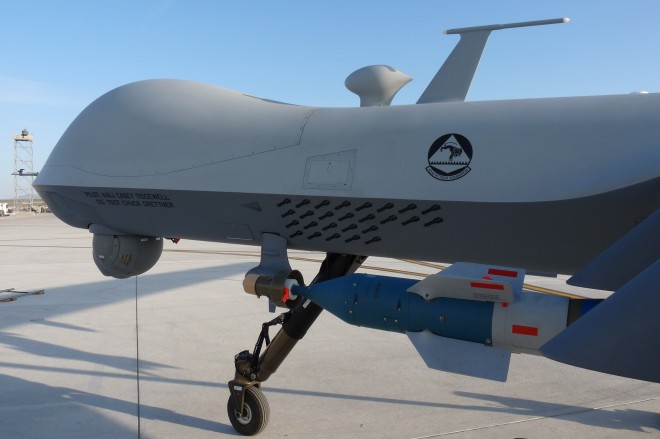
Defense Secretary Robert Gates met with officials in Islamabad to reiterate the importance of drone attacks, despite escalating reservations of their use amongst Pakistani’s. It’s been a polarizing issue from the onset because while it’s convenient to fly unmanned CIA predator aircraft over potential terrorist havens, they result in significant civilian casualties, and displaced persons. So it’s no surprise that over a year later, reconciling their use in Pakistan is still on the agenda.
For this reason, Secretary Gates announced a possibility of America providing “Pakistan with 12 unarmed Shadow aircraft”. Meaning the planes would not have a capacity to strike, but offer enhanced “surveillance capabilities under U.S. supervision”. It’s a fair decision and something I’ve suggested previously.
Gates also stressed the importance of militarily addressing all extremist groups because:
“It’s dangerous to single out any one of these groups and say, ‘If we could beat that group that would solve the problem,’ because they are in effect a syndicate of terrorist operators”
And almost simultaneously, Secretary Clinton unveiled The Afghanistan and Pakistan Regional Stabilization Strategy which sends an increase of 20-30% in civilian experts to both countries and “outlines plans to rebuild the Afghan farm sector, improve governance, and reintegrate extremists into society”. But this strategy of “reintegrating extremists” runs in contradiction to Secretary Gates’ aforementioned remarks.
Gates ruled out any possibility of reintegration calling for a consolidated attack on extremists suggesting that they work in “syndication”, while Cinton’s plan attempts to bring extremists back into the fold of moderate society.
It’s a stark inconsistency in our foreign policy. Because while I think Secretary Clinton’s idea notion of reintegration is more in tune with ground realities, and therefore viable, I figure Secretary Gates was being staunch in talks because finally relinguishing partial drone technology provided him with that margin of hawkishness. Either way though, one thing is certain, despite skepticism on both ends of the U.S. Pakistan relationship, cooperation is ever deepening.
“I hope we (Americans) learn to be more humble, to listen more. Because what we are in the end, or should be, are actions that speak for themselves, that speak for us”,
Says Chairman of the Joint Chiefs of Staff, Michael Mullen, the highest-ranking officer in the US Armed forces. The statement comes as the United States faces possibly its deadliest few months for the War on Terror in a deteriorating Afghan-Pakistan situation. President Obama says this war is one of “necessity” and searches for ways to amplify US efforts with Admiral Mullen and special envoy Richard Holbrooke weighing in on how best to secure this region.
Holbrooke, the seasoned diplomat and Mullen the military expert agree that more needs to be done to engage the Muslim world but differ significantly on how. At the onset of the War on Terror, Holbrooke advocated the United States enhance communication by
“convincing Muslims that this is not a war against Islam, but a war on terror.
Holbrooke says this is acheivable through a sustained public discussion with key Muslim Intellectuals and must be taken up by the White House because it alone has a capacity to direct activities of State, Defense, Justice, CIA, AID and others toward the Muslim world and can also allocate required resources. President Obama’s troop surge in Operation Enduring Freedom, and Holbrooke’s appointment as special envoy marks a shift to more “strategic communications” as advocated by Holbrooke in Afghanistan and Pakistan and focuses on three goals:
“Redefining our message; connecting to the people of Afghanistan and Pakistan on the ground in new ways through cell phones, radio, and other means; and identifying and supporting key communicators who are able, through local narratives, to counter extremists’ propaganda and present a positive alternative. Additional personnel and structures in the Afghan provinces and in Islamabad/Peshawar will be necessary”
However, despite Holbrooke’s diplomatic prescriptions, the situation in Afghanistan/Pakistan is deteriorating and Admiral Mullen last week shifted significantly with the concept of relying on “strategic communications”. Instead, he suggests the problem is not one of communication, rather:
“Our messages lack credibility because we haven’t invested enough in building trust and relationships and we haven’t always delivered on promises. Each time we fail to live up to our values or don’t follow up on a promise, we look more and more like the arrogant American’s the enemy claims we are”
Admiral Mullen stresses credibility by leading through example and suggests a tangiblity to our efforts in Afghanistan and Pakistan are imperative as opposed to just communications. When Holbrooke visitsed Karachi last week and talked about a “major turn with our relationship with Pakistan” and discussed granting more visas for Pakistani’s, textile trade and preferential access to US markets, he visited underprivilaged schools and met with opposition leaders to give an overall message that “drone attacks and the hunt of Al Qaeda are not he only American foreign policy activities in the country”. But Admiral Mullen might counter that these communicative efforts do little to establish meaningful change in the hearts and minds of Muslims. Because these efforts have in the past remained just that, efforts. Rarely are these discussions translated to tangible results for everyday citizens. Each time a special envoy or diplomat thus engages in progressive talks that do not turn out in actuality, US credibility falters.
But Pakistan and the United States have a long, deep history of cooperation. Much of that cooperation has been macro, diplomatic, and military to military cooperation from as far back as defense agreements like SEATO/CENTCOM or until present day collaboration in the War on Terror. Despite the history though, Pakistani masses have seen their country remain economically underdeveloped and their social and political situation has perpetually deteriorated. That is not to imply Pakistan is reliant on a coperation with the US or any alliance/assistance for that matter, but years of allying at the forefront of the Cold War during the US sponsored Soviet Afghan War and now Operation Enduring Freedom, Pakistani’s do not see or feel any positive results and therefore have an interest in cooperation with us.
Admiral Mullen then is correct: US crediblity must be rooted in leading through examples that enhance US credibility which in turn, wins over hearts and minds. He further suggests that when the US does not deliver tanigble benefits in exchange for cooperation and as promised, militant/extremist groups fill those gaps:
“They deliver. Want to know what happens if somebody violates their view of Sharia law? You don’t have to look very far or very long. Each beheading, each bombing, and each beating sends a powerful message or, rather, is a powerful message”
Leaving Pakistan and Afghanistan to recuperate and redevelop without adequate assistance after deeply cooperating in the Soviet Afghan war are exactly the kinds of mistakes that profoundly thwart our interests in winning over civilian hearts and minds
The Soviet Afghan War, and current War on Terror has left Pakistan with an immense refugee problem which created vast security, social and political problems.I think applying Admiral Mullen’s perscriptions to this issue would be a great place to start in winning over Pakistani hearts and minds. Important to note is that Pakistan is currently home to a the second largest Muslim population in the world and continues to grow rapidly. And a deteriorating situation in neighboring Afghanistan we’ve seen has a dangerous spillover effect into Pakistan. Thus, winning hearts and minds in this heavily Muslim populated regoin is certainly in our interest. Pakistani troops and civlians bear immediate, tangible costs in fighting against terrorism in and around their border in our War on Terror. This shared motive, and 60+ year alliance should prompt Washington should focus on establishing viable policies that in serving civlians who truly pay to secure our interests, also establishes credibility in the Muslim world. I think Admiral Mullen describes this hurdle in our dealings in the Muslim world best:
“it’s a subtle world we don’t fully — and don’t always attempt to — understand. Only through a shared appreciation of the people’s culture, needs and hopes for the future can we hope ourselves to supplant the extremist narrative.”
“Pakistan Objects to U.S. Plan for Afghanistan War” reads a New York Times article last month updating us on our foreign policy. The article forewarns of “fissures” in the U.S. Pakistan alliance at this critical moment when President Obama sends additional troops to the region. The article specifically outlines Pakistan’s insistence on maintaining forces along the Indian border when the United States expresses concern that the Afghan border is of greater priority. Pakistani officials, to some international dismay, contend that it is more constructive to maintain dialogue with some parts of the Taliban rather than going at the group in an all out military offensive. The piece continues to explain that, sources from the Inter Services Intelligence Agency (ISI: Pakistan’s intelligence agency, their equivalent to our CIA) briefed Special Envoy Holbrooke this morning in their strong concerns of an U.S. “surge” which would “result in more civilian casualties, further alienate local populations. Thus more local resistance to foreign troops”. And while the article continues with how these concerns contrast starkly with U.S. fears that Pakistan is not focusing enough on the Taliban in the north, it is important to revisit the consequences of, and reassess our long-term strategy in Operation Enduring Freedom. Because more of the same may not be an apt solution given that the war is escalating in terms of U.S. costs (on various levels), the region is deteriorating, and prominent experts now claim the effort is doomed to be “unwinnable”.
The fact is, this is the deadliest month for U.S. troops in Afghanistan and where there once was no Al Qaeda or Taliban in the sovereign state of Pakistan, now exists a terribly frightening border through which terrorists are fleeing and situating themselves in the north. Furthermore, it is important to remember that until recently, the Taliban was not considered a terrorist organization, although alarming they were not a military threat before 9/11. Al Qaeda was the main target in Afghanistan, and their presence in Pakistan was minimal, if at all. Since our invasion, the Taliban and Al Qaeda are increasingly difficult to differentiate, and rather than being obliterated, are moving in to Pakistan. And a once ideologically problematic group of Islamic extremists, the Taliban, are now dangerously aligning with far more treacherous terrorist outfits like Al Qaeda.
In a similar way, other regional militant groups are gaining ground as extremist groups evade NATO forces and subsequently weaken our anti-terrorist efforts. The Mumbai atrocities and embassy attacks in Afghanistan last year are testimony to the danger of militant groups advancing their efforts in an increasing climate of instability. This only legitimizes Pakistan’s skepticism of continuing an predominantly military means to combating terrorism. If limited surgical strikes, close intelligence sharing, and consistent provision of anti-terror training and supplies is agreed as effective amongst officials, the U.S. and Pakistan should focus on a “surge” on these fronts.
So when the news paints a clashing picture of interests between Pakistan and the United States, it is a simplistic one. Both states actually have an intense interest in securing the region against terrorists and while they might disagree on tactics, it is important that the Obama administration at least reassess the previous administration’s policies of simply implementing a military “surge”. Even if a surge in troops is potentially successful, working closely to expand on what has proven to be effective is a safer option. So a discerning look at this weeks supposed “fissure” between U.S. and Pakistani officials in discussing cooperation should prompt us to better understand Islamabad’s concerns and perhaps reassess our strategy .





 Zainab B. Jeewanjee
 Zainab Jeewanjee