Posts Tagged ‘us pakistan politics’
 January 26, 2010
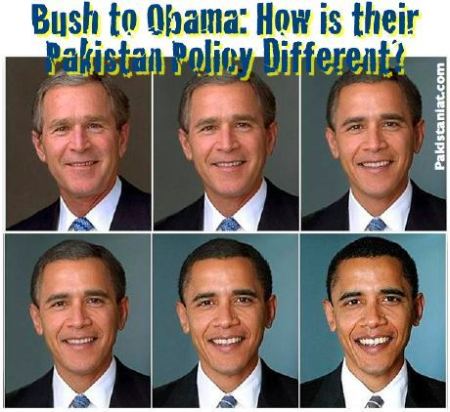
Bush & Obama : Identical Policies to Pakistan?
Similar to his ratings drop at home, abroad President Obama is being accused of not living up to expectations. In DAWN news this week there’s an article entitled: “Obama’s Changing Tone” suggesting our President is reverting to foreign policy reminiscent of the Bush administration on Pakistan, and to an extent, the greater Muslim World. The idea is that Obama’s planned troop surge in tandem with ever toughening rhetoric post the Fort Hood Massacre and the Christmas Bomber, reflects leadership that’s not much different than former President Bush’s.
But on the contrary, our escalating presence in Pakistan is exactly what Obama promised. During the campaign trail, he made clear that his main focus was Al Qaeda and destroying terrorists in Pakistan (militants having spilled over from Afghanistan into Pakistan). The rhetoric was so hawkish, it actually became a sticking point before the primaries that Republicans and Democrats like Hillary criticized. Also, the media publicized his staunch rhetoric at length, so
Obama really has not changed tone on Pakistan: an intensified war matches his rhetoric from the start.
Plus is it fair to expect something radically different than the previous administration in the first place? Let’s not forget that it is often the political system and circumstances that drive leadership, and not vice versa. The fact is, America was already deeply engaged in two very problematic wars at the inception of Obama’s Presidency. He inherited an intensely worsening situation in Afghanistan that rapidly spilled across the border into Pakistan. President Obama anticipated this and is thus living up to campaign promises: a more hawkish foreign policy to Pakistan.
Which of course then raises the question: is hawkishness the right approach to Pakistan at this time? Pakistani’s certainly don’t think so. CIA drones have the entire country in an uproar, while Islamabad isn’t taking well to DC’s tacit encouragement of rapidly increasing Indian influence in Afghanistan, and even billions in aid from America is frowned upon with unprecedented magnitude. And it’s not that the Obama administration isn’t aware of skepticism. Rather, toughening policies are a matter of practicality.
My guess is that the President is thinking: we’re already in Afghanistan, the war is deteriorating into Pakistan, what’s the best way to mitigate the situation, secure the region just enough to exit in the next couple years while leaving behind more cooperative players in the region so as to ensure our energy and geopolitical interests in South/Central Asia.
Phew. Now there’s a dilemma. And when looked at from his possible perspective, the Pakistan quagmire is revealed as tremendously complex. It’s such a multifaceted, sweeping, consequential and changing situation that involves so many players who work within the confines of political systems that only history should be the best judge of whether Obama’s stance on Pakistan is constructive or progressive. And that itself is relative. So let’s not be surprised at his hawkishness. It was naive of anyone to expect otherwise in the case of Pakistan.
ORIGINALLY PUBLISHED @
Posted in Current Affairs, Foreign Policy, International Affairs, International Relations, Pakistan, US Foreign Polciy, US Pakistan relations | Tagged af-pak, af-pak region, af-pak strategic, af-pak war, af-pak war on terror, america and pakistan cooperation, america and pakistan politics, american foreign policy and pakistan, american foreign policy pakistan, american pakistani politics, International Affairs, International Affairs Pakistan, international politics pakistan, International Relations, international relations pakistan, military aid, obama and pakistan, obama foreign policy, Obama Pakistan, obama pakistan policy, obamas foreign policy, obamas pakistan policy, pakistan international, pakistan policy, pakistan politiacal affairs, pakistan political, pakistan political affairs, pakistan politics, pakistan united states afghanistan, Pakistan US cooperation, Pakistan US relations, pakistan us relationship, Pakistan war on terror, pakistan washington dc, pakistani affairs, pakistani corruption, pakistani military, pakistani policies, pakistani political affairs, pakistani politics, pakistani poltics, pakistani poltiis, pakistani taliban, pakistani us relations, pakistans military, pakistans war on terror, pervez musharraf pakistan, policy to pakistan, political affairs of pakistan, politics in pakistan, politics of pakistan, politics pakistan, president obama and pakistan, president obama foreign policy, president obama pakistan, president obama pakistan strategy, prime minister sharif, relations between united states and pakistan, senator kerry, senator kerry pakistan, senator lugar pakistan, south waziristan pakistan, Taliban, taliban afghanistan, taliban in pakistan, taliban pakistan, the af-pak region, the af-pak war, troop surge afghanistan, troop surge in afghanistan, troop surge in pakistan, troop surge pakistan, u.s. pakistan cooperation, united states assistance pakistan, united states democracy pakistan, United states foreign policy pakistan, united states pakistan cooperation, united states pakistan policies, united states pakistan relations, us aid to pakistan, us assistance to pakistan, US foreign policy, US foreign policy pakistan, us foreign policy south asia, US foreign policy to pakistan, us led war on terror, us led war on terror pakistan, us neutrality pakistan, US pakistan cooperation, us pakistan politics, US Pakistan relations, us pakistan relationship, us war on terror, us war on terror pakistan, war on terror in afghanistan, war on terror in pakistan, war on terror pakistan, war on terror united states pakistan, zainab blog, zainab jeewanjee, zainab jeewanjee foreign policy, zainab jeewanjee internation, zainab jeewanjee international affairs, zainab jeewanjee international relations, zainab jeewanjee Pakistan, Zainab jeewanjee politics, zainab politics, zainyjee | 1 Comment »
October 15, 2009
What happens when a majority of one country’s citizens opt for martial law but the democratically elected government in power including judicial, executive and legislative branches are against a military takeover? It’s quite the political conundrum because either side offers legitimate democratic authority, but they’re diametrically opposed. A rational answer is to let the democratically elected government fulfill it’s term and allow citizens to elect politicians to office who will support martial law in the next term. That might work in a fully functional democracy backed by institutions that can uphold legitimacy and granted the state is sufficiently secure. However, in light of decreasing security, severe economic downturns and age old skepticism of U.S. actions in Pakistan, ever so gradually the country shifts it’s gaze toward the military.
Decreasing Security :: To offer partial explanation in a nutshell: Since 2001, terrorists fleeing Operation Enduring Freedom in Afghanistan, spilled over into Pakistan at the nebulous northern border areas which are historically autonomous from federal regulation. The fact that Pakistan already housed one of the worlds largest refugee populations allowed this spillover a massive and destitute demographic from which to exploit support. As a result, we now see unprecedented terrorism in Pakistan where Al Qaeda and the Taliban had no significant presence prior to 9/11.
Skepticism of U.S.’s Role in Pakistan :: Since the inception of Pakistan in 1947, bilateral realations with the United States have been defined by cooperation wherein Pakistan served as a proxy for U.S. Containment throughout the Cold War (i.e. security pacts like SEATO, CENTCOM, then aiding our Afghan led defense against Soviet incursions in the 1980’s). In exchange, Pakistan’s military with U.S. support, bolstered itself as the strongest, most efficient and stable institution in Pakistan. Some argue civilian governments and democratic institutions were thus never given an opportunity to compete with such a well funded, strongly backed military. And therein we find multifaceted dimensions that help explain the controversy over current U.S. support of Pakistan. Former Pakistan to U.S. ambassador Maleeha Lodhi describes the Kerry Lugar bill:
“the offending part of the legislation sets up the country as hired help and puts the military in the dock, presumed guilty on many counts and having to prove its innocence to Washington”
Pakistan is “hired help”, that’s the crux of skepticism on the Kerry-Lugar bill. Concern is rooted in a long history of cooperation with the United States that some argue created a behemoth military institution costing them a fair chance at democracy. In attempt to address that very concern, the Kerry Lugar bill mentions no military aid in exchange for cooperation on the War on Terror, unlike previous assistance packages from the Cold War. Ironically, bleak affairs in Pakistan now which are partially a result of pervious cooperation, particularly during the Soviet Afhgan war, prompt arguments that the military is exactly what needs support right now. Thus, the Lugar Bill receives not only skepticism from Pakistan’s strongest institution, but increasingly the public.
Although Secretary Clinton and Senators Kerry and Lugar have made no indication of altering the bill, to avoid future skepticism and potential resentment of U.S. involvement in Pakistan it could be wise to make changes so as to not sideline the military at this critical period in our War on Terror. Unlike previous Republican presidencies, the Obama administration is committed to dealing with civilian governments in Pakistan. It’s a noble idea and even though i don’t suspect that as the military gains legitimacy the civilian government will collapse soon, we should think twice before riling such concern over a bill that has just a 5 year life span. Central and South Asia are critical regions for our interests and we may need to engage strategically positioned Pakistan in more years to come. So a backlash by the most powerful institution in that country is something we should anticipate, and work actively against.
ORIGINALLY PUBLISHED @
Posted in Pakistan | Tagged Afghan war, afghanistan cold war, afghanistan pakistan border, afghanistan soviet war, afghanistan war on terror, Al Qaeda, Al Qaeda Pakistan, ambassador lodhi, america pakistan, america pakistan politics, america pakistan relations, american pakistani relations, american politics pakistan, biden lugar act, biden lugar bill, biden lugar pakistan, cold war pakistan, Current Affairs, current affairs pakistan, democracy in pakistan, democracy pakistan, democratic pakistan, dick lugar pakistan, enhanced cooperation pakistan act, enhanced cooperation with pakistan act, foreign policy pakistan, foreign policy to pakistan, International Affairs, international affairs in pakistan, international affairs of pakistan, International Affairs Pakistan, international current affairs, international current affairs pakistan, international pakistan politics, international politics, jeewanjee, jeewanjee politics, kerry lugar act, kerry lugar bill, kerry lugar legislation, kerry lugar pakistan bill, kerry lugar pakistan congress, kerry pakistan, Maleeha Lodhi, martial law in pakistan, martial law pakistan, military in pakistan politics, military of pakistan, military politics pakistan, Pakistan, pakistan afghanistan, pakistan afghanistan cold war, pakistan america, pakistan american affairs, pakistan bill, Pakistan democracy, Pakistan economy, pakistan history, Pakistan international affairs, pakistan international relations, pakistan martial law, pakistan military, pakistan politics, pakistan security, pakistan soviet afghan war, pakistan us war on terror, Pakistani ambassador US, pakistani foreign policy, pakistani politics, politicians pakistan, politics of pakistan, politics us pakistan, senator kerry pakistan, soviet war afghanistan, soviet war in afghanistan, Taliban, taliban in pakistan, US foreign policy to pakistan, US maleeha lodhi, us pakistan affairs, US pakistan ambassador, us pakistan politics, US Pakistan relations, us pakistan relationship, us policy for pakistan, US role in pakistan, war on terror america pakistan, war on terror pakistan, zainab jeewanjee, Zainab jeewanjee politics, zainab politics | 12 Comments »
September 25, 2009
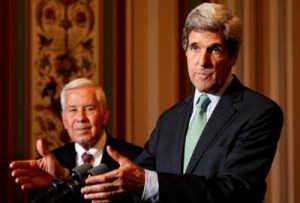
Senate unanimously passed a bill authorizing “appropriations to promote an enhanced strategic partnership with Pakistan”. The legislation is likely to receive similar support in the House later this week before being sent to President Obama for final approval. Initial versions of legislation were presented as the Biden-Lugar bill last year led by democrats Joe Biden and Senator Kerry, and supported by Hillary Clinton and Barack Obama. Currently, the bill is coauthored by Republican Senator Dick Lugar making it widely bipartisan which reflects our growing desire to engage Pakistan ensuring stability and ultimately our interests in the region.
The Legislation triples foreign aid to our major non NATO ally” allowing up to $1,500,000,000 for their cooperation in “counterterrorism/counterinsurgency describing Pakistan’s ongoing struggles and successes against the Taliban and Al Qaeda. It cites assassination of Benazir Bhutto, the Islamabad and Mumbai hotel attacks last fall among other suicide bombings in Pakistan and Afghanistan, some of which involved deaths of US citizens to underscore an immediate need to assist Pakistan at this critical time. As we face mounting deaths in the War on Terror, send additional troops to Afghanistan and President Obama works closely with generals to revamp our strategy there, the bill is meant to forge a new relationship with Pakistan.
It extends diplomatic rhetoric directly to the people of Pakistan by describing the daily plight of citizens who are “especially hard hit by rising food and commodity prices and severe energy shortages” with 2/3rds of the population living on less than 2.25 and 1/5 of the population living below the poverty line”. It further mentions “Compatible goals of combating terrorism, radicalism and promoting economic development through building of infrastructure and promoting social and material well being for Pakistani citizens through development of public services”. And most interestingly, the bill cites Pew opinion polls finding:
“Pakistan has historically viewed the relationship between the United States and Pakistan as a transactional one characterized by a heavy emphasis on security issues with little attention to other matters of great interest to citizens of Pakistan”.
Then referring to the current civilian government as an “opportunity to place relations on a new and more stable foundation”. The bill’s ‘statement of policy‘ identifies the following objectives:
- Support the consolidation of democracy, good governance & rule of law in Pakistan
- Support economic growth & development to promote stability/security
- To build a sustained, long term, multifaceted relationship with Pakistan
- Expanding bilateral engagement with Pakistan
- To work with Pakistan and bordering countries to facilitate peace (a possible reference to mediating the Kashmir issue. President Obama mentioned doing so during his campaign run for President)
- Expand people to people engagement between US and Pakistan through increased educational, technical and cultural exchanges (possibly in the form of more student/professional visas. Envoy Holbrooke mentioned this in visits to Karachi in July)
- Work with government of Pakistan to:
-
- prevent Pakistani territory from being used as a base/conduit for terrorism in Pakistan, Afghanistan, India or elsewhere
- Coordinate military, paramilitary & police action against terrorist terrorism
- Help bring peace, stability and development
- (this might entail counterinsurgency/counterterrorism assistance and cooperation through intelligence sharing, arms development/trade and training of Pakistani forces)
Pakistan is aptly described as a major non-NATO, long-standing ally. But cooperation has been dominated by security issues generally in the form of military dictators supported by the States in exchange for Pakistan’s military assistance throughout the Cold War and current War on Terror resulting in the Pakistani mindset of solely “transactional” relations. This bill is a fair attempt to shift that context to a more positive tone with the aforementioned objectives and diplomatic rhetoric.
However, certain specificities such as timetables and solid oversight must be transparently accessible to the Pakistani and American public to ensure more positive relations are achieved. Already experts are weighing in with concerns. Despite the commitment to development in addressing the plight of daily Pakistani’s, Foreign Policy Magazine mentions that the bill doesn’t say exactly how much of these funds are to be allocated toward military assistances. And although senator Kerry insists “Clear, tough minded accountability standards and metrics” are contained in the bill, Dawn News cites Rand Corporation expert Dr. Christine Fair raising the issue of “greater transparency” and wanting to ensure international accounting standards are applied in allocating these funds. Such concerns are equally felt in Pakistan, where past commitments of economic development have not always found their way to alleviating the plight of daily citizens for whom funding is supposedly intended.
For this reason a concerted conviction to improving the daily lives of Pakistani’s is required by Pakistani politicians who have ultimate control over how these funds are applied. I hope that President Asif Zardari along with Parliament works closely to ensure monies are responsibly allocated to a “sustainable” development the bill calls for.
ORIGINALLY PUBLISHED @
Posted in Current Affairs, Economics, Foreign Policy, International Affairs, International Relations, Pakistan, South Asia, U.S. Politics, US Foreign Polciy, US Pakistan relations | Tagged 2009 bill pakistan, aid pakistan, aid to pakistan, Al Qaeda, Al Qaeda Pakistan, america foreign policy pakistan, america pakistan relations, american pakistani relations, appropriations bill pakistan, appropriations pakistan, appropriations to pakistan, Asif Zardari, biden lugar bill, biden lugar bill pakistan, biden pakistan, bill for pakistan in the senate, bipartisan bill pakistan, clinton pakistan, corruption in pakistan, counterterrorism pakistan, defeating terrorism, defeating terrorism development, defeating terrorism with development, dick lugar, enhanced strategic partnership pakistan, enhanced strategic partnership with pakistan, foreign aid pakistan, foreign aid to pakistan, foreign policy to pakistan, funding to pakistan, HIllary Clinton Pakistan, hillary pakistan, International Affairs, International Affairs Pakistan, international politics, international politics in pakistan, international relations pakistan, joe biden, joe biden pakistan, john kerry, john kerry bill, john kerry pakistan, kerry biden, kerry lugar, kerry lugar bill on pakistan, kerry lugar bill pakistan, kerry lugar pakistan, lugar kerry bill, lugar pakistan, Obama Pakistan, pakistan affairs., pakistan and congress, pakistan and the west, pakistan bill, pakistan bill passed, pakistan congress, pakistan corruption, pakistan counterterrorism, pakistan foreign policy, pakistan foreign policy united states, pakistan international relations, pakistan kerry lugar bill, pakistan lugar, Pakistan obama, pakistan political affairs, pakistan politics, pakistan senate bill, pakistan united states political affairs, pakistan us political affairs, Pakistan US relations, Pakistan war on terror, pakistani foreign policy, pakistani politics, pakistans foreign policy, political affairs of pakistan, politics in pakistan, politics of pakistan, politics pakistan, politics to pakistan, politics us and pakistan, politics us pakistan, president obama pakistan, relations with the united states, senate bill pakistan, senate pakistan, senate passes pakistan bill, senator dick lugar, senator john kerry, senator kerry, Taliban, taliban pakistan, terrorism, united states and pakistan politics, united states foreign policy and pakistan, united states pakistan relations, united states pakistani relations, us congress and pakistan, US foreign policy, US foreign policy pakistan, US foreign policy to pakistan, us funds to pakistan, us pakistan political affairs, us pakistan politics, US Pakistan relations, us pakistani relations, us political affairs and pakistan, us politics and pakistan, us politics pakistan, us to pakistan relations, us war on terror, war on terror, war on terror kerry, war on terror obama, war on terror pakistan, zainab jeewanjee, zainab jeewanjee Pakistan, Zainab jeewanjee politics | 2 Comments »


 Zainab B. Jeewanjee
 Zainab Jeewanjee