Posts Tagged ‘war on terror afghanistan’

h1

Concessions & Collateral Damage : CIA Drones in Pakistan – Part 2

January 22, 2010

Reconciling CIA Drones in Pakistan

Reconciling CIA Drones in Pakistan

Click here to Read the First Part: Reconciling CIA Drones in Pakistan Part 1

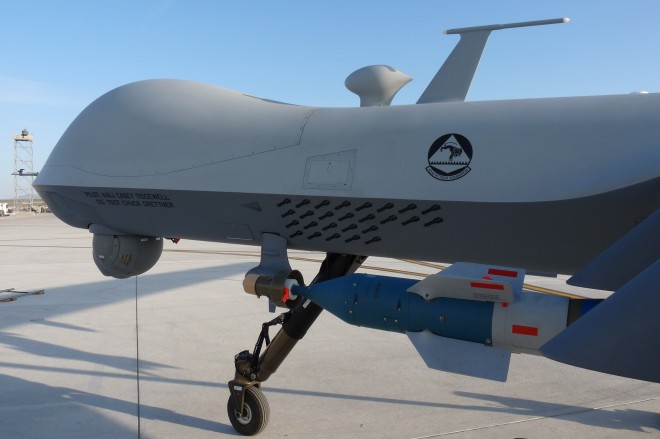
Defense Secretary Robert Gates met with officials in Islamabad to reiterate the importance of drone attacks, despite escalating reservations of their use amongst Pakistani’s. It’s been a polarizing issue from the onset because while it’s convenient to fly unmanned CIA predator aircraft over potential terrorist havens, they result in significant civilian casualties, and displaced persons. So it’s no surprise that over a year later, reconciling their use in Pakistan is still on the agenda.

For this reason, Secretary Gates announced a possibility of America providingPakistan with 12 unarmed Shadow aircraft”. Meaning the planes would not have a capacity to strike, but offer enhanced “surveillance capabilities under U.S. supervision”. It’s a fair decision and something I’ve suggested previously.

Supplying drones to close allies who aid in our War Efforts absolves us of sole liability for collateral damage wreaked by these machines that are always controversial, and increasingly protested internationally.

Gates also stressed the importance of militarily addressing all extremist groups because:

“It’s dangerous to single out any one of these groups and say, ‘If we could beat that group that would solve the problem,’ because they are in effect a syndicate of terrorist operators”

And almost simultaneously, Secretary Clinton unveiled The Afghanistan and Pakistan Regional Stabilization Strategy which sends an increase of 20-30% in civilian experts to both countries and “outlines plans to rebuild the Afghan farm sector, improve governance, and reintegrate extremists into society”. But this strategy of “reintegrating extremists” runs in contradiction to Secretary Gates’ aforementioned remarks.

Gates ruled out any possibility of reintegration calling for a consolidated attack on extremists suggesting that they work in “syndication”, while Cinton’s plan attempts to bring extremists back into the fold of moderate society.

It’s a stark inconsistency in our foreign policy. Because while I think Secretary Clinton’s idea notion of reintegration is more in tune with ground realities, and therefore viable, I figure Secretary Gates was being staunch in talks because finally relinguishing partial drone technology provided him with that margin of hawkishness. Either way though, one thing is certain, despite skepticism on both ends of the U.S. Pakistan relationship, cooperation is ever deepening.

ORIGINALLY PUBLISHED @

h1

Tolerating the Taliban

October 9, 2009

After months of consideration on how to deal with our escalating engagement in the AF-Pak region, Obama’s administration has decided:

“the Taliban cannot be eliminated as a political or military movement”

An article in the Washington Post today cites the administrations re-vamped goal of mitigating a Taliban capacity to interfere in the establishment of a stable Afghan government while assuring us that Al Qaeda is the primary threat, and our strategy will focus squarely on eradicating them.

It seemed news on Pakistan in the past year revolved around Islamabad not doing enough to eradicate the Taliban; equating the group to Al Qaeda in terms of importance in the War on Terror. But today marks a clear departure from such criticism. Distinguishing Al Qaeda from the Taliban is a huge step forward for the United States. Because connecting our goals to eliminate both immediate security threats and major elements of Afghan society that are unpalatable to our values, has proven counter productive. Having lived in Pakistan to experience the ill effects of hyper conservative religious factions, I know we mean well in trying to uproot extremism, but it just hasn’t worked in tandem with our military offensive. And I’ve mentioned the importance of a distinction between these groups previously:

The Taliban is historically distinct from militant groups like Al Qaeda. Unlike the Taliban, Al Qaeda is directly responsible for 9/11. Simply put, the Taliban was an ideologically fundamental group, while Al Qaeda is a militant, terrorist group. Both are dangerous as such, but the Taliban has national interests in controlling Afghanistan under strict ideological rules while Al Qaeda is a militant organization with international ambitions.

It’s not a novel contention, but only just being reflected in policy, and I think it has potential for success. As an ideological force, the Taliban foster an ultra conservative brand of Islam, but are not necessarily a threat to our security interests. Plus, if General McChrystal’s goal is defined as establishing a sustainable, democratic Afghan government, in order for it to be considered legitimate, it must be rooted in Afghan values and according to Afghan preferences. Such preferences might seem backward, or entirely unpleasant to us, but so long as our interests are being protected, impressing our brand of democratic values should take a back seat for the time being. I think the Obama administration has taken a wise step in revamping the Af-Pak strategy and hope it yields lasting success.

ORIGINALLY POSTED @