Posts Tagged ‘zainab jeewanjee’

h1

The Hawk Some Didn’t See Coming : Obama’s Pakistan Policy

January 26, 2010

Bush & Obama : Identical Policies to Pakistan?

Bush & Obama : Identical Policies to Pakistan?

Similar to his ratings drop at home, abroad President Obama is being accused of not living up to expectations. In DAWN news this week there’s an article entitled: “Obama’s Changing Tone” suggesting our President is reverting to foreign policy reminiscent of the Bush administration on Pakistan, and to an extent, the greater Muslim World. The idea is that Obama’s planned troop surge in tandem with ever toughening rhetoric post the Fort Hood Massacre and the Christmas Bomber, reflects leadership that’s not much different than former President Bush’s.

But on the contrary, our escalating presence in Pakistan is exactly what Obama promised. During the campaign trail, he made clear that his main focus was Al Qaeda and  destroying terrorists in Pakistan (militants having spilled over from Afghanistan into Pakistan). The rhetoric was so hawkish, it actually became a sticking point before the primaries that Republicans and Democrats like Hillary criticized. Also, the media publicized his staunch rhetoric at length, so

Obama really has not changed tone on Pakistan: an intensified war matches his rhetoric from the start.

Plus is it fair to expect something radically different than the previous administration in the first place? Let’s not forget that it is often the political system and circumstances that drive leadership, and not vice versa. The fact is, America was already deeply engaged in two very problematic wars at the inception of Obama’s Presidency. He inherited an intensely worsening situation in Afghanistan that rapidly spilled across the border into Pakistan. President Obama anticipated this and is thus living up to campaign promises: a more hawkish foreign policy to Pakistan.

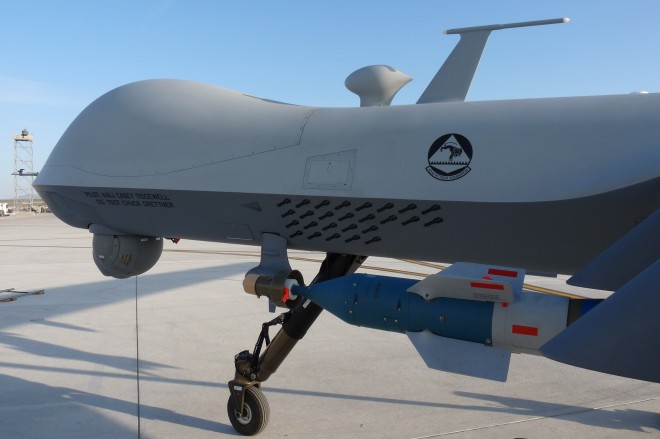
Which of course then raises the question: is hawkishness the right approach to Pakistan at this time? Pakistani’s certainly don’t think so.  CIA drones have the entire country in an uproar, while Islamabad isn’t taking well to DC’s tacit encouragement of rapidly increasing Indian influence in Afghanistan, and even billions in aid from America is frowned upon with unprecedented magnitude. And it’s not that the Obama administration isn’t aware of skepticism. Rather, toughening policies are a matter of practicality.

My guess is that the President is thinking: we’re already in Afghanistan, the war is deteriorating into Pakistan, what’s the best way to mitigate the situation, secure the region just enough to exit in the next couple years while leaving behind more cooperative players in the region so as to ensure our energy and geopolitical interests in South/Central Asia.

Phew. Now there’s a dilemma. And when looked at from his possible perspective, the Pakistan quagmire is revealed as tremendously complex. It’s such a multifaceted, sweeping, consequential and changing situation that involves so many players who work within the confines of political systems that only history should be the best judge of whether Obama’s stance on Pakistan is constructive or progressive. And that itself is relative. So let’s not be surprised at his hawkishness. It was naive of anyone to expect otherwise in the case of Pakistan.

ORIGINALLY PUBLISHED @

h1

Ohh Coco :: NBC’s Conan / Leno Debacle

January 25, 2010

What prompted NBC to reinvent the wheel? Conan was pulling high ratings following Jay Leno’s Tonight Show, and in that position, Leno outranked Letterman dominating Late Night TV for more than a decade. So why shift gears when you’re above the competition?

I assume to try and ensure top position above the competition by grooming the future star early on. But that still entailed reinventing the wheel and was done so early on that all parties are paying for the grave miscalculation.  After only 7 months of hosting the Tonight Show, Conan has taken the high road in walking away without any uproar, but at the expense of his credibility as a high profile comedian. Leno in the same way won’t immediately regain audience when he resumes the main position in NBC Late Night TV.  And as NBC pays heavy compensation to outgoing Conan O’Brien, cuts losses from their Leno show launched some months back and re-gears everything back to as close to the original state as possible, they come across as ultimate fools in this debacle.

But what went wrong after Conan actually replaced Leno? I always thought Conan was funnier than Jay. Leno was good, certainly better than Letterman, but Coco made me laugh, like actually laugh out loud. He was far less staged, less slick than Leno.

Conan wasn’t static. He made me laugh out loud because he acted funny. It was more than just delivering punch lines. Conan amused us with antics: he brought clowning around to Late Night TV. He was unpredictable and his content came across as less scripted than Leno’s.

And I think that’s why he didn’t initially pull in ratings as host of the Tonight Show. One could see the lackluster way in which Conan performed product placements that came so naturally to Leno. Jay Leno had the art of staging anything down to a tee, product placements, T.V., book, movie promo guised as celebrity Q&A came naturally to him. Slapstick antics on the other hand are natural to Conan and the Tonight Show didn’t offer him ample platform for them. Conan needs a show where he can be clowny Conan.

Oh well. I don’t watch much television, but when i choose to, it was nice having Conan as an option. I hope this doesn’t ultimately cost us his comedy. Both Leno and Coco had more left in them, and it’s so uncool to see someone as un-funny as Letterman raking in the ratings 😦

h1

Concessions & Collateral Damage : CIA Drones in Pakistan – Part 2

January 22, 2010

Reconciling CIA Drones in Pakistan

Reconciling CIA Drones in Pakistan

Click here to Read the First Part: Reconciling CIA Drones in Pakistan Part 1

Defense Secretary Robert Gates met with officials in Islamabad to reiterate the importance of drone attacks, despite escalating reservations of their use amongst Pakistani’s. It’s been a polarizing issue from the onset because while it’s convenient to fly unmanned CIA predator aircraft over potential terrorist havens, they result in significant civilian casualties, and displaced persons. So it’s no surprise that over a year later, reconciling their use in Pakistan is still on the agenda.

For this reason, Secretary Gates announced a possibility of America providingPakistan with 12 unarmed Shadow aircraft”. Meaning the planes would not have a capacity to strike, but offer enhanced “surveillance capabilities under U.S. supervision”. It’s a fair decision and something I’ve suggested previously.

Supplying drones to close allies who aid in our War Efforts absolves us of sole liability for collateral damage wreaked by these machines that are always controversial, and increasingly protested internationally.

Gates also stressed the importance of militarily addressing all extremist groups because:

“It’s dangerous to single out any one of these groups and say, ‘If we could beat that group that would solve the problem,’ because they are in effect a syndicate of terrorist operators”

And almost simultaneously, Secretary Clinton unveiled The Afghanistan and Pakistan Regional Stabilization Strategy which sends an increase of 20-30% in civilian experts to both countries and “outlines plans to rebuild the Afghan farm sector, improve governance, and reintegrate extremists into society”. But this strategy of “reintegrating extremists” runs in contradiction to Secretary Gates’ aforementioned remarks.

Gates ruled out any possibility of reintegration calling for a consolidated attack on extremists suggesting that they work in “syndication”, while Cinton’s plan attempts to bring extremists back into the fold of moderate society.

It’s a stark inconsistency in our foreign policy. Because while I think Secretary Clinton’s idea notion of reintegration is more in tune with ground realities, and therefore viable, I figure Secretary Gates was being staunch in talks because finally relinguishing partial drone technology provided him with that margin of hawkishness. Either way though, one thing is certain, despite skepticism on both ends of the U.S. Pakistan relationship, cooperation is ever deepening.

ORIGINALLY PUBLISHED @

h1

Indian Premier League Bowls an Underarm Delivery to Pakistan

January 21, 2010

To my knowledge, Cricket is not an official tool of diplomacy in international relations. Cricket is however, traditionally a sophisticated, gentleman’s game.

But the Indian Premier League (IPL) foolishly overlooked this and soured the name of cricket on Tuesday by adhering to tacit government calls to exclude Pakistani cricketers from this years IPL tournament.

A very childish move because on a micro level, it wastes World Class cricketers’ time and on a macro scale, excludes the World Champions in 20Twenty from this tournament.

It’s bad enough that Pakistani visa’s were issued at the last moment, and IPL franchises were not given any guarantee that official clearance would ultimately be given at game time. Plus there are domestic extremist threats in India such as the Shiv Sena who even the Aussie team are worried about.

But the IPL has given no official reason for the snub, and realistically, bidding on Pakistani cricketers posed no serious security threat. And because the snub comes after implicit government instructions that Pakistani’s would not be “welcome in places like Mumbai”, a deep short sightedness is revealed on the Indian side, whether it be on the part of the BCCI, IPL, or government.

Were decision makers naïve enough to think that not bidding on Pakistani players would send a tough message to the Pakistani government so that they might soften up on Kashmir or divert troops from the Indian, to the Afghan border? I highly doubt it. Which renders the decision to exclude Pakistani players just juvenile.

It’s the kind of thing a teenager does which accomplishes little else than a momentary, base satisfaction that he or she later realizes wasn’t worth it as they get older. Because this is not going to improve relations, and it certainly doesn’t help the game of cricket to exclude the World Champs. It sends a symbolic slap across the border to millions of fans. Mind you, it slaps the fans, not the government, the fans. So, even though cricket is not an official tool of diplomacy, it can have a periphery effect of separating peoples. This snub can only stall rather than alleviate already chilling relations in South Asia.

But mostly, this comes at the cost of cricket in general. It’s reminiscent of  Greg and Trevor Chappel bowling the now infamous underarm ball to New Zealand in 1981. Shame on IPL for such a foolish misstep that accomplishes nothing positive.

h1

Strokes of Genius in a Time of War : Pakistani Artist Imran Mudassar

January 11, 2010

Both DAWN news and CNN have good reports on Pakistani artist Imran Mudassar. The following video briefly takes us into some of his recent works that depict deteriorating security, and amplified militarism that torments his country.

VIDEO : CNN talks to Pakistan Artist Imran Mudassir – January 2010

I found his first work in the video of particular interest: the wall piece brought from Kabul that was peppered with shrapnel holes. Mudassir traces an outline of a man’s torso onto the destroyed wall and highlights each hole with color to accentuate a very poignant notion that these aren’t just holes, they’re wounds. He specifically mentions he can’t stop thinking about those holes after having seen them, and quite effectively after seeing his work, one might feel the same. Minimal use of color and the small scale work set into a simple frame brings us in contact with a wrenching reality that mainstream news reporting of terrorism just can’t offer.

Seeing the actual holes that sharpnel makes on an individual human torso is far different than just hearing that another suicide bomber struck in the Af-Pak region.

The holes in this work leave us feeling empty as we peer into the darkness and depth of these wounds. Kudos once again CNN for reporting on one of the many persevering stories out of Pakistan during these testing times.

ORIGINALLY PUBLISHED @

h1

Oh The Convenient Thought of Match Fixing in Cricket

January 7, 2010

Zainab Jeewanjee Says Don't Waste Time Thinking About Match Fixing

Zainab Jeewanjee Says Don't Wonder About Match Fixing, Worry About Fixing the Team!

We’ve all thought about it. Some of us think it’s true, some of us think it’s rubbish. But we’ve definitely heard it before: does match fixing in cricket drive world class teams to consistently choke in the most unbelievable ways?

I’m not going to lie: it’s appealing to think match fixing is the reason Kamran Akmal drops not one, not two, not three, but four catches off a single batsman in one match, or Younis Khan for years underperforms, making similar mishaps leaving no apparent merit based reason for his captaincy. And let’s not forget Pakistan’s 2007 World Cup debacle where they managed to somehow lose to Ireland. Yes, Ireland: an ICC Charter team. And mind you this is the second time in World Cup history that Pakistan shocked the world with incomprehensible play. In 1999, being the top team when reaching the world cup, renowned cricketers including the likes of Wasim Akram, Soaib Akhtar, Inzamam-ul-Haq just up and choked in the final against Australia. The string of under-performances are just astounding and fan a notion that match fixing takes place.

But the idea of match fixing is only appealing because in a vicarious way, it absolves us fans of any liability for failure. It’s a convenient defense mechanism that assures very loyal, often nationalistic fans that their team, or nation if you will, simply can’t fail: talent is so exceptionally immense that only bookies could be the cause of such horrendous cricket.

And that’s irrational. Without proof of match fixing, it’s futile to even speculate. The fact is, Pakistani cricket is in shambles. Yes it’s frustrating because there is exceptional talent and an illustrious history of amazing cricketers. But a wicket keeper who drops 4 catches in a single match and performs at mediocre level the remainder of the season is not a world class cricketer. Kamran Akmal, is not, and could never be Pakistan’s best wicket keeper or batsman. Similarly, Younis Khan has proven he isn’t a good captain. He sends out pace bowlers when the ball is swinging, places fielders so opposition is almost assured to find gaps during power plays and rarely puts up a match winning total or leads the team with genuine passion.

The point is, Pakistan’s current lineup are playing like a mediocre bunch. When viewed within the context of the rest of the world, they’re just not hacking it. It’s not about match fixing, it’s about fixing the cricket.

Granted Pakistan increasingly looks like a war zone and in such an environment, one can’t expect the team be run at optimal levels by National Cricket board. But still one shouldn’t waste time on match fixing allegations. Cricket isn’t immune to bookies (Hans Cronje, Mohammad Azharuddin, Shane Warne & Mark Waugh), however, until proven guilty, let’s assume innocence and focus on the real issue at hand: rooting out poor performers and bringing in better cricketers.

h1

Success & Scandal Confounded Into One Image : Tiger Woods in Vanity Fair

January 6, 2010

The Tiger Woods scandal was totally uninteresting to me, until I saw the February cover of Vanity Fair featuring a rarely seen Mr. Woods:  shirtless and void of expression.

Tiger Woods - Successful or Scandalous

Tiger Woods - Successful & Scandalous

It struck me because, is he really expressionless in the photo? We tend to think that in the absence of a smile, or frown, expression itself is missing. But this photo has Tiger speaking volumes.

In fact, his face is far from neutral, it’s scowling at us. Shot by renowned photographer Annie Leibovitz, Tiger doesn’t perform for an audience here. There’s no glassy eyed, glossy smile from the pleasant green of a Southern Californian golf course. Rather, he leers directly at us, confronting our gaze, unashamed. His eyebrows ever so slightly, but certainly shifted down furrowed above his eyes and his face, contorted just enough so that creases on his cheeks accentuate a deep scowl. The predominant shades of blue and grey and his forceful grip on weights in the foreground don’t help. It’s a cold, cold image.

Apparently the photo was shot before the scandal broke and what’s fascinating is had it been published prior to his exploits being made public, it would have spoken of a vastly different man. Tiger Woods would be the unequivocally flawless and justifiably successful, quintessential man. The picture would ooze strength, determination, drive and hard earned triumph. He’d actually look valiant.

Unfortunately for Tiger though, context crafts perception and since this is published post leakage of his misdeeds, I doubt the Vanity Fair cover will trigger sympathy. It will only add to his infamy.

h1

With Liberty and Justice for All : Enhanced American Security Measures

January 5, 2010

U.S. Airport Security

U.S. Airport Security

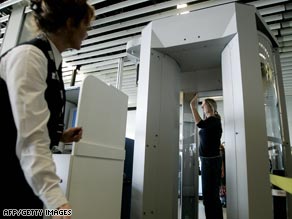
The Transportation Security Administration announced heightened security measures for inbound  travelers to the United States from countries designated as “state sponsors of terrorism or other countries of interest”. Currently listed as state sponsors of terrorism are Iran, Cuba, Sudan and Syria while the “other countries of interest include Afghanistan, Algeria, Iraq, Lebanon, Libya, Nigeria, Pakistan Saudi Arabia, Somali and Yemen.

Fox News reports that effective Jan 1 2010, Pakistan International Airlines (PIA) is enhancing security checks for travelers to the United States, even though no direct flights even exist to America at this time. P.I.A. spokesperson Sultan Hassan explainspassengers are subjected to special screening, including full body searches, in a designated area of the departure lounge. He said the airline had run advertisements in newspapers to warn prospective passengers of the increased safety measures. maintaining strict security standards at all airports for all flights”

I am of the opinion that such measures are useful if they help prevent terrorist attacks and offer peace of mind to travelers. In tandem with enhanced security directives however, should come enhanced diplomacy and perhaps specificity.

Diplomacy is especially important because racial profiling is already a widespread international concern for inbound travelers to the United States. CAIR (the Council on American Islamic Relations) spokesperson Ibrahim Cooper says the new measurescome pretty close to across-the-board profiling of Muslim travelers,” and added that they would unfairly single out not just foreigners but Muslim Americans traveling to see their families in the selected countries. “It only serves to alienate those whose hearts and minds we’re trying to win.” It’s a fair point and underscores the need for smart power as we increase international security.

To prevent Anti-Americanism from the majority of travelers who are not terrorists, our embassies or appropriate State Department offices should amplify soft tools used in winning hearts and minds in the dozen countries whose passengers are now designated for special scrutiny.

Another way to ensure enhanced security measures don’t have unintended consequences might be a U.S. led international protocols. If all incoming travelers to the United States from a country like Pakistan are going to be searched at new, exceptional extents both in Pakistan and upon arrival to the United States, then it could be useful to implement some best practices protocols that all international Transportation authorities adhere to. For instance, to avoid instances where authorities might misuse liberties to scrutinize and make travelers feel unnecessarily uncomfortable is having a visible camera present at all times.

In the same way some California police departments are now installing cameras in officer helmets to help prevent abuse of authority and make others feel comfortable knowing there is oversight and evidence should recourse be required, T.S.A. authorities might have visible cameras present in areas where passengers from select countries like Pakistan are subject to enhanced scrutiny.

I think the new T.S.A. law could be an effective one. I don’t think most passengers would object to tightened security for the sake of safety so long as they feel they are being treated with care and there is little chance of mistreatment. So it’s important that as American’s, when we expand laws that affect the international community, we still uphold what we pledge allegiance to each day: “liberty and justice for all”.

ORIGINALLY PUBLISHED @

h1

Cricketing Teams of the Decade

January 4, 2010

Cricinfo published their Cricketing “Teams of the Decade” and were pretty much spot on, with a couple selections that might have been slightly off. I’ve listed the Cricinfo picks along with my assessments on each as either: “RIGHT ON“, “PERHAPS“, or “ABSOLUTELY INCORRECT“, followed by my B Team selection’s for Test and ODI’s.

Enjoy     🙂

CRICINFO’S TEST TEAM OF THE DECADE & ZAINAB’S ASSESMENT

Matthew Hayden: PERHAPS: Although he was deadly in his day, his career was short lived and sometimes inconsistent. To be considered for the decade, he would have needed a longer contribution to the game. As opener, he was good, but wish we could have seen more of him.

Virender Sehwag: ABSOLUTELY INCORRECT: In Tests, Sehwag is effective when he get’s by on drop catches! The 2 triples centuries Cricinfo mentions in their reasoning for choosing him as opener didn’t mention that those scores were accompanied by at least a couple drop catches when he was under a hundred. Sehwag simply doesn’t have Test cricket mentality: although he scores a lot of runs when on a roll, his lacking consistency, patience and batting skill don’t compare to Test greats like Dravid, who can smash just as well, but know better than to risk it. Even if he puts a 100 in 1 innings, it’s usually not wroth gambling your wicket or a duck. He’s not cut out for Test, and certainly not as opener.

ZAINAB’S SUGGESTED REPLACEMENT: Chris Gayle: With a test average of roughly 42, he’s can smash the ball just as well as Sehwag, and usually with better consistency.

Ricky Ponting: RIGHT ON: Although my feelings for him went sour after the graphite controversy, fact is he’s put up exceptional performances.

Sachin Tendulkar: RIGHT ON: A man who can single handedly alter the course of a game as opener or fourth man down. The little master needs no justification.

Rahul Dravid: RIGHT ON: The best batsman in this lineup, hands down. Dravid’s the most classy, consistent, and solid batsman any team could hope for in a Test match. A man who will never let you down, it’s outstanding cricketers like him who keep decent players like Virender Sehwag from making the cut in this lineup.

Jaques Kallis: RIGHT ON: A Solid all rounder and the man who always has two of the three critical aspects of any game at 100%. Kallis’ fielding, bowling or batting will meet any opposition with formidable force.

Adam Gilchrist: RIGHT ON: I simply can’t say it better that Cricinfo here: ” by the time he departed the game he had raised the bar so high for wicketkeepers that they were forced to prove themselves as batsmen first” 🙂

Sean Pollock: PERHAPS: Not bad, he’s a great cricketer, solid, effective and his line and length are impeccable, but he’s not the man you go to when you need a wicket, there are better options.

ZAINAB’S SUGGESTED REPLACEMENT: Mohammad Asif: Although young and might not have the largest sample size with which to asses him, Asif has already proven himself. He’s never let the team or aduiences down in a match having already bowled a 10 wicket match and 5, five wicket matches in 15 games. Not to mention he massacring the Aussies in a Test going on right now. A gritty strike bowler from the start, he’s perfect for the past decade, and next one.

Shane Warne: RIGHT ON: Despite controversy, “ball of the century“. Enough said.

Muttiah Muralidharan: RIGHT ON: He can bowl the deadly doosra like no other. Although Saqlain Mushtaq revoluntionized the game by inventing it, Muralidaran mastered it and used it to catapult Sri Lanka to new heights int he past decade. Always fun to watch him.

Glen McGrath: RIGHT ON: He is to bowling what Dravid is to Batting: the ultimate in skill, consistency and perfect text book cricket. Can’t go wrong with MCGrath in your attack.

ZAINAB’S PICKS FOR TEST TEAM B OF THE DECADE :

          • Chris Gayle – West Indies
          • Herschelle Gibbs – South Africa
          • Kumar Sangakkara – Sri Lanka
          • Mohammad Yusuf – Pakistan
          • Inzamam ul Haq – Pakistan
          • Brian Lara – West Indies
          • Mahela Jayawardena – Sri Lanka
          • Heath Streak – Zimbabwe
          • Daniel Vettori – New Zealand
          • Mohammad Asif – Pakistan
          • Danish Kaneria – Pakistan

CRICINFO’S ODI TEAM OF THE DECADE AND ZAINAB’S ASSESMENT

Sachin Tendulkar: RIGHT ON. Greatest batsman in the decade, and still today. 17, 0000 + runs and counting. Need I go on?

Sanath Jayasuriya: RIGHT ON: Only one player has hit more sixes than him, and that’s Shahid Afridi, whose average is of course expectedly lower than Jasuriya’s. So having the power, presence and capacity to smash of Afridi along with sharp skill and consistency is a dream come true for an ODI opener. Good call on Jayasuirya.

Ricky Ponting: PERHAPS: He’s good, but there are more deadly batsman who could play one down this decade:

ZAINAB’S SUGGESTED REPLACEMENT: Kumar Sangakkara. Cricket’s Renaissance Man, Sangakkara’s one of the hottest bats this decade and still going. While ponting looks about done, Sangakkara has only just begun. He’s tearing bowlers apart consistently and with class. Always one of my favorite players to watch 🙂

Jaques Kallis: RIGHT ON: As an all rounder, he has averages that are comparabale to soem ofthe best batsman, or bowlers, not to mention his consistent fielding.

Andrew Symonds: ABSOLUTELY INCORRECT: He was a non critical part of the Australia team at their peak and saw fair success during that reign and there are far more skilled batsman than Symonds to choose from:

ZAINAB’S SUGGESTED REPLACEMENT: Brian Lara: No one had the presence he did, let alone struck the ball like he did. There’s a reason why every cricket video game in the past decade was named after him 🙂 Brian Lara is arguably batting king of the decade (“arguable” only because of Sachin)

Andrew Flintoff: PERHAPS: I love Flintoff. He never screws up, is always consistent and great team leader. He could work either way, but I might prefer someone with more raw talent:

ZAINAB’S SUGGESTED REPLACEMENT: Abdul Razzaq: The worlds best game changer, hands down. When the team’s five wickets down and needs 14 runs an over, half way through an ODI, Abdul Razzaq is one of the only men i’d trust at bat. I’ve seen him do that against world class teams like New Zealand and did I mention he can bowl? My favorite all rounder for the decade.

Adam Gilchrist: RIGHT ON: It’s rare to find keepers who can not only bat, but open, play middle order and keep your runs flowing at any position. Gilchrist was always an exceptional keeper and batsman.

Sean Pollock: RIGHT ON: He’s cosistent and will never let a team down. When you’re running behind, he’ll step up and bring the team back to a possible win, whether with a bat, or ball. A solid choice.

Brett Lee: ABSOLUTELY INCORRECT: Did they pick him just for pace? This is as bad as the Sehwag for Test opener pick! Lee’s not a deadly strike bowler and if it was pace they were praising, Shoaib Akhtar is faster. Brett Lee’s career average economy of 5 runs an over coupled with the fact that he’s never taken more than 5 wickets in an ODI match doesn’t cut him out for the team of the decade. Bad call Cricinfo.

ZAINAB”S SUGGESTED REPLACEMENT: Harbhajan Singh: He picks up crucial wickets: when your team is in the hole and the opposition is creating havoc with a run fest. He strikes with spin and takes out the few key wickets needed to bring you back into the game. A far better choice than Brett Lee!

Glen McGrath: RIGHT ON: One of the best bowlers in history. We’re still waiting to see a replacement from Australia.

Muttiah Muralidharan: RIGHT ON: He’s just too cool with the doosra that confounded probably every batsman in the world at some point. He defines Sri Lankan cricket for the past decade.

ZAINAB’S ODI B TEAM FOR THE DECADE:

            • Chris Gayle: West Indies:
            • A.B. De Villiers – South Africa
            • Kumar Sangakkara – Sri Lanka
            • Brian Lara – West Indies
            • Inzamam ul Haq –  Pakistan
            • Abdul Razzaq – Pakistan
            • Shoaib Malik – Pakistan
            • Daneil Vettori – New Zealand
            • Harbhajan Singh – India
            • Makhaya Ntini – South Africa
            • Shoaib Akhtar – Pakistan

So, that’s my take on Cricketing greats for the decade. Cricinfo came up with a nice list, and i think my tweaks made the list slightly better. Hope you enjoyed my B Team roster, and cheers to another ten years of exciting cricket !

h1

The End of Conservative Cricket

December 31, 2009

Test matches will disappear from cricket by the year 2020, and ironically, because of 20Twenty. After Pakistan’s frustrating loss against Australia today, batsman Mohammad Yousuf warns that Twenty20 cricket will ruin Pakistan’s game. He says:

“Because of Twenty20 cricket no player knows how to stay at the wicket anymore. Until players do not play with discipline and play ball to ball and leave balls they are supposed to we will struggle in ODIs, let alone Tests. If you are going to slog all the time what is the point? It is necessary that Pakistanis, the media, the board, the fans realise that we play as little Twenty20 as possible.”

Mohammad Yousuf is asking everyone to limit Twenty20 cricket at a time when it’s popularity is on the rise, Pakistan is the reigning World Champion and undoubtedly has the best players the game has seen (Afridi, Razzaq, Ajmal, Gul). He’s basically making a case for conservative cricket: or getting back to the basics of Test.

In Test’s even if you’re pitched a full toss at above average speed and there’s no one at long on or square leg, the skilled batsman refrains from smashing it out of the park.

Reason being the risk of getting out supersedes the worth of a six. However, that kind of discipline is the exact antithesis of 20Twenty cricket where you are required to play each ball as if it’s a potential six. But having the sense to resist potential sixers is but one part of the batting discipline needed in traditional cricket. It’s an overall psychological discipline where batsman must with extreme patience and consistency just hold one’s wicket. To do that, over after over for 5 days, knowing that the match could wind up in just a draw requires an extreme endurance that few batsman posses. In fact some of the best batsmen in the game who have mastered this don’t even play ODI’s anymore, like Rahul Dravid. Case in point, most teams don’t have players who specialize in Test, Dravid is actually a rare case. Mohammad Yousuf could then be on the right track: are players losing an edge in Test, and perhaps even skill by playing 20Twenty cricket?

20Twenty is the American equivalent of Home Run Derby: the game simply requires batsman to smash anything and everything out of the park. 8th man down must carry at least a 100% strike rate to give a team the depth required to be competitive in the game.

It’s less about psychological discipline, discerning batting or even batting skills for that matter. Because if the aim is to slog, you can take a whack at just about anything pitched your way. It requires a lot of power and little else. Anyone with training and enough arm strength to smack the ball around can be fairly successful. There aren’t rewards for consistency, patience or discipline. In fact, those qualities are counter productive in 20Twenty. In Tests you score runs by first discerning which balls are safe, whether that be after 5 or 50 overs, and then you nudge, or direct the ball into anticipated gaps.

It’s a whole different ball game, as they say in the States. So is Mohammad Yousuf correct in calling for a limit to 20Twenty? The conventional part of me who tends to resist change says yes. But the more spontaneous, forward thinking side of me says, hey, if that’s the natural progression of the game and Tests are inevitably obsolete, bring on a few more Shahid Afridi’s !

😉