Pakistan is in desperate need of a plumber to fix the leak on the front page of the New York Times this morning. The article has one of strongest suggestions yet that the Inter Services Intelligence Agency aids the enemy in Afghanistan and is rooted in reports made available by the whistler blower organization, Wikileaks. The reports entitled the “Afghan War Diaries” purport that the Pakistani ISI provides haven, if not supports Al Qaeda comes from “unverified” sources most likely “aligned with Afghan” intelligence and “paid informants”. The New York Times piece provides examples of how a suggestion of Pakistani aiding insurgents could be accurate, and leaves only a brief disclaimer that nothing is yet certain. Rather, the story more strongly asserts:
Senior lawmakers say they have no doubt that Pakistan is aiding insurgent groups. “The burden of proof is on the government of Pakistan and the ISI to show they don’t have ongoing contacts,” said Senator Jack Reed
“No doubt” is an alarming allegation against a critical ally in this war and a bit sensational in the absence of a closer reading of Pakistan’s realities and motivations.
What seems more likely than “no doubt”, is something I’ve stated previously. Both Ideology and what Pakistan’s foreign ministry spokesperson said are “ground realities” run directly counter to the suggestion that the ISI rampantly supports insurgent groups against American interests.
Quite simply, insurgent groups including Al Qaeda are deeply comprised of remnants from the Soviet Afghan war, meaning former fighters we engaged the ISI to train, maintained links to “freedom fighters” who ultimately became extremist groups we combatted post 9/11. That engagement created a decade long window in which there was little instruction or immediate opportunity and to some extent, interest for Pakistan to eradicate insurgents in its neighboring country. Couple this with the fact that Pakistan shares a nebulous border with Afghanistan as it became haven to one of the worlds largest refugee problems with Afghans fleeing Soviet atrocities, and you’ve got a battle hardened, impoverished, and an armed influx of an outside population who call major cities like Karachi, home.
So when we hear about the “Af-Pak Quagmire”, one should really be thinking in terms of the pickle Pakistan got into when millions of refugees made Pakistan’s underdeveloped, politically volatile and vastly feudal state home as the Cold War ended.
This climate allows us to put the Wikileaks reports into perspective. Firstly, reports linking ISI aid to insurgents could likely be referring to former Pakistan intelligence officials who maintained ties to insurgents as Afghans became part of the fabric of Pakistani society. Secondly, although these groups made Pakistan their home, the arms and influx of drugs via Afghanistan, never ceased. An infamous Klashinkov culture pervades Karachi amongst other places, including the now well-known FATA areas. So with such imbedded presence in Pakistan, obliterating Afghani insurgents becomes a highly sensitive task.
I rarely point to ideology as a driver of action when it comes to government behavior, but as Afghan’s made their home in Pakistan, they came sharing religion and some aspects of culture which intensifies the complexity of hunting down terrorists because it leaves Pakistan open to the possibility of a civilian uprising. Certainly Afghans would have preferred we “negotiate” rather than wage full scale war post 9/11 to settle differences. And I will not argue whether or not that would have been wise, however, the point is that the
ISI may be dealing with insurgents in vastly different ways, wheeling and dealing as opposed to obliterating them with the force we might use because of a profound risk involved in alienating an enormous, and internal Afghan presence within Pakistan’s border.
Since 9/11 Pakistan has descended into civlian chaos at certain intervals with extremists growing polarized, gravitating toward insurgents as we intensified our offensive in Afghanistan and Pakistan. So our expecations must take these realities into account and the Wikileaks reports understood within that context.
Ultimately, a lesson we might learn from the Wikileaks story is that negotiating with extremist groups for Pakistan is inevitable. General McChrystal’s Counterinsurgency strategy was moving in that direction as it called for U.S. engagement for the long haul requiring additional years in time, toil, troops, and treasure; which is an increasingly unpopular idea. So will the Wikileaks reports be the “game changer” or this wars equivalent to the “Pentagon Papers” for it’s suggestions that our engagement of Pakistan in providing billions in aid has been not only counter productive but comes in addition to our own mishandlings of the war thus far?
Perhaps. But either way, Pakistan is in desperate need of one skilled plumber to fix this leak.
There are people all over television news tonight crying, with actual tears; grown men characterized by grotesque beer bellies hanging out of disheveled t-shirts, faces contorted, whining like hapless children, yelling into cameras wildly flailing their arms in thunderous accusations that Mr. LeBron James committed some sort of injustice in announcing his choice to join a new N.B.A. team.
It’s nauseating.
Such disproportionate coverage of protests trivialize the name of justice on a day like today, when a real injustice has occurred. I don’t blame the icky, irritated men here, but am shocked at an absurdly mute televised media this evening. There’s an excruciatingly distasteful sensation of irritation and astonishment that many experienced after hearing the “Involuntary Manslaughter” verdict in the killing of Oscar Grant, a young , unarmed African American shot in the back by a BART officer. Yet no mainstream t.v. pundit, not even the loud, proud, ferocious prosecution hawk Nancy Grace discussed this issue.
And i’ll leave the debate on whether or not the Mehserle trial was fairly carried out, from jury selection to evidence presented and the larger issue of racial bias seeping in our justice system to legal professionals who have issued the following statement:
“The verdict is a painful example of what we already know, the criminal justice system treats white, police officers with deference and poor people of color with hostility,” said Carlos Villarreal, National Lawyers Guild – San Francisco Chapter – Executive Director. “It is shameful that irrelevant aspects of Grant’s past were put before the jury and troubling that the jury included no African Americans.”
So legal technicalities that could have caused injustice aside, there’s another injustice taking place by way of the media. Nauseating is the fact that I rarely watch television but caught glimpses of T.V. news throughout the day at work, the gym, the mall and when I got home, finally wanted to hear some rational, educated discussion on this case and got nothing from the television.
What did we get? We got simian looking men, hot and bothered about basketball rather than coverage on the loss of life and the grave injustice of a man getting away with what the victims mother cries is “murder”.
And why this is nauseating as opposed to just annoying is because the coverage major T.V. outlets, including local Bay Area channels did offer said absolutely nothing about the fact that an injustice might have taken place. There was zero discussion, let alone debate on the verdict from any news station.
Instead, we were fed repeated talk of riots; most specifically, footage of a Foot Locker being raided by protestors and empty Nike shoe boxes on the Oakland streets hours after the verdict was announced. Again, I’ll not delve into how the images and commentary of the protests could have easily been construed as racist, but will leave that to someone who has studied sociology of media and has weaved this injustice into the larger issue of force in America; Michael Moore.
Yes many say he’s gone too far left after Sicko and I’ll be the first to say Capitalism: a Love Story was off the deep end. However, Moore’s best work to date is Bowling for Columbine. It’s one of the most poignant documentaries of our time, and we as American’s would be wise to revisit that work today.
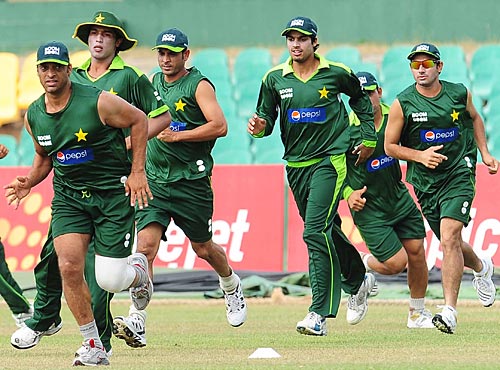
Pakistan Warms up for the Asia Cup India Match - June 2010
Well, it’s that time again. An India vs. Pakistan ODI match will be underway in a few moments. And there’s nothing like India-Pakistan cricket. For better or worse, it’s THE epic rivalry; it get’s catty, intense, fans are insanely polarized. It’s basically crickets equivalent to the NHL’s Crosby / Ovechkin rivalry. For my non-sports readers, it’s akin to team Aniston vs team Angelina. (for the record: I’m team Ovechkin and Angelina respectively)
But whether you’re a Pakistan or India fan, both teams are somewhat evenly matched at this time with Pakistan having more depth and raw talent, and India with firm composure, more consistent experience and better record in recent history. So it’s likely going to be a nail biter, winding down to the final over to determine a winner.
So, what’s it going to take for the men in green? Here’s what’s swimming around my head before the game:
Afridi: Stay the same. Awesome performance in the last game as skipper. In typical Afridi character he lived up to the “boom boom” title and strong character we expect from him. With 110 off of 75 it was his natural game catapulted to great heights with leadership and consistency. Good news is he has a tendency to excel against India. Let’s hope that form is maintained.
Salman Butt: Hold your wicket yo. He usually does, but it’s not always certain, yet crucial that he does so today. The Indian bowling attack looks mediocre, but don’t underestimate their pace bowling. Zaheer Khan is in the attack and Nehra could do harm too.
Abdur Razzaq: My favorite All rounder must be the Danger Man today. What does that mean? It means if we need it, you make 14 runs an over. No questions asked. Oh, and when we need those key maiden overs in the last hour of their lineup, keep up the bowling defense.
Kamran Akmal: Please no butterfingers. This is a world class game and an epic rivalry, no room for drop catches. Also, be quicker on the stumpings. Be a solid bat; a clutch hitter picking up the run rate consistently as a lower order batsman and even more so if you’re pushed up the order.
Mohammad Aamer: Come in strong and shut down Sehwag. Perhaps cut him some slack early on, get him into a slogging mindset then throw on pressure with an ultra slow ball. Sehwag’s bat is so fast that this is bound to be confusing to his game.
Shahzaib Hasan: Damn rookie stop playing like it’s a test match.
Shoaib Akhtar: Watch the extras, nuff said. If The Rawalpindi express does this, there’s no stopping him.
Shoaib Malik: Be at the top of your game, back form a honeymoon we need to see classic Malik in your best form. Picking off Harbhajan smashing off a couple sixes, fielding like a beast, and with accurate off spin.
Umar Akmal: Run with raw talent. You’ve got the youth, energy and can hold your wicket with a solid strike rate. Pick up the occasional boundary and stay consistent.
Prediction :::: the game changer will be either Shoaib Malik or Shoab Akhtar. They’re comback kids and can steal matches for Pakistan. They’ve done it in classic form in the past, and i want to see them do it again tonight.
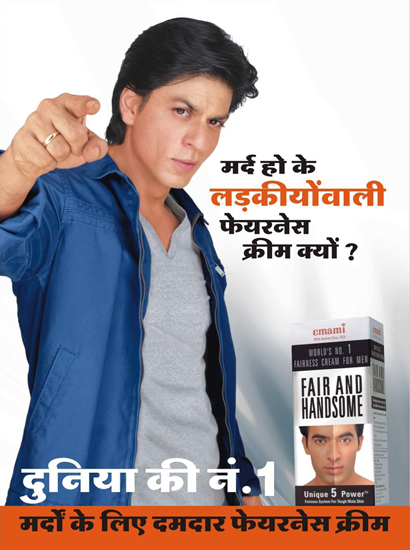
I’ve very intentionally avoided this subject despite its relevancy to South Asia, but it’s close to summertime and now that Shah Rukh Khan is involved it’s borderline political, so it’s within my jurisdiction.
“Fair and Lovely” face cream is so pervasive in “desi” culture that it’s a household name amongst both Resident and non Resident Pakistani’s. International diplomats, the United Nations, countless non profits have all failed to get India and Pakistan to agree on nukes, trade, cricket, religion (the list goes on) but when it comes to the primal issues of attraction, both have consistently been on the same page. Visit the Fair and Lovely website and you’re confronted with images of a woman’s face growing progressively lighter and the slogan: “Gorepan se kahin ziyada SAAF GORAPAN” Translation: “Even more Whiteness than Whiteness”. I kid you not, that is an accurate translation literally and contextually speaking, and yes despite this, we are still in the 21’st Century.
So this week Shahrukh Khan’s face is seen promoting the creams male counterpart, “Fair and Handsome”. The Telegraph reports“despite doubts of the effectiveness, the sight of Khan’s chiseled features endorsing the cream has angered campaigners, who say it’s “racist” to promote lighter skin as superior”
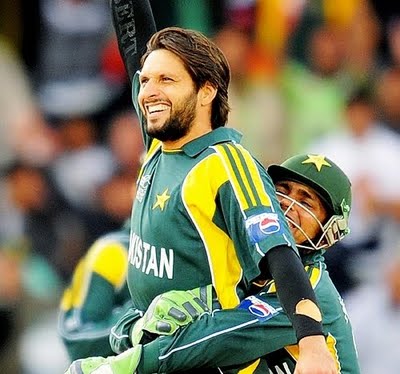
Shahid Afridi's Pretty Chiseled
Alright, first off Shah Rukh Khan doesn’t from any angle I can see have “chiseled” features. Shahid Afridi is more chiseled than him. But, that’s besides the point and doesn’t invalidate the fact that billions of men and women around the world idolize Khan and find him very attractive, hence the lakhs of rupees I’m sure he’s receiving for this endorsement. But with such immense fame, comes responsibility and his endorsement of Fair & Handsome cream is justifiably being labeled “racist” by angry campaigners.
I grew up in California where girls lay out in the sunshine all summer to quite frankly, try and get skin like mine. When sunshine isn’t an option, they confine themselves into what are nothing shortof human frying pans, lids closed in tanning beds as they do their best to maintain my shade of golden brown all year long. So it’s no surprise that I love my mocha skin. Always have. I wouldn’t change it for anything. Tan skin is part and parcel of being a Californian. Just listen to Katy Perry or the Beach Boys. In this part of the world, tan has always been undeniably sexy.
Zainab & Maria - Perfect Beach tans
Which is why the angered campaigners in India are correct in denouncing the Shah Rukh Khan endorsement; it perpetuates an unhealthy, yes racist fascination with fair skin. The reason it’s racist while the the girls in California wallowing in tanning beds isn’t is because “Fair & Lovely” occurs in a post-colonial context. You’d think that as oppressed subjects having suffered and struggled to fight of massive injustices of colonialism until Partition wherein India severed itself into two as a result (the birth of Pakistan) looking like the oppressor would be unpopular. But instead fair skin is the ultimate desire in desi land, and it’s mind boggling because European skin tones are not naturally attainable in South Asia.
Sure evolutionary biology will tell you that humans are innately attracted to beautiful people.According to biologists, we’re attracted to relatively youthful characteristics because they’re indicative of heightened fertility(i.e. lustrous hair, hourglass figures, large eyes and clear skin)but a preference for skin color really is only skin deep. South Asians naturally have darker skin and there’s no reason it should be touted as inferior.
Out of chance I happened to have grown up in a particular part of the West that values darker skin, but had I lived in Pakistan I might not have been so lucky. It’s a sad realization, because skin color is not in our control, which is why it’s problematic when corporations like Fair and Lovely seize control in attempt to create preferences where none should exist. They’re preying on insecurities to peddle their products which is done by all advertisers, but this one goes too far because it’s racist.
Shame on Shah Rukh Khan for endorsing Fair & Handsome cream; it’s not a “fair” or “handsome” move on his part. It’s Unfair and Ugly.
Friedric Nietzsche & Zainab Jeewanjee : Can't agree on Religion
There’s an amazing article this week at TruthDig.com by Mr. Chris Hedges entitled “After Religion Fizzles, We’re Stuck with Nietzsche”. Hedges’ gist is that the core teachings of Abrahamic faiths (Islam, Christianity and Judaism)“are now lost in the muck of church dogma, hollow creeds and the banal bureaucracy of institutional religion”
Not a new argument; criticism of organized religion for being dogmatic is as ubiquitous as my generations disdain for Michael Jackson (God Rest his Soul).
And Hedges’ does a fairly sound job of supporting a censure of religious institutions by the notion of their failure to “unequivocally denounce unfettered capitalism, globalization and pre-emptive war” concluding that “empowerment of the individual conscience which was the starting point of great ethical systems of civilization” from Confucius to Kant have been traded for adherence to poorly outlined ideologies touted by dogmatic religious institutions. He prescribes we revert to an introspective, individual questioning of authority to guide our moral sense. And I like it; I want to expand on that notion, especially since Nietzsche, although super duper fascinating always irked me with his too sweeping condemnation of religion.
To pick up where Hedges article leaves off; what does happen when we’re “stuck” with the emptiness of Nietzsche’s notion that there is no morality? Like Hedges Nietzsche criticizes religion as inherently dogmatic, but to a far greater extent. Nietzsche says organized religion is riddled with the voids created by an incorrect contention that fixed perspectives exist. I read his work Beyond Good and Evil last year wherein with Christianity in particular,
Nietzsche finds religion prescribes actions, if not an entire way of life based on faulty contentions; faulty in that they are rooted on a morality that is inherently relative; he might even say contrived.
Specifically contrived is morality rooted in asceticism that accompanies organized religious expectations such as those calling for chastity (think Catholic priests) or abstinence from both food and sexual pleasure in the form of fasting (think the Muslim Holy month of Ramadaan). Such boundaries according to Nietzsche give rise to a society of undiscerning masses who wallow, yet make every effort in their struggle to achieve nothing more than a kind of denial, suffering and ultimately, mediocrity.
On top of that, prescriptions of asceticism being rooted in religious truths assumed to be absolute, constant and certain come into question and eventual conflict in light of more modern rationality which is less rooted in faith and instead in science, as Hedges would agree. Thus atheism becomes more readily accepted as the concept of God in and of itself is less able to be reconciled with advances in science that defy so called truths upon which religious prescriptions for a faithful life are based.
So to accept that time and space are relative, denying that absolute truth can ever be experienced and that religious asceticism in specific is nothing more than a pacifying consolation for an individual, Nietzsche’s philosophy condemns Abrahamic faith for their prescription’s of ultimately, a lifetime of mediocrity.
Thus his subsequent explanation for increasing atheism is understandable, however makes religion out to be a dismal experience in utter ignorance. And the bleak realization of such an argument can immediately prompt a kind of defensiveness wherein such radical challenges are immediately contested.
Although I consider myself moderately religious with a most certain faith in a monotheistic God, without intentionally being defensive in response to Nietzsche’s criticism of religion, I find his assertions contradictory to a notion of faith. Because if his premise is that there are no absolutes, and the problem with religion is that it cannot easily be reconciled with science, which is often considered to be in and of itself a kind of certainty, then it is perhaps difficult to reconcile the very notion that absolute truths do not exist and perspectives are relative to time and space.
By arguing that something mostly accepted as absolute, certain and “true” as science is a reasonable explanation against the spread of theism, Nietzsche himself lends credibility to the notion that certain truths might actually exist.
To clarify: if institutionalized religion is embedded in dogmatism founded on untruths as proved by its inability to reconcile with the realities of science, then would science then not be, in its strong opposition to religion, a body of at least some truths? Especially given that science is today generally regarded as irrefutable given its own roots in empirical procedures and products.
Furthermore, this raises the inevitable question that, in the absence of religion or philosophy then, what is morality, or the “right thing to do”? Nietzsche may argue that there is no certain definition of what is moral since it would be relative to time and space. However, again, accepting that a certain epistemic confinement is a plausible result of the dogmatism of religion, then is faith not then a credible means to achieving morality since it is rooted not in any tangible, scientific or absolute truth?
Faith is then relative as it requires no truth. Given the absence of absolute truths, faith then becomes quite conducive to my understanding of Nietzsche in that it seamlessly accepts the possibilityofnot knowing for certain.
Of course, this can itself become dogmatic and therefore problematic when individuals reach an extreme wherein reason and scientific and other rationale are abandoned for fanatical faith and harmful ends. But bracketing the extreme and assuming moderation as the norm for most individuals of “faith”, religious spirituality, especially a sincere belief in an intangible God who Nietzsche himself describes as “incapable of making himself clearly understood”, then can be a strong, and perhaps ironically, “spiritual” acceptance in the notion of a relative existence.
***sigh*** So guess I’m gonna have to just beg to differ with the late, great Nietzsche on this one and send my props to Mr. Hedges for a very insightful piece 😉
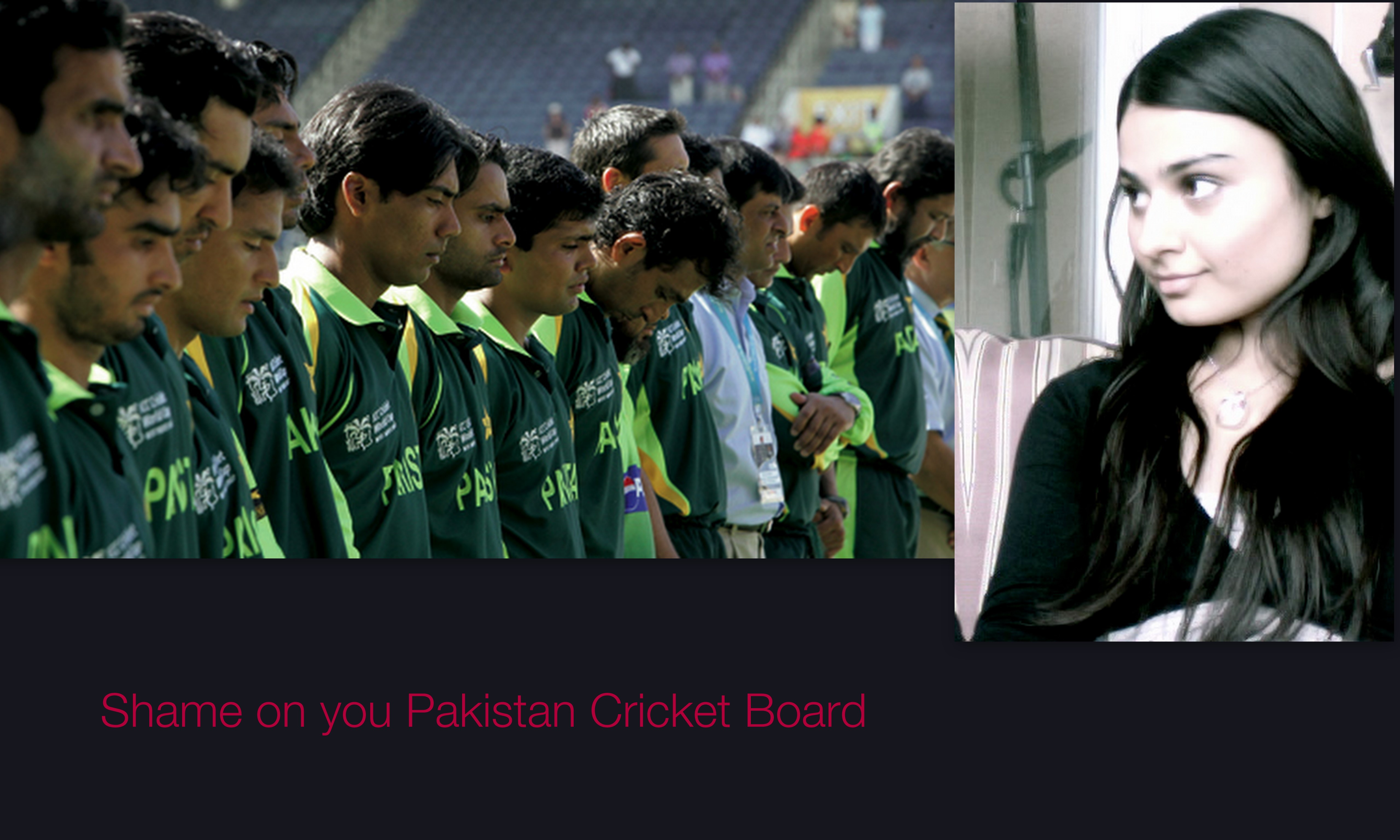
And I’m not going to lie. After your loss to the Aussies last month, I was tempted to leave you, perhaps for the Kiwi’s, maybe even see Sri Lanka for awhile. But I didn’t stray; I was a good girlfriend. Then came today’s PCB decision, reminding me that you are subject to an absurdly inefficient authority so seeped in politics that I can’t deal with your baggage anymore. The drama has been progressively agonizing.
It’s like dating a teenager. Which is why it was so easy to love you when I was one. But I’m not a teenager anymore. I’m in my 20’s now and am seriously thinking about settling down. I need a cricket team who can reciprocate my love, show consistency and keep me amused. After a long day of work, yoga and blogging, I stay up till midnight and beyond (California time) to watch your ODI’s, even Tests and you leave me dissatisfied, night after night. It’s been 14 years, of ups and downs, which have been a sad series of “downs” in the past few years. When Shahid Afridi first joined the team and scored the Worlds Fastest Century in the nineties, I was captivated; you had me at hello. So I put up with the 1999 World Cup Debacle, the next world Cup Debacle, and have no idea what you’re going to pull in this next one.
So why do I still love you? I suppose because deep down I still believe in you. It’s irrational, impractical and against my immediate interests to stay, but I won’t leave. And after all you’ve put me through: if I still don’t walk away…..that’s gotta be love.
Even though I miss the maximize button and know MS Office is easier to use on a PC, I can’t imagine switching away from Mac. I converted last summer amidst pressure from my brothers, both Mac users who pointed and laughed each time I would start up my Sony VAIO. The laughter would last anywhere from 2, to 4 minutes, chuckling at the slow, tired fan of my laptop, chugging away as if gasping for air to load 50 programs that I never used but came pre-installed anyway. And that was just the startup process.
While blogging, and patiently waiting as my laptop stalled for a good 20 seconds when I opened up MS Word and 3 tabs in an Explorer window one evening, my brother placed his arm on my shoulder and said “Zainab, don’t let your computer control you. Ever since I switched to MAC, I have less stress”. I looked at him. I had a deadline for an article and had to be up at 6 am for work the next morning, and at that moment I wanted nothing more than to experience the carefree state of mind my brother had. That’s when I decided to take the plunge and give Mac a chance.
I realized soon that just like other great forms of art, less is often more, and therein lies the genius of Apple.
There’s no burden with my Mac. It’s given me technological autonomy to browse the web, word process, download, and organize the way I want. My PC had me living in a constant state of fear! Mac doesn’t impose hundreds of programs I have no use for or interest in. It doesn’t accuse me of committing an “illegal operation and will shut down” or crash in the middle of writing my senior thesis. It simply leaves things out. By offering less options, it gives more freedom.
There’s a book I looked at but never fully read by Barry Schwartz entitled the Paradox of Choice describing this phenomenon. The first part went over how Americans shop for jeans. Back in the day, and by back in the day I assume the author meant the 80’s and before, purchasing jeans was a simple, mostly enjoyable activity. Today, because we’re bombarded with so many options for jeans the desire to purchase one becomes tiresome, shopping becomes a task when burdened by extraneous, often redundant options. It seemed like a somewhat convincing argument, although I think it’s more applicable in the case of the Mac/PC debate.
So, on this rainy northern California winter day, I thought I’d take a moment to reflect in hindsight of a well made decision: once you go Mac, it’s hard to go back 😉
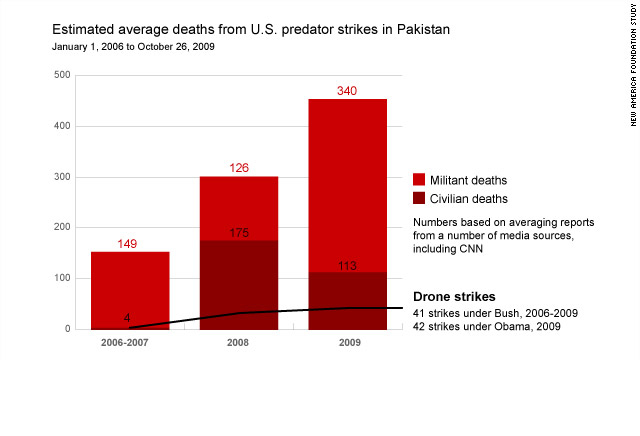
The most provocative piece I’ve seen on drones in Pakistan was published last week. Not the most detailed, well researched article (the New Yorker takes the cake so far) but certainly the most confrontational. Farhat Taj writes in the Daily Times that International media, including American and Pakistani reports critical of drone use are totally unfounded. Vehemently, Taj writes:
” The people of Waziristan are suffering a brutal kind of occupation under the Taliban and al Qaeda. It is in this context that they would welcome anyone, Americans, Israelis, Indians or even the devil, to rid them of the Taliban and al Qaeda”
It’s a grand, almost inconceivable statement given that Anti Americanism is on a rapid rise and India / Pakistan are widely considered notorious Arch Nemesis in international relations today. Taj says inhabitants of Waziristan actually “welcome” drone attacks and dismisses all accusations of civilian casualties as Taliban propaganda. Basing this on the idea that almost no media are allowed in the area, she concludes there is no verifiable evidence, and therefore no reason for concern of civilian casualties. But mere logic would indicate otherwise. Although surgical, drones are not so precise to as to obliterate one individual at a time. When they strike, the range of damage inflicted by any drone is bound to cause peripheral damage, destroying more than just a singular terrorist.
Taj also too vehemently dismisses the concern that drones infringe on Pakistan’s sovereignty. She says greater Pakistan is oblivious to the more pressing priority of wiping out Taliban. And while I agree the Taliban is inflicting profound, perpetual and grave damage on Waziristan, greater Pakistan’s perceptions are important and not to be overlooked so easily.
Waziristan is but a fraction of Pakistan. If the majority of Pakistani’s see drones as an infringement of sovereignty, future cooperation with strategically poised Pakistan can become difficult. The alliance is already waning and one of politics’ golden rules is: perceptions matter. Whether or not there are exact numbers of civilian casualties, Pakistani’s are strongly against unmanned aircraft dropping bombs in their territory. Regardless of circumstances, the perception of an alliance with America, and our War on Terror is endangered by the drones. Hence arguments that drones are counter productive.
At what cost are we using drones to wipe out a few key leaders from militant and extremist groups? Might we accomplish the same success in hunting down terrorists by employing Pakistani forces to take these guys out themeslves using close cooperation with our counter terrorism, intelligence and military operations?
Some already argue that Islamabad tacitly works with the United States on drones in the north, however, the official and public stance of the Pakistani government is of staunch disapproval of drones. It’s a fair argument because without Islamabad’s approval, the United States would be in violation of international law, and protocol in using drones in Waziristan minus Pakistsan’s approval. So I buy the argument that Islamabad works closely in using drones in the north. But the fact that the government goes to the extent of constantly assuring its public that they disapprove of drones on record, is testimony to how offensive the use of unmanned aircrafts are in Pakistan.
So while our heightened use of drones might be effective in obliterating key leaders from the Taliban ranks for success in the immediate term, the consequences of drones entail potentially riling further anti Americanism which could compromise our interests in the future.
Cooperation is key, and I’m not convinced increased use of drones will help us engage Pakistan in the future.
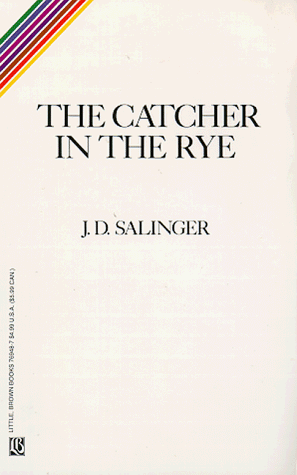
Catcher in the Rye - Salingers Invaluable Gift To the American Imagination
“I don’t even know what I was running for – I guess I just felt like it”
~J.D. Salinger, The Catcher in the Rye, Chapter 1
I was 16 when I first picked up Catcher in the Rye. It was winter, my junior year at single sex, college prep Catholic School, probably much like the one Holden Caulfield attends in the book. The book wasn’t assigned until Spring semester, but I couldn’t sleep one night so I picked it up and thought it would lull me to bed. Little did I realize that a couple hours later I had to force myself to put it down, only to find myself putting it in my backpack to read at school in the morning. The next day, I sat at the very back of all my classes, hid it just above my knees under the hem of my skirt and read as many lines as I could. I had it finished by the time I got home and was captivated. The beauty of Catcher in the Rye is that not only is it a page-turner to read, but after reading it the real fascination begins.
There’s a great article in Forbes lamenting Salinger’s death and it reminds us why the book was revolutionary in it’s time and still captures imaginations today:
In the 1950s, the life stage we call adolescence lasted a relatively short time. High schools prepared the majority of students not for college but for the responsibilities of adulthood. A “life adjustment” curriculum taught students to dress right, date right, engage in civic life and take on the trappings of maturity. Notably Catcher in the Rye called into question this entire program of social engineering, with Holden exploding the notion that adulthood was something to strive for. What was the rush?
Salinger revealed “social engineering” in all it’s humdrum and futility. The Forbes piece aptly describes Gen X’ers and beyond as in no way rushing to grow up. On the contrary, we’ve developed an existence that lingers in adolescence, finding and defining our own value sets. We give ourselves room to grow at our pace, not limiting ourselves to “engineered” time frames. Holden struggled in a world that was unkind to that mindset,*SPOILER ALERT* and winds up in a mental asylum as a result. Spending too many years in school jumping from major to major to discover one’s passion, or spending vast time and money to become a medical doctor only to graduate and make music is exactly what we’re taught not to do. It was the height of being counter-productive in the 50’s but today is increasingly seen as acceptable, and perhaps even romantic.
Holden Caulfield’s passion was caring for children, and 1950’s America might have shunned him for finding work that would normally fall in a feminine domain. Society would censure him for not “developing to his potential”, which translates to society seeing zero ROI in occupations with relatively little pay after parents have paid huge sums for kids to attend the best private schools. Society might balk at Holden the high school counselor, or pre-school teacher. But today the idea of social engineering, engineering itself is balked at to a greater extent. It’s easier to accept a path of self-definition now than ever before. Societal engineering and impositions still exist, and are often the easier route, but Holden Caulfield would have faired much better in this decade, perhaps in a place like San Francisco than he did in the past century, upstate New York.
Salinger’s work allowed our generation the freedom to question confines of “social engineering” and be less fearful of pursuing our passions. It’s an enormous contribution that no government or corporation could have given us. Such gifts only come from art.
Test matches will disappear from cricket by the year 2020, and ironically, because of 20Twenty. After Pakistan’s frustrating loss against Australia today, batsman Mohammad Yousuf warns that Twenty20 cricket will ruin Pakistan’s game. He says:
“Because of Twenty20 cricket no player knows how to stay at the wicket anymore. Until players do not play with discipline and play ball to ball and leave balls they are supposed to we will struggle in ODIs, let alone Tests. If you are going to slog all the time what is the point? It is necessary that Pakistanis, the media, the board, the fans realise that we play as little Twenty20 as possible.”
Mohammad Yousuf is asking everyone to limit Twenty20 cricket at a time when it’s popularity is on the rise, Pakistan is the reigning World Champion and undoubtedly has the best players the game has seen (Afridi, Razzaq, Ajmal, Gul). He’s basically making a case for conservative cricket: or getting back to the basics of Test.
In Test’s even if you’re pitched a full toss at above average speed and there’s no one at long on or square leg, the skilled batsman refrains from smashing it out of the park.
Reason being the risk of getting out supersedes the worth of a six. However, that kind of discipline is the exact antithesis of 20Twenty cricket where you are required to play each ball as if it’s a potential six. But having the sense to resist potential sixers is but one part of the batting discipline needed in traditional cricket. It’s an overall psychological discipline where batsman must with extreme patience and consistency just hold one’s wicket. To do that, over after over for 5 days, knowing that the match could wind up in just a draw requires an extreme endurance that few batsman posses. In fact some of the best batsmen in the game who have mastered this don’t even play ODI’s anymore, like Rahul Dravid. Case in point, most teams don’t have players who specialize in Test, Dravid is actually a rare case. Mohammad Yousuf could then be on the right track: are players losing an edge in Test, and perhaps even skill by playing 20Twenty cricket?
20Twenty is the American equivalent of Home Run Derby: the game simply requires batsman to smash anything and everything out of the park. 8th man down must carry at least a 100% strike rate to give a team the depth required to be competitive in the game.
It’s less about psychological discipline, discerning batting or even batting skills for that matter. Because if the aim is to slog, you can take a whack at just about anything pitched your way. It requires a lot of power and little else. Anyone with training and enough arm strength to smack the ball around can be fairly successful. There aren’t rewards for consistency, patience or discipline. In fact, those qualities are counter productive in 20Twenty. In Tests you score runs by first discerning which balls are safe, whether that be after 5 or 50 overs, and then you nudge, or direct the ball into anticipated gaps.
It’s a whole different ball game, as they say in the States. So is Mohammad Yousuf correct in calling for a limit to 20Twenty? The conventional part of me who tends to resist change says yes. But the more spontaneous, forward thinking side of me says, hey, if that’s the natural progression of the game and Tests are inevitably obsolete, bring on a few more Shahid Afridi’s !







 Zainab B. Jeewanjee
 Zainab Jeewanjee