I’m not going to pretend and say the Kansas City Chiefs were amazing yesterday and I love football. Truth is, I love a winter Sunday afternoon amidst a new year, with game day eats and this big American production that is the Super Bowl. Even the years I don’t watch the game, I make sure to catch the national anthem performance, the halftime show and the ads – it’s fun leaning into the cultural zeitgeist, this grand snapshot of mainstream consumer and pop culture for any year.
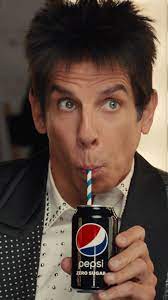
This is a whole vibe that stands the test of time. Alicia Silverstone reprising her lead role from CluelessDon’t let anyone tell you otherwise: Ben Stiller is a genius. Here he’s reprising his role as Zoolander.
But what I loved most were Millennial sentiments of parenthood on full display at the Super Bowl. We saw it in Rihanna’s halftime show which doubled as a pregnancy announcement, and in some of the biggest advertisements from Amazon & Kia.
In “Binky Dad” we get a glimpse into the glory that is Millennial fatherhood as a dad goes full superhero to urgently retrieve his infants favorite pacifier in a Kia he drives like a Batmobile. It’s funny, it’s cute and speaks volumes about how dads today consider parenthood a central part of their identity and are more involved with their kids than ever before. And market forces have responded in kind – we see less male gaze and men being lauded for being able to crack open beer cans at a beach in today’s Super Bowl ads, and more of men actually gazing at their babies and being celebrated for changing diapers and grocery shopping. Millennial dads and I’d say Gen X as well, are redefining parenthood, for the better.
Amazon’s “Saving Sawyer” gives us a view into the chaos and closeness of Millennial life and how pets are an integral part of our families. It’s an homage to the humanity and resilience of Millennials as we withstand the challenges of our time like parenting in dual working families and through a pandemic — and how nonetheless, our parenting extends to our furry family members who are non-negotiable. This ad takes you on a rollercoaster of emotion in under two minutes, and in the best way possible.
Millennial Parenthood in Amazon’s ad – How we’re raising our furry family members
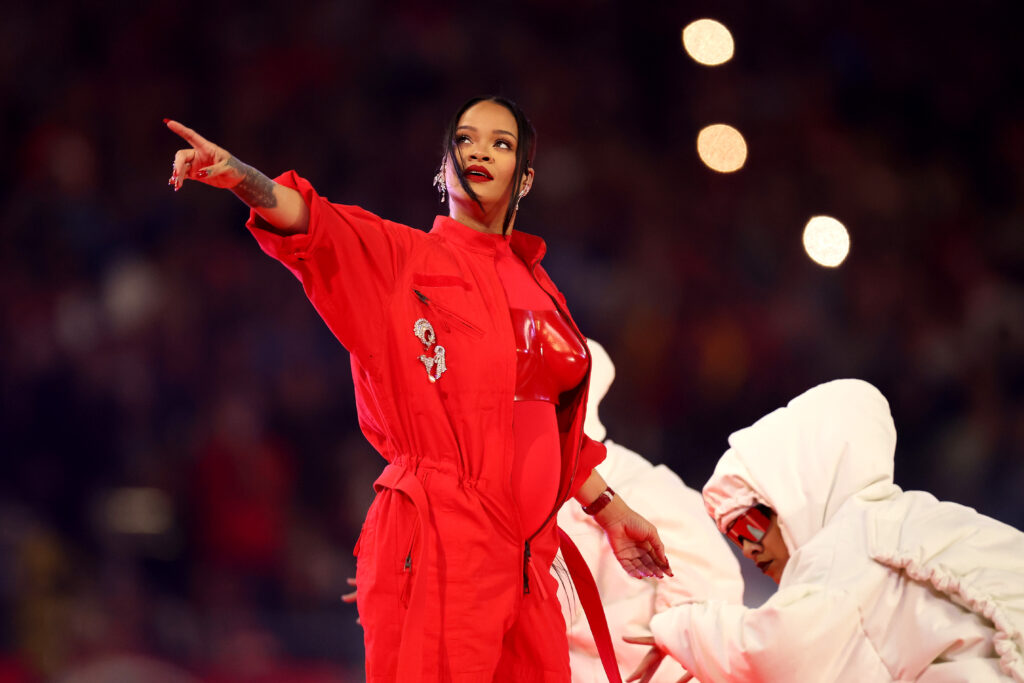
And redefining parenthood was personified at halftime, where Rihanna brought mom power to the show; performing with a confidence that for many of us, comes precisely with motherhood. Her minimalist (relative to past performers) choice of wardrobe and choreography amplified her achievements and her baby bump; she performed one hit after another from a catalogue spanning 15 years and it was a stunning visual. Seeing this superstar pregnant, looking gorgeous, and performing on this grand stage without missing a beat speaks volumes about how millennial moms juggle work and our personal lives. It’s testimony to the very high expectations we put on today’s moms and how still, we rise to them – redefining motherhood, womanhood and finding our confidence in the process. Rihanna actually said it best herself before the performance at a press conference promoting the halftime show:
“When you become a mom, there’s something that just happens where you feel like you could take on the world, you can do anything”.
Let’s enjoy this moment as millennials – we’re kind of a big deal right now. Just like how we made sure skinny jeans are here to stay, (no matter how a fickle fashion industry may try to wrestle them away from us), we’re influencing culture for the better.
GLENDALE, ARIZONA – FEBRUARY 12: Rihanna performs onstage during the Apple Music Super Bowl LVII Halftime Show at State Farm Stadium on February 12, 2023 in Glendale, Arizona. (Photo by Ezra Shaw/Getty Images)
I’m crestfallen, but not surprised by team Pakistan’s performance today against the West Indies in the World Cup. By showing up to International Crickets biggest tournament with apparently very little preparation, one shouldn’t have expected anything different than what’s happening.
Truth is, the teams they have lost to so far are not playing spectacular cricket, rather, Pakistan lacks the basic components of a world class team:
1. No Specialist Wicket Keeper. Pakistan is essentially playing without a wicket keeper and I wonder if that has ever happened in the history of the World Cup. Also, I’ve said it before and I’ll say it again, a specialist wicket keeper must also be a spectacular bat as a requisite in one day international cricket in the past 20 years: think Australia’s Adam Gilchrist, Sri Lanka’s Kumar Sangakkara and India’s M.S. Dhoni. Yet, selectors (PCB), commentators (Ramiz Raja) coaching (Waqar Yunus) refuse to address why specialist wicket keeper and in form batsman Sarfaraz Ahmed is not on the team now. And with every Akmal butterfingers drop, Sarfaraz’s absence is sorely missed. Yahoo Sports puts it well:
Surprisingly, regular wicketkeeper Sarfraz Ahmed, who had scored prolifically against Australia and New Zealand in last year’s test and ODI series in the UAE, is yet to get his first Cricket World Cup match.
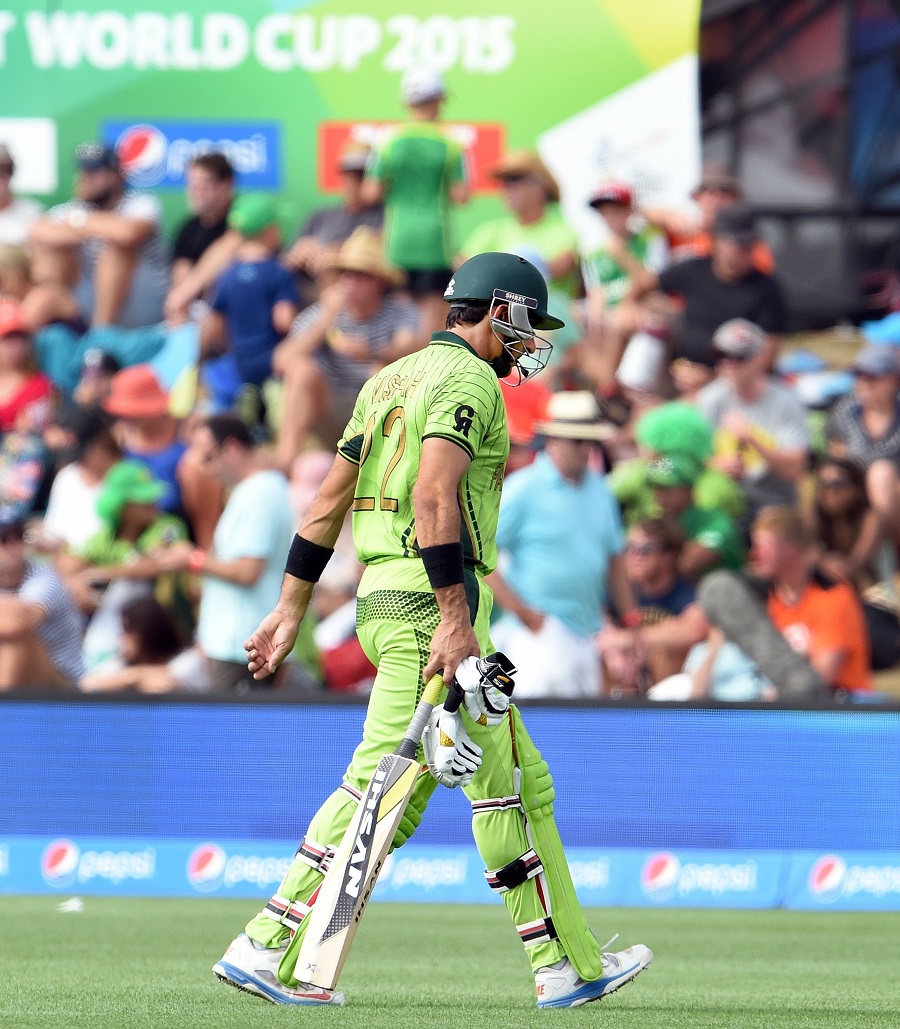
2. Zero Team Leadership: Starting from the top with mind boggling selections of the PCB, to Waqar Younus as a clueless coach and Misbah ul Haq as a most lackluster, demoralizing captain. Waqar consistently baffles everyone with his selection of bowlers and his misplacing batsman in the order (i.e. consistently selecting or opening with Younus Khan or putting him at the most valuable #3 spot, or not playing spin bowler Yasir Shah against the Windies who have trouble with spinners, but playing him against India who traditionally does okay with spinners). Then, Misbah who is the only captain out of every team i’ve seen, including the minnows who seems incapable of competitive, encouraging positive athletic leadership– which is a requisite of a captain for any sport! Battling legend Javed Miandad summarizes Misbah’s leadserhip succinctly
This is aside from the fact that Misbah’s field placements CONSISTENTLY cost us matches (i.e. putting one of our least mobile fielders, Mohammad Irfan at mid wicket and long on), one is left scratching their head — what on earth is Misbah’s strategy, let alone rationale for winning?
Shoaib Akhtar agrees, he scathingly commented today “We are heading for disaster. I have never seen a more selfish and coward captain like Misbah,”
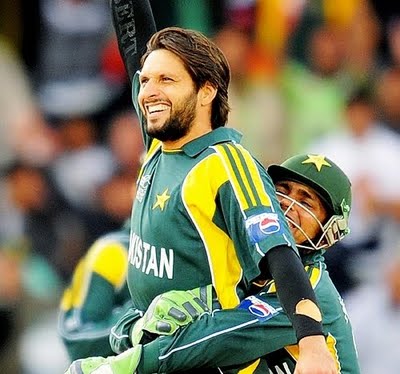
Remember Shahid Afridi as captain of Pakistan’s 2011 world cup team? THAT was world class leadership: Afridi led an inexperienced side that was underestimated by all, from the front, and launched them to exceeding all expectations. He was positive, motivational, competitive and strategic — Misbah doesn’t compare, and his captaincy is costing Pakistan win after win 😦
Shahid Afridi’s Pretty Chiseled
3. No Batsmen Groomed for the World Cup: Shame on the PCB: Pakistan it seems is the only team who squandered the past 4 years without grooming enough batsmen for this tournament.
Inventor of the deadly “doosra” delivery, former master spinner Saqlain Mushtaq explains “The whole nation feels let down and is understandably angry. You don’t expect such unprofessional decisions from a professional management,” he said.
Constantly yanking batsman with in form, winning performances like Fawad Alam, refusing to play Mohammad Hafeez when he insists he is ready, and wasting world class batsman like Umar Akmal and Shahid Afridi as lowest order players and instead playing non performing batsmen who consistently cost us key matches, like Younus Khan, Pakistan has yet to have a reliable opening duo, let alone stable batsmen to follow. And with Waqar Younus as coach admitting he’s still “experimenting” with the order (with dire results), Pakistan is painfully unprepared for the World Cup 2015.
Don’t expect major wins from a team that lacks the most basic components for crickets biggest tournament. I’m looking forward to tomorrows South Africa vs. India game. A.B. de Villiers, Hashim Amla and company — now that’s a team to be excited about.
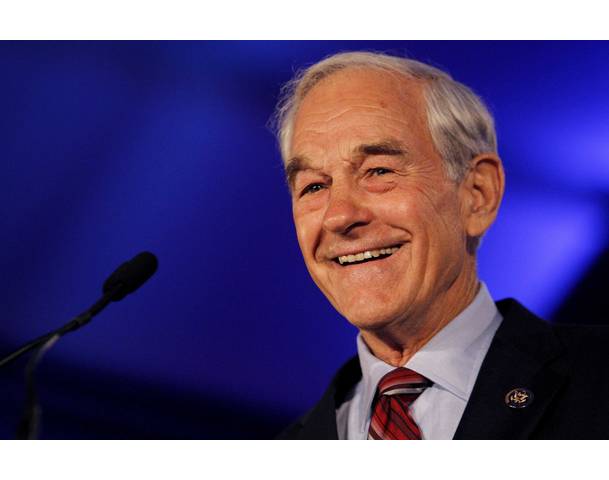
Ron Paul speaks during the Republican Leadership Conference: 2011
Is it just me, or are seemingly incessant GOP debates the past few months allowing President Obama’s lack of public exposure to seem more and more like solid leadership? The Republican lineups simplistic, square and reactionary focus on “Anti-Obama” rhetoric especially on foreign policy has highlighted a resoundingly hawkish stance on Iran with little attention to our current engagements in Afghanistan and Pakistan. And while it may be expedient amongst a certain political base to try and one-up each other in aggressive foreign policy talk, only Ron Paul challenges the party line on Americas role in the world.
When it comes to Pakistan, compared to Democrats Republicans have a consistent history of preferring to work closely with the military establishment in Islamabad. While there is a level of bipartisanship post 9/11, (case in point is Obama’s continuation of Bush era drone use with little debate), Republicans have through the Cold War and beyond preferred dealing with the military establishment rather than focusing on democratic, or liberal institution building. Which is not necessarily an entirely erroneous policy; part of the rationale is that state building is expensive in blood, toil, time and treasure and rarely feasible. Further, there are an endless number of constraints and uncertainties that profoundly hinder institution, or democratic state building in a place like Pakistan, rendering Republican policies simply pragmatic.
Which brings us to current policy: the bipartisan endorsed “Enhanced Partnership with Pakistan Act” (S. 1707) enacted in 2009 has yet to bear tangible fruit. Granted the aforementioned that institution building is time exhaustive, the fact remains that Pakistan has deteriorated politically, in the realm of security and economically. And having watched everyone from Gov. Romney, Sen. Santorun, Gov. Perry, Rep. Bachmann and yes even the soft spoken Gov. Huntsman, reiterates hawkish foreign policy while refusing to acknowledge a need for meaningful improvement. In the Republican camp only Rep. Ron Paul’s extreme calls for an isolationist posture offer some semblance of change. And because his prescriptions have yet to be tried, the utility of his ideas have yet to be tested. And now may be a time to consider his stance since they call for exactly what the Pakistani public wants right now.
Referring to our policies to Pakistan as nothing short of “Bombs for Bribes” Ron Paul acknowledges the nobility, yet inherent futility in calling for democratic institutions in places of strategic engagement. He understands that we are already engaged in “130 countries” with “700 bases around the world” and in this speech against the Enhanced Partnership with Pakistan Act, he bluntly explains:
“the way we treat our fellow countries around the world is we tell them what to do and if they do it, we give them money. If they don’t we bomb them. Under this condition we are doing both. We are currently dropping bombs in Pakistan and innocent people get killed. If you want to promote our good values and democratic processes, you can’t antagonize the people”
He goes on to suggest dialogue and trade as alternatives to current policy. And although his statement is simplistic and was made in 2009, it highlights Ron Paul’s isolationist, more economically focused prescriptions on foreign policy that seek to reduce our military footprint abroad based on pragmatic constraints, like military and fiscal overstretch. And these calls seem more reasonable than before, especially when it comes to Pakistan and the fact that our aid has yet to yield satisfactory results. So while the Obama administration continues engagement and GOP candidates refuse to acknowledge much concern over current policy to Pakistan, can Ron Paul really be the only alternative available?
Someone once considered completely out of left, excuse me, right field, could be the reminder we need to moderate our engagement with countries of interest. Because what is interesting is that current rhetoric in Pakistan is very much in line with Ron Paul’s ideas. Ron Paul isn’t touting conspiracy theories, nor does he echo far left foreign policy thinkers like Noam Chomsky. Rather, his past statements on our engagement in Pakistan as “inadvertently causing chaos” and “violating security and sovereignty” are exactly what the average Pakistani seems to feel and hears about in their mainstream TV, and print media. Takeaway for us means, it’s a perception the is realistic; perhaps more so than current policy reflects.
In fact, legendary cricket star turned politician Imran Khan’s recent surge in popularity is in large part due to his highly critical foreign policy rhetoric that vociferously calls for D.C. to adopt a more isolationist stance so Pakistan might reclaim lost autonomy. Imran Khan steadily built support for his party on the continued observation that America’s “War on Terror” has intensified insecurity and his subsequent promises to curtail American involvement is a first step in alleviating Pakistan’s problems.
He underscores Ron Paul’s sentiment that perceptions urgently matter in a climate where American intervention is increasingly received hostilely. Both politicians insistence on winnings hearts and minds renders Ron Paul’s foreign policy prescriptions worthy of consideration. Imran Khan’s recent ascendency and Governor Paul’s gradually increasing support marks a convergence in shifting to a direction of a less militarized approach to Pakistan. Two men once considered out of the realm of politician viability now increasingly resonate in their respective publics; policymakers ought to take note.
In kindergarten the last thing we did before going home was have story time. And I best recall Cinderella in particular because I interrupted Mrs. Woods twice during her reading: first because I didn’t understand why the glass slipper didn’t change back to Cinderella’s original shoe when everything else did at midnight, and then I wondered why out of all the girls in the land, how could that slipper just not fit anyone else?
Suffice to say, Cinderella didn’t add up when I was 5 (for some odd reason, Alice in Wonderland did, but that’s another matter altogether). Then in high school and undergraduate Women’s Studies and Sociology classes we deconstructed seemingly endless dangers of these fairy tales with their adverse impact on female agency (or rather, a complete omission of it), which certainly didn’t help the skepticism I already had for this princess. But Maureen Dowd asks us to revisit her in an article on Sunday. Yes, I will grant that the whole damsel in distress cliché in fairy tales (and to a large extent in Hollywood to this day) did little to empower women, but in light of this weeks Royal wedding, Dowd describes a redefinition of Cinderella:
“Teaming with the spirit of her dead mother, Cinderella cleverly rescues herself from servitude, conjures up her own glittery makeover and then saves the prince from the same torment she endured living with her hideous stepsisters”
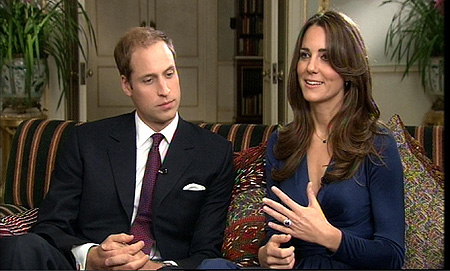
Was Cinderella more clever than my volumes of feminist theory posited? And in that light, can we credit the new Duchess, Kate Middleton as being an empowered woman with agency who married a Prince but is actually the leading heroic figure in their tale? Dowd likens her to Cinderella given their so called, “commoner” background and the solemn image of a deceased mother figure (Princess Diana) that looms large in their pasts:
“You could sense a collective prayer among the spectators that Kate, with her Cinderella coach, Cartier tiara and satin slippers, was not a lamb being led to slaughter. Many assured the invading celebrity journalists that Kate was older and more grounded than the virginal and high-strung 20-year-old who married an older man who loved another woman”
And therein we find agency, in a place no one ever encourages you to look: in a females age. The fact that Kate is nearly 10 years older than Diana at the time of her marriage changes the story completely. Testimony to this are a string of articles in the past couple years describing an increasingly buffoon like modern day male, painfully complacent in his inability to think or act for himself, versus an increasingly assertive, confident and successful modern female. The result is that both sexes converge in delaying marriage and other markers of adulthood more than ever before. Not that the Prince is any way buffoon like, or Kate a high strung, domineering partner, but they are entering into a relationship that seems much more complementary than what William’s mother entered into. And that might have much to do with age and this delayed experience of adulthood that has ironically given girls a chance to be girls longer, but simultaneously offers greater opportunity to discover, and attain our interests. Couple this girl with a guy who evades the buffoon like existence and you’ve probably got a happy ending.
So, we go back to Dowd’s question: did Cinderella and Kate “marry up” or was it the other way around? Well, I suppose it’s both. Because whether it’s the new Duchess and Duke of Cambridge or Cinderella and her handsome prince, there’s a very interesting balance that each person found by acting with keen self-awareness, and taking time to thoughtfully determine a plan independent of external pressure which they then executed with utmost confidence and presentation. Go figure: fairy tales wound up being more pragmatic in adulthood than in kindergarten 🙂
I’m in my second quarter of classes and I get the funny feeling I spend more time between the kitchen and Yoga studio than anyone else here. Plainly put, I’m not fulfilling any stereotypes of American chicks in grad school.
My friends have been going out to dinner the past couple nights and the mere thought of more than abundant portions of overly salted foods cooked in processed ingredients is less than appetizing. But, it’s my first week back and spending time with friends is important, and its far more convenient to eat out than cook given our schedules. Plus I’ve come to terms with the fact that I can dine mostly anywhere and at the sake of mildly annoying waiters & waitresses and getting puzzled onlookers, I can specifically order a Red-tip, Arugla, Butterleaf, Spinach, Swiss chard or Romaine lettuce salad, with dressing on the side, and request to hold the hormone laced tomatoes. Except at most South Asian restaurants, where “salad” more often than not means you’re getting a bread plate of sliced tomatoes, onions on a bed of …**shudder** Iceberg Lettuce, (the Snookie of all lettuces, if you will. I’m not one to hate, but Iceberg lettuce is to lettuce, what Snookie is to brunettes).
So, that’s what i did on Thursday night when I went out. I ordered a Wasabi, Seared Ahi Tuna salad, which although salty, was quite delicious. Downside: it wasn’t originally a salad! The Tuna was supposed to be covered in creamy potatoes until i said, please hold the mash and give me extra veggies. Bigger downside: I ended up paying as much as the guy next to me who ordered a 3 course dinner. Then on Friday night we went out, and I was exceptionally hungry so, I passed on the salad and ordered a saffron broth based stew of boiled calamari, artichokes, crab leg, mussels, and whitefish (request to hold the pasta). But it happened to be the priciest entree on the menu.
What’s wrong with this picture? First, the fact that eating healthy in America is far more expensive than eating junk (you’ll find the same phenomenon if you visit any grocery store). Which brings us to the second, larger problem of defining the concept of “eating healthy”.
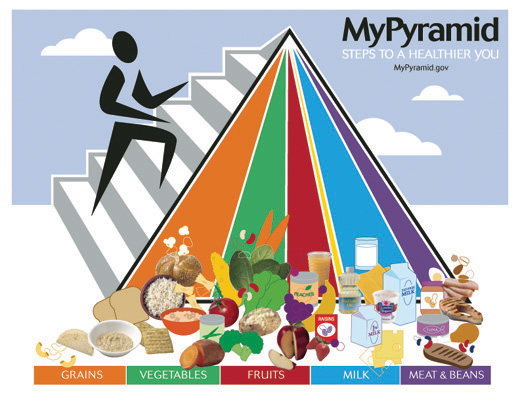
In the 1980’s we were bombarded with advertisements for “low fat” diets that had Americans consuming highly processed packaged foods and condiments that were loaded with added sugar and starch to compensate in taste for the lacking fat. Then in the 1990’s as people realized the increased sugar intake was making them fatter, Atkins and other high protein diets re-emerged with everyone touting Dr. Atkins 1972 proclamation “The High Calorie way to Stay Thin Forever!“. Sure, until most found it’s disgusting to live on a staple diet of meat and eggs minus any grains. Not to mention such diets are almost diametrically opposed to the FDA’s Food pyramid, which is just as ridiculous as the Atkins diet (even the recently modified one).
Are you Kidding me? The FDA wants us to eat more pasta & cereal rather than fresh produce?
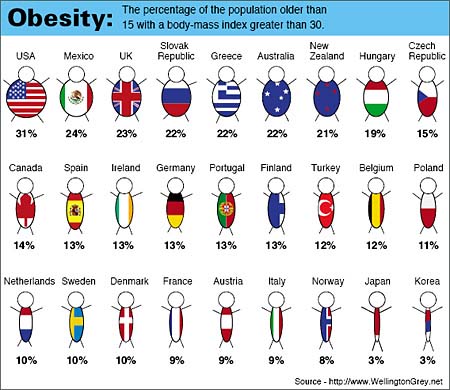
And in this past decade as Americans break their backs in a perpetual professional rat race and hit the gym far more than our European counterparts (who mind you work less and are far thinner than us), studies confirm Americans continue to grow fatter.
Suffice to say, most everything recommended thus far has been counter productive. And amidst this continual trial and error, (which has apparently been a long series of errors), Americans ought to finally catch on.
Beautiful. It’s streamlined, sensible and hard to refute. Yes, it turns the entire western diet upside down on its head, but that’s exactly what’s needed as Americans are plagued by heart disease, and obesity. Pollan suggests the “western diet” that arose with the industrialization of food in the 20th century is characterized by lots of processed food, meats and refined grains, lots of added sugar and fat, but few vegetables, fruits and whole grains”
In fact, go to any grocery store and try to follow the FDA pyramid of loading up on “grains” and even the well informed, yet time pressed American will fall for the sham that are breads, pastas, crackers and cereal laced with additives including fructose (sometimes the infamoushigh fructose corn syrup), starches (namely enriched corn starch) and even sodium.
So, I’ve come to accept the general rule of thumb that buying anything in a package at an American grocery store (including places like Whole Foods and Trade Joes) will most often come processed sugar, and salty “preservatives”.Which leaves us with an option to purchase raw foods that one prepares themselves, bringing me back to my concern with being the odd man, er, woman out here in grad school.
But at the expense of being that girl who does a lot of cooking and Yoga, I’ve found what Pollan says is true. He advises we eat fresh foods that are not processed or enriched with additives. He refers to this as “what our grandmothers would recognize as food”. That sounds about right.
In addition to the problem with highly processed foods, Pollan provides a critical look at the “Reductionist” nutrition ideology in America that has convinced us ofThree myths:
Food is only a carrier of nutrients, and it’s the nutrients that matter, not the food
We need experts to tell us what to eat because nutrients are invisible and mysterious to everyone but scientists
Entire purpose of eating is to promote a narrow concept of physical health
I think he’s right and these myths are key in why Americans keep getting fatter. Let’s go back to the Federal Food and Drug Administration that recommends we get a ridiculous amount of bread, cereal, crackers and pasta in our diet, and advises we make sure at least 3 servings are “whole grain”. Take a box of Cheerios, the seemingly most healthy Cheerios: the ones in the yellow box titled “Toasted whole Grain Oat Cereal” which at the top proclaims “Whole Gain guaranteed!” and toward the bottom declares “Big G Cereals are America’s #1 Source of Whole Grain at breakfast”. It has such a wholesome image of red heart shaped bowl filled with the product and at the bottom reminds us that “3 grams of soluable fiber daily from whole grain oat foods, like Cgerrios cereal, in a diet low in saturated fat and cholesterol may reduce the risk of heart disease”.Looks great, until you actually read the nutritional label and ingredients list.
There’s modified corn starch, sugar and worst of all, sodium added to each box. And at 160 grams per serving of sodium and just 1 gram of Sugar, Cherrios are actually among the most healthy of American cereals.
I mean, why can’t I just get a box of unsalted oats. I like oats. What’s wrong with plain oats? If i want them salty, I’ll add salt myself. Or I could opt for foods with significant amounts of naturally occurring sodium content, like beets, or chickpeas, or spinach. And if I want sugar, I can have any number of fruits. Modify Corn starch? Why, so we can mass produce thicker jelly that preserves Twinkies for years on end? Pollan is right: the western diet is so far removed from natural foods that humans have simply not been able to adapt to it. And the American food industries have rendered it too convenient to be unhealthy, bombarding us with aisle after aisle of grocery store processed excuses for fresh food. I’d really love to see some long term studies that collect data to weigh the costs of producing these foods vs the increasing obesity and heart disease rates, including the cost of prevention and treatment.
So I suppose even if cooking takes up a chunk of my time between studying, socializing and Yoga, eating fresh has helped me maintain a BMI under 20 and capacity to jog a couple miles in the Denver altitude. And the peripheral benefits of wellness are something one cannot put a price on.
DISCLAIMER I periodically indulge in a ridiculous amount of double stuffed Oreos, Cupcakes, Full Fat Milk and South Asian “mithai”.
It’s said that Chuck Norris has no fear. Fear has Chuck Norris”. Funny, but that’s mythical. Real fear comes from Pakistan’s all rounder Abdul Razzaq, a silent Cricketing stalwart whose rightly deemed the “Danger Man’. Without Shahid Afridi’s brazenness, Shoaib Ahktar’s offensive aggression, or Inzamam’s star power, Razzaq has quietly, and consistently wrecked havoc on world class teams. Suffice to say his dangerousness runs deep, but it could only have been concealed for so long. Trending on Twitter since yesterday, he stunned the cricket world in what a BBC Sports Blogger tweeted: “109 not out off 72 balls with 10 sixes, Razzaq pulls off one of the great heists in ODI history” J
Heist is right. Because Razzaq robbed South Africa blind in yesterday’s ODI. Just as South Africa’s victory seemed inevitable with Pakistan 5 wickets down for 136 in the 30th over chasing a massive total, the Danger Man serenely stepped to the pitch. Without flinching at only 20 over’s with which to make 250 runs requiring a massive 7.5 run rate, Danger Man began his attack.
Devising not a slogging onslaught, but a strategic, carefully developed batting ambush only Razzaq could execute,
he began with the support of rookie batsman Fawaad Alam. They maintained a steady run rate of 6.5 bringing them to a respectable partnership of 88. But in comes rookie middle order batsman/wicketkeeper Zulqarnain Haider. There’s gotta be better players to choose from in Pakistan than this guy who gets run out for a score of 6. Nonetheless, Razzaq calmly takes the setback in stride and with only tail enders left, he remains the last batsman standing to chase 60 runs in 6 overs. But he anticipated that.
With a half century under his belt, he picks up the pace: smashing 26 runs in the next 3 overs. But just before he tries to get the strike back at the end of the 46th over, bowler Wahaab Riaz is run out, and 3 balls later, another man falls. Nine wickets down, one more out and the game is over. South Africa’s crushing triumph over Pakistan in this series seems inevitable. Razzaq is the only man standing with 2.3 over’s remaining and 29 required for victory.
Classic Pakistan. And Razzaq knows it. He anticipated it the moment he began to bat, thus taking the match into his own hands, and becoming Danger Man.
Well aware that Shoaib Akhtar is the Worlds Fastest bowler, not the greatest batsman, Razzaq undertakes full responsibility. In the last 2 overs, he safely but skillfully hits 4-5 balls into the gap when Akhtar reasonably began to run for the single’s & doubles. But Razzaq confidently instructed otherwise. Now that’s scary. If I was South Africa, I’d fear a man needing near 30 runs to save any face in a series with less than 3 overs left yet still tells his partner not to run. That’s intrepid. Razzaq was sending a message to everyone: “Stay. I got this”
Pakistan's Danger Man - Abdul Razzaq Conquers South Africa in Abu Dhabi 2010
Talk about presence. Fearing why he’s NOT scrambling to make these last runs, South Africa had to wonder what the heck this guy had up his sleeve and tremble at his audacity.
In preventing Akhtar from risking a wicket to take seemingly critical runs, Razzaq upped his own responsibility, demonstrating tremendous leadership, strategic thinking, confidence and damn powerful cricket. For me this command and control was the highlight of the game. He took the colossal task of rescuing Pakistan from humiliation in the series solely upon his own shoulders.
He maintained confidence, composure and leadership in seeing the ball well, skillfully directing the ball, and meticulously assessing the match at each interval. Knowing how to make everything go off the middle of the bat, he was conquering South Africa despite their weighty total and floundering Pakistani batting.
In fact, come the last three overs Akhtar only sees 1 of those 12 balls, because Razzaq just didn’t let him take strike. Taking complete responsibility upon himself rather than risk loss, he allowed Akhtar to run once for a single just before the last over. Shoaib dot balled it, returning strike to Razzaq.
Decisive final over. Pakistan needs 14 runs off 6 balls.
After smashing another six, Danger Man is at 99 runs and doesn’t flinch. Just smashes another one one for 6. Catapulting him to 105. There’s no celebration: he simply raises his bat, promptly brings it back and focuses on his strategy and the larger task at hand.
Then there’s a dot ball. 2 runs needed off the last 3 balls. And that’s when the South African skipper worries. The fact that Danger Man didn’t celebrate 105 off of 70 balls again had to leave them wondering who the heck this guy is and what he’s going to pull next. South Africa unsuccesfully appeals on a caught behind for Razzaq. But Danger Man unfazed with just two runs required won’t even need to run: he hits the next ball for a boundary and jumps up and tosses his bat in the air.
With two sixes to seal a win in the last over, it marked his his 10th six in the game. Danger Man scored 63 of the whole teams last 65 runs to overcome the weighty chase. It was all Abdul Razzaq. Not even a wide or no ball to help him, South Africa cut him no slack and he single handedly achieved the Pakistan victory in this series.
He’s always been my favorite. It’s this Danger Man that should forever instill fear in anyone who plays against Pakistan with him in the lineup. No win is certain so long as Abdul Razzaq’s around 😉
No Question too Tough for Obama - The Daily Show with Jon Stewart : October 2010
I just remembered why I liked Barack Obama so much. His appearance on the Daily Show with Jon Stewart last night showcased the President at his best: intellectual, elegant, steadfast and most importantly: insightful.
Without divulging how I voted in the Democratic primaries or General Elections of 2008, I will admit to being skeptical of Obama’s static foreign policy agenda and also feeling apprehensive about his left of center public policy. Because with such immense charisma calling for sweeping change amidst sentiments of “hope”, (which gave him mass appeal, especially amongst my generation) actual substance of his promises on policymaking were left out.
For better or worse, realities of effective politicking in our commercial election culture denied us an opportunity for substantial debate. Ironically, that gap in information was filled last night not by a mainstream news outlet, but Comedy Central .
This morning though, the mainstream news outlets probably realized this and have been abuzz over the interview. The Christian Science Monitor questions: “Did Mr. Obama take Jon Stewart to the cleaners?” In one word: Yeah. But with such questions abounding, apparently many of us expected otherwise. Stewart is so widely celebrated as a voice of younger generations; recall pundits taking swipes at him in 2008 citing “stoned slackers” were his majority viewing demographic. But his impact is far greater than such talk suggests. The Daily Show has become a relatively legitimate cultural representation of political inquiry and dissent. While the material is sometimes crass, I’ve found that well informed members of the public actually pay attention to what is said on the program.
If Wikileaks is the mighty foreign affairs whistleblower of our time, the Daily Show is it’s naughty little brother, revealing less dramatic yet just as irrational and unacceptable public policy absurdities of the day.
To boot, Jon Stewart actually asks compelling questions on important issues that he sincerely seems concerned are not addressed by mainstream media. And he did this impeccably in interviewing the President yesterday. Decidedly subduing humor, Stewart was poised and firm. He questioned Obama a number of times on Democratic party infighting as symptomatic of a larger problem within our system of government:
“Is there a difference between what you ran on and what you delivered? You ran on, if I may, such “audacity”…yet legislatively it has felt timid at times. I’m not even sure at times, what you want out of a healthcare bill”
Cheeky use of “audacity” but the question was an honest, direct investigation of the American President keeping promises, complete with a serious suggestion that he has not. Undaunted and with characteristic level-headedness, Obama responded deftly by listing accomplishments of healthcare reform thus far:
– 30 million more Americans are to be insured
– A new Patients Bill of Rights ensures carriers can’t cancel coverage when one is sick
– Abolishes Lifetime Maximum’s on health policies
– Children/Young adults have extended stay on parental coverage until age 26
– All while cutting the deficit by 1 trillion + dollars
“This is what I think most people would say is as significant a piece of legislation as we’ve seen in this nations history. But what happens is it gets discounted because the presumption is we didn’t get 100% of what we wanted, we got 90% of what we wanted, so lets focus on the 10%. And right now there is a woman in New Hampshire who doesn’t have to sell her house to get her cancer treatments because of that healthcare bill. And she doesn’t think it’s inconsequential, or “timid”
It was one of the most substantial responses I’ve heard a politician say on television that I can remember. We’ve become so used to seeing political figures evade questions (in the few instances they are asked serious ones), ambiguously address issues, irrelevantly tout campaign slogans, and regurgitate party rhetoric. Obama did not resort to any of that. He steadily addressed each pressing question with facts followed by insight. The highlight and defining moment of the interview came when Stewart peppered the President with a third follow up inquiry on healthcare reform, insisting enough had not been done in line with campaign promises to which Obama responded:
“Look, if the point Jon is that overnight we did not transform the healthcare system, that point is true. When we promised during the campaign, change you can believe in, it wasn’t change you can believe in, in 18 months. It was change you can believe in, but you know what, you’re going to have to work for it”
Sold. It was witty, honest and directly answered the question: And he elaborated:
“When social security was passed, it applied to widows and orphans and it was a very restricted program, and overtime that structure that was built, ended up developing into the most important social safety net in our country. The same is true on every piece of progressive legislation. When the civil rights act passed, there were still folks down south who couldn’t vote, and I’m sure there were commentators who said this law is not doing the job, but the point was we had created a structure, we put a framework in place that allowed us to continue to make progress. That’s what we’ve done in the past 18 months, and that’s what we’ll keep on doing as long as I’m president of the United States”
Behold: Factual + insightful = solid answers the public deserves. And while we can complain about an apparently dismal state of affairs wherein cable comedy television is perhaps the most substantial access to political discourse we have, let us instead revel in this moment when our Commander in Chief authoritatively leads with intellect. Our hegemony deserves nothing less.
“Making Ignorance Chic” is among the most emailed articles this week at the New York Times in which Maureen Dowd addresses an everlasting female dilemma: choosing between “intellectualism and sexuality”. She describes the “false” dichotomy in which women are rarely appreciated for both simultaneously. And by describing this phenomenon as “persistent”, I interpret it’s become progressively easier to pursue heightened sexuality than intellectualism. Dowd takes us back to 1950’s America reminiscing that “dumb blonde’s” like Marilyn Monroe made it seem fashionable to at the least, attempt to appear intellectual, while today’s personalities like Sarah Palin are “making ignorance chic”.
And it sounds convincing to cite a time when beauty icons like Marilyn were asked to pose with token history books and married intellectuals versus Sarah Palin who prides herself on being anti intellectual, or who Dowd is actually describing is of “average” intellect.
But does this make Marilyn any more intellectual in and of itself? Did Marilyn give females more reason to aspire to be intellectual while Palin makes ignorance chic? I don’t think so. If anything, it’s the other way around. If both cases reflect a societal and ultimately self-imposed choice for beauty over brains, Palin should be perceived as more empowering between the two.
Did Marilyn Monroe Make Reading Chic?
Because while both represent sex before intellect, at least Palin comes complete with autonomy; which is a function of time and space.
Dowd describes Marilyn marrying intellectuals, or posing in “tight shorts” with books on Goya as evidence that it was somehow more chic to be intellectual then, albeit in an apologetic tone. But despite Palins sometimes absurd thoughts, she is not prided by advocates for being absurd or sexy; she’s lauded for what she has accomplished.
Unlike Monroe, Palin has very tangible intellectual achievements to show for as governor of Alaska, per opportunities afforded to her as we’ve progressed as a society in trying to level the playing field for women since Marilyn’s time.
So there are system level differences making it misleading to compare to what degree their individual impact was on perpetuating ignorance as chic. But if anything, Marilyn, and I’d say females in that time had less opportunity and incentive to pursue intellectual routes than we do in Palin’s America.
Simply put: Palin was governor / Marilyn merely married the author of Death of a Salesman.For what it’s worth, looking then just to sexuality: it’s further telling that Marilyn had to show far more skin than Palin in setting any standards for chic. Point being, it’s not significantly less sexy to be intellectual now than it was in the 50’s.
So Dowd’s piece is slightly off target. It’s partial to Marilyn (heck, deep down I am too) and that era. The article would be correct in a more general sense: it’s remained diametrically chic to be sexy rather than intellectual. And that route is often more immediately convenient too (females are aware of this every waking second, and very early on).
The catch is, pursuing sexuality at the expense of intellectualism is disastrous long term strategy (girls are rarely fully aware of this), and that’s the real lesson both Marilyn Monroe and Sarah Palin demonstrate.
Well, I called it: Pervez Musharraf is staging a return to Pakistani politics. Launching his new “All Pakistan Muslim League” (AMPL) party this week in a plan to return to the country, the former General will have to face a tremendously skeptical, increasingly hardened citizenry and even tougher adversaries in the judicial branch and opposition parties. In an Al Jazeera special report, Musharraf’s former Legal Advisor Ahmed Raza Kasuri insisted that should tacit approval come from the country’s military establishment and most importantly, with support of a “silent majority” Kasuri measures at 60-65% of moderate Pakistani’s, Musharraf will garner required support to win in future elections. Political analyst Imtiaz Gul insisted otherwise explaining not only would the military establishment be weary of backing Musharraf who cost them valuable political capital when he sacked the judiciary in 2007 and issued a State of Emergency, but also because he has “lost relevance” in Pakistan today.
Gul makes a valuable point: without relevance a political figure is climbing an uphill battle of garnering credibility, and because credibility is deeply intertwined with legitimacy, Musharraff undoubtedly faces a bumpy comeback.
But relevance is not necessarily an impediment to power in Pakistan since the current situation lends a valuable opportunity for it to be readily earned. Current President Asif Zardari usurped such an opportunity when his wife was tragically murdered and assumed leadership, riding the waves of sympathy that swept the nation to win elections. While that “relevance” is waning now, it was enough to allow him a seat of power for 2 years and actually shake off some of the “Mr. 10%” infamy, which is a far larger feat than what Mushrraf faces today.
While the main opposition party leaders Asif Zardari and Nawaaz Sharif are forever bogged by allegations of corruption, Musharraff’s criticisms revolve around issues of “democracy”.
His most vociferous opponents will cite his sacking of the judiciary, coup to power, and 9 year dictatorial reign as subverting democracy in Pakistan. But such criticism of Musharraf is both misleading and mostly hyperbole.
The deficient part of such rhetoric lies in lacking recognition of liberalism. Notions of individual human rights and liberty, free trade, separation of church and state and religious tolerance are erroneously assumed to come only with democratic leadership in Pakistan. On the contrary, liberal policies extending specifically to women’s rights, fostering regional cooperation and trade, namely with India, opening domestic markets, such as free media and holding free and fair elections were successfully carried out previously by Musharraf.
Ironically, under the title of “dictator”, he brought forth more liberal triumphs than any other leaders in my lifetime. And it is important to not confuse democracy with liberalism. Fareed Zakaria makes this distinction in tweaking “Democratic Peace Theory”. His ideas are described:
“democracy is defined in terms of the process by which a government is selected. In contrast, “constitutional liberalism” is defined not by how the government is selected, but rather b the extent to which the society and its institutions protect individuals’ basic rights (to life, property, freedom of speech, and religion)”
Thus basic tenants of a such liberalism, to a fair extent were brought forth by Musharraf. And as political change seems imminent in Pakistan, if we continue looking to political theory one might advance a case for liberalism by way of identifying Musharraf’s opposition. If we take a voluntaristic view of government, wherein heads of states are integral parts of policymaking as opposed to looking mostly at system wide determinants of policy, one finds that not only corruption, but the fact that both Asif Zardari and Nawaz Sharif are part of feudal, landowning elites in Pakistan is meaningful. With that background, and likely subsequent value sets which are diametrically opposed to liberal notions of liberty and individual rights, Pakistan runs the risk of remaining socially, and economically stagnant under their leadership. Moreover, with the U.S. winding down our war in Afghanistan and shifting in to Pakistan, more than ever liberal ideals are needed.
No amount of drones, target killings or CIA intervention have yet quelled extremism let alone terrorism in Pakistan since 9/11. Modernity and liberalism are Pakistan’s best bet at framing a solution for the long run.
It cannot be an overnight shift, but it will require leadership that espouses liberal ideals. Because without credible experience in upholding individual rights and freedoms, only halfhearted appreciation will come for liberalism and even weaker attempts to implement them.
Is Musharraf the solution Pakistan is looking for? I do not know. But until new, more modern and liberal alternatives in political leadership are available, he just might be the best option now.
It’s my first week in Denver where I’ll be attending graduate school for the next two years and I’m soaking in how kind this city is. It is the most laid back, genuine U.S. City I’ve experienced. The sincerity with which people prod “No, where are you really from?” when I initially respond “California”, is priceless. I feel like a novelty here. At an Eid Celebration last night, even a local of Pakistani descent pointed out “Wow, the guys are going to flip over you. There are no ethnic girls in Denver”.
“Ethnic”? I’ll take it; I realize I’m getting a pass for being a Californian female. Because in light of increasingly disheartening news from Pakistan, be it about floods, match fixing in cricket, and mostly terrorism plaguing the country since 9/11, Pakistani’s have captured the American state of mind in a less than appealing way. Once indecipherable on a world map for most Americans, Pakistan emerged as our stalwart ally in victory after 40+ years of Cold War. Yet as we turn to Islamabad again to fight a War on Terror, we possess a deep skepticism of Pakistani intentions.
Since September 11, every time I come to the States or western countries I feel people have the wrong impression about Pakistan as a terrorist nation. I just wanted to declare that we are very friendly, loving and caring people, and we want peace in this world as much as Americans and the rest of the world wants.
There are extremists in every religion, but just because of them you cannot judge the whole country as a terrorist nation. I just wanted to get this message across as a Pakistani
In plain terms Qureshi clarified that his country is a mostly moderate nation where people expect the same peace and security desired by all people. He reminded us of Pakistan’s humanity, directly countering the “transactional” ties that progressively complicate our understanding of Pakistan. Fareed Zakaria might agree. In a recent piece, he eloquently concurred:
Across the Muslim world, militant Islam’s appeal has plunged. In the half of the Muslim world that holds elections, parties that are in any way associated with Islamic jihad tend to fare miserably, even in Pakistan.
In his article “We’re Safer Than We Think” Zakaria points out that Muslims in Pakistan and beyond are if anything, less safe from terrorism than we are as they suffer the brunt of radical Islam’s consequences.
Over the last few years, imams and Muslim leaders across the world have been denouncing suicide bombings, terrorism, and Al Qaeda with regularity….The fatal problem with these kinds of attacks is that they kill ordinary civilians—not U.S. soldiers or diplomats—and turn the local population against Islamic radicals.
With more thorough detail, Zakaria’s is saying exactly what Qureshi did; Pakistan is not a country of terrorists. So next time I get asked where I am “really” from, I might just say “I’m from Asiam Qureshi.’s country”.








 Zainab B. Jeewanjee
 Zainab Jeewanjee
Pakistan’s Silent Superstar
November 1, 2010It’s said that Chuck Norris has no fear. Fear has Chuck Norris”. Funny, but that’s mythical. Real fear comes from Pakistan’s all rounder Abdul Razzaq, a silent Cricketing stalwart whose rightly deemed the “Danger Man’. Without Shahid Afridi’s brazenness, Shoaib Ahktar’s offensive aggression, or Inzamam’s star power, Razzaq has quietly, and consistently wrecked havoc on world class teams. Suffice to say his dangerousness runs deep, but it could only have been concealed for so long. Trending on Twitter since yesterday, he stunned the cricket world in what a BBC Sports Blogger tweeted: “109 not out off 72 balls with 10 sixes, Razzaq pulls off one of the great heists in ODI history” J
Heist is right. Because Razzaq robbed South Africa blind in yesterday’s ODI. Just as South Africa’s victory seemed inevitable with Pakistan 5 wickets down for 136 in the 30th over chasing a massive total, the Danger Man serenely stepped to the pitch. Without flinching at only 20 over’s with which to make 250 runs requiring a massive 7.5 run rate, Danger Man began his attack.
he began with the support of rookie batsman Fawaad Alam. They maintained a steady run rate of 6.5 bringing them to a respectable partnership of 88. But in comes rookie middle order batsman/wicketkeeper Zulqarnain Haider. There’s gotta be better players to choose from in Pakistan than this guy who gets run out for a score of 6. Nonetheless, Razzaq calmly takes the setback in stride and with only tail enders left, he remains the last batsman standing to chase 60 runs in 6 overs. But he anticipated that.
With a half century under his belt, he picks up the pace: smashing 26 runs in the next 3 overs. But just before he tries to get the strike back at the end of the 46th over, bowler Wahaab Riaz is run out, and 3 balls later, another man falls. Nine wickets down, one more out and the game is over. South Africa’s crushing triumph over Pakistan in this series seems inevitable. Razzaq is the only man standing with 2.3 over’s remaining and 29 required for victory.
Well aware that Shoaib Akhtar is the Worlds Fastest bowler, not the greatest batsman, Razzaq undertakes full responsibility. In the last 2 overs, he safely but skillfully hits 4-5 balls into the gap when Akhtar reasonably began to run for the single’s & doubles. But Razzaq confidently instructed otherwise. Now that’s scary. If I was South Africa, I’d fear a man needing near 30 runs to save any face in a series with less than 3 overs left yet still tells his partner not to run. That’s intrepid. Razzaq was sending a message to everyone: “Stay. I got this”
Pakistan's Danger Man - Abdul Razzaq Conquers South Africa in Abu Dhabi 2010
Talk about presence. Fearing why he’s NOT scrambling to make these last runs, South Africa had to wonder what the heck this guy had up his sleeve and tremble at his audacity.
He maintained confidence, composure and leadership in seeing the ball well, skillfully directing the ball, and meticulously assessing the match at each interval. Knowing how to make everything go off the middle of the bat, he was conquering South Africa despite their weighty total and floundering Pakistani batting.
In fact, come the last three overs Akhtar only sees 1 of those 12 balls, because Razzaq just didn’t let him take strike. Taking complete responsibility upon himself rather than risk loss, he allowed Akhtar to run once for a single just before the last over. Shoaib dot balled it, returning strike to Razzaq.
Decisive final over. Pakistan needs 14 runs off 6 balls.
Then there’s a dot ball. 2 runs needed off the last 3 balls. And that’s when the South African skipper worries. The fact that Danger Man didn’t celebrate 105 off of 70 balls again had to leave them wondering who the heck this guy is and what he’s going to pull next. South Africa unsuccesfully appeals on a caught behind for Razzaq. But Danger Man unfazed with just two runs required won’t even need to run: he hits the next ball for a boundary and jumps up and tosses his bat in the air.
He’s always been my favorite. It’s this Danger Man that should forever instill fear in anyone who plays against Pakistan with him in the lineup. No win is certain so long as Abdul Razzaq’s around 😉
Share this:
Posted in cricket | Tagged abdul razak, abdul razzaq, abdur razzak, analysis of pakistan cricket, analysis of razzaq, batting, chuck norris, commentary, cricket, danger man, danger man abdul razaq, dubai, dubai cricket, fear chuck norris, game, match highlights, ODI pakistan, opinion on the game, pak cricket, pakistan cricket 2010, pakistan ODI cricket, pakistani cricket 2010, razzaq trending, score, shoaib akhtar, south africa, south africa pakistan cricket, south africa vs pakistan, south african cricket, tremendous cricket batting, trending tweets, tweet, twitter, zainab, zainab jeewanjee, zainyjee | 6 Comments »