The most provocative piece I’ve seen on drones in Pakistan was published last week. Not the most detailed, well researched article (the New Yorker takes the cake so far) but certainly the most confrontational. Farhat Taj writes in the Daily Times that International media, including American and Pakistani reports critical of drone use are totally unfounded. Vehemently, Taj writes:
” The people of Waziristan are suffering a brutal kind of occupation under the Taliban and al Qaeda. It is in this context that they would welcome anyone, Americans, Israelis, Indians or even the devil, to rid them of the Taliban and al Qaeda”
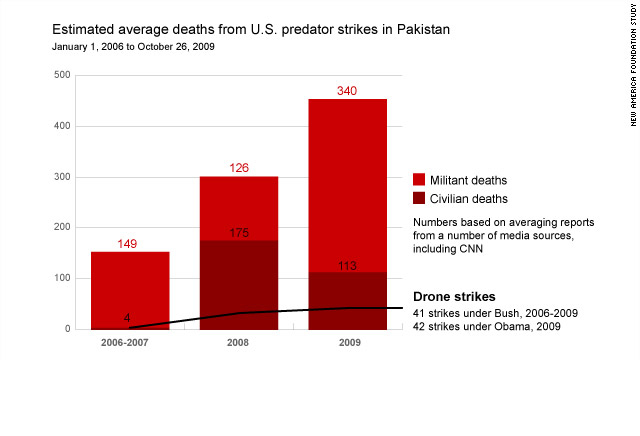
It’s a grand, almost inconceivable statement given that Anti Americanism is on a rapid rise and India / Pakistan are widely considered notorious Arch Nemesis in international relations today. Taj says inhabitants of Waziristan actually “welcome” drone attacks and dismisses all accusations of civilian casualties as Taliban propaganda. Basing this on the idea that almost no media are allowed in the area, she concludes there is no verifiable evidence, and therefore no reason for concern of civilian casualties. But mere logic would indicate otherwise. Although surgical, drones are not so precise to as to obliterate one individual at a time. When they strike, the range of damage inflicted by any drone is bound to cause peripheral damage, destroying more than just a singular terrorist.
Taj also too vehemently dismisses the concern that drones infringe on Pakistan’s sovereignty. She says greater Pakistan is oblivious to the more pressing priority of wiping out Taliban. And while I agree the Taliban is inflicting profound, perpetual and grave damage on Waziristan, greater Pakistan’s perceptions are important and not to be overlooked so easily.
Waziristan is but a fraction of Pakistan. If the majority of Pakistani’s see drones as an infringement of sovereignty, future cooperation with strategically poised Pakistan can become difficult. The alliance is already waning and one of politics’ golden rules is: perceptions matter. Whether or not there are exact numbers of civilian casualties, Pakistani’s are strongly against unmanned aircraft dropping bombs in their territory. Regardless of circumstances, the perception of an alliance with America, and our War on Terror is endangered by the drones. Hence arguments that drones are counter productive.
At what cost are we using drones to wipe out a few key leaders from militant and extremist groups? Might we accomplish the same success in hunting down terrorists by employing Pakistani forces to take these guys out themeslves using close cooperation with our counter terrorism, intelligence and military operations?
Some already argue that Islamabad tacitly works with the United States on drones in the north, however, the official and public stance of the Pakistani government is of staunch disapproval of drones. It’s a fair argument because without Islamabad’s approval, the United States would be in violation of international law, and protocol in using drones in Waziristan minus Pakistsan’s approval. So I buy the argument that Islamabad works closely in using drones in the north. But the fact that the government goes to the extent of constantly assuring its public that they disapprove of drones on record, is testimony to how offensive the use of unmanned aircrafts are in Pakistan.
So while our heightened use of drones might be effective in obliterating key leaders from the Taliban ranks for success in the immediate term, the consequences of drones entail potentially riling further anti Americanism which could compromise our interests in the future.
Cooperation is key, and I’m not convinced increased use of drones will help us engage Pakistan in the future.
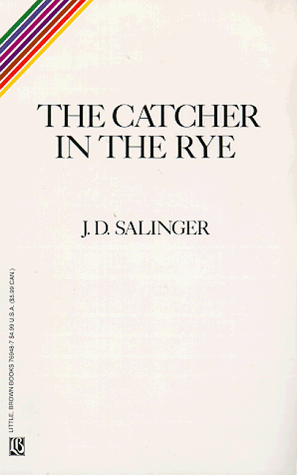
Catcher in the Rye - Salingers Invaluable Gift To the American Imagination
“I don’t even know what I was running for – I guess I just felt like it”
~J.D. Salinger, The Catcher in the Rye, Chapter 1
I was 16 when I first picked up Catcher in the Rye. It was winter, my junior year at single sex, college prep Catholic School, probably much like the one Holden Caulfield attends in the book. The book wasn’t assigned until Spring semester, but I couldn’t sleep one night so I picked it up and thought it would lull me to bed. Little did I realize that a couple hours later I had to force myself to put it down, only to find myself putting it in my backpack to read at school in the morning. The next day, I sat at the very back of all my classes, hid it just above my knees under the hem of my skirt and read as many lines as I could. I had it finished by the time I got home and was captivated. The beauty of Catcher in the Rye is that not only is it a page-turner to read, but after reading it the real fascination begins.
There’s a great article in Forbes lamenting Salinger’s death and it reminds us why the book was revolutionary in it’s time and still captures imaginations today:
In the 1950s, the life stage we call adolescence lasted a relatively short time. High schools prepared the majority of students not for college but for the responsibilities of adulthood. A “life adjustment” curriculum taught students to dress right, date right, engage in civic life and take on the trappings of maturity. Notably Catcher in the Rye called into question this entire program of social engineering, with Holden exploding the notion that adulthood was something to strive for. What was the rush?
Salinger revealed “social engineering” in all it’s humdrum and futility. The Forbes piece aptly describes Gen X’ers and beyond as in no way rushing to grow up. On the contrary, we’ve developed an existence that lingers in adolescence, finding and defining our own value sets. We give ourselves room to grow at our pace, not limiting ourselves to “engineered” time frames. Holden struggled in a world that was unkind to that mindset,*SPOILER ALERT* and winds up in a mental asylum as a result. Spending too many years in school jumping from major to major to discover one’s passion, or spending vast time and money to become a medical doctor only to graduate and make music is exactly what we’re taught not to do. It was the height of being counter-productive in the 50’s but today is increasingly seen as acceptable, and perhaps even romantic.
Holden Caulfield’s passion was caring for children, and 1950’s America might have shunned him for finding work that would normally fall in a feminine domain. Society would censure him for not “developing to his potential”, which translates to society seeing zero ROI in occupations with relatively little pay after parents have paid huge sums for kids to attend the best private schools. Society might balk at Holden the high school counselor, or pre-school teacher. But today the idea of social engineering, engineering itself is balked at to a greater extent. It’s easier to accept a path of self-definition now than ever before. Societal engineering and impositions still exist, and are often the easier route, but Holden Caulfield would have faired much better in this decade, perhaps in a place like San Francisco than he did in the past century, upstate New York.
Salinger’s work allowed our generation the freedom to question confines of “social engineering” and be less fearful of pursuing our passions. It’s an enormous contribution that no government or corporation could have given us. Such gifts only come from art.
You’ve arrived in a foreign land, and are suddenly surrounded by distress. What do you do in a terrorist attack where you are caught entirely off guard, not fluent in the local language, and have no clue where help might be? It’s a frightening scenario and since 9/11, a concern Americans face when travelling abroad. And while individual travelers might not be able to prevent or predict terrorist activity, there are precautions and tips that help us when we leave home:
Avail the free Travel Registration Service allowing you to “record information about your upcoming trip abroad so the Department of State may assist you in case of emergency”. This is especially useful for long term international travel because it allows the embassy to know who missing persons are. In times of trouble, they might work with local government contacts to locate you, or if you’re injured, help you find proper medical attention. (https://travelregistration.state.gov/ibrs/ui/)
Check in with close friends, family, and trusted contacts to get inside information from people who have visited or lived in your destination country and might know how and whom to address in emergency situations
On Arrival:
Check local laws. Certain crimes carry heavier punishments than ours. A good example is the 1996 case of American Michael Fay who was caned for allegedly vandalizing cars with graffiti in Singapore (a charge he denies). Despite strong pressure from the U.S. embassy and even President Bill Clinton urging Singapore to ease the penalty, Fay suffered 12 strokes by cane and 4 months in jail. So be sure to mind local laws that could be vastly different from ours. Other examples include stricter penalties on drugs, including marijuana and even bans on pornography in some Middle Eastern countries.
Keep trusted people informed of your plans. Email hotel information and other contact info of who you plan to visit in addition to your itinerary to trusted persons. It’s important others know of your whereabouts to help track you down in case of emergency or if you wind up missing.
Maintain photocopies of passports separate from originals in your luggage in case originals are lost.
Convert to local currency and carry only a couple credit cards. Americans usually have numerous cards, but Visa and Amex are mostly sufficient abroad. Don’t burden yourself with extraneous modes of payment, or reasons to be mugged!
When Abroad
(especially in places of turmoil, terrorist activity or where there could be Anti-American Sentiment):
Consider refraining from using your first name when possible.
Keep from walking into crowded places such as local markets when alone.
Typical targets of terrorist activity are western hotels, American franchises, resort areas, and shopping places frequented by tourists and while those are places you might be likely to visit, be sure to go with trusted escorts and rarely alone.
Be careful about getting into vociferous discussions on touchy political, religious or ideological issues.
Merge with local customs and appearances. Don’t be loud or inadvertently disturb cultural sensitivities with your behavior or attire. Especially females. For instance, in some Muslim countries women opt for more modest clothes, and an American in shorts and a tank top might draw unnecessary, and unwanted attention in those situations
Avoid public transport. Opt for government/federally authorized taxi services. Saudi Arabia and Mexico have been known for private taxi services that are unreliable if not entirely fake operations!
If An Attack Occurs:
Distance yourself from the site of the attack and become as inconspicuous as possible.
Don’t argue with authorities. And don’t assume Miranda rights or other American style protection services are immediately available to you. Cooperate with authorities: your “right to remain silent” or to “counsel” is secondary to safety and may not be relevant or offered at all.
If transportation is operating normally, find the earliest flight back. If transportation is disrupted, seek assistance from the U.S. embassy
Remember the point of terrorism is to instill fear, try not to fall into that trap. Don’t panic & remain calm.
If Kidnapped:
Keep quiet & listen carefully. Answer questions but don’t voluntarily divulge extraneous information or opinions.
Carefully assess the risk at hand. Is escape a viable opportunity? There is often a high risk involved in attempting to escape.
Memorize the appearance of your surroundings and captors. If freed, that will be invaluable to bringing the terrorists to justice.
Don’t be aggressive
Patiently get to know your kidnappers and pay close attention to their sentiments so as to ensure you don’t offend them. Listening and even pretending to understand or be sympathetic to their cause/ideology, no matter how disturbing, might go a long way in buying negotiation time.
Clearly ascertain the situation: what is their objective, demands and cause. Do they have a political objective or are they seeking ransom.
Plead
Bomb or Sabotage:
Assess the situation & be aware of your surroundings. The first moments are likely followed by shock & chaos. Gather yourself and find safe haven to distance yourself from harm
Remain vigilant and listen and watch for where safety/medical attention is available – get to your hotel and contact the embassy who will guide you on what to do.
Chemical Warfare
– Shield yourself with clothing or something else to act as a gas mask.
– Most imperative is fleeing the area with some form of covering on your mouth and nose.
– If you can, wet your shirt and use it as a gas mask and breathe only enough air to get you away from the attack
Hijacking/Hostage Situation:
– Don’t antagonize your captors. Keep quite and listen.
– Evaluate the consequences of being proactive in battling terrorists. If hostage takers are on a suicide mission, it might be worthy to take action. If they are negotiating with authorities and have a financial objective, trying to be hero may be an impediment to ultimate safety for everyone. So a careful evaluation of the situation is key.
– As with kidnappers, memorize the appearance of your captors. Notice names, height, weight, language, hair color, eyes, hair type, clothing and whatever other details will help authorities recognize them in the future.
After an attack:
– Immediate evacuation might not be necessary, but you should consider cutting the trip short and leaving the country should the situation worsen
– Seek embassy advice and assistance in the event that there is a complete breakdown of law and order. They can help arrange for your evacuation in the absence of governmental control.
***** DISCLAIMER *****
Zainab Jeewanjee is not a security expert. She is a blogger, sales director and tenured student.
Anything written on this blog are her personal opinions, unless otherwise cited. You can take her advice at your own risk 😉
Similar to his ratings drop at home, abroad President Obama is being accused of not living up to expectations. In DAWN news this week there’s an article entitled: “Obama’s Changing Tone” suggesting our President is reverting to foreign policy reminiscent of the Bush administration on Pakistan, and to an extent, the greater Muslim World. The idea is that Obama’s planned troop surge in tandem with ever toughening rhetoric post the Fort Hood Massacre and the Christmas Bomber, reflects leadership that’s not much different than former President Bush’s.
But on the contrary, our escalating presence in Pakistan is exactly what Obama promised. During the campaign trail, he made clear that his main focus was Al Qaeda and destroying terrorists in Pakistan (militants having spilled over from Afghanistan into Pakistan). The rhetoric was so hawkish, it actually became a sticking point before the primaries that Republicans and Democrats like Hillary criticized. Also, the media publicized his staunch rhetoric at length, so
Obama really has not changed tone on Pakistan: an intensified war matches his rhetoric from the start.
Plus is it fair to expect something radically different than the previous administration in the first place? Let’s not forget that it is often the political system and circumstances that drive leadership, and not vice versa. The fact is, America was already deeply engaged in two very problematic wars at the inception of Obama’s Presidency. He inherited an intensely worsening situation in Afghanistan that rapidly spilled across the border into Pakistan. President Obama anticipated this and is thus living up to campaign promises: a more hawkish foreign policy to Pakistan.
Which of course then raises the question: is hawkishness the right approach to Pakistan at this time? Pakistani’s certainly don’t think so. CIA drones have the entire country in an uproar, while Islamabad isn’t taking well to DC’s tacit encouragement of rapidly increasing Indian influence in Afghanistan, and even billions in aid from America is frowned upon with unprecedented magnitude. And it’s not that the Obama administration isn’t aware of skepticism. Rather, toughening policies are a matter of practicality.
My guess is that the President is thinking: we’re already in Afghanistan, the war is deteriorating into Pakistan, what’s the best way to mitigate the situation, secure the region just enough to exit in the next couple years while leaving behind more cooperative players in the region so as to ensure our energy and geopolitical interests in South/Central Asia.
Phew. Now there’s a dilemma. And when looked at from his possible perspective, the Pakistan quagmire is revealed as tremendously complex. It’s such a multifaceted, sweeping, consequential and changing situation that involves so many players who work within the confines of political systems that only history should be the best judge of whether Obama’s stance on Pakistan is constructive or progressive. And that itself is relative. So let’s not be surprised at his hawkishness. It was naive of anyone to expect otherwise in the case of Pakistan.
What prompted NBC to reinvent the wheel? Conan was pulling high ratings following Jay Leno’s Tonight Show, and in that position, Leno outranked Letterman dominating Late Night TV for more than a decade. So why shift gears when you’re above the competition?
I assume to try and ensure top position above the competition by grooming the future star early on. But that still entailed reinventing the wheel and was done so early on that all parties are paying for the grave miscalculation. After only 7 months of hosting the Tonight Show, Conan has taken the high road in walking away without any uproar, but at the expense of his credibility as a high profile comedian. Leno in the same way won’t immediately regain audience when he resumes the main position in NBC Late Night TV. And as NBC pays heavy compensation to outgoing Conan O’Brien, cuts losses from their Leno show launched some months back and re-gears everything back to as close to the original state as possible, they come across as ultimate fools in this debacle.
But what went wrong after Conan actually replaced Leno? I always thought Conan was funnier than Jay. Leno was good, certainly better than Letterman, but Coco made me laugh, like actually laugh out loud. He was far less staged, less slick than Leno.
Conan wasn’t static. He made me laugh out loud because he acted funny. It was more than just delivering punch lines. Conan amused us with antics: he brought clowning around to Late Night TV. He was unpredictable and his content came across as less scripted than Leno’s.
And I think that’s why he didn’t initially pull in ratings as host of the Tonight Show. One could see the lackluster way in which Conan performed product placements that came so naturally to Leno. Jay Leno had the art of staging anything down to a tee, product placements, T.V., book, movie promo guised as celebrity Q&A came naturally to him. Slapstick antics on the other hand are natural to Conan and the Tonight Show didn’t offer him ample platform for them. Conan needs a show where he can be clowny Conan.
Oh well. I don’t watch much television, but when i choose to, it was nice having Conan as an option. I hope this doesn’t ultimately cost us his comedy. Both Leno and Coco had more left in them, and it’s so uncool to see someone as un-funny as Letterman raking in the ratings 😦
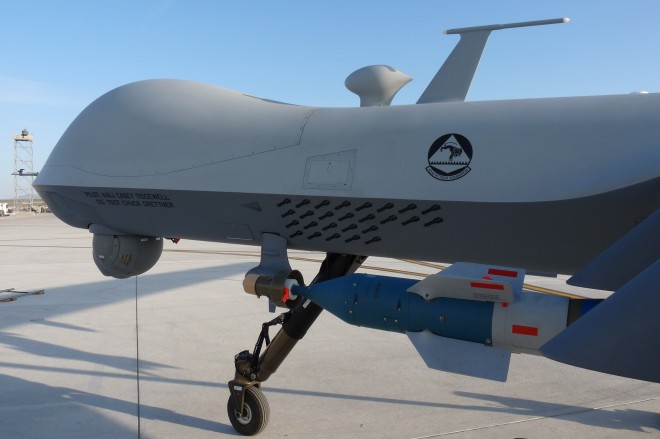
Defense Secretary Robert Gates met with officials in Islamabad to reiterate the importance of drone attacks, despite escalating reservations of their use amongst Pakistani’s. It’s been a polarizing issue from the onset because while it’s convenient to fly unmanned CIA predator aircraft over potential terrorist havens, they result in significant civilian casualties, and displaced persons. So it’s no surprise that over a year later, reconciling their use in Pakistan is still on the agenda.
For this reason, Secretary Gates announced a possibility of America providing “Pakistan with 12 unarmed Shadow aircraft”. Meaning the planes would not have a capacity to strike, but offer enhanced “surveillance capabilities under U.S. supervision”. It’s a fair decision and something I’ve suggested previously.
Gates also stressed the importance of militarily addressing all extremist groups because:
“It’s dangerous to single out any one of these groups and say, ‘If we could beat that group that would solve the problem,’ because they are in effect a syndicate of terrorist operators”
And almost simultaneously, Secretary Clinton unveiled The Afghanistan and Pakistan Regional Stabilization Strategy which sends an increase of 20-30% in civilian experts to both countries and “outlines plans to rebuild the Afghan farm sector, improve governance, and reintegrate extremists into society”. But this strategy of “reintegrating extremists” runs in contradiction to Secretary Gates’ aforementioned remarks.
Gates ruled out any possibility of reintegration calling for a consolidated attack on extremists suggesting that they work in “syndication”, while Cinton’s plan attempts to bring extremists back into the fold of moderate society.
It’s a stark inconsistency in our foreign policy. Because while I think Secretary Clinton’s idea notion of reintegration is more in tune with ground realities, and therefore viable, I figure Secretary Gates was being staunch in talks because finally relinguishing partial drone technology provided him with that margin of hawkishness. Either way though, one thing is certain, despite skepticism on both ends of the U.S. Pakistan relationship, cooperation is ever deepening.
To my knowledge, Cricket is not an official tool of diplomacy in international relations. Cricket is however, traditionally a sophisticated, gentleman’s game.
A very childish move because on a micro level, it wastes World Class cricketers’ time and on a macro scale, excludes the World Champions in 20Twenty from this tournament.
Were decision makers naïve enough to think that not bidding on Pakistani players would send a tough message to the Pakistani government so that they might soften up on Kashmir or divert troops from the Indian, to the Afghan border? I highly doubt it. Which renders the decision to exclude Pakistani players just juvenile.
It’s the kind of thing a teenager does which accomplishes little else than a momentary, base satisfaction that he or she later realizes wasn’t worth it as they get older. Because this is not going to improve relations, and it certainly doesn’t help the game of cricket to exclude the World Champs. It sends a symbolic slap across the border to millions of fans. Mind you, it slaps the fans, not the government, the fans. So, even though cricket is not an official tool of diplomacy, it can have a periphery effect of separating peoples. This snub can only stall rather than alleviate already chilling relations in South Asia.
But mostly, this comes at the cost of cricket in general. It’s reminiscent of Greg and Trevor Chappel bowling the now infamous underarm ball to New Zealand in 1981. Shame on IPL for such a foolish misstep that accomplishes nothing positive.
Both DAWN news and CNN have good reports on Pakistani artist Imran Mudassar. The following video briefly takes us into some of his recent works that depict deteriorating security, and amplified militarism that torments his country.
I found his first work in the video of particular interest: the wall piece brought from Kabul that was peppered with shrapnel holes. Mudassir traces an outline of a man’s torso onto the destroyed wall and highlights each hole with color to accentuate a very poignant notion that these aren’t just holes, they’re wounds. He specifically mentions he can’t stop thinking about those holes after having seen them, and quite effectively after seeing his work, one might feel the same. Minimal use of color and the small scale work set into a simple frame brings us in contact with a wrenching reality that mainstream news reporting of terrorism just can’t offer.
Seeing the actual holes that sharpnel makes on an individual human torso is far different than just hearing that another suicide bomber struck in the Af-Pak region.
The holes in this work leave us feeling empty as we peer into the darkness and depth of these wounds. Kudos once again CNN for reporting on one of the many persevering stories out of Pakistan during these testing times.
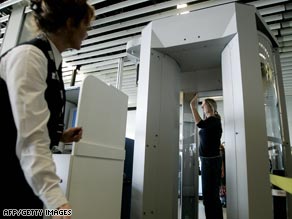
The Transportation Security Administration announced heightened security measures for inbound travelers to the United States from countries designated as “state sponsors of terrorism or other countries of interest”. Currently listed as state sponsors of terrorism are Iran, Cuba, Sudan and Syria while the “other countries of interest include Afghanistan, Algeria, Iraq, Lebanon, Libya, Nigeria, Pakistan Saudi Arabia, Somali and Yemen.
Fox News reports that effective Jan 1 2010, Pakistan International Airlines (PIA) is enhancing security checks for travelers to the United States, even though no direct flights even exist to America at this time. P.I.A. spokesperson Sultan Hassan explains: “passengers are subjected to special screening, including full body searches, in a designated area of the departure lounge. He said the airline had run advertisements in newspapers to warn prospective passengers of the increased safety measures. maintaining strict security standards at all airports for all flights”
I am of the opinion that such measures are useful if they help prevent terrorist attacks and offer peace of mind to travelers. In tandem with enhanced security directives however, should come enhanced diplomacy and perhaps specificity.
To prevent Anti-Americanism from the majority of travelers who are not terrorists, our embassies or appropriate State Department offices should amplify soft tools used in winning hearts and minds in the dozen countries whose passengers are now designated for special scrutiny.
Another way to ensure enhanced security measures don’t have unintended consequences might be a U.S. led international protocols. If all incoming travelers to the United States from a country like Pakistan are going to be searched at new, exceptional extents both in Pakistan and upon arrival to the United States, then it could be useful to implement some best practices protocols that all international Transportation authorities adhere to. For instance, to avoid instances where authorities might misuse liberties to scrutinize and make travelers feel unnecessarily uncomfortable is having a visible camera present at all times.
In the same way some California police departments are now installing cameras in officer helmets to help prevent abuse of authority and make others feel comfortable knowing there is oversight and evidence should recourse be required, T.S.A. authorities might have visible cameras present in areas where passengers from select countries like Pakistan are subject to enhanced scrutiny.
I think the new T.S.A. law could be an effective one. I don’t think most passengers would object to tightened security for the sake of safety so long as they feel they are being treated with care and there is little chance of mistreatment. So it’s important that as American’s, when we expand laws that affect the international community, we still uphold what we pledge allegiance to each day: “liberty and justice for all”.
Test matches will disappear from cricket by the year 2020, and ironically, because of 20Twenty. After Pakistan’s frustrating loss against Australia today, batsman Mohammad Yousuf warns that Twenty20 cricket will ruin Pakistan’s game. He says:
“Because of Twenty20 cricket no player knows how to stay at the wicket anymore. Until players do not play with discipline and play ball to ball and leave balls they are supposed to we will struggle in ODIs, let alone Tests. If you are going to slog all the time what is the point? It is necessary that Pakistanis, the media, the board, the fans realise that we play as little Twenty20 as possible.”
Mohammad Yousuf is asking everyone to limit Twenty20 cricket at a time when it’s popularity is on the rise, Pakistan is the reigning World Champion and undoubtedly has the best players the game has seen (Afridi, Razzaq, Ajmal, Gul). He’s basically making a case for conservative cricket: or getting back to the basics of Test.
In Test’s even if you’re pitched a full toss at above average speed and there’s no one at long on or square leg, the skilled batsman refrains from smashing it out of the park.
Reason being the risk of getting out supersedes the worth of a six. However, that kind of discipline is the exact antithesis of 20Twenty cricket where you are required to play each ball as if it’s a potential six. But having the sense to resist potential sixers is but one part of the batting discipline needed in traditional cricket. It’s an overall psychological discipline where batsman must with extreme patience and consistency just hold one’s wicket. To do that, over after over for 5 days, knowing that the match could wind up in just a draw requires an extreme endurance that few batsman posses. In fact some of the best batsmen in the game who have mastered this don’t even play ODI’s anymore, like Rahul Dravid. Case in point, most teams don’t have players who specialize in Test, Dravid is actually a rare case. Mohammad Yousuf could then be on the right track: are players losing an edge in Test, and perhaps even skill by playing 20Twenty cricket?
20Twenty is the American equivalent of Home Run Derby: the game simply requires batsman to smash anything and everything out of the park. 8th man down must carry at least a 100% strike rate to give a team the depth required to be competitive in the game.
It’s less about psychological discipline, discerning batting or even batting skills for that matter. Because if the aim is to slog, you can take a whack at just about anything pitched your way. It requires a lot of power and little else. Anyone with training and enough arm strength to smack the ball around can be fairly successful. There aren’t rewards for consistency, patience or discipline. In fact, those qualities are counter productive in 20Twenty. In Tests you score runs by first discerning which balls are safe, whether that be after 5 or 50 overs, and then you nudge, or direct the ball into anticipated gaps.
It’s a whole different ball game, as they say in the States. So is Mohammad Yousuf correct in calling for a limit to 20Twenty? The conventional part of me who tends to resist change says yes. But the more spontaneous, forward thinking side of me says, hey, if that’s the natural progression of the game and Tests are inevitably obsolete, bring on a few more Shahid Afridi’s !




 Zainab B. Jeewanjee
 Zainab Jeewanjee